Commercial Garage Door Cable Repair Vancouver — Cables, Drums, and Bottom Fixtures
By
/ June 13, 2026
Cable repair guide — Metro Vancouver
A snapped lift cable on a commercial overhead door usually announces itself one of two ways. Either the door drops hard on one side — tilting, jamming in the tracks, sometimes taking out a track bracket on the way down — or it makes it all the way down but when the operator tries to lift it, nothing happens on one side and the door skews.
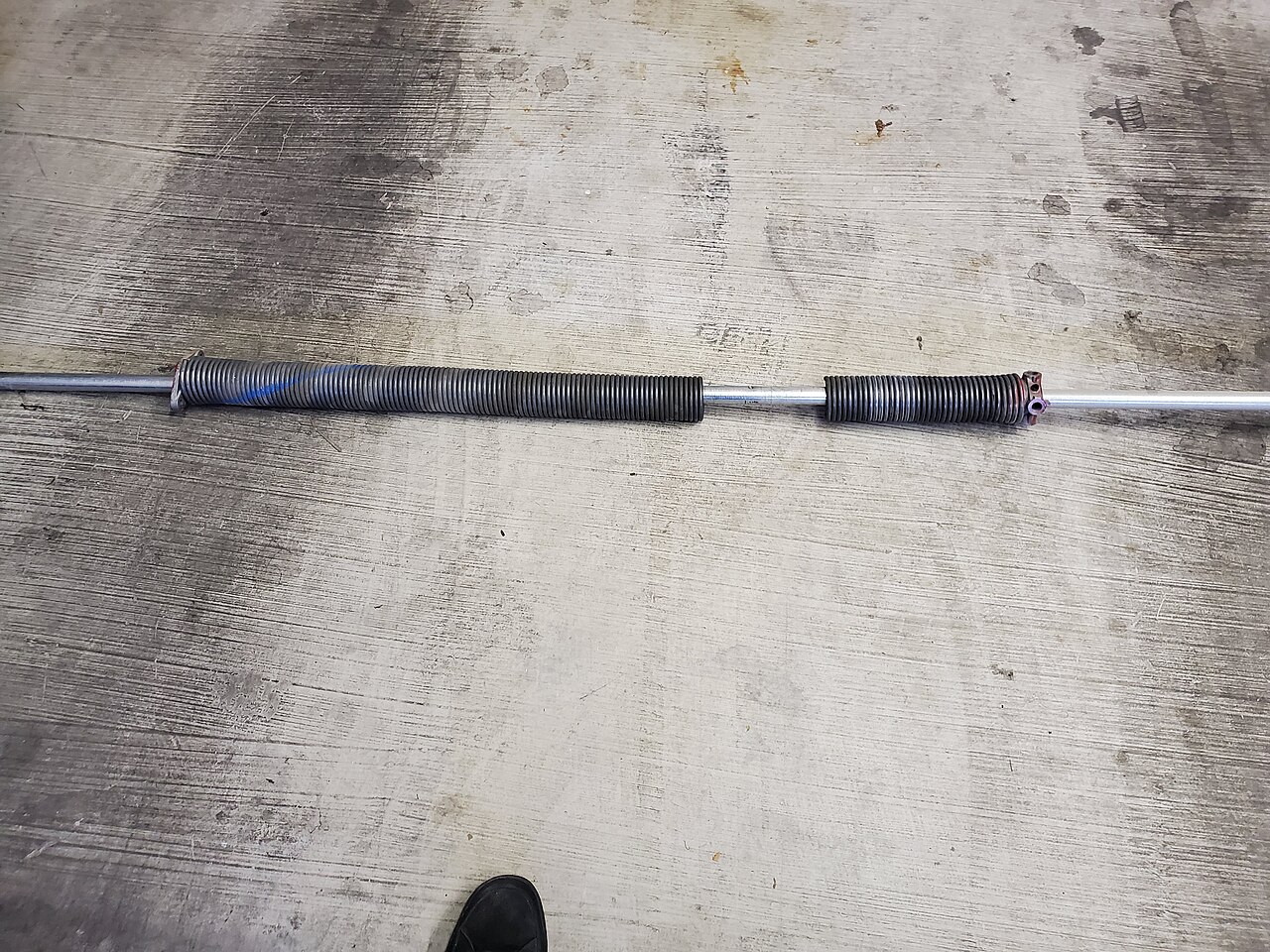
Lift cables are the connection between the torsion spring system and the door panels. The spring stores energy, the cables transfer that energy to the bottom of the door through a drum-and-cable system. When a cable breaks, the force distribution becomes uneven immediately. The door is now being lifted on one side only. The track gets side-loaded. Panels can get forced against the track and dent. What started as a cable failure turns into a cable-plus-track-plus-panel job if you let it run.
Why Commercial Cables Fail
Lift cables are stranded steel wire rope, usually 1/8 or 3/16 inch diameter on standard commercial applications. The most common failure is wear at the drum — the point where the cable wraps onto the cable drum as the door goes up. If the drum has a burr, is mis-aligned, or the cable is jumping out of the groove, the cable gets kinked and fatigued locally and eventually breaks there.
The second failure point is at the bottom bracket where the cable attaches. The swaged fitting takes the full load every cycle. Corrosion here is common in Metro Vancouver where salt air gets into everything, particularly on doors that face west or south. We see a lot of bottom bracket cable ends that are corroding from the inside out where you cannot see it until the cable fails.
Galvanized Cable for Vancouver
For any commercial installation in Metro Vancouver we use galvanized aircraft-quality cable as the standard. The zinc coating resists corrosion and extends life substantially versus bare steel in a coastal environment. The cost difference per cable is small. The difference in service life is measurable. Stainless steel cable is available for food processing or chemical environments where galvanized zinc is not appropriate.
Cable Drums
The cable drum is the spool mounted on the torsion shaft that the cable winds onto as the door goes up. Drums are sized to match the door height and spring geometry. Wrong drum and the door will be unbalanced at the top or bottom of travel even with a correctly sized spring. When we replace cables we inspect the drums every time. Scored grooves, cracked flanges, loose set screws — any of these create cable problems. A fresh cable on a bad drum will fail early.
Bottom Fixtures
The bottom fixture is the bracket at the very bottom corner of the door that carries the cable attachment point, the lowest hinge, and the bottom roller. Every cycle the full cable tension runs through it. We see bent, cracked, and stripped bottom brackets regularly on commercial doors with any age on them. A bent bracket throws the cable geometry off. If we are replacing cables and the bottom bracket is bent or corroded, the bracket goes too.
Emergency Cable Replacement
A commercial door with a broken cable should not be operated. The door is out of balance and will either jam, tilt, or come down unevenly. We carry standard commercial cable sizes on the truck. Most cable replacements on doors we can identify over the phone are handled same-day. Call (604) 206-5727 any time — we run 24/7 across Richmond, Vancouver, Burnaby, Surrey, Delta, and Metro Vancouver.
 By
/ June 13, 2026
By
/ June 13, 2026