Cold weather makes commercial overhead door struts more prone to bending, cracking, or failing under load. As temperatures drop, the steel in the strut loses flexibility and becomes more brittle, especially if it’s already worn or stressed from daily use. This isn’t just theoretical—facility teams in Metro Vancouver see real failures when struts snap or deform during winter cycles, leaving doors sagging or binding in the tracks.
What a Strut Does in a Commercial Door System
A strut is a rigid steel bar, usually mounted vertically or diagonally on the interior side of a door panel, designed to prevent the panel from bowing under its own weight or wind load. On wide commercial doors—especially those over 14 feet wide—struts are critical for keeping the panel flat as it rolls up and down. Without them, the door can warp, bind in the tracks, or come loose from the rollers. Struts aren’t load-bearing like springs, but they carry constant bending stress, and that stress changes with temperature.
How Cold Changes Steel Behavior
Steel undergoes a ductile-to-brittle transition as it cools. Above a certain temperature—varies by alloy, but often around -10°C to -20°C for common construction steel—it starts to lose its ability to bend without cracking. In a strut, this means repeated flexing from door movement can cause micro-fractures to propagate. You won’t see it happen; the strut looks fine until one day it snaps or kinks under normal operation. The colder it gets, the less force it takes to initiate a crack.
What Failure Looks and Sounds Like
A failing strut often gives warning signs. You might hear a new creaking or popping sound when the door moves—especially at the top or bottom of the travel—where stress concentrates. Visually, look for visible bending, a gap between the strut and the door panel, or uneven wear on the rollers where the door is no longer tracking straight. If the door starts to drag on one side or the panel appears twisted when viewed from inside, the strut may have lost its rigidity. In extreme cases, the strut fractures completely, and the door panel sags noticeably in the middle.
What You Can Check Yourself
Before calling a technician, do a visual and operational check. With the door closed, inspect each strut for signs of corrosion, cracks at the welds or bolt holes, or obvious deformation. Use a straightedge—like a level or a piece of 2×4—held against the door panel; if the strut doesn’t sit flush or the panel bows between struts, it’s not providing adequate support. Operate the door manually (disconnect the opener first) and listen for new noises or resistance. If the door binds at a specific point, note where—it often correlates with a weakened strut.
When It’s Not a DIY Fix
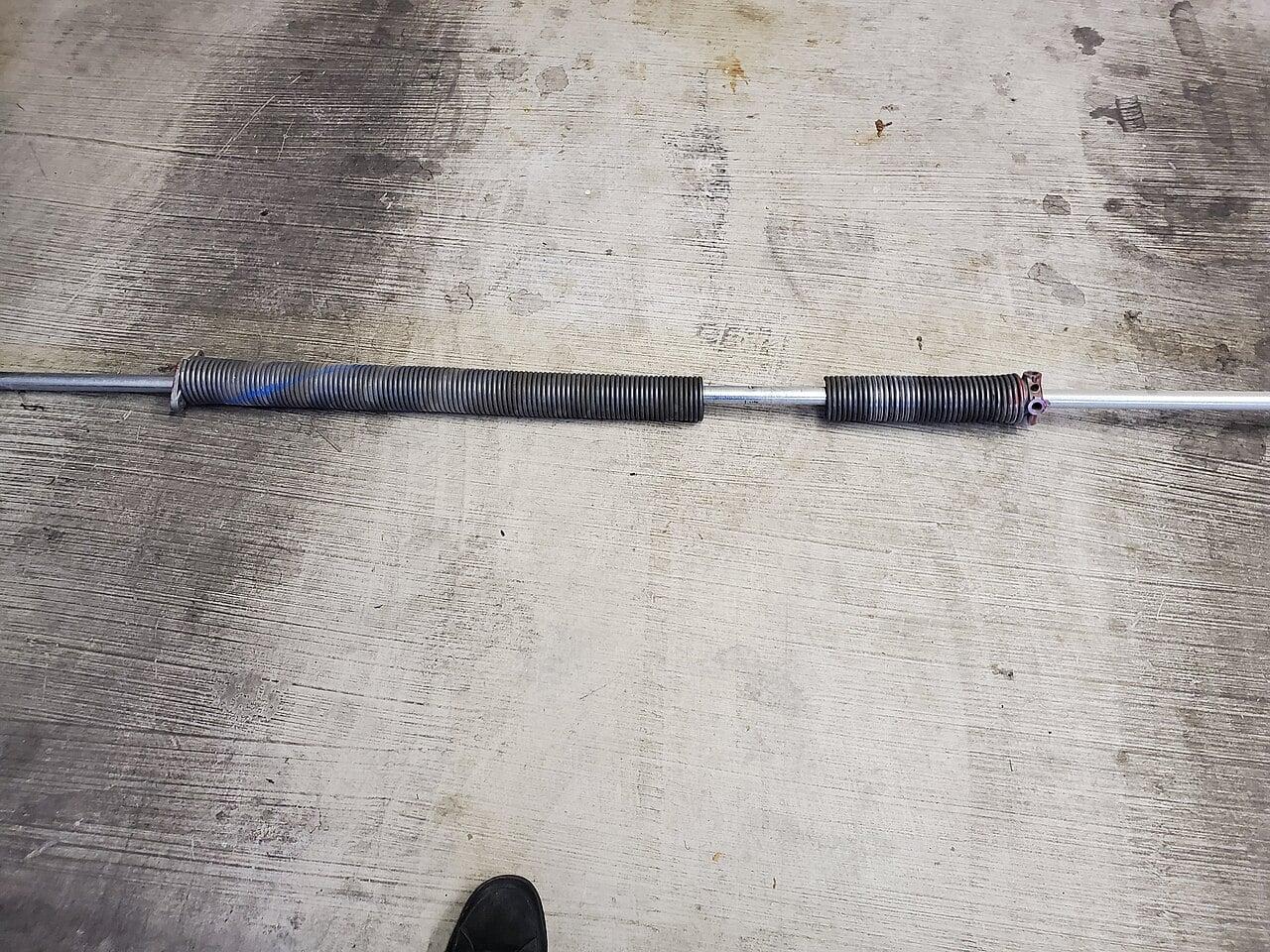
Replacing a strut itself is straightforward—unbolt the old one, bolt on a new one of the same size and gauge—but only if the door is fully secured and under no tension. Never attempt this while the door is open or if there’s any chance it could fall. More importantly, if the strut failure has caused damage to the tracks, rollers, or hinges, or if you suspect the torsion springs are involved (e.g., the door won’t stay up, moves unevenly, or makes loud bangs), stop. Torsion springs store lethal amounts of energy and must be handled only by trained technicians with the proper tools. Misjudging spring tension can result in severe injury or death.
Why Material and Installation Matter
Not all struts are equal. Thicker gauge steel (12-gauge or better) resists cold-induced brittleness better than thinner stock. Proper installation—ensuring the strut is mounted flat against the panel with no gaps and all bolts torqued to spec—prevents point loading that accelerates fatigue. In coastal BC, where moisture and salt air promote corrosion, inspect for rust that weakens the cross-section. A corroded strut fails faster in cold because the effective steel thickness is reduced.
Frequently Asked Questions
Can I reinforce a weak strut with a brace or support?
Adding external bracing might seem like a fix, but it often creates uneven load distribution and can interfere with door movement. If a strut is showing signs of fatigue, replacement is the only reliable solution. Temporary supports can mask the problem and lead to sudden failure.
How often should struts be inspected in a cold climate?
At minimum, inspect struts twice a year—once before winter and once after. In high-cycle facilities (warehouses, distribution centers), quarterly checks are advisable. Look for corrosion, cracks, and loose fasteners, especially after extreme temperature swings.
Does lubricating the strut help with cold-weather performance?
No. Struts don’t move relative to the door panel—they’re fixed. Lubrication won’t affect their structural properties. Focus instead on keeping the tracks, rollers, and hinges lubricated, as reduced friction there lessens the bending load on the strut.
CCGDS (604) 206-5727