A commercial overhead door cycles thousands of times a year. Most facilities run the same annual walkthrough — lubricate the rollers, tighten a few bolts, call it done. The doors that fail in January are the ones where the checklist stopped at the obvious.
What the code actually requires
NFPA 80 and CSA B326 both mandate annual inspections for fire-rated and standard commercial doors. The wording is broad: “visual and operational inspection of all components.” The interpretation is where trouble starts. A technician who checks spring tension but skips the counterbalance cable anchor has not completed the inspection. Neither has one who tests the photo-eyes but ignores the reversing edge on a dock door.
If your building carries insurance on the door system — and it does — the adjuster will ask for the signed inspection report after a claim. A checklist with blank lines is the same as no checklist.
Springs and counterbalance: the parts under load
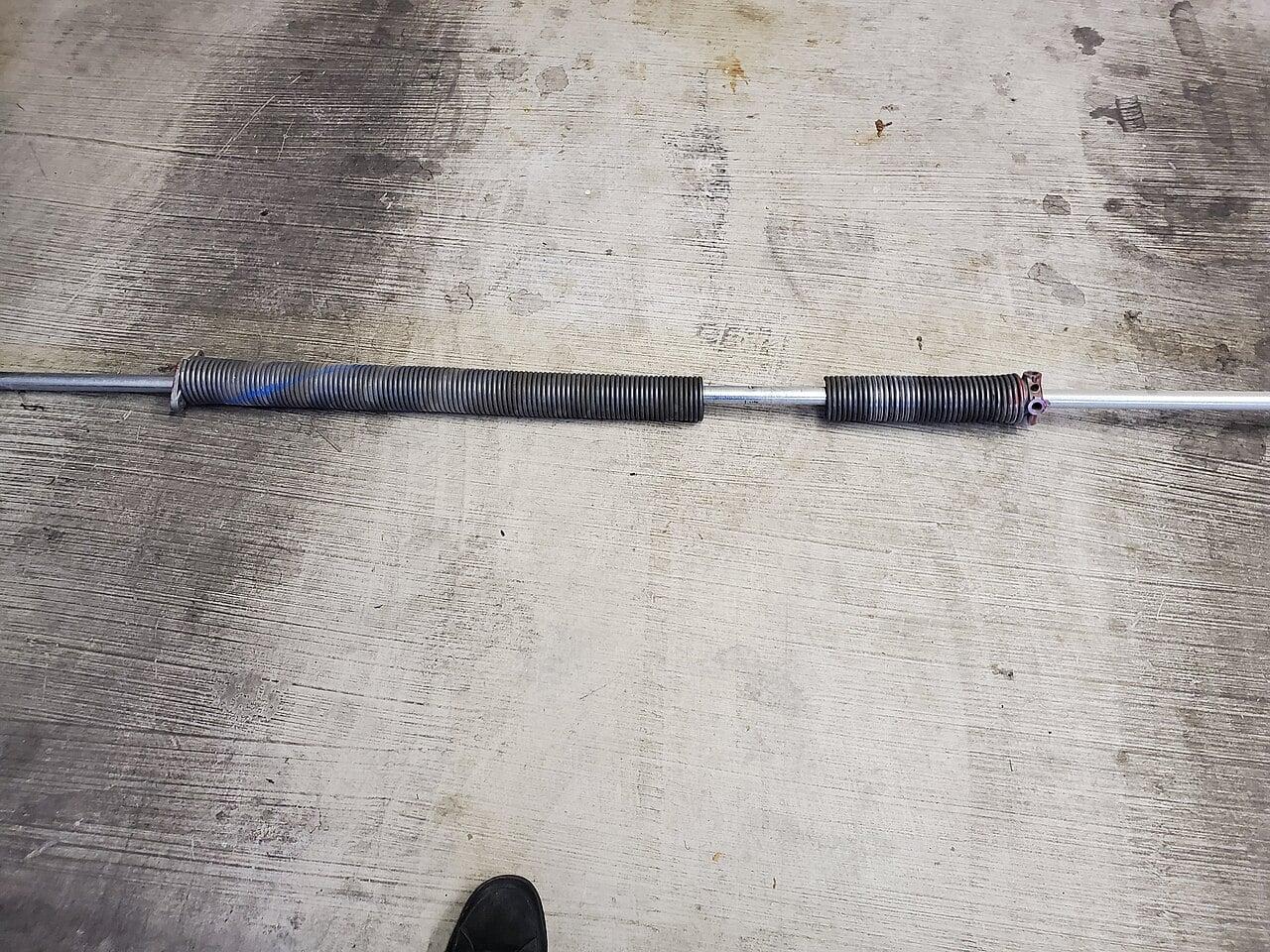
Torsion springs store enough energy to throw a 400-pound door section across a loading bay. The inspection starts before you touch anything. Look at the spring cones. Hairline cracks at the set-screw contact points mean the spring has been over-torqued or cycled past its rated life. Mark the shaft with a paint pen at the cone face. If that mark moves next year, the cone is walking.
Extension springs need safety cables through the center. Every year we find at least one bay where the cable was cut during a prior repair and never replaced. When that spring breaks, the coil becomes a projectile. The safety cable costs twelve dollars and takes three minutes.
Check the cable drums. The cable should sit flat in the groove, not riding the flange. A drum that has shifted on the shaft will fray the cable in weeks. Tighten the set screws to spec — usually 15 to 20 ft-lb on a 1-inch shaft — and torque-mark them.
Tracks, rollers, and the alignment nobody verifies
Roll the door by hand with the opener disconnected. It should move with one hand on a 12-foot panel. If it binds, the track is bent or the jamb brackets have shifted. We see this constantly on dock doors where a forklift clipped the vertical track six months ago and nobody reported it.
Rollers: steel ball-bearing on commercial doors, nylon only on light-duty sectional. Check for flat spots, seized bearings, and stems that have worked loose in the hinge. A roller that does not roll drags the opener gear set and shreds the drive chain inside six months.
Hinges — end hinges and center hinges — carry the door weight through the horizontal track transition. The top roller on each end hinge takes the hardest hit. Cracked hinge leaves and elongated bolt holes mean the door has been running heavy. Replace the hinge, not just the bolt.
Weather seal and the air you pay to heat
Bottom astragal, jamb seal, header seal. Three pieces, three failure modes. The bottom seal flattens permanently after two winters in a Richmond warehouse. You can see daylight at the corners before the center fails. Jamb seal tears at the hinge points where the door flexes. Header seal gets sliced by the top panel on high-lift tracks.
Replace all three on a schedule, not when the draft complaint arrives. A 16-foot door with a 1/4-inch gap at the bottom moves 1,200 CFM at 15 mph wind. That is a heating bill line item, not a maintenance nuance.
Operator and safety systems: test like you mean it
Photo-eyes: block the beam with your hand. The door must reverse immediately. Clean the lenses with a dry cloth — forklift dust cakes them in hours. Check alignment with a laser pointer if the eyes are mounted above eight feet; a degree of drift at that height misses the receiver by inches.
Reversing edge: press the bottom bar with a 2×4 laid flat. The door reverses on contact, not after crushing the wood. If it does not, the edge sensor or the operator logic board is faulty. We replace edges annually on high-cycle doors; the rubber hardens and the internal switch sticks.
Force limits: set them with the door disconnected, then reconnect and test. A limit set on a cold morning will be wrong by July. The operator should stall at 15 pounds of resistance on a standard commercial door. More than that and you are crushing whatever is in the path.
Limit switches: run the door full open and full closed. The door should stop with the top panel flush to the header, not jammed into it. Over-travel bends the top section and shears the operator output shaft.
Fire-rated doors: the checklist items that are not optional
Fusible links: one per door, rated for the opening. Replace annually. Do not paint them. Do not zip-tie them to the track. The link must drop cleanly when the temperature hits its rating.
Self-closing test: disconnect the opener. The door must close and latch from the fully open position under its own weight. If it stalls halfway, the spring tension is wrong or the track binding is severe enough to defeat the fire rating.
Label verification: the UL or ULC label on the door and the operator must be legible. Paint overspray on the label voids the rating in an inspector’s eyes. Photograph it every year.
Hardware you forget exists
Center bearing brackets on torsion systems. The bearing seizes, the shaft scores, the spring cones walk. Spin the shaft by hand — it should turn freely with the springs unwound.
Cable anchor brackets at the bottom corners. The bolt loosens, the cable slips, the door cocks sideways in the track. Torque to spec and mark.
Operator chain or belt tension. Half-inch deflection at mid-span. A loose chain jumps the sprocket under load; a tight one eats bearings.
Emergency release: pull it. The door must disconnect cleanly. Re-engage and verify the trolley locks. We find seized releases on doors that have not been manually operated since installation.
The walkthrough that catches what the list misses
After the checklist, stand in the opening and watch a full cycle. Listen. A healthy door sounds like a low hum. Ticking means a roller bearing. Scraping means track contact. A thunk at the top of travel means the horizontal track is not level.
Smell the operator. Hot windings smell like burnt varnish before they trip the thermal overload.
Check the floor. Oil spots under the operator mean a gearbox seal. Rust stains at the bottom corners mean the bottom seal is gone and water is riding the panel skins.
Write down what you see, not just “pass/fail.” The next technician — or you, next year — needs to know the left jamb seal was torn at the second hinge, not that “seal condition: fair.”
When to call a commercial door company
You have no torque wrench calibrated for 20 ft-lb. The springs are 15,000-cycle rated and you do not know the install date. The fire door label is painted over. The operator logic board throws a code you cannot clear. The door is 14 feet wide and the track is bowed 3/4 inch at center.
Any of those — call. We carry spring stock, panel sections, and operator parts for Amarr, Raynor, LiftMaster Maxum, Manaras, and Hörmann doors on the trucks. The AI dispatch matches the tech to the parts before the truck leaves the yard.
Call (604) 206-5727 — Metro Vancouver.