A door-down event at a busy loading dock is not an inconvenience. It is a bottleneck that stops receiving, shipping, and sometimes fire egress. The plan you write today determines whether the dock is back online in two hours or two days.
Start with the doors themselves. List every opening by number, type, size, spring cycle rating, and operator model. Note which are fire-rated and which serve as required egress. Attach a photo of the data plate on each operator and spring assembly. When the 2 a.m. call comes in, the technician does not need a description — they need the part numbers.
Redundancy is not a spare door
If Dock 3 goes down, traffic does not pause. It shifts. Your plan must name the alternate route: which other docks absorb the volume, whether the grade-level door on the north wall can take a 53-foot trailer, and if the ramp angle allows it. Walk the route with a loaded pallet jack. Measure the clearance. A door that looks wide enough often has a header or light fixture that catches the top of a high-cube load.
Spring failure is the most common hard stop
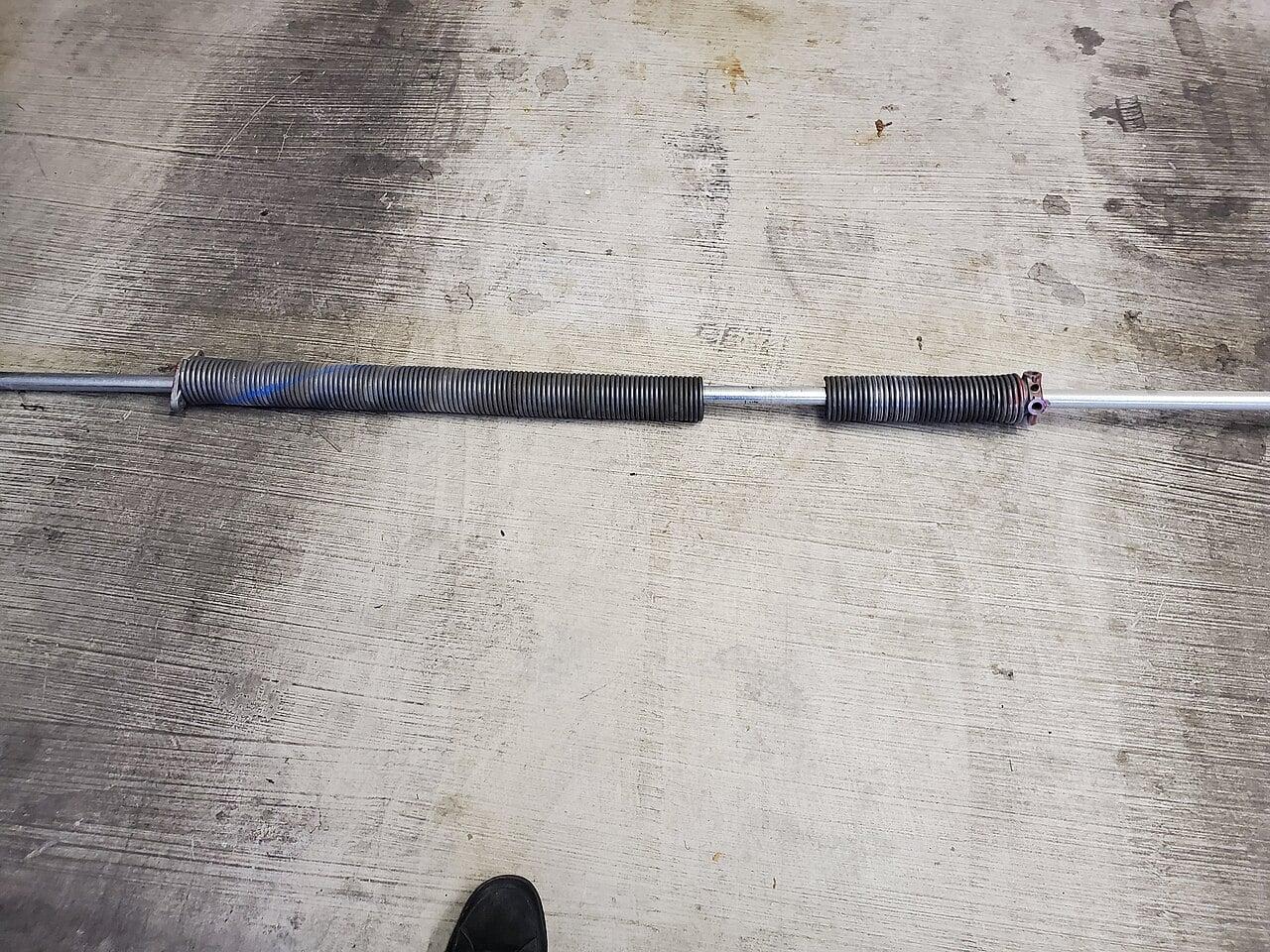
Torsion springs fail on cycle count, not calendar age. A 25,000-cycle spring on a door cycling 40 times a day lasts less than two years. The plan should show the last replacement date and the cycle counter reading if the operator tracks it. Keep one matched spring set per door in a locked cabinet on site. Label it with the door number, wire size, inside diameter, and length. A mismatched spring changes the balance, burns the operator, and creates a second failure.
Cable and drum failures cascade
A frayed cable does not snap cleanly. It wraps the drum, jams the torsion tube, and often bends the shaft. Stock cable assemblies cut to length for each door — not bulk roll. Include the correct thimbles and stops. Drum wear is harder to see. If the cable grooves are polished smooth, the drum slips under load. Replace drums in pairs when you replace cables. The plan should list the drum part number and the shaft diameter.
Operator failure modes are predictable
Commercial operators — LiftMaster Maxum, Manaras, Hörmann — fail in known ways. Limit switches drift. Logic boards lose memory after a power surge. Gear reducers strip when a door is forced. Keep a spare logic board and a limit-switch assembly for each operator model in use. If you run three different brands, you stock three different board kits. The plan notes which doors share models and which are orphans.
Photo-eyes and edge sensors cause false downs
A misaligned photo-eye reverses the door two inches off the floor. Dirt, vibration, and forklift impact knock them out. The plan assigns a weekly check: block the beam, confirm reversal, clean the lens. Spare eyes and mounting brackets live in the same cabinet as the springs. Edge sensors on the bottom seal take the most abuse. Keep two complete kits per door type.
Vehicle impact: the plan changes when steel hits steel
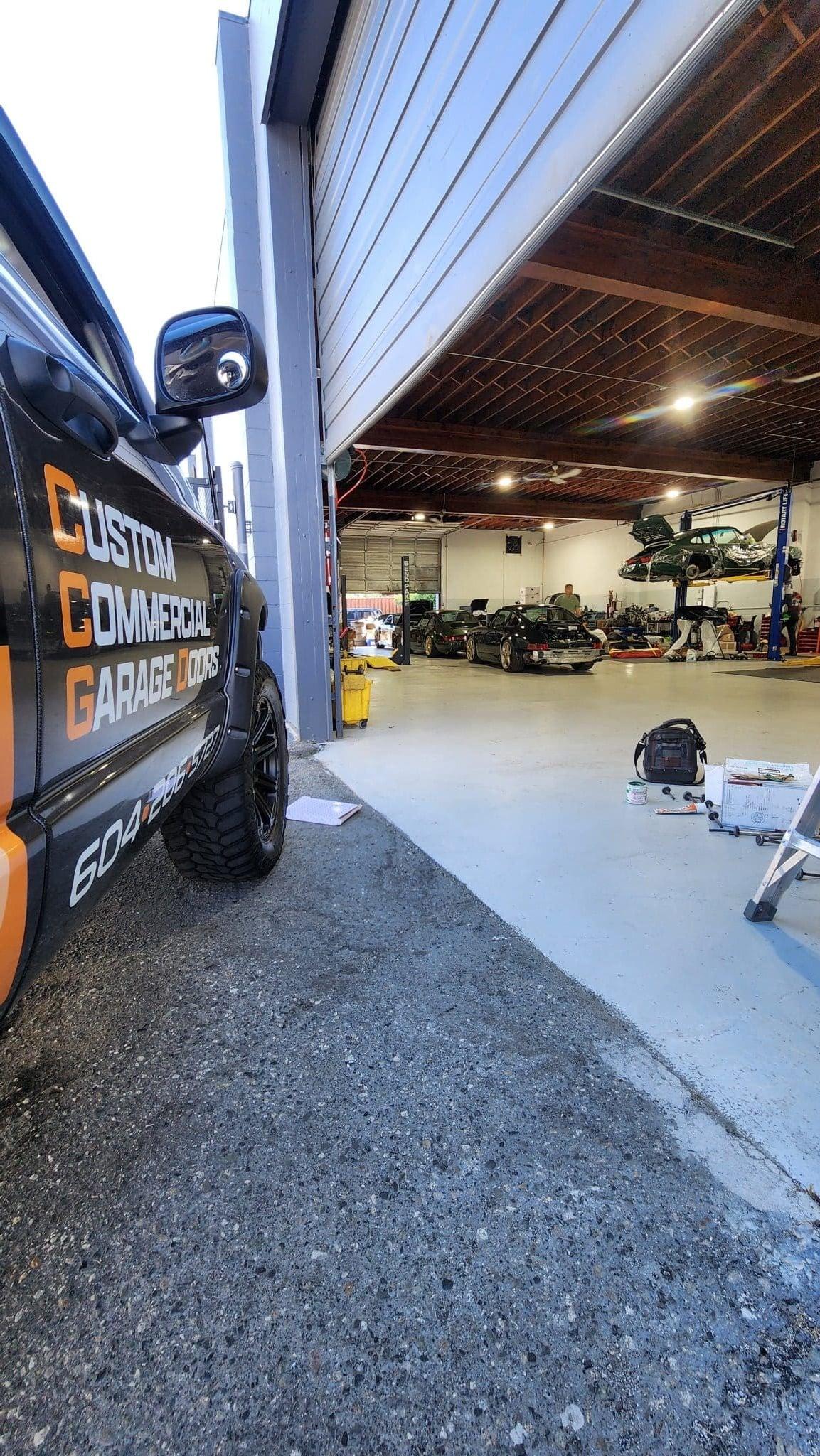
A forklift hitting a track bends the vertical angle, twists the horizontal, and often cracks the jamb. The door will not seal. It may not move. Your plan names the structural vendor who can straighten or replace jambs and headers — not just the door company. Include the ICBC or insurance claim number field on the incident form. Photos of the impact, the vehicle, and the door from three angles go to the insurer before cleanup starts. CCGDS handles the door and structural repair on insurance jobs; the plan should reference that capability so the dispatcher does not have to guess.
Vendor protocol: one call, not three
The plan lists one primary vendor with 24-hour dispatch and parts vans stocked for your door models. CCGDS runs a voice AI that answers every call, captures the door number and symptom, and dispatches the nearest tech carrying the relevant spring, cable, or operator parts — 30 to 60 minutes to most Lower Mainland industrial areas, even at 2 a.m. No hold queue. No voicemail. The backup vendor line is only for when the primary cannot respond. Write the escalation time limit: if no tech is rolling in 45 minutes, call the backup.
Decision tree: repair versus replace
When the tech arrives, the ops manager needs a rule, not a debate. The plan sets the threshold: if repair cost exceeds 60 percent of a new door and operator package, or if the door has two prior major repairs in 24 months, replace. The threshold is a number, not a feeling. It prevents the “just fix it this once” loop that costs three replacements over eighteen months.
Fire-rated openings have no flexibility
A fire door that fails to close and latch is a code violation the moment it happens. The plan treats every fire-door fault as a Priority 1 — same response target as a dock door, but with the fire marshal notification field on the incident form. Annual drop-test records stay in the cabinet. If the fusible link is painted over, the door will not release. Scrape the paint during the weekly check.
Cold weather adds a layer
Below freezing, nylon rollers flatten, grease stiffens, and condensation freezes photo-eyes. The winter addendum to the plan specifies low-temp grease on bearings, silicone spray on seals, and a heated enclosure for the operator if the door cycles more than ten times an hour in sub-zero. A door that runs fine in October jams in January. The plan anticipates that.
The cabinet is the plan in physical form
One locked cabinet per dock bank. Inside: spring sets, cable assemblies, drums, operator boards, limit switches, photo-eyes, edge sensors, low-temp grease, silicone spray, a torque wrench, winding bars, and a laminated copy of this plan. The key lives with the shift lead. Inventory is checked monthly. Used parts are reordered the same day.
Train the night shift
The plan fails if only the day manager knows it. Run a tabletop drill quarterly. Simulate a spring break on Dock 2 at 3 a.m. The night lead pulls the plan, reads the door number, calls the vendor, and directs the tech to the cabinet. Time it. Debrief. Update the plan with what went wrong.
A contingency plan is not a document. It is a set of decisions made before the adrenaline hits. Write it once. Keep it current. Use it.
Call (604) 206-5727 — Metro Vancouver.