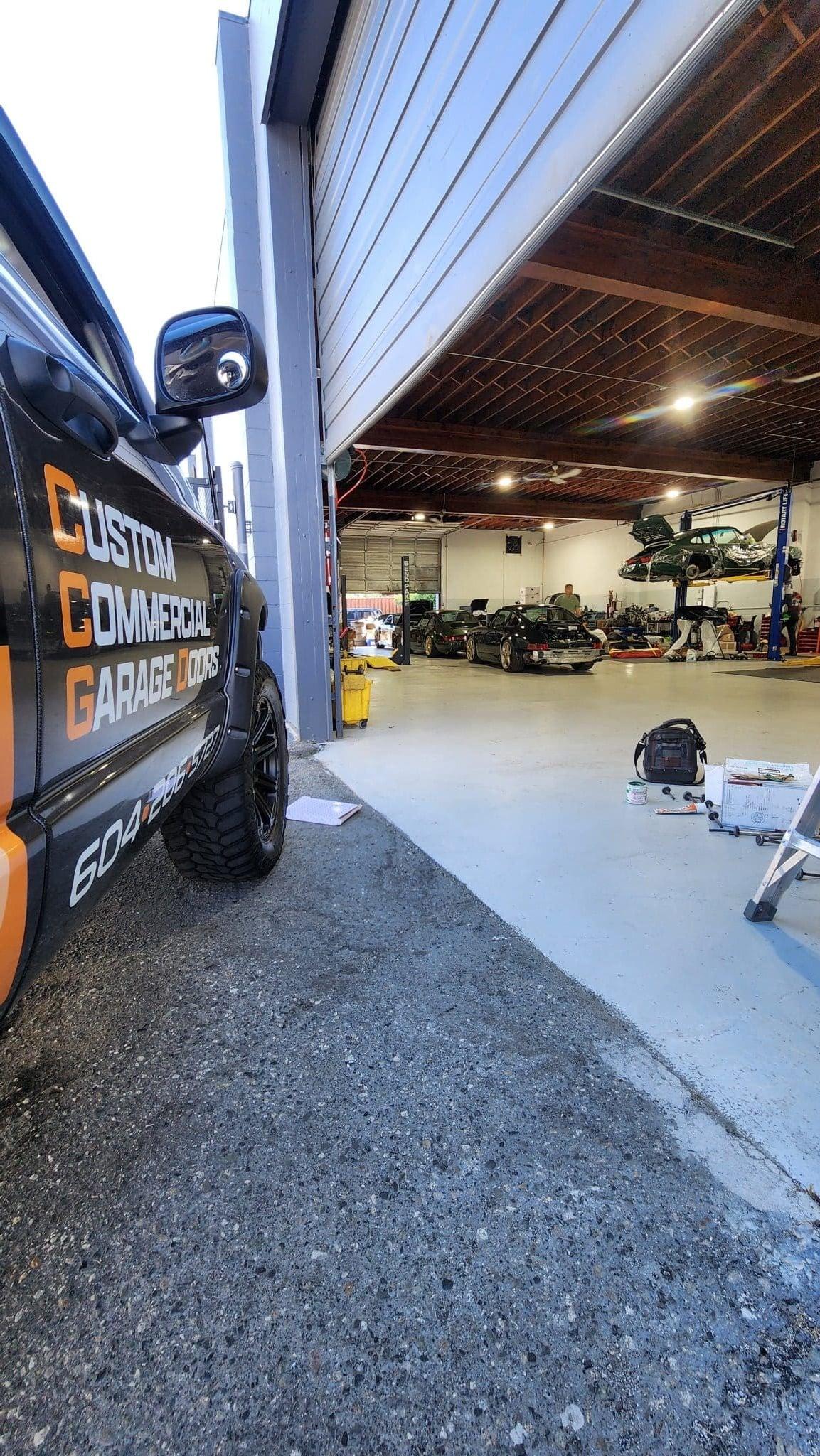
Fleet shops do not run on gentle cycles. A bay door in a busy shop sees twenty to forty cycles a day, every day, often with a truck idling under it or a forklift blade grazing the bottom panel. The door that lasts is the one spec’d for that abuse, not the one that looked right in the catalog.
The difference between a door that runs for ten years and one that needs a spring swap at eighteen months comes down to three decisions: cycle rating, track geometry, and operator duty class. Get those right and the rest is maintenance. Get one wrong and you are buying parts on overtime rates.
Cycle rating is the only number that matters
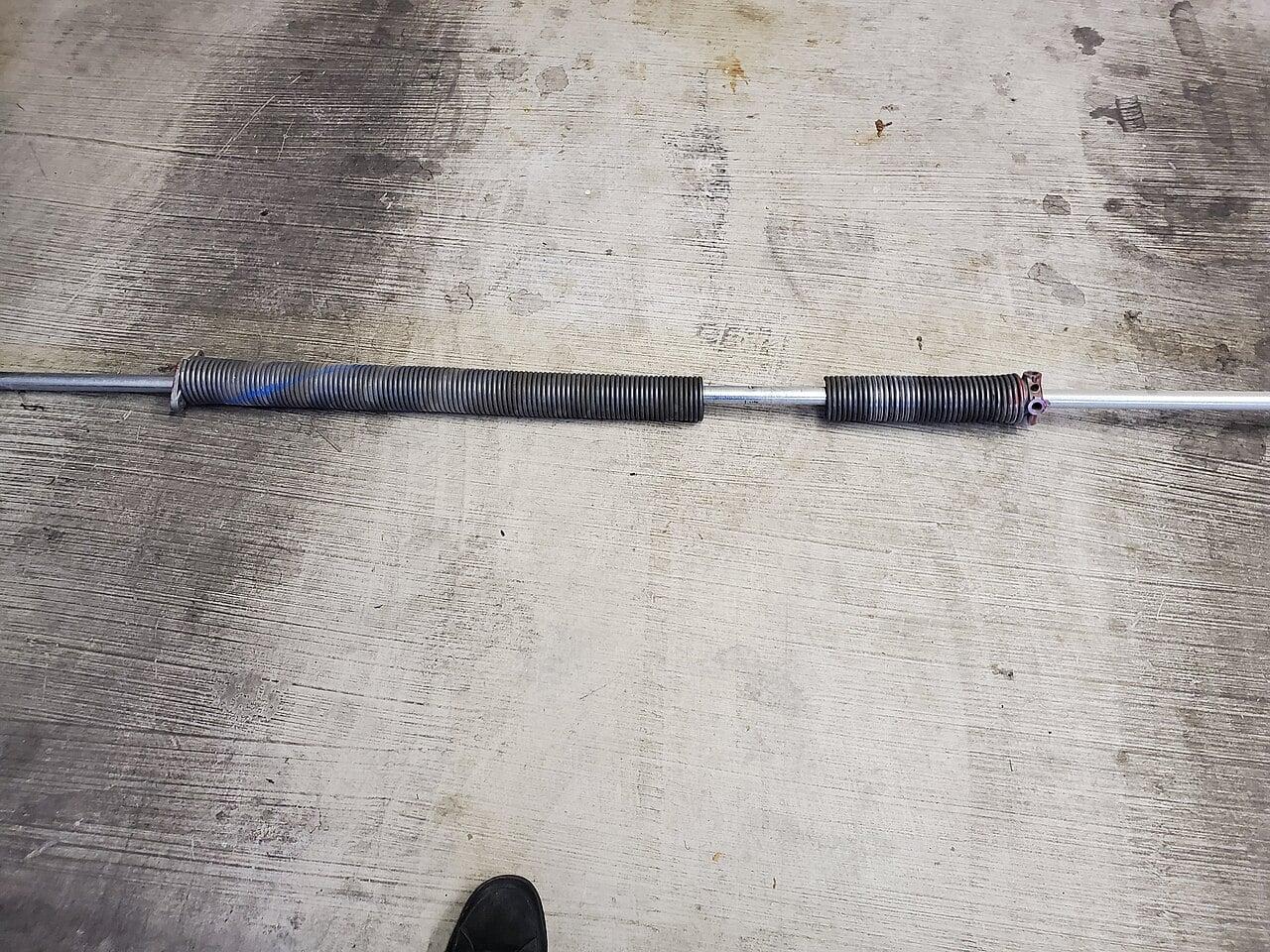
Manufacturers rate springs in cycles — one open, one close equals one cycle. A standard residential spring is 10,000 cycles. That lasts a homeowner seven to ten years. In a fleet shop running twelve trucks with two shifts, a bay door hits 10,000 cycles in fourteen months.
You need 25,000-cycle springs at minimum. 50,000-cycle or 100,000-cycle springs exist and they cost more upfront. They also require a larger wire diameter, which means a larger spring assembly, which means more headroom. If your header clearance is tight, you may be locked into a lower cycle rating unless you restructure the opening. That is a conversation to have before the order ships, not after the spring snaps.
High-cycle springs also change the winding cone and the shaft load. The shaft, bearings, and cable drums must match. A 100,000-cycle spring on a standard shaft will twist the shaft or walk the drums off the bearings inside two years.
Track geometry decides whether the door survives contact
Standard-lift track puts the horizontal track twelve to fourteen inches below the ceiling. That works until a high-roof van or a reefer unit clips the bottom section. The impact transfers straight into the horizontal track, bending the angle iron and knocking the door out of plumb.
High-lift track raises the horizontal run, buying you two to four feet of extra vertical clearance before the curve. Vertical-lift track runs straight up the wall — maximum clearance, but you need the wall height and the side room for the counterbalance assembly. In a retrofit, high-lift is usually the practical ceiling. It keeps the door panels above the impact zone of mirrors, roof fairings, and liftgate arms.
Low-headroom track (also called dual-track) folds the horizontal track back on itself. It fits tight headers but the double track collects grit, the rollers take side load they were not designed for, and the cable angle at the drum gets steep. Steep cable angle means uneven winding, which means cable fray and early spring failure. Use low-headroom only when the building gives you no other option.
Operator duty class is not marketing
A light-duty jackshaft operator rated for twenty cycles a day will overheat in a fleet bay by 10 a.m. The motor windings cook, the thermal overload trips, and the crew starts pulling the emergency release chain — which defeats the safety edge and the photo-eyes.
Spec a heavy-duty or industrial-duty operator. Look for continuous-duty motor ratings, oil-bath gearboxes, and a brake that holds the door at any position without drifting. LiftMaster Maxum and Manaras industrial lines both have models built for this cycle count. The operator should also carry a built-in timer-to-close with a safety-edge override, not a separate relay box wired by the electrician. Fewer components, fewer failure points.
Mount the operator on the torsion shaft, not wall-mounted with a chain drive. Shaft-mount eliminates chain stretch, sprocket wear, and the alignment drift that comes from building vibration. It also puts the operator weight on the shaft bearings, which are already sized for the door load.
Panel construction: steel gauge, insulation, and the bottom section
Twenty-gauge steel dents when a forklift fork kisses it. Twenty-four gauge crumples. For fleet bays, specify eighteen-gauge or sixteen-gauge exterior skins. The cost difference per panel is real but the replacement interval stretches from annually to once a decade.
Insulation choice depends on whether the bay is heated. Polyurethane foam-in-place gives R-12 to R-18 and rigidizes the panel — it resists oil-canning and handles impact better than polystyrene slabs. If the bay is unheated, single-skin eighteen-gauge with a thermal break at the stile is lighter, cheaper, and less likely to trap condensation between the skins.
The bottom section takes the most abuse. Spec a reinforced bottom rail with a U-shaped astragal retainer that accepts a replaceable rubber seal. The seal should be EPDM, not vinyl — vinyl hardens at minus twenty and tears when a tire rolls over it frozen. Keep a spare seal on the shelf. Swapping it takes ten minutes with a cordless drill. Replacing a bent bottom panel takes half a day and a lift.
Hardware that survives the cycle count
Ten-ball bearing rollers, not nylon. Nylon rollers flat-spot under constant load and they shatter in cold weather. Ten-ball steel rollers with hardened races run quieter than people expect and they last the life of the spring.
Hinges: eleven-gauge minimum on end hinges, fourteen-gauge on intermediates. The end hinges carry the roller load through the track curve. Thinner hinges elongate at the bolt holes, the roller wanders, and the door starts binding in the vertical track.
Cables: aircraft-grade seven-by-nine galvanized, minimum three-sixteenths inch for doors up to sixteen feet wide. Quarter-inch for wider or heavier doors. Thinner cables stretch, stretch changes the effective spring tension, and the door drifts down overnight. The tech arrives to a door sitting on the floor and a spring that looks fine — because the cable ate the adjustment.
Shaft: solid one-inch keyed shaft for doors up to eighteen feet. Hollow shaft or splined shaft for wider spans. The keyway must match the winding cones and the operator drive hub. Mismatched keyways round out in six months and the door spins on the shaft.
Maintenance that prevents the 2 a.m. call
Monthly: wipe the photo-eyes with a clean rag. Dust and brake dust blind them faster than anything else. Check the safety edge — press it with your hand at mid-height. The door must reverse instantly. If it hesitates, the edge is worn or the wiring is cracked at the coil cord.
Quarterly: lubricate the rollers, hinges, and spring coils with a synthetic spray lubricant — not WD-40, not grease. Grease collects grit and turns into grinding paste. Cycle the door manually (pull the release) and feel for rough spots. A binding roller or a dry bearing announces itself through your hand before it shows up in the operator current draw.
Annually: have a tech check spring tension, cable drum alignment, and operator brake torque. The brake torque setting is the one nobody checks. If it is too loose, the door drifts down when the power cuts. If it is too tight, the operator fights the spring on every cycle and the motor burns.
Keep a spare spring, a spare cable, and a spare bottom seal on the shelf. Label them with the door number. When the spring breaks at 6 a.m. before the first shift, you want your tech swapping parts, not driving to a supplier.
The spec sheet you hand to the vendor
Door size: ______ Headroom: ______ Sideroom (each side): ______ Backroom (depth into shop): ______ Cycles per day: ______ Shift count: ______ Heated bay: Y / N Typical vehicle height: ______ Impact risk (forklift, liftgate, mirror): Low / Med / High Operator voltage/phase: ______ Timer-to-close required: Y / N Safety edge type: Pneumatic / Electric / Monitored
Fill that out before you call. A vendor who quotes without asking for those numbers is guessing. Guessing costs you downtime.
Call (604) 206-5727 — Metro Vancouver.