Warehouse Overhead Door Service Vancouver — Preventive Maintenance and Emergency Repair
June 13, 2026
Warehouse overhead door service — Metro Vancouver
A warehouse with ten overhead doors running two shifts has a maintenance obligation whether the facility manager thinks about it or not. Those doors will fail — the question is whether they fail on a scheduled PM visit when it is convenient, or at 3am when a driver is sitting outside and the dock supervisor is calling the after-hours line. The facilities with maintenance contracts call us a lot less often in emergencies.
What a Warehouse Door PM Actually Covers
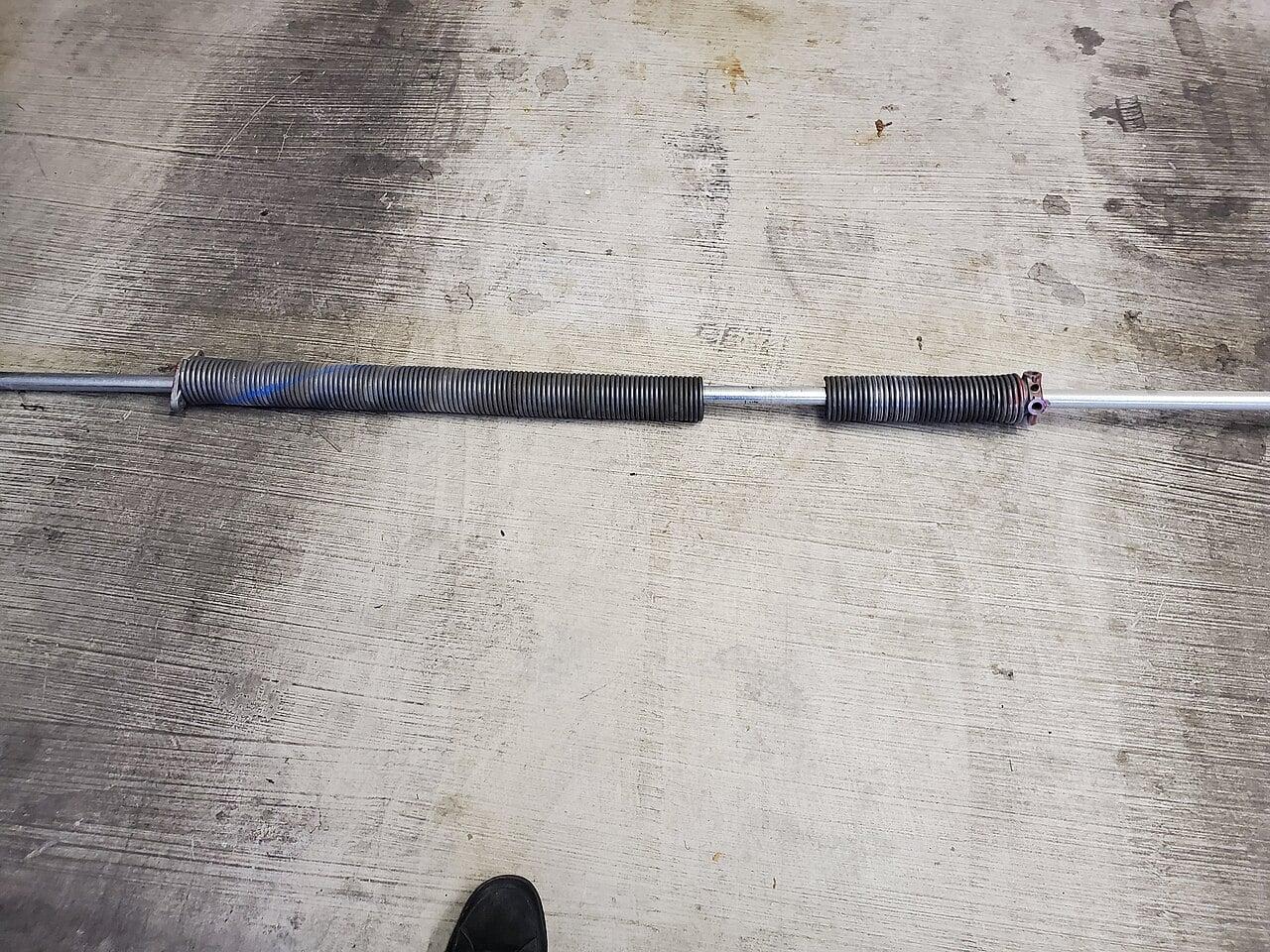
Spring system inspection and tension check. We do the balance test on every door — disconnect the operator, lift to mid-travel, verify it holds. If a door is pulling heavy the spring is losing tension and getting close to the end of its service life. We document the balance condition and note which doors are approaching replacement.
Cable inspection. We check both cables for fraying at the drum and at the bottom bracket. Wire rope showing individual broken strands needs replacement before it parts completely.
Roller inspection and lubrication. Steel rollers get lubricated. Rollers with worn or seized bearings get replaced. The friction from bad rollers goes directly onto the operator — that is motor heat, elevated current draw, and shortened operator life.
Operator service. We check limits, test safety devices, inspect the drive system, check the logic board for fault codes, listen to the motor for any audible signs of bearing wear or winding issues.
Multi-Door PM Contracts
We offer PM contracts for warehouses with multiple doors. A facility with 8 to 10 doors gets scheduled visits — we come through and do the full scope on every door, document everything, and leave a written report. The report covers current condition, what was done, and what is coming up in the next service window.
Emergency Warehouse Door Response
Even with good PM things break. We are the emergency call for warehouse facilities across Richmond industrial area, the Delta port industrial zone, Burnaby industrial corridor, and Surrey industrial parks. Call (604) 206-5727. We run 24 hours.
Common Failure Modes in Warehouse Door Systems
The most predictable warehouse door failures follow the same pattern. High-cycle doors — a loading dock door seeing 40 or more cycles per day — will break a torsion spring within 10,000 to 15,000 cycles. A standard commercial spring is rated for roughly 10,000 cycles. At 40 cycles per day, that is 250 days — under a year of real use. Facilities that do not track spring age or cycle count discover this at the worst possible time.
Cable failure follows a similar pattern. Cables wear at the drum and at the bottom bracket where they attach to the door. Wire rope showing individual broken strands is within cycles of a full break. Once a cable parts, the door drops on the unbroken side, binds in the tracks, and usually takes the operator with it.
Operator failure on warehouse doors is often preceded by weeks of warning signs — slow travel speed, unusual sounds during operation, the door hesitating before reversing. These are early warning signs that show up on a PM inspection and are inexpensive to address. Ignored, they turn into a motor burnout or a logic board failure that is two to four times more expensive.
What Multi-Door Contracts Look Like in Practice
A facility with eight loading dock doors and two interior access doors on two shifts gets a scheduled PM twice per year. The first visit in spring addresses winter wear — door seals that failed in the cold, cables that stretched under load at low temperature, operators that ran harder in cold starts. The fall visit prepares the doors for winter — lubrication that is appropriate for cold temperatures, seal inspection and replacement where needed, operator limit adjustments.
Each visit generates a written report. The report lists current condition of every door, what was done, and what is projected to need attention in the next service window. Facilities managers use this report for budget planning and for documentation when a strata or insurance requirement asks for evidence of maintenance activity.
Facilities with maintenance contracts also get priority emergency dispatch. When a dock door goes down on a contract account, they go to the front of the same-day queue ahead of non-contract calls. The contract rate also locks in the PM pricing — no cost increase mid-term.
Dock Equipment Beyond the Door
Warehouse dock service often includes more than the door itself. Dock levellers — the hydraulic or mechanical ramp that bridges the gap between the dock floor and the truck bed — are separate but adjacent to the door and have their own service schedule. Dock shelters and seals that surround the truck opening are another maintenance item. A dock door in perfect condition paired with a failed dock shelter is still losing heat and blocking dust, rain, and pests around the truck perimeter.
We service dock levellers and can refer dock shelter work to specialty contractors. When we do a PM at a warehouse facility, we note the condition of dock levellers and shelters as part of the written report, even if those items are outside the scope of the door contract.
Warehouse Door Repair Response Across Metro Vancouver
Our warehouse clients are distributed across the Richmond industrial area, the Delta port zone (Annacis Island and the 72nd Avenue industrial corridor), Burnaby’s Still Creek and Boundary Road industrial areas, Surrey’s industrial parks along 104 Avenue and 88 Avenue, and the growing distribution warehouse stock in Pitt Meadows and Maple Ridge along the Lougheed Highway.
Emergency response for warehouse facilities is 24 hours. Most after-hours calls are dispatched within 30 to 45 minutes of the call. Parts for common warehouse door components — springs, cables, rollers, bottom brackets, logic boards for LiftMaster H-Series and J-Series — go on the truck. If a part needs to be sourced, we tell you before the tech leaves the yard.
When to Repair vs Replace a Warehouse Door
A commercial sectional door on a loading dock has a practical life of 15 to 20 years with consistent maintenance. A door that has been neglected — seals failed and untreated, spring replaced without checking cable condition, rollers worn through without replacement — may be at end of useful life at 10 to 12 years.
The repair vs replace decision turns on two questions: what is the total annual cost of maintaining the existing door, and what is the installed cost of a replacement? When a door needs three major repairs in a 12-month period, and the fourth is on the horizon, replacement usually works out better on a 5-year cost basis. We give you the honest number for both options.
Frequently Asked Questions — Warehouse Door Service
How often should warehouse loading dock doors be inspected?
High-cycle dock doors should be inspected twice per year. Lower-cycle interior access doors can go to once per year. The PM interval should shorten if a door shows early signs of wear between visits.
What causes a warehouse overhead door to reverse unexpectedly?
Most unintended reversal is a safety device — a misaligned photo-eye, a damaged safety edge on the bottom bar, or a limit set incorrectly after a spring replacement. Any of these will make the door reverse before closing completely. A correct diagnosis is faster than guessing — call us and we’ll identify the specific cause.
Can you service warehouse doors outside business hours?
Yes. Our 24-hour line handles warehouse emergency calls around the clock. Scheduled PM visits can be arranged for off-peak hours — early morning, late evening, or weekend — to avoid disrupting shipping operations.
What is the cost of a warehouse door maintenance contract?
A single-door annual contract for a standard commercial dock door is $280 to $420 depending on door type and service frequency. Multi-door contracts are priced per door with a discount starting at three or more doors. Call 604-206-5727 for a site-specific quote.
Call us for warehouse door service in Metro Vancouver: 604-206-5727 — PM contracts, 24/7 emergency response, written reports after every visit.