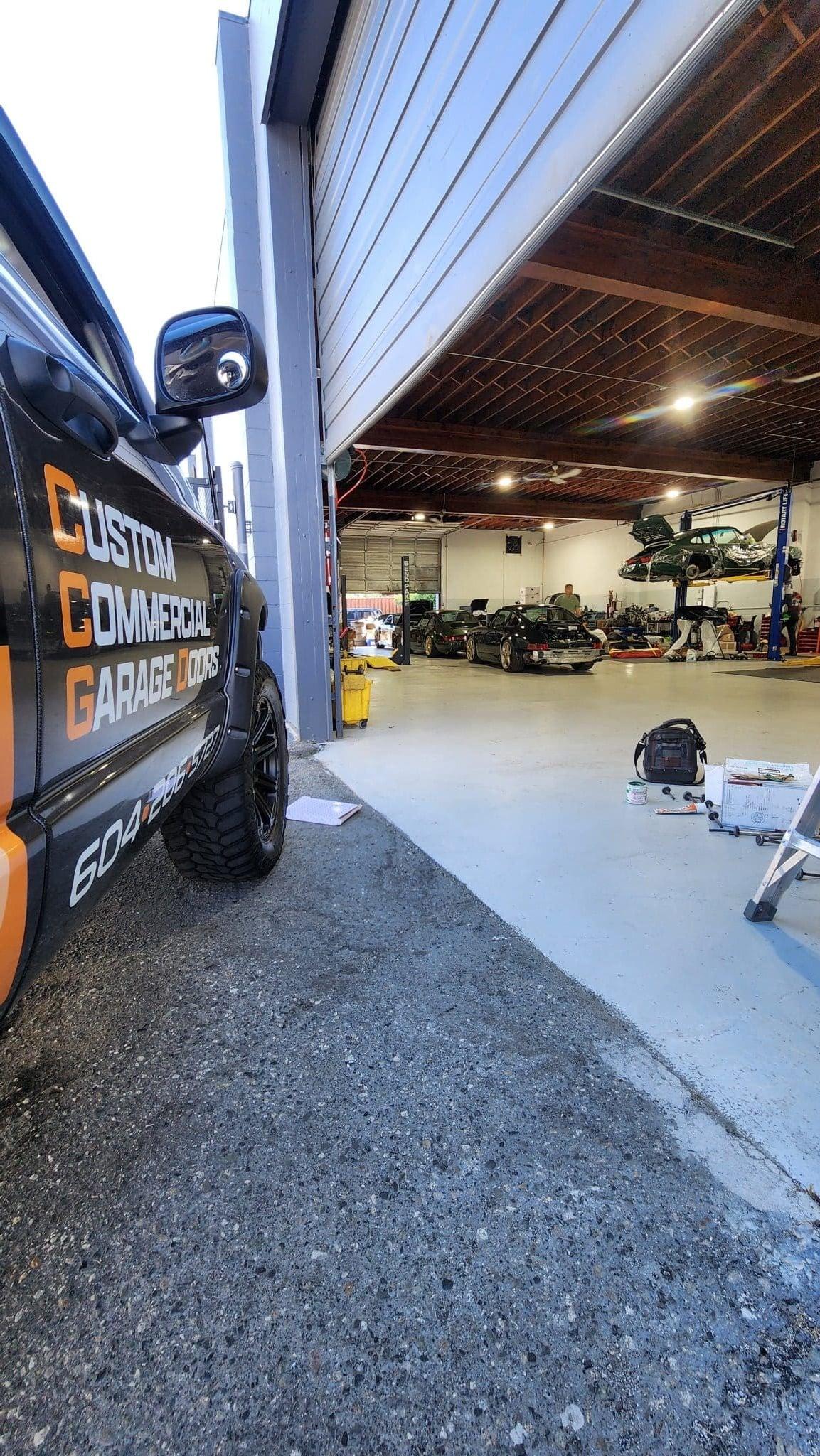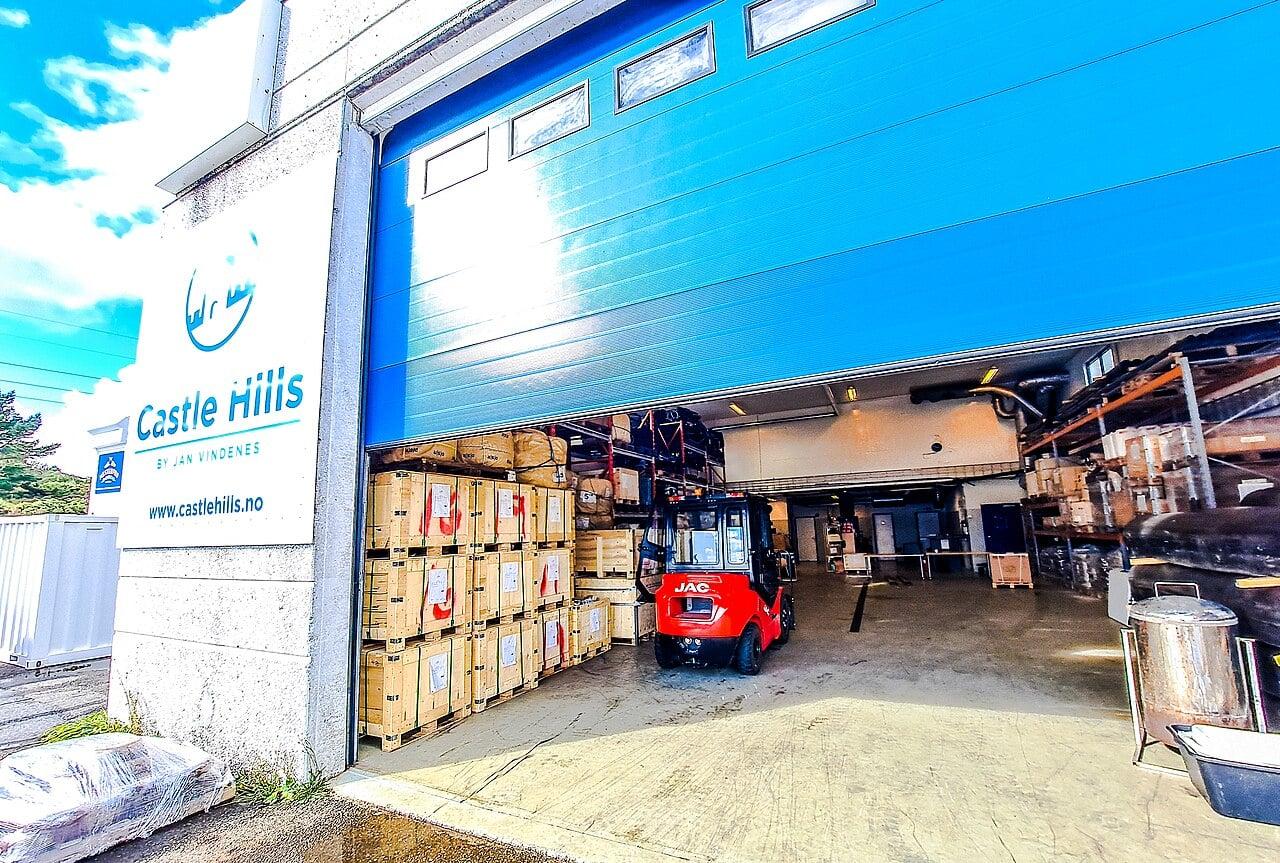
Why multi-dock math changes everything
A single-bay warehouse loses one door. A 24-dock distribution centre loses one dock position — and every trailer backed into that position sits idle. With detention charges and yard congestion running by the hour, a four-hour spring replacement on dock 17 costs more than the door. The failure mode is the same torsion spring. The cost structure is not.
Downtime math per dock position
Most DCs run 300 to 500 cycles per dock per day. A standard 10,000-cycle spring lasts three weeks. A 25,000-cycle spring lasts two months. A 50,000-cycle spring lasts four. The price difference between 10k and 50k springs is roughly 40 percent. The labour to swap them is identical. Spec’ing the higher cycle spring on every dock position is the single highest-ROI decision in the building.
Track it by dock number. Dock 3 fails at 11 months. Dock 7 at 14. Dock 12 at 9. That pattern tells you which doors run hotter — heavier trailers, tighter scheduling, more short cycles. Replace springs on a staggered schedule by dock cohort, not by calendar. You avoid the “all springs fail in the same week” event that paralyzes a shift.
High-cycle spring spec’ing for 300-plus cycles daily
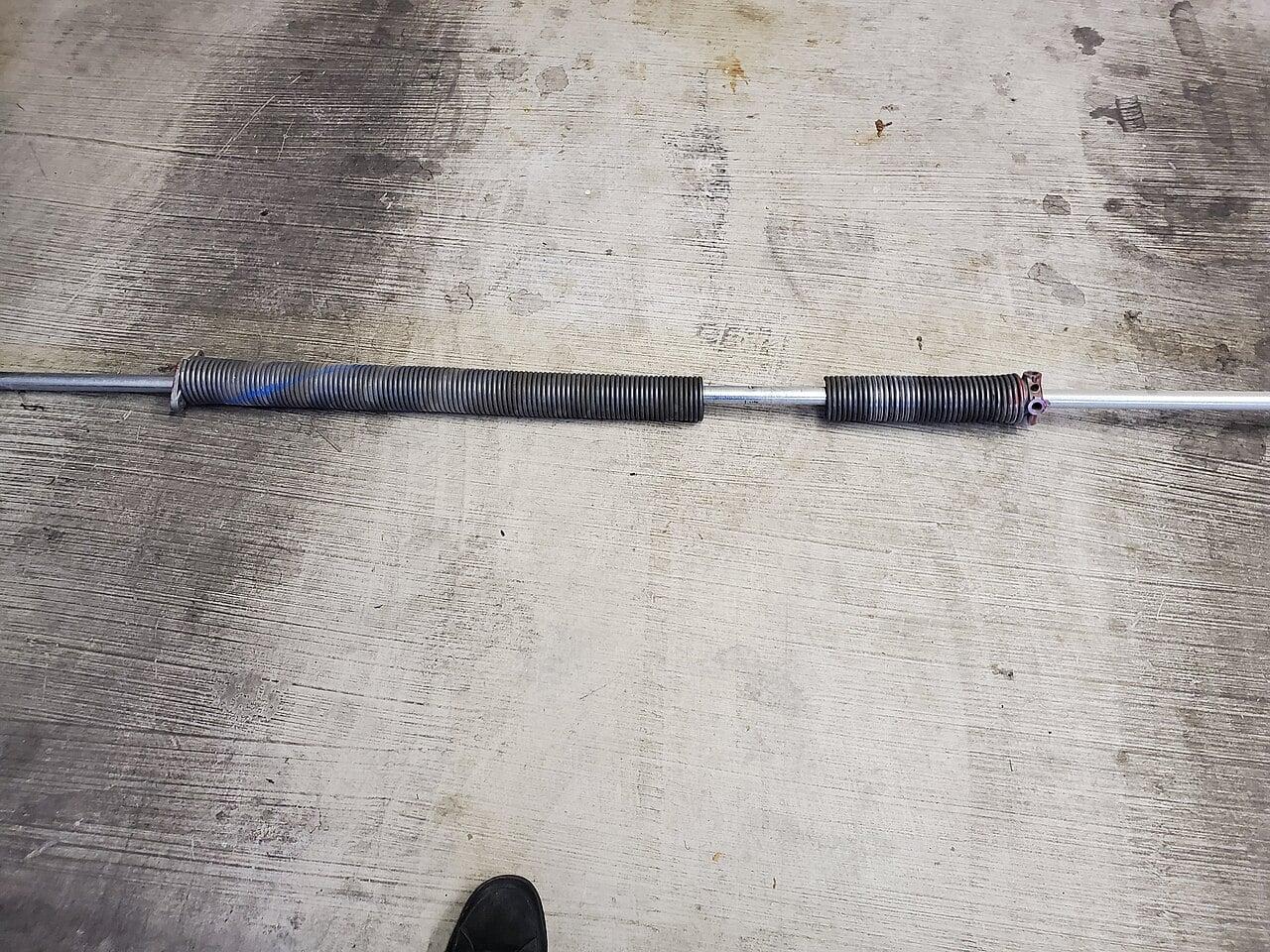
Wire diameter, inside diameter, and length determine cycle rating. Most DCs on Annacis Island run 16-foot by 14-foot sectional doors on standard-lift track with 2-inch shafts. The stock spring is .250 wire, 10k cycles. Moving to .262 or .273 wire at the same ID adds 15,000 to 25,000 cycles. The shaft and cones stay the same. No structural change.
Dual-spring assemblies (two springs per side) split the load. If one breaks, the door still opens — slowly, but it opens. That keeps the dock live while you schedule the swap. Single-spring assemblies are a single point of failure. Do not install them on dock positions that run more than 200 cycles a day.
Oil-tempered wire is standard. Shot-peened adds 10 to 15 percent cycle life for roughly 20 percent more cost. Worth it on your top 20 percent busiest docks. Powder-coated springs resist the river air better — see below — but the coating hides micro-cracks. Inspect them with a magnet, not your eyes.
Salt-air corrosion on hardware near the river and port
Annacis Island and Tilbury sit in the Fraser’s brackish reach. Chloride deposition on exposed hardware is measurable 500 metres inland. Roller stems, hinge pins, cable drums, and bottom brackets show white rust in six months. Red rust in eighteen. Once the stem corrodes, the roller seizes. The door drags. The operator trips on force limits. The spring winds unevenly. The cycle count drops because the door fights itself every cycle.
Spec stainless roller stems and nylon rollers with sealed bearings on every dock within 800 metres of the water. Galvanized hinge pins are not enough — the zinc sacrifices itself in months. Stainless cable drums cost three times galvanized. They last the life of the door. Bottom brackets: powder-coated over hot-dip galvanized, with stainless fasteners. The fasteners are the part that seizes first.
Wash the tracks and hardware quarterly with fresh water. A garden hose and a brush. No pressure washer — it drives salt into the bearings. Lubricate with a PTFE-based spray, not white lithium grease. Lithium holds grit. PTFE sheds it.
Operator sizing for high-cycle, heavy-door combinations
A 16×14 insulated sectional with 50k springs weighs 350 to 420 pounds. A standard 1/2 HP trolley operator stalls at 300 cycles a day. The duty cycle rating (typically 25 percent) means 15 minutes on, 45 minutes off. At 400 cycles, the motor hits thermal limit by 10 a.m.
Jackshaft operators (LiftMaster JHDC Maxum, Manaras OMH/OPH, Hörmann RotaMatic) mount beside the shaft. They run cooler, take 1 HP or 2 HP three-phase, and handle 75 percent duty cycles. They also free the headroom for high-lift or vertical-lift track — critical when you need the door fully clear of a 53-foot trailer’s swing radius.
Match the operator to the spring cycle rating. A 50k spring on a 25 percent duty operator guarantees the operator fails first. The spring is fine. The operator burns out. That is a planning error, not a parts error.
Preventive maintenance that protects throughput
Quarterly PM on a 24-dock building takes two technicians one full day. The checklist:
- Cycle every door three times. Listen for bearing rumble, spring chatter, roller flat-spots.
- Check spring tension with a tension gauge. Not by feel. A 10 percent tension drop cuts cycle life by 30 percent.
- Inspect cables at the drum and bottom bracket. Fraying at the drum means the drum is misaligned or the cable is wrong length.
- Test photo-eyes and safety edges with a calibrated block. Misaligned eyes are the most common cause of “door won’t close” calls.
- Verify operator limits and force settings. Force set too high masks track binding. Force set too low causes nuisance reversals.
- Torque all lag bolts and track bolts. Vibration loosens them. A loose track bolt on dock 19 becomes a track replacement by Christmas.
Document every reading by dock number. Build the trend line. Replace on data, not on failure.
When to standardize vs. when to customize
Standardize springs, rollers, hinges, cables, and operators across the building. One part number per position. Your techs carry stock. Your PM kit fits every dock. Your invoices are predictable.
Customize track configuration per dock. Dock 1 and 24 need vertical lift for overhead crane clearance. Docks 5 through 8 need high-lift for mezzanine conveyors. Docks 12 through 15 need low-headroom for fire sprinkler mains. The door panels and hardware stay standard. Only the track and angle iron change.
Emergency response that understands yard flow
A dock-down call at 2 a.m. is not a door call. It is a yard management call. The technician needs to know: which dock, what trailer is parked there, can the trailer be moved, is there a spare dock, what is the detention clock. The repair plan changes based on the answer.
If the trailer cannot move, the tech brings a manual chain hoist and a come-along. Opens the door by hand. The trailer leaves. The door gets fixed properly at 7 a.m. when the dock is clear. If the trailer can move, the tech fixes it now. The dispatch AI at CCGDS captures this on the initial call — location, issue, trailer status — so the tech arrives with the right plan, not just the right parts.
30 to 45 minutes to most Richmond industrial areas during business hours. 30 to 60 minutes at 2 a.m. The AI matches the nearest tech carrying the spring wire diameter and operator model for that dock.
The spreadsheet that pays for itself
Build it once. Columns: Dock Number | Door Size | Spring Spec (wire/ID/length/cycles) | Operator Model | Track Type | Last Spring Date | Cycles Since Install | Next Predicted Failure | Hardware Spec (roller/hinge/cable/bracket) | PM Notes.
Update it quarterly. Share it with your service provider. When they show up, they know the building. You do not explain it again. That is the service arrangement that protects throughput.
Next step
Send your dock schedule and door specs to info@ccgds.ca, or call (604) 206-5727. We will return a spring spec sheet by dock position and a PM calendar that staggers replacements to keep every position live.