What a high-speed door actually changes
A standard sectional opens at six to eight inches per second. A high-speed roll-up runs 24 to 60 inches per second. That difference looks small on a spec sheet. In a building where a dock door cycles 200 times a day, it determines whether the refrigeration plant can hold temperature, whether forklifts queue at the opening, and whether the door survives the year without a curtain replacement.
The extra cost pays back in three specific scenarios: high cycle counts, conditioned-space thermal loss, and traffic separation where forklifts and pedestrians share an opening. Outside those scenarios, a reinforced sectional with a high-cycle spring package and a fast operator is usually the smarter spend.
Cycle count is the first filter
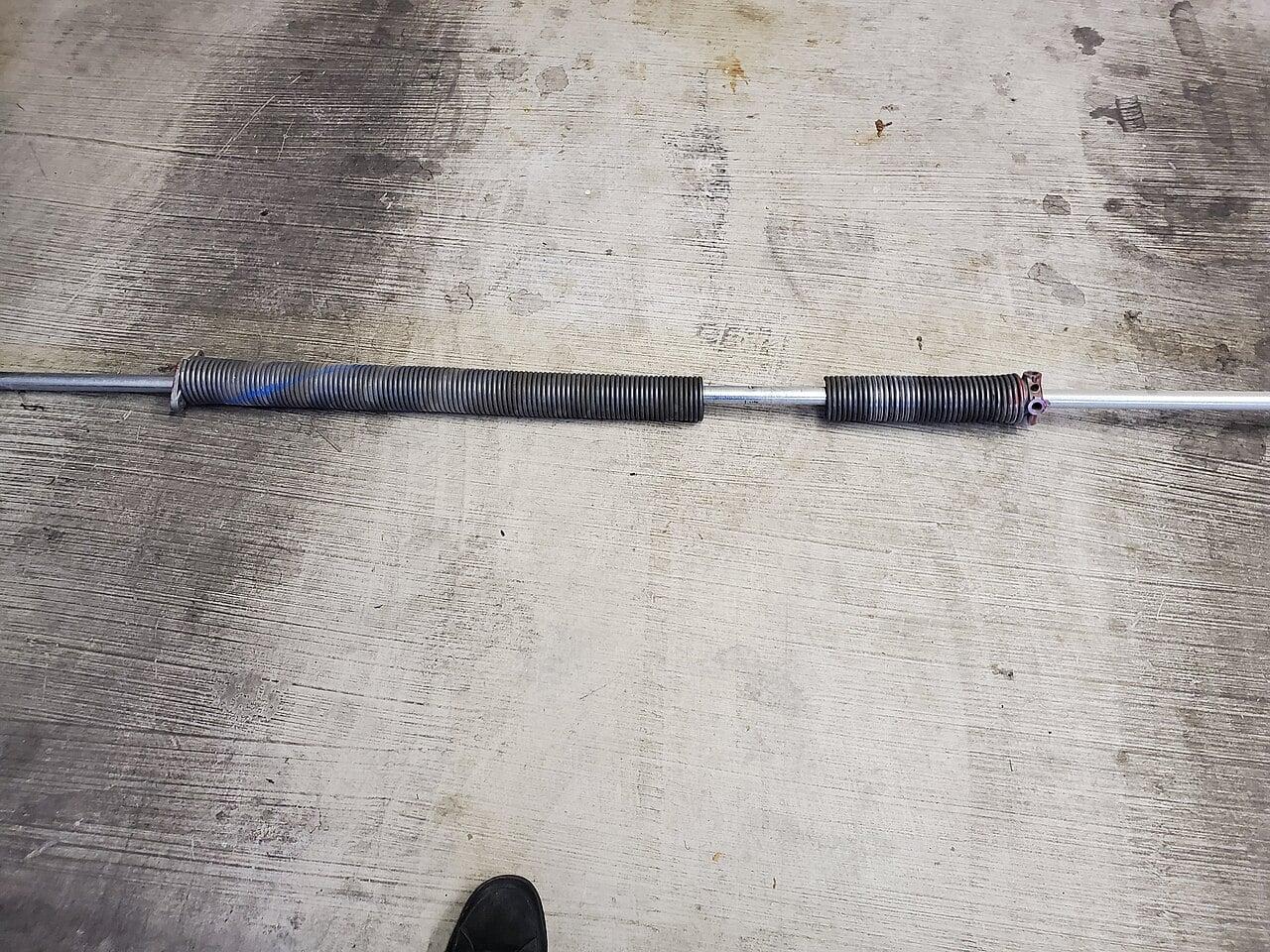
Sectional doors on standard 10,000-cycle springs last two to three years at 15 cycles a day. At 50 cycles a day, you are replacing springs twice a year. At 100 cycles, the hardware — rollers, hinges, cables, bearings — fails before the springs do.
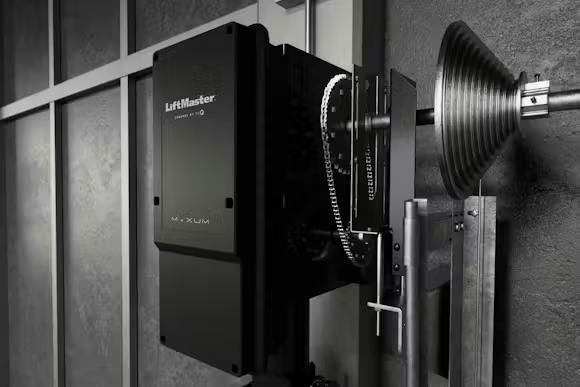
High-speed doors are rated for 500,000 to 1,000,000 cycles. The curtain has no hinges to fatigue. The counterbalance is a direct-drive motor with a brake, not a torsion spring. The guide tracks are the only wear surface.
If your door sees fewer than 75 cycles a day, the payback on a high-speed unit stretches past seven years. Above 150 cycles, it typically pays back in 18 to 30 months on spring and hardware replacement alone — before you count downtime.
Cold storage: thermal loss at the opening
A 10-by-10 freezer door left open for 30 seconds loses roughly 1,200 cubic feet of -20°F air. The refrigeration plant must pull that heat back out. At $0.12/kWh, each cycle costs $0.08 to $0.12 in extra compressor run time. At 100 cycles a day, that is $3,000 to $4,500 a year per opening.
A fabric high-speed door cuts open time to four seconds. A rigid spiral door with insulated slats cuts it to six seconds and adds R-8 to R-12 when closed. The thermal payback on a freezer opening is often under 12 months.
Cooler doors (35°F) run different math. The delta-T is smaller. Payback stretches to 24 to 36 months unless cycle counts are high. In that band, a high-speed fabric door with a good bottom seal often beats a rigid insulated spiral on total cost.
Traffic separation: forklifts don’t wait
A standard sectional with a photo-eye reversal adds two to three seconds per cycle when a forklift breaks the beam. Multiply by 200 cycles — that is 400 to 600 seconds of idle forklift time per day. At $45/hour loaded operator cost, that is $5 to $7.50 daily, $1,800 to $2,700 annually per door.
High-speed doors with presence detection (radar or infrared curtain) hold open only while the forklift is in the threshold. No reversal delay. No “wait for the door” habit where operators back out and re-approach.
The safety edge on a high-speed door is a wireless pressure sensor in the bottom bar. It stops and reverses in 20 milliseconds. A sectional’s photo-eye reversal takes 500 to 800 milliseconds. At forklift speed, that difference is the difference between a bent bottom bar and a bent forklift mast.
Rubber vs fabric vs rigid spiral — what each builds
Rubber (solid vinyl/polyester composite) Self-repairing on impact. A forklift tine punctures the curtain; the tear stops at the next reinforcement strand. No panel replacement. Heavier — 2.5 to 3.5 lbs/sq ft — so the motor and shaft are larger. Best for: high-abuse interior openings, waste transfer, recycling, any opening hit weekly.
Fabric (PVC-coated polyester, 900–1,200 g/m²) Light — 0.8 to 1.2 lbs/sq ft. Fastest open speeds (up to 60 in/sec). Lowest motor cost. Tears do not self-repair; a hard hit means a curtain swap. Best for: clean rooms, food processing, freezer/cooler openings where speed matters more than impact resistance.
Rigid spiral (aluminum or steel slats, interlocking) Opens in a tight coil — 18 to 24 inches of headroom. R-8 to R-12 insulated slats available. Speed tops out around 24 in/sec. Heaviest option — 3 to 4.5 lbs/sq ft. Best for: exterior openings needing wind load rating, security, or thermal performance with high-cycle duty.
All three types run direct-drive operators with variable-frequency drives. The motor brakes the curtain at the top and bottom — no coasting, no slam. That is why they survive the cycle counts.
Headroom and side room — the retrofit trap
A standard sectional needs 14 to 18 inches of headroom plus spring clearance. A high-speed roll-up needs 18 to 24 inches for the motor/brake assembly and the coil diameter. A rigid spiral needs 24 to 30 inches.
Side room: sectionals need 4.5 to 6 inches per side for vertical track. High-speed doors need 6 to 10 inches per side for guide tracks and the control box.
In a 1970s Richmond tilt-up warehouse with 12-inch headroom and 3-inch side room, none of them fit without structural work. That work often costs more than the door. Measure before you spec.
Control integration — don’t leave it to the electrician
High-speed doors ship with a PLC controller that expects:
- 24 VDC safety inputs (E-stop, safety edge, photo-eye)
- 120 VAC or 24 VDC activation inputs (loop detector, push button, radar, pull cord)
- Relay outputs for interlock (dock leveler, traffic light, HVAC damper)
If your building runs a BACnet or Modbus BAS, specify the gateway card at order. Retrofitting it later means an extra service call and a firmware update.
Interlock the door with the dock leveler. The leveler should not deploy until the door is fully open. The door should not close until the leveler is stored. This prevents the number-one damage mode: leveler lip shearing the curtain.
Maintenance that actually differs
Sectional: lubricate rollers, hinges, springs quarterly. Adjust spring tension annually. Replace cables every three to five years.
High-speed:
- Inspect guide track wear strips every six months. Replace when groove depth exceeds 3 mm.
- Check safety edge continuity monthly — wireless battery lasts 18 to 24 months.
- Verify brake air gap annually (0.3–0.5 mm typical).
- Clean radar/lens on presence sensors quarterly. Dust kills detection range.
- Curtain tension: fabric doors need re-tensioning at 12 months, then every 24. Rubber and spiral do not.
No springs to replace. No cables to fray. The motor brake is the wear item — rated 2,000,000 cycles. At 200 cycles a day, that is 27 years.
When to stay with a sectional
- Under 75 cycles/day
- No conditioned-space thermal penalty
- No forklift/pedestrian conflict
- Headroom or side room won’t fit a roll-up
- Budget cycle is three to five years and you need a door this month
A sectional with a 25,000-cycle spring package, nylon rollers, and a 12-inch-per-second operator (LiftMaster JHDC or Manaras OMT) covers 80% of Vancouver warehouse doors for half the capital cost.
The decision sequence
1. Count cycles for two weeks. Log every open/close. 2. If over 100/day, price high-speed. 3. If freezer/cooler, calculate compressor kWh savings at your utility rate. 4. If forklift traffic, cost the idle time. 5. Measure headroom and side room at the opening. 6. Pick curtain material by abuse level: rubber > fabric > spiral for impact; spiral > fabric > rubber for thermal; fabric > rubber > spiral for speed. 7. Spec the controller for your BAS and interlocks at order.
Skip any step and the payback model breaks.
Next step
Bring the cycle log and the opening measurements. We’ll run the numbers on your specific opening — no generic ROI calculator.