The five failure points that show up on every Metro Vancouver dock
WorkSafeBC officers and insurance adjusters look at the same five things when they walk a loading dock. The leveler lip hinge cracks. The vehicle restraint does not engage. The overhead door reverses at more than 40 pounds of force. The photo eyes are misaligned or dirty. The trailer creeps away from the dock face while a forklift is on the leveler. Any one of them shuts the bay down. All five together are what we see on sites that have not had a documented inspection in two years or more.
This page is a checklist you can walk the dock with. It explains what each test involves, why it fails, and what the repair looks like — so you know what you are approving before the quote lands on your desk.
1. Leveler lip hinge and hinge tube
The lip hinge takes the full weight of a loaded forklift every time a trailer pulls in. On a high-cycle dock — 20, 30 trucks a day — the hinge tube walls thin out from the inside where you cannot see it. The first sign is usually a lip that hangs low or drags on the trailer floor. The second sign is a crack in the hinge tube weld, often hidden behind the weather seal.
What the inspection tests
- Lip extends and retracts fully under power, no binding
- Hinge tube wall thickness measured at three points with ultrasonic gauge
- Welds at hinge-to-deck and hinge-to-lip inspected for propagation cracks
- Lip crown (the slight upward bend) still present — a flat lip means the steel has yielded
- Hold-down mechanism engages and releases cleanly
What fails Hinge tubes worn past 60 percent of original wall thickness. Cracks longer than 25 mm in any weld. Lip crown gone. Hold-down that requires a hammer to release — that is a pinch-point injury waiting for a technician’s fingers.
Repair reality On most Kelley, Serco, and McGuire levelers the hinge tube is replaceable without pulling the whole pit. Two hours, two techs, one overhead lift. If the deck plate is also cracked, the leveler comes out and you are into a full replacement — three days lead time on a standard 6 x 8 unit, longer if the pit needs re-pouring.
2. Vehicle restraint engagement
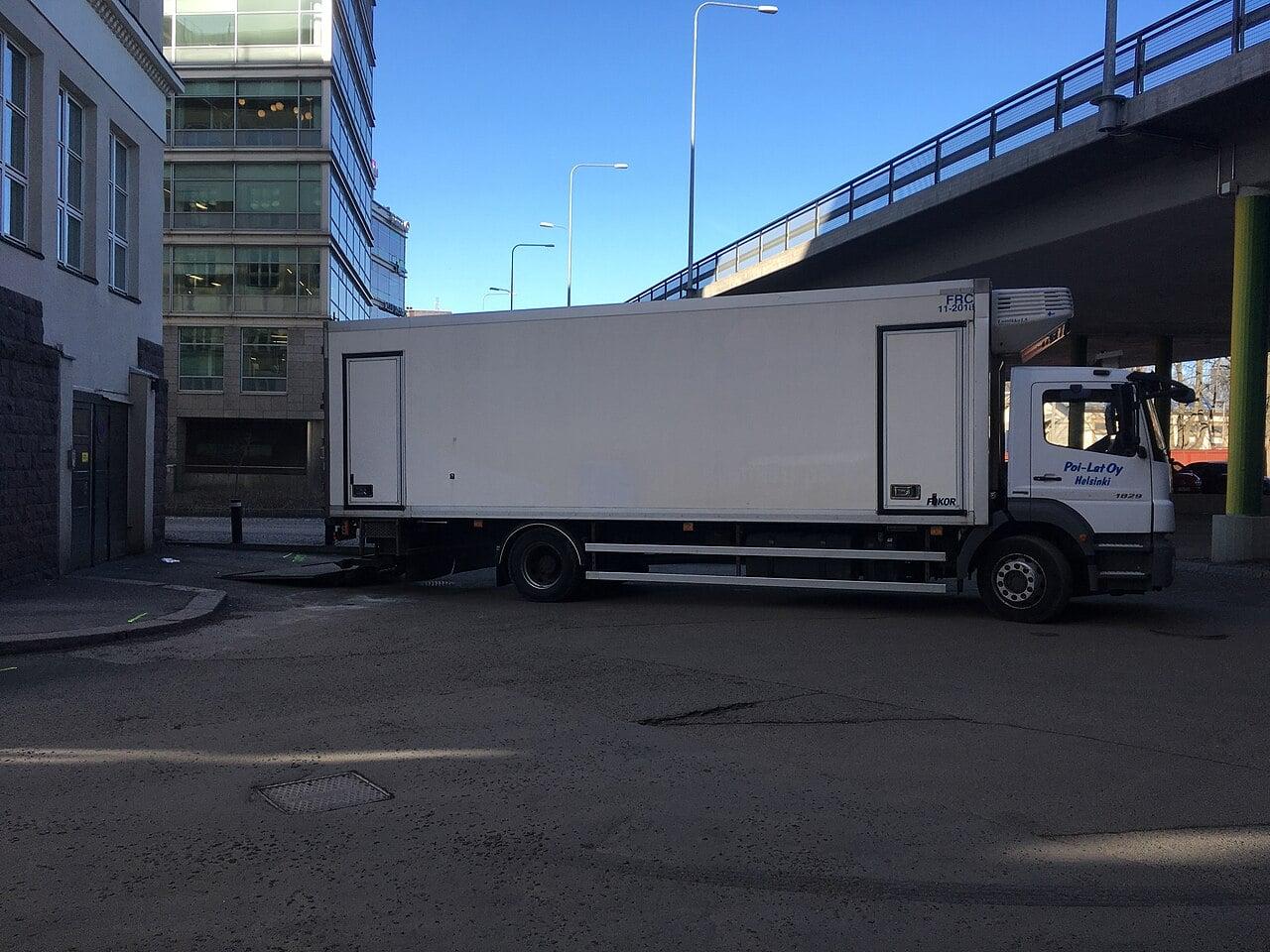
A restrained trailer cannot creep. An unrestrained trailer moves 100 to 300 mm per forklift entry cycle. That gap is where the forklift drops.
What the inspection tests
- Restraint arm reaches the RIG (rear impact guard) on the lowest and highest trailer bed heights you serve
- Engagement sensor confirms lock — not just “arm extended” but “hook captured”
- Manual override operates from ground level without climbing on the dock face
- Communication lights (red/green) visible to driver and forklift operator simultaneously
- Interlock with leveler and overhead door — restraint must engage before leveler stores, door must not open until restraint releases
What fails Restraint arm bent from a driver pulling away early. Sensor giving false green because the reflector is dirty or the wiring harness has been chewed by rodents — common in Delta and Richmond industrial parks. Interlock wiring bypassed with a jumper because “it was slowing us down.” That bypass is exactly the kind of thing that gets a stop-work order written.
Repair reality Bent arms straighten once. After that the heat-affected zone cracks. Replace the arm, not the whole unit, unless the housing is twisted. Sensor harness replacement is 45 minutes. Interlock logic repair depends on the controller — Rite-Hite, Poweramp, and DLM all speak different languages. Bring the manual or plan on a service call with a laptop.
3. Overhead door reversal force
The working standard for a powered commercial door is that it reverses on contact with an obstruction at no more than 40 pounds (180 N) of force. It is common to find doors reading 60 to 90 pounds on a first inspection. The operator has been tuned for speed, not safety, or the force sensor has drifted.
What the inspection tests
- Force gauge reading at three points: center, 300 mm from left edge, 300 mm from right edge
- Reversal time — door must start reversing within 2 seconds of contact
- Photo-eye reversal tested separately (see section 4)
- Bottom edge safety edge (if equipped) tested for continuity and response
- Operator limit switches set so the door seals to the floor without crushing
What fails Force over 40 pounds at any test point. Reversal delay over 2 seconds. Safety edge open-circuit — usually a broken wire in the coil cord. Limits set so the door slams the floor to “seal better,” which destroys the bottom seal and the operator gearbox.
Repair reality Force adjustment is a 10-minute job on LiftMaster Maxum, Manaras OMH/OPH, and Hörmann ProMatic operators — if the operator is healthy. If the gearbox is worn or the brake solenoid sticks, the force reading will drift again inside a month. That operator needs replacement, not adjustment. Budget half a day plus the operator cost.
4. Photo eyes and safety edges
Two separate systems. Photo eyes stop the door before contact. Safety edges stop it on contact. Both must work. Neither is optional.
What the inspection tests
- Photo eyes aligned: beam unbroken at floor level across the full opening width
- Lenses clean — no dust, frost, or shrink-wrap film (the number one killer in cold-storage docks)
- Mounting brackets solid — no vibration wander when a heavy truck hits the dock bumpers
- Safety edge continuity test: 10 kΩ loop resistance end-to-end, no opens when the edge is flexed
- Wireless edge battery voltage and signal strength logged
What fails Eyes mounted on the door track instead of the jamb — they move with the door and lose alignment in a week. Lenses scratched by forklift forks. Safety edge coil cord conductors fractured at the strain relief. Wireless edge batteries dead because the charging coil is misaligned.
Repair reality Re-aim and clean: 15 minutes. Replace scratched lenses: 30 minutes plus parts. Rewire or replace safety edge: 1 hour. Wireless edge realignment: 20 minutes. If the mounting brackets are welded to damaged track, you are into track work — see the roller and track repair page for what that involves.
5. Trailer creep and dock leveler float
Even with a restraint engaged, a trailer on air-ride suspension walks. The leveler floats with it — up to 25 mm vertical, 50 mm horizontal on a standard mechanical leveler. That movement fatigues the lip hinge (section 1) and shears the leveler-to-pit anchor bolts.
What the inspection tests
- Leveler float range measured with dial indicator while a loaded forklift cycles
- Anchor bolts torque-checked — 150 ft-lb on 5/8 in. Grade 8, no rotation
- Dock bumpers intact, 4 in. minimum projection, no steel showing through rubber
- Trailer RIG height and condition logged for the fleet you serve — bent or missing RIGs defeat the restraint
What fails Float exceeding manufacturer spec (usually 19 mm vertical). Anchor bolts loose or missing — often because the pit concrete has spalled and the bolt has nothing to bite. Bumpers worn to the steel, transferring impact straight to the building column.
Repair reality Shim the leveler frame to reduce float: 2 hours. Epoxy-anchor replacement in spalled concrete: half a day per bolt, cure time before torque. Bumper replacement: 1 hour per bay. If the building column is cracked from bumper loss, that is structural — see the header and structural repair page.
What a documented inspection gives you
A signed report with pass/fail on every item above, photos of each failure point, and a priority list: immediate (bay down today), 30-day (schedule before peak), and monitor (re-check at next quarterly). It is the due-diligence paper trail you want on file if WorkSafeBC or your insurer ever asks. Your forklift operators get a dock that does not move under them.
Next step
Walk the dock with this checklist. Mark what you see. Then call (604) 206-5727 or email info@ccgds.ca with the list. We will quote the repairs in priority order — no bundled packages, no “while we’re there” upsells. If a bay needs to stay running, we schedule around your receiving windows. 24/7 dispatch means the tech shows up when the dock is quiet.