What a Preventive Maintenance Visit Covers
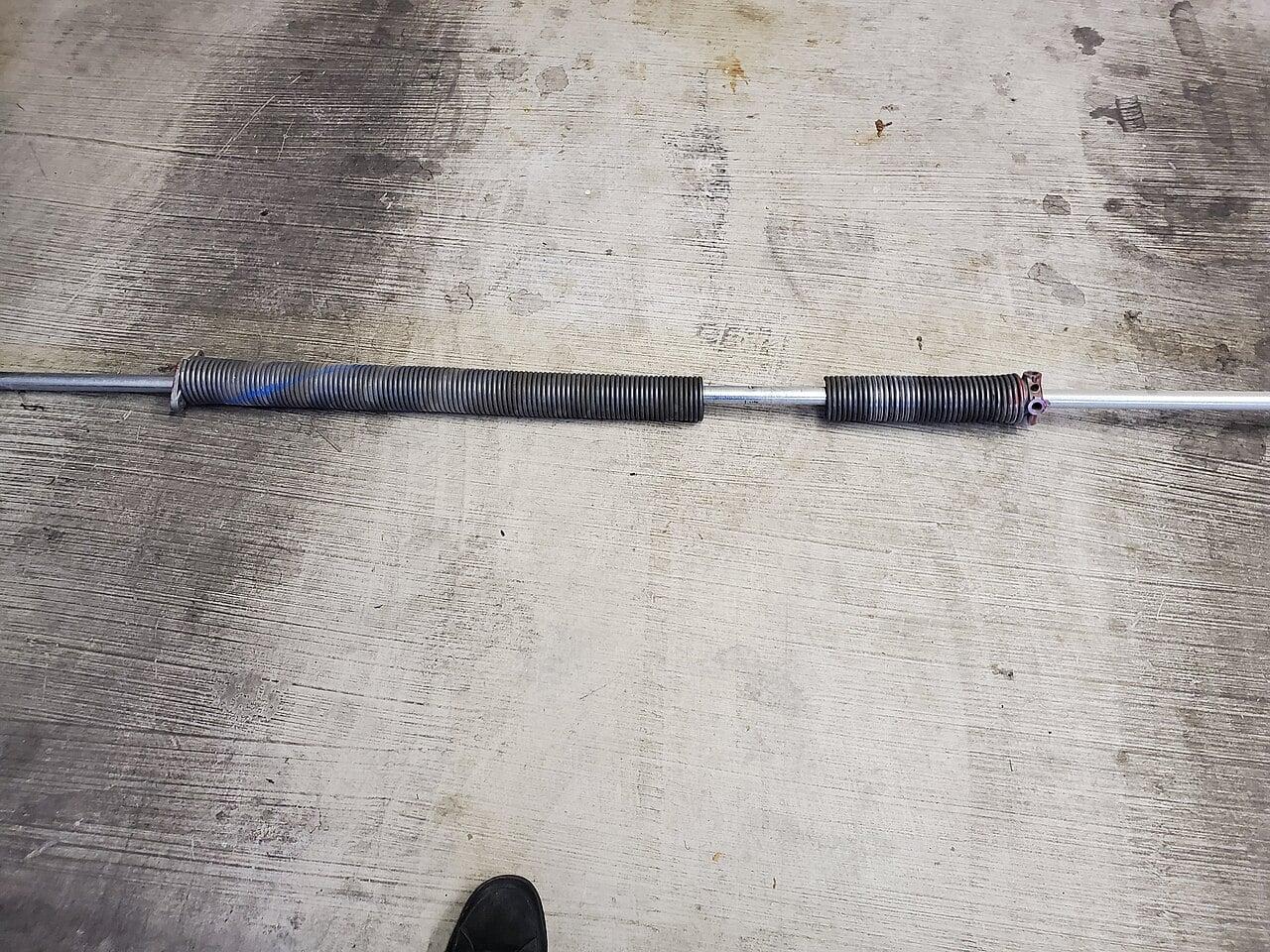
A preventive maintenance visit is a systematic inspection and adjustment of every moving and structural component on a commercial overhead door. The technician starts with a visual assessment of the door sections, looking for panel damage, delamination, or corrosion that could compromise structural integrity or weather seal. From there, the focus shifts to the counterbalance system. Springs are inspected for gap separation, coil deformation, and rust pitting. The spring cycle count is recorded against the manufacturer’s rated life — typically 25,000 to 100,000 cycles depending on the spring wire size and door weight. This count is the single most reliable predictor of remaining spring life. Cables are checked for fraying, kinking, or corrosion at the drum and bottom bracket. Drums are examined for groove wear and set-screw tightness. Rollers are spun by hand to detect bearing noise, flat spots, or stem wobble. Tracks are checked for alignment, bracket lag bolt torque, and roller path clearance. The opener undergoes limit and force setting verification, photo-eye alignment and reversing test, and safety edge function check if equipped. Every hinge, roller stem, and bearing point receives appropriate lubrication — synthetic grease for bearings, light oil for roller stems, never WD-40. All accessible fasteners are torqued to spec. The visit concludes with a full cycle test under load.
Setting Visit Frequency by Cycle Volume
Visit frequency is not arbitrary. It is calculated from actual door cycle volume. A cycle is one complete open-and-close sequence. A loading dock door at a distribution centre might run 200 cycles a day — 5,000 a month, 60,000 a year. That door needs monthly visits. A fire hall bay door might run 15 cycles a day — 450 a month, 5,400 a year. Quarterly visits are appropriate. A storage facility roll-up door might see 50 cycles a week. Semi-annual visits suffice. The technician establishes baseline cycle counts during the first visit using the opener’s internal cycle counter or a mechanical cycle counter retrofitted to the shaft. Subsequent visits compare the counter reading to the baseline, confirming the assumed volume or revealing drift. Seasonal businesses — cold storage in summer, landscaping yards in spring — require adjusted schedules. The maintenance agreement specifies the visit cadence, the cycle threshold that triggers an extra visit, and the protocol for unscheduled cycles such as after a vehicle impact or power outage. This data-driven approach prevents both over-servicing and the catastrophic failures that come from under-servicing.
Spring Cycle Count and Remaining Life Tracking
The spring cycle count is the backbone of the maintenance log. Every visit records the current cycle counter reading, the cumulative cycles since installation, and the percentage of rated life consumed. A 50,000-cycle spring at 38,000 cycles is at 76 percent. At 80 percent, the spring enters the replacement planning window. At 90 percent, replacement is scheduled before the next visit. This tracking eliminates guesswork. It also catches anomalies. If a door rated for 50,000 cycles hits 45,000 in eighteen months instead of the projected five years, something is wrong — perhaps the door is being used for pedestrian access, or a control issue is causing phantom cycles. The log reveals the discrepancy immediately. Spring wire diameter, inside diameter, and length are recorded on the first visit so that replacement springs can be ordered in advance without a second site measure. Dual-spring systems are tracked independently; uneven wear indicates a balance issue or a broken spring running solo. Torsion springs on solid shafts show their cycle count on the counter. Extension springs require manual tracking. In both cases, the log builds a replacement forecast that feeds directly into capital planning.
Cable Drum Wear and Cable Condition
Cables and drums fail without warning if not inspected. The technician measures cable diameter at three points — near the bottom bracket, at mid-height, and at the drum — using a micrometer. A reduction of 10 percent from nominal diameter means the cable is in the replacement window. Broken wires, even a single strand, mandate immediate replacement. Drums are inspected for groove wear depth. A worn groove allows the cable to slip, creating slack that leads to cable crossover or derailment. Set screws on the drum are checked for torque and for evidence of rotation on the shaft — witness marks or fretting corrosion. The cable anchor at the drum is examined for proper seating and clamp condition. On doors with cable tension monitors, the monitor reading is logged. On doors without, the technician verifies equal tension by measuring the distance from the cable to a fixed reference point on each side. Unequal tension twists the shaft, loads bearings unevenly, and accelerates wear on the heavy side. All findings are photographed and logged. A cable replacement is a two-technician job on doors over 14 feet wide; the log notes crew requirements so the next visit is staffed correctly.
Roller Track Alignment and Bearing Health
Rollers and tracks carry the door’s full weight every cycle. A seized roller bearing adds drag that the opener must overcome, overheating the motor and tripping the thermal protector. A flat-spotted roller hammers the track each revolution, spreading the track rails and loosening lag bolts. The technician spins each roller by hand. Roughness, noise, or lateral play means replacement. Nylon rollers with sealed bearings are standard on doors under 500 pounds. Steel rollers with precision bearings are used on heavier doors. The track is checked for plumb, level, and parallel spacing at three heights. Brackets are lag-bolted to structural steel or concrete — not drywall, not wood furring. Lag bolts are torqued to 80 foot-pounds for half-inch bolts in steel, 60 in concrete with expansion anchors. The horizontal track angle is verified against the manufacturer’s spec — typically 2 to 3 degrees down from horizontal — to ensure the door seats fully at the floor without binding. Track joints are felt for lips; any step over 1/16 inch is dressed flat. The rear track hanger is checked for sag. A sagging horizontal track changes the spring geometry, altering balance and cycle life. All measurements go into the log.
Opener Limits Force Settings and Safety Systems
The opener is the only component that can kill someone. Limits, force, and safety reversal are tested every visit — no exceptions. The technician runs the door open and closed three times. The open limit must stop the door with the top section level with the header, not jammed against it. The close limit must stop the door with the bottom seal compressed 1/4 to 3/8 inch — enough to seal, not enough to bend the bottom bar. Force settings are tested by placing a 15-pound obstruction on the floor. The door must reverse on contact. The force knob or digital setting is adjusted until reversal is reliable but the door still closes against normal wind load and seal friction. Photo-eyes are tested by breaking the beam at three heights — 6 inches, 24 inches, and 48 inches — during close travel. The door must reverse instantly. The safety edge, if present, is tested with a calibrated 15-pound force at the centre and each end. The reversing time is logged in milliseconds. The emergency disconnect is pulled and the door operated manually to verify free travel. The control station wiring is inspected for insulation damage, strain relief, and terminal torque. Battery backup voltage is logged. Every test result is recorded pass or fail with the actual measured value.
Lubrication Specs and Fastener Torque Values
Lubrication is not a spray-and-pray exercise. Each component gets a specific product. Torsion spring coils: light coating of synthetic chain and cable fluid — prevents rust, reduces inter-coil friction, does not attract grit. Roller stems: ISO 32 hydraulic oil, applied to the stem where it enters the bracket. Hinge pins: same. Bearing plates and end bearings: NLGI 2 synthetic grease, pumped until fresh grease purges the seal. Opener chain or belt: manufacturer-specified chain lube or dry PTFE spray. Track: nothing. Oil on the track attracts dirt and creates a grinding paste. Fastener torque is equally specific. Lag bolts to steel: 80 ft-lb for 1/2-inch, 150 ft-lb for 5/8-inch. Lag bolts to concrete with wedge anchors: 60 ft-lb for 1/2-inch, 110 ft-lb for 5/8-inch. Hinge bolts: 25 ft-lb. Roller bracket bolts: 18 ft-lb. Drum set screws: 14 ft-lb. Coupler bolts on solid shafts: 35 ft-lb. The technician carries a calibrated torque wrench and logs the actual reading for every critical fastener. A loose drum set screw found at 8 ft-lb instead of 14 is a finding, not just a correction — it indicates vibration or thermal cycling that needs investigation.
Building a Service History That Drives Decisions
The maintenance log is not a compliance checkbox. It is a decision-making tool. Each visit adds a dated entry with cycle count, component measurements, test results, photos, and technician notes. Over time, the log reveals trends. Spring cycle accumulation rate. Cable wear rate. Roller replacement frequency. Track alignment drift. Opener force creep. These trends feed directly into budget forecasting. A facility manager can see that Door 3 at the loading dock will need springs in Q2 next year, cables in Q4, and a full opener rebuild in eighteen months. The log also supports warranty claims. A spring that fails at 60 percent of rated life with a complete service history is a manufacturer defect. Without the history, it is a maintenance gap. The log travels with the door. If the property changes hands, the new owner receives a complete component lifecycle record. The log is stored digitally in the customer portal and a printed copy remains in the on-site maintenance binder. Access is restricted to authorized personnel. The data is never shared with third parties.
Frequently Asked Questions
How do I know if my doors are on the right maintenance schedule?
The schedule is set by actual cycle count, not calendar date. The first visit establishes the baseline. Subsequent visits confirm or adjust the frequency.
What happens if a component fails between scheduled visits?
The maintenance agreement includes a priority dispatch clause for doors under active PM contracts. The service history accelerates diagnosis because the technician already knows the door’s condition.
Can I see the maintenance log before I commit to a program?
Yes. A sample log from a similar door type — anonymized — is available on request. It shows the data fields, photo documentation, and trend reporting format.