Parkade Gate Repair in Vancouver
A parkade gate that refuses to move or stays stuck open is a direct threat to the security of your building and the property of every resident inside. When a gate fails, you need a technician who understands the specific stresses of high-cycle strata environments and can arrive quickly enough to prevent a security breach.
Why a parkade gate reverses or stops halfway
When a gate begins to close and then suddenly reverses without an obvious obstruction, the issue is usually found in the safety logic of the operator. High-traffic Vancouver parkades accumulate road salt, grime, and spider webs on the photo-eye lenses, which can break the beam mid-cycle. If the gate stops and then stays dead, the problem might be a physical obstruction in the track or a misaligned safety edge. A gate that racks or twists as it moves puts uneven pressure on the guide rollers, causing the motor to sense an overload and shut down to prevent burning out. We often see this when a gate has been nudged by a bumper, shifting the frame just enough to cause binding at a specific point in the travel. If your system is showing these symptoms, you may need a photo eye and safety edge repair to restore the safety circuit and allow the gate to complete its cycle.
Managing the security risk of an open gate
A parkade gate that sits open overnight is not just a maintenance inconvenience; it is a significant security incident for a strata or commercial building. An open entrance invites unauthorized foot traffic and vehicle access into what should be a secure perimeter, often leading to theft or vandalism in storage lockers. Because of this risk, we prioritize these calls through our 24/7 AI-assisted dispatch system. When you call, our system identifies the nearest technician in Metro Vancouver who has the right tools for your specific gate brand, whether it is a LiftMaster, Manaras, or Hörmann. We aim for a response time of 30 to 45 minutes in Richmond and 30 to 60 minutes for the rest of the Lower Mainland, even at 2 AM. Our goal is to get the gate closed and locked as quickly as possible, even if a permanent repair requires a custom part that must be ordered.
Mechanical failure in chains and drive sprockets
The weight of a commercial parkade gate puts immense strain on the drive chain and the sprockets that turn it. Over thousands of cycles, the pins in the chain wear down, which leads to chain stretch. This slack causes the gate to jerk during startup or allows it to sag when it reaches the open position, often resulting in a loud banging sound as the slack is taken up. If the chain is too loose, it can jump the teeth of the drive sprocket, potentially jamming the entire mechanism or allowing the gate to fall closed if it is a vertical lift model. We also look for worn keyways on the drive shaft; if the key that holds the sprocket in place shears or wears thin, the motor will spin, but the gate will stay still. Replacing these components requires heavy-duty emergency commercial garage door repair techniques to safely tension the system without risking a snap.
Structural damage from vehicle impacts
Vehicle impacts are the most common cause of sudden parkade gate failure in Vancouver strata buildings. Even a low-speed clip from a resident’s car can rack the gate leaf, pulling it out of square and making it impossible for the rollers to move through the tracks. When a gate is hit, the force is transferred back to the hinges, the operator arm, and the mounting brackets. We often find that the gate itself looks fine, but the steel header it hangs from has been twisted, or the concrete anchors have been pulled loose. Our technicians assess the structural integrity of the entire opening, not just the gate. If the damage is extensive, we can assist with the documentation required for ICBC or private insurance claims, ensuring that the repair brings the gate back to its original safety specifications rather than just forcing it to move again.
Loop detector saturation and ground issues
Many parkade gates in the Lower Mainland rely on inductive loop detectors—wires buried in the concrete that sense the metal mass of a vehicle. In our wet climate, moisture can seep into the saw-cuts in the concrete, causing the loop to short out or become “saturated.” When this happens, the detector might “see” a car that isn’t there, holding the gate open indefinitely, or it might fail to detect a car at all, leaving a resident trapped inside. We use frequency meters to test the health of these loops. If the loop is failing due to a cracked slab or poor sealing, we can often bypass the faulty loop and set up a temporary photo-eye or timer-to-close system to keep the building secure while a new loop is scheduled for installation. This prevents the gate from being a total loss during a rainy Vancouver week.
Access control and fob authorization failures
Sometimes the gate is mechanically perfect, but the command to open never arrives. Access control issues can range from a dead battery in a single resident’s fob to a total failure of the receiver mounted near the gate. If the gate responds to the “open” button on the motor but ignores fobs, the problem lies in the radio frequency (RF) receiver or the building’s gate controller. In some cases, local interference from new cellular towers or even nearby construction equipment can “swamp” the receiver, making it unable to hear the signal from the fobs. We can diagnose these signal issues and, if necessary, install a high-gain antenna or a modern commercial gate access control system that uses encrypted signals. This makes sure that residents can get home without having to wait for the concierge to manually trigger the entrance.
Negotiating low headroom and tight logistics
Repairing a gate in a Vancouver parkade is different from working in a warehouse because of the physical constraints of the building. Most underground parkades have very low headroom, which means our service vans must be carefully positioned to avoid hitting fire sprinklers or low-hanging pipes. We are used to working in these tight environments, often in narrow alleyways or steep ramps where a gate has failed. When a technician arrives, they need to get the gate code or a master fob from the concierge or manager to test the system fully. If the gate is stuck closed and blocking the only exit, we prioritize clearing the opening so that residents are not trapped. This often involves a manual override of the operator, which must be done carefully to prevent the gate from crashing down under its own weight.
Securing the building when parts are unavailable
Not every parkade gate repair can be finished in a single visit, especially if a custom-sized sprocket or a specific circuit board is required. In these cases, the priority shifts to the security of the building. We do not leave a building exposed. If we cannot fix the gate immediately, we will manually secure it in the closed position to protect the residents’ vehicles. If the gate is the only way in and out for hundreds of residents, we may have to secure it in the open position and recommend that the strata hire a security guard until the repair is finished. Our technicians will explain the trade-offs of each option, helping you make a decision that balances resident convenience with the need for a secure perimeter. This is part of the standard strata parkade door repair process we follow for every multi-family building.
Operator brakes and clutch slippage
The motor that drives a parkade gate, such as a LiftMaster Maxum or a Manaras operator, uses a brake system to stop the gate exactly where it needs to be. Over time, the brake pads can become glazed or worn, causing the gate to “coast” past its limit switches. This can lead to the gate slamming into the ground or the head track, which eventually breaks the internal gears of the motor. Similarly, many operators use a friction clutch to protect the motor if the gate hits something. If this clutch is set too loose, the motor will hum and spin, but the gate will stay still, especially on a cold morning when the grease in the rollers is thick. We adjust these clutches and brakes to the exact torque specifications required for your specific gate weight, making sure the system is both powerful and safe.
Coordination with residents during a lockout
When a gate fails in a large strata building, the primary challenge is often the volume of traffic. Residents who are late for work or trying to get home can become frustrated, and a service van parked in the middle of the ramp does not help. Our technicians are trained to work as quickly as possible while keeping the site safe. We often work with the building’s concierge to set up a traffic flow plan, such as using the “exit” gate for both entry and exit while the “entry” gate is being repaired. Clear communication is the most important part of the job; we tell you exactly what is wrong and how long it will take to fix so you can update the residents. This minimizes the chaos and allows us to focus on the mechanical repair without distractions.
Safety edges and accidental closures
A parkade gate is a heavy piece of moving machinery that can cause significant damage if it closes on a vehicle. To prevent this, most modern gates are equipped with a safety edge—a rubber strip that runs along the bottom or leading edge of the gate. Inside that strip is a sensor that tells the gate to stop and reverse the moment it touches something. These edges can fail if they are compressed too many times or if the internal wiring becomes brittle. If your gate is closing on cars or seems to have “blind spots” where it doesn’t sense an obstruction, the safety edge needs immediate attention. We test the sensitivity of these edges across the entire width of the gate to make sure there are no gaps in protection that could lead to a liability claim for the strata.
High-cycle fatigue and cracked welds
Parkade gates in Vancouver often run hundreds of cycles every day, which is far more than a typical warehouse door. This constant movement leads to metal fatigue. We frequently find cracks in the welds where the operator arm attaches to the gate leaf, or at the hinge points where the gate’s weight is concentrated. If these cracks are not caught early, the metal can fail catastrophically, causing the gate to fall off its mountings. During a repair call, we don’t just look at the part that broke; we inspect the high-stress areas of the frame for signs of fatigue. If we find a crack, we can often reinforce the area with steel plating, extending the life of the gate and preventing a much more expensive replacement in the future.
Manual overrides and motor failures
When the motor in a parkade gate operator burns out or loses power, the gate becomes a dead weight. Every commercial operator has a manual override, usually a chain hoist or a release lever, that allows the gate to be moved by hand. However, if the gate is poorly balanced or if the release mechanism is seized from lack of use, it can be nearly impossible for a resident or concierge to move it. During a service call, we make sure the manual release is functional and that the gate is balanced correctly. If the motor has failed entirely, we can provide a range of replacement options, from standard belt-drive units to high-speed operators that reduce the time the gate stays open, further improving the security of your building.
Frequently Asked Questions
Why does my parkade gate in Vancouver stop halfway up?
This is usually caused by a safety sensor being triggered or a mechanical bind in the tracks. In Vancouver, we often find that dirt and road salt have built up in the vertical tracks, increasing the friction as the gate rises. The motor senses this resistance as an obstruction and stops to prevent damage. It could also be a misaligned photo-eye. If the beam is just on the edge of alignment, the vibration of the gate moving can cause it to lose contact for a split second, which tells the motor to stop.
Can you fix a gate that was hit by a car in Richmond?
Yes, vehicle impacts are a regular part of our service. We assess the damage to the gate leaf, the tracks, and the motor arm. If the gate is racked or twisted, we can often straighten the frame or replace the damaged sections. We also check the mounting points in the concrete or steel header to make sure nothing was pulled loose. Since we work with insurance and ICBC claims, we can provide the detailed documentation you need for your strata’s claim process.
Why won’t the fobs work at my building in Burnaby?
If the gate opens with a wall button but not with fobs, the issue is in the receiver or the fobs themselves. We check for radio interference or a failed receiver board. In some Burnaby locations near industrial zones, signal “noise” can interfere with older fob systems. We can often resolve this by installing a higher-gain antenna or moving the receiver to a better location. If the whole system is outdated, we can discuss upgrading to a more secure, modern access control system.
How fast can you get a gate closed if it’s stuck open in Surrey?
We treat a gate stuck open as a security emergency. Our AI-assisted dispatch identifies the closest technician in the Surrey area to ensure a fast response. We typically arrive within 30 to 60 minutes for emergency calls. Our first priority upon arrival is to get the gate closed and the building secure. If a part is broken and cannot be replaced immediately, we will manually lock the gate so the building is not left exposed overnight.
What causes a parkade gate to make a loud grinding noise?
Grinding usually points to a mechanical failure in the operator’s gearbox or a worn-out drive chain. If the internal gears are losing their teeth, you will hear a metal-on-metal sound as the motor spins. It could also be a dry or seized bearing in one of the main rollers or pulleys. These parts are under high tension and should be addressed immediately before they fail completely and jam the gate.
Is it safe to manually open a heavy parkade gate?
It is safe only if the manual release is working correctly and the gate is properly counterbalanced. Commercial gates are heavy, and if the springs or counterweights are broken, the gate could fall rapidly when released. You should always use the provided chain hoist or release lever according to the manufacturer’s instructions. If the gate feels unusually heavy or won’t move easily, stop and call a technician to avoid injury.
Why does the gate close on cars even with sensors?
This happens when the safety devices, like the loop detectors or the safety edge, are failing or improperly configured. A safety edge might have a “dead spot,” or a ground loop might not be sensitive enough to detect smaller vehicles or motorcycles. This is a major liability risk. We can test every inch of your safety system to identify where the failure is and make sure the gate reverses the moment it detects a vehicle.
Can you repair gates from brands like LiftMaster and Manaras?
Yes, we service all major commercial brands, including LiftMaster’s Maxum line and Manaras-Opera. Our technicians carry common replacement parts for these systems, such as limit switches, contactors, and drive chains. Because these brands are the standard for Vancouver parkades, we are familiar with their specific failure modes and can usually get them back in operation during the first visit.
Additional Questions
Does the rain in Vancouver affect parkade gate sensors?
Yes, heavy rain can cause significant issues for parkade gates. Moisture can enter the housings of photo-eyes, causing them to fog up or short out. Even more common is “loop saturation,” where water gets into the saw-cuts in the concrete where the vehicle detection loops are buried. This changes the electrical properties of the loop, causing the gate to behave erratically, such as staying open or failing to open when a car pulls up.
How do I know if my parkade gate chain needs replacing?
You can tell a chain is worn if it has excessive slack or if you see “red dust” around the sprockets, which is actually pulverized metal from wear. If the gate jerks or makes a popping sound when it starts moving, the chain is likely stretched and may be skipping teeth on the sprocket. Replacing a chain before it breaks is much cheaper and safer than dealing with a gate that has snapped its drive system and is stuck in the opening.
What should a strata manager do if a gate is stuck closed?
First, try the manual release if it is safe to do so, to allow residents to exit. Then, call for emergency service. A gate stuck closed is a fire safety issue and a major inconvenience. While waiting for the technician, you should communicate with the residents through the concierge or building app to let them know the estimated time of arrival. We prioritize these “lock-out” situations to restore access to the building as quickly as possible.
Can a broken spring on a parkade gate be repaired?
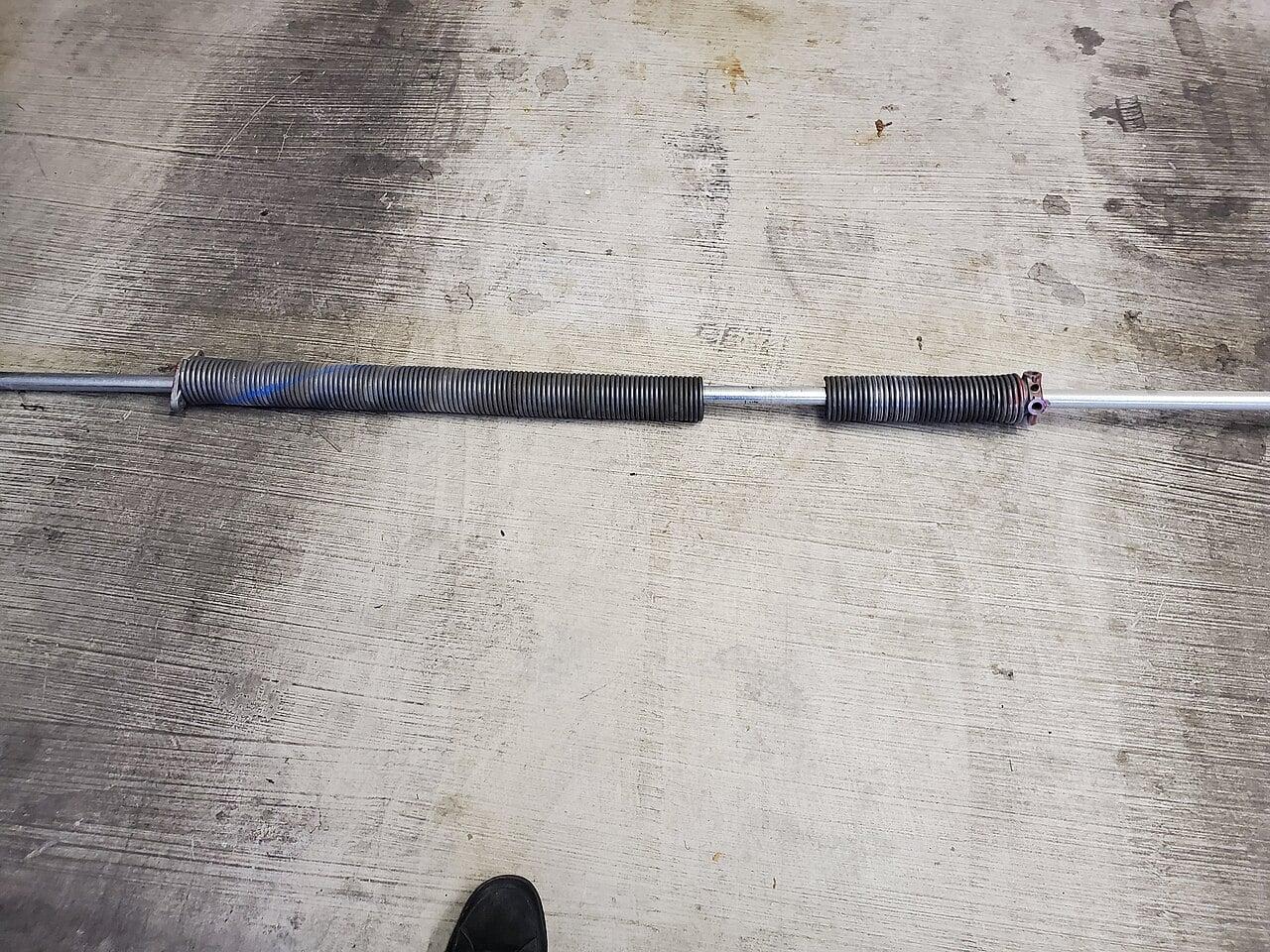
Springs cannot be repaired; they must be replaced. When a torsion spring reaches the end of its cycle life, it snaps with significant force. A gate with a broken spring is dangerous because the motor is now lifting the full weight of the gate without help, which will quickly burn out the motor. If you see a gap in the coils of your spring, do not attempt to move the gate and call for a technician who has the tools to safely wind a new commercial-grade spring.
Why is my gate operator motor humming but not moving?
A humming motor usually indicates that the start capacitor has failed or that the gate is physically jammed. The motor is trying to turn but doesn’t have the electrical “push” it needs to start, or it is fighting against a mechanical obstruction like a bent track or a seized roller. You should turn