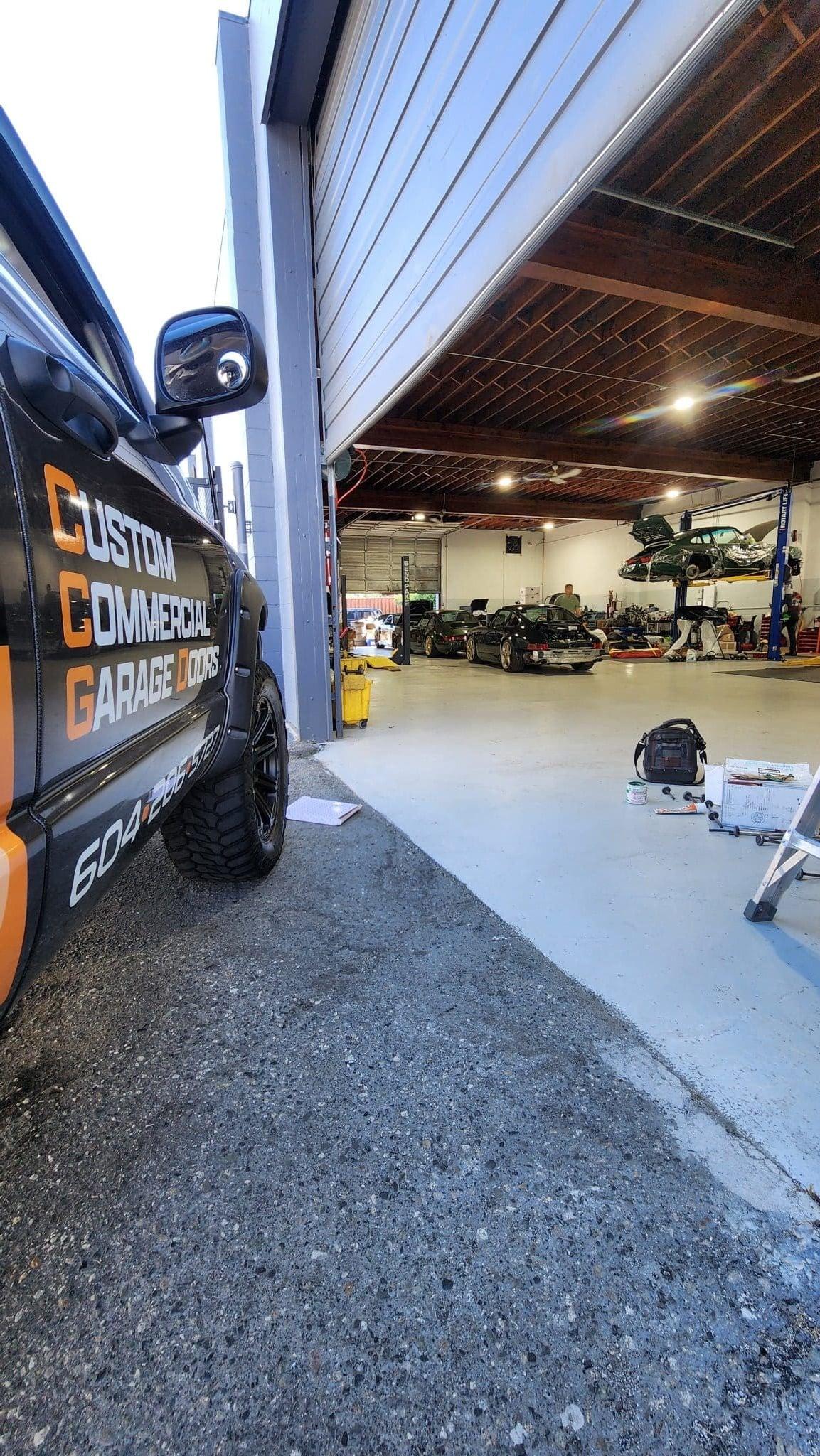
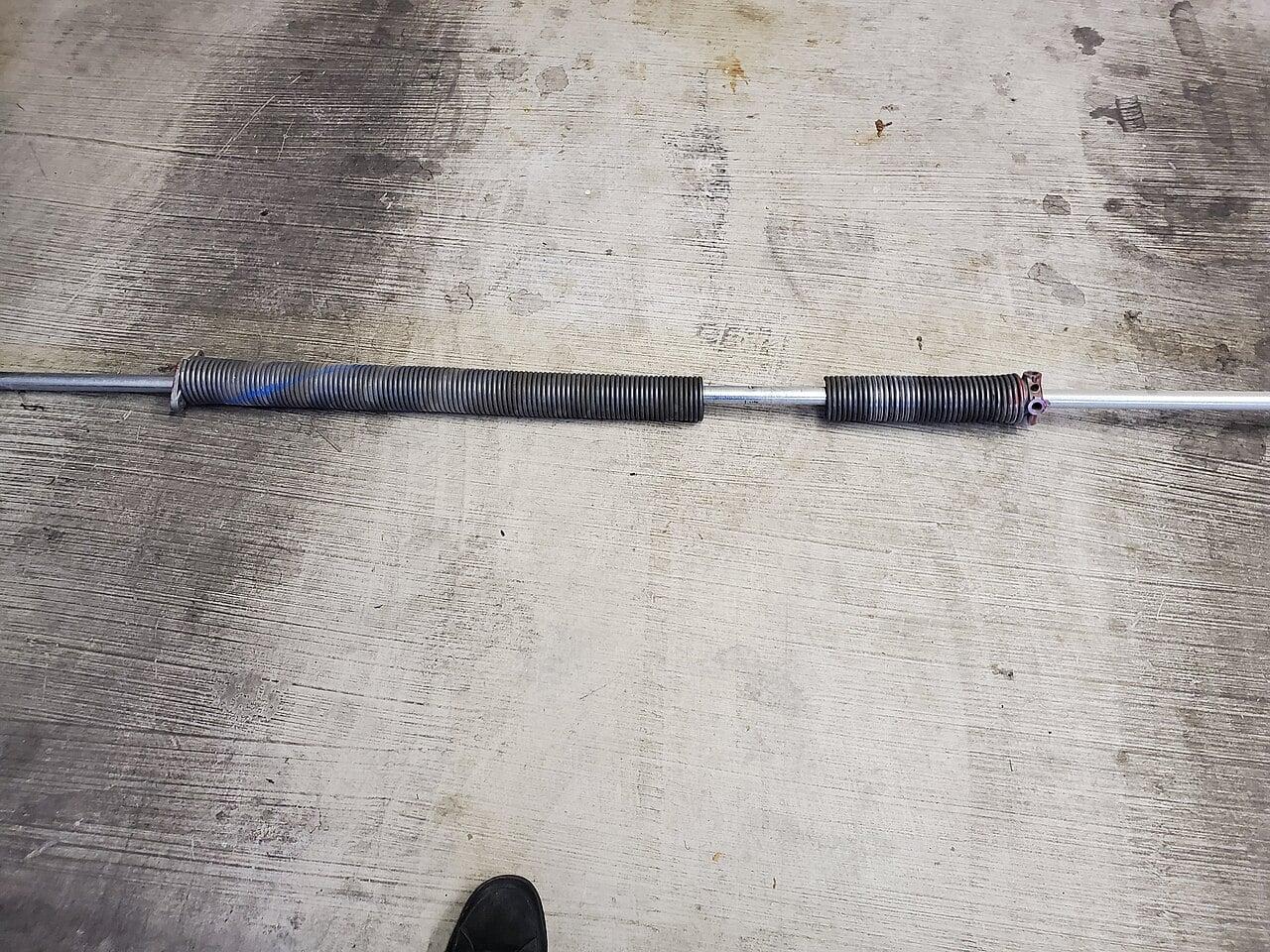
A parkade door in a 120-unit building cycles 480 times a day. That is 175,000 cycles a year. A standard 25,000-cycle torsion spring lasts six weeks. Most councils find this out when the door will not open on a Monday morning and the spring has snapped into three pieces.
The math is simple. Every vehicle that enters or exits triggers a cycle. Two cycles per car — one up, one down. Multiply by the number of units, then by the number of trips per unit per day. The total is rarely intuitive.
How the count adds up
A 100-unit townhouse complex with underground parking. Assume 1.2 vehicles per unit. That is 120 cars. Each car leaves once in the morning and returns once in the evening. Four cycles per vehicle per day. Four hundred and eighty cycles daily. The door never rests. Morning rush: 6:30 a.m. to 8:30 a.m., a car every 30 seconds. Evening rush: same. The motor runs hot. The rollers never cool.
A warehouse door on a loading dock might see 20 trucks a day. Forty cycles. The parkade door does twelve times the work on the same hardware.
What fails first
Springs. Standard commercial torsion springs are rated for 25,000 cycles. At 480 cycles a day, you pass that rating in 52 days. High-cycle springs rated for 50,000 or 100,000 cycles buy you months, not years. The wire fatigues. The coils lose tension. One cold snap and the spring snaps at the stationary cone — usually 5 a.m. on a Tuesday.
Rollers. Nylon rollers with unsealed bearings last 10,000 to 15,000 cycles in a parkade. The bearings contaminate with brake dust, road salt, and moisture. They seize. The roller skids instead of rolls. The track wears a groove. The door drags. The operator trips on force limits.
Hinges. Fourteen-gauge hinges on a 16-foot door flex every cycle. The holes elongate. The door sags. The top section bows. You see it first as a gap at the weatherseal.
Cables. They pay out and wind back 480 times a day. The drum grooves wear. The cable frays at the bottom bracket. A frayed cable under tension is a stored-energy hazard. It does not warn you. It parts.
The operator is not sized for this
Most parkade operators are light-duty commercial units — half-horsepower, 20-cycle-per-hour duty rating. The spec sheet says “intermittent use.” A parkade at rush hour is continuous use. The motor windings overheat. The thermal overload trips. The door stops halfway. Residents press the button again. The motor tries to start under load. The capacitor fails. The board cooks.
A continuous-duty operator with a fan-cooled motor and a proper brake is the only thing that survives. It costs more upfront. It costs less than three emergency calls a year.
Photo-eyes and edge sensors take a beating
The photo-eyes sit 6 inches off the floor. They catch tire spray, salt, grit, and the occasional bumper strike. The lenses cloud. The beam breaks. The door reverses. Residents wave their arms. The property manager gets texts. The technician cleans the lenses and the door works — until tomorrow.
Edge sensors on the bottom seal get crushed by tires that park too far forward. The rubber tears. The switch shorts. The door thinks something is in the way and refuses to close. The building is unsecured overnight.
Maintenance intervals that match reality
Annual maintenance on a parkade door is like changing oil every 50,000 kilometres. It does not match the duty cycle.
Quarterly is the minimum. Spring tension check. Roller inspection. Cable inspection. Operator force-limit test. Photo-eye cleaning and alignment. Track cleaning. Lubrication with a synthetic PTFE spray that does not gum up in cold weather.
Monthly visual walk-by by the building manager: look for frayed cables, cracked rollers, sagging sections, daylight under the bottom seal. Takes ten minutes. Catches the failures before they lock the parkade.
What to specify on the next replacement
High-cycle springs — 100,000 cycle minimum. Sealed-bearing steel rollers, not nylon. Fourteen-gauge hinges with reinforced holes. Continuous-duty operator with fan-cooled motor and 30-cycle-per-hour rating. NEMA 4X photo-eyes with heated lenses. Monitored edge sensor with wireless transmitter so there is no coil cord to fatigue.
And a cycle counter on the operator board. It tells you exactly when the spring hits its rated life. No guessing. No “it feels heavy.”
The conversation to have with your council
Show them the math. One slide: units, vehicles, trips, cycles per year. Compare to the spring rating on the door right now. Show the cost of a high-cycle spring package versus the cost of two emergency calls, a weekend locksmith, and the liability of a door that traps a resident’s car.
Strata councils approve numbers. They do not approve “we should probably.”
Call (604) 206-5727 — Metro Vancouver.