Parkade Gate Maintenance and Safety Inspection
Establishing a parkade gate maintenance schedule depends entirely on how many vehicles pass through the opening every day rather than just the number of months since the last visit. For a high-traffic strata tower in Vancouver or a busy commercial loading bay in Richmond, a quarterly or even monthly inspection is often the only way to catch mechanical fatigue before it causes a total lockout. Waiting for a gate to fail before calling for service usually leads to higher costs and compromised building security.
Initial Duty Assessment and Cycle Counting
The first step in any professional maintenance visit is determining the actual workload the gate has performed since the last technician was on-site. Most modern commercial operators, such as the LiftMaster Maxum line, include a cycle counter on the logic board. A technician will pull this data to see if the gate is performing 50 cycles a day or 500. This data changes the entire approach to the inspection. If a gate is over-performing for its spring rating, the technician knows to look for microscopic fractures in the winding cones or thinning of the galvanized aircraft cables.
In a 400-stall residential tower, the gate may cycle 800 times a day or more during peak morning and evening rushes. This volume places extreme stress on the trolley assembly and the drive chain. By comparing the cycle count to the manufacturer’s recommended service intervals, we can adjust the frequency of the visits. This ensures that a building with lower traffic is not over-servicing their equipment, while a high-density building is not letting their commercial garage door maintenance contracts go too long between critical safety checks.
The Role of Traffic Volume in Your Schedule
A parkade gate maintenance schedule is not a one-size-fits-all plan. A 20-unit walk-up in Burnaby has different mechanical needs than a 50-story high-rise in downtown Vancouver. High-traffic gates suffer from heat build-up in the operator motor and faster degradation of the lubrication on the rollers and hinges. When a gate cycles hundreds of times a day, the friction creates heat that can cause standard grease to thin and run out of the bearings, leaving the metal-on-metal components dry and prone to seizing.
For high-volume sites, we often recommend a monthly schedule to focus on these high-wear items. On lower-volume sites, a bi-annual or quarterly visit may be sufficient to check for environmental damage, such as salt corrosion from the winter months or settling of the building structure that might throw the tracks out of alignment. The goal is to match the service level to the reality of the gate’s usage. This prevents the mechanical surprises that lead to residents being stuck in the parkade at 7 AM.
Chain Tension and Drive Sprocket Wear Patterns
The drive chain is the heart of most overhead parkade gate systems. During a maintenance visit, the technician checks for “chain stretch,” which is actually the wearing down of the pins and bushings in the chain links. A sagging chain can whip during the start or stop of a cycle, causing it to jump the teeth on the drive sprocket. This often leads to a jammed operator and a gate that is stuck halfway open. We adjust the tension to ensure there is just enough play to prevent bearing load, but not enough to allow for movement.
Sprockets are inspected for “hooking,” where the teeth become curved and sharp from constant friction. If a sprocket shows this wear, it indicates that the chain has been running too loose or that the alignment between the motor and the drive shaft is off. Identifying this early allows for a planned replacement of a low-cost part before it shears off and requires expert parkade gate repair services in Vancouver at an emergency rate. We also check the set screws on the sprockets to make sure they haven’t vibrated loose.
Precision Lubrication of Moving Parts
Lubrication is about more than just spraying a can of oil on everything that moves. In a commercial parkade, the environment is often dusty and damp. Using the wrong type of lubricant can actually cause more harm by attracting grit that acts like sandpaper inside the bearings. We use a combination of penetrating lubricants for the tight tolerances of the roller stems and heavier, tackier greases for the heavy-duty hinges and torque tube bearings.
Technicians also look at the color and consistency of the existing grease. If the grease has turned into a thick, black paste, it means it is saturated with metal shavings and dirt and must be cleaned off before new lubricant is applied. We pay special attention to the nylon rollers common in many Metro Vancouver stratas. These rollers have sealed bearings that do not require oiling, but the stems must be kept clean to ensure they can float within the hinges as the door moves through the radius of the track.
Operator Brake and Travel Limit Verification
The operator brake is what stops a heavy steel gate from drifting after the motor shuts off. If the brake pads are worn or the solenoid is sticking, the gate may travel an extra inch or two after every cycle. Over time, this causes the gate to “crash” into the floor or put unnecessary tension on the cables when it reaches the fully open position. We test the brake tension and make fine adjustments to the limit switches to ensure the gate stops exactly where it is supposed to every single time.
Limits are also checked for “drift,” which can happen as the building settles or as the drive chain stretches. If the gate doesn’t close fully, it leaves a gap that compromises security and allows rodents or unauthorized individuals to enter. Conversely, if it closes too hard, it puts a bow in the top section and can eventually crack the door panels. A proper maintenance visit includes running several full cycles to confirm the limits are repeatable and stable.
Inductive Safety Loop and Photo-Eye System Checks
Parkade gates rely on a combination of safety sensors to prevent closing on a vehicle. Inductive loops are wires buried in the concrete that detect the metal mass of a car. These can fail if the concrete cracks and water seeps in, or if the loop detector in the control panel loses its sensitivity. We test these loops by moving a metal test plate over the “sweet spot” of the loop to make sure it triggers the reverse command.
Photo-eyes are the second line of defense and are often the first thing to fail due to being bumped by a trash can or covered in road grime. We clean the lenses and check the alignment of the beams across the driveway. If the brackets are loose or the photo eye and safety edge repair has been done improperly in the past, the gate may reverse intermittently for no apparent reason. We make sure the wiring is secure and the sensors are communicating clearly with the main board.
Executing a Proper Physical Obstruction Test
A safety test is only valid if it mimics a real-world hazard. We do not use a person’s foot or hand to test the reversing mechanism. Instead, we use a solid object, like a 2×4 block of wood, placed on the floor in the path of the door. The gate must reverse within two seconds of making contact with the block. This tests the internal clutch of the operator or the pressure-sensitive edge on the bottom of the gate.
If the gate continues to push against the block without reversing, it indicates that the force settings on the operator are set too high. This is a significant liability for a strata council. We adjust the force to the minimum required to move the gate reliably. In Richmond and Delta, where humidity can make a gate feel heavier on certain days, finding this balance is a technical task that requires an experienced eye to avoid “phantom” reversals while maintaining absolute safety.
Manual Release and Emergency Disconnect Testing
In the event of a power outage or a motor failure, the parkade gate must be able to be opened manually. Many gates sit for years without ever being disconnected, which causes the release cable to seize inside its housing. During a maintenance visit, we pull the red release cord and manually lift the gate. This confirms that the disconnect is functional and that the door is properly balanced.
If a 600-pound steel gate is difficult for a technician to lift by hand after it has been disconnected, the springs are out of balance. This puts a massive strain on the operator motor and will eventually lead to a burnout. We test the manual operation to make sure that a single resident or security guard could reasonably open the gate in an emergency. We also check that the gate stays in the half-open position without falling or shooting upward, which is the hallmark of a correctly balanced system.
Fastener Torque and Structural Hardware Integrity
The constant vibration of a parkade gate cycling hundreds of times a day acts like a slow-motion impact wrench on every bolt in the system. It is common to find track bolts, hinge screws, and motor mount fasteners that have backed out several turns. We go through the entire system with a wrench and torque every critical fastener. Loose tracks allow the gate to wobble, which accelerates wear on the rollers and can eventually lead to the door jumping the track entirely.
We also inspect the “back-hangs,” which are the steel supports that hold the horizontal tracks to the ceiling. In many older Vancouver buildings, these supports can become rusted or the anchors in the concrete can begin to pull loose. We look for any signs of movement or metal fatigue in the perforated angle iron. Making sure the structure is rigid is the only way to ensure the gate moves in a straight, predictable line.
Spring Tension and Counterbalance Calibration
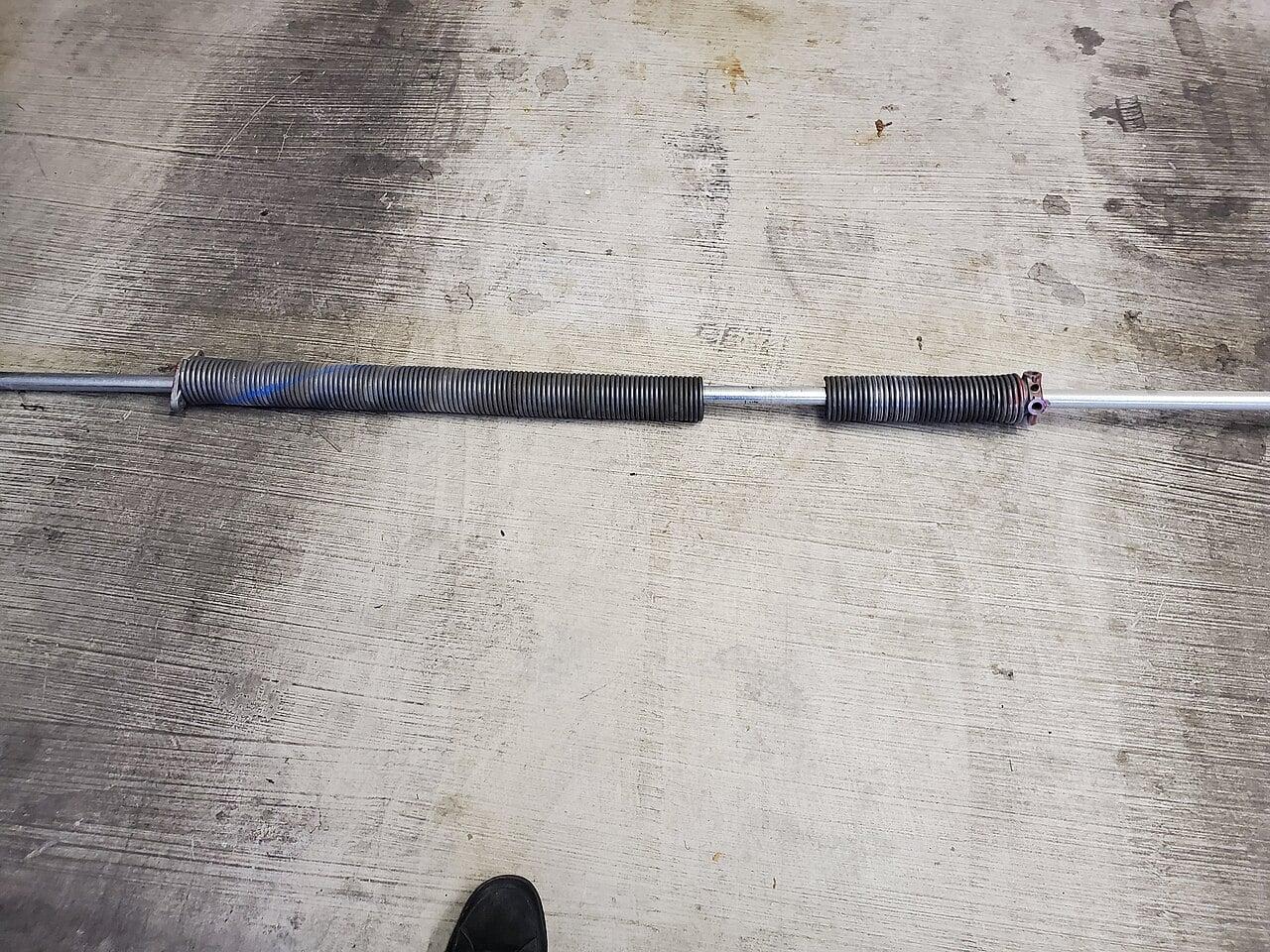
Torsion springs have a finite lifespan measured in cycles. During maintenance, we check for “spring fatigue,” where the coils begin to lose their tension and the door becomes heavy. We also look for signs of rust or pitting on the spring wire, which are precursors to a snap. If the springs are nearing the end of their predicted life cycle based on the building’s traffic, we report this to the strata council so they can budget for a replacement before the break occurs.
A well-balanced door should be able to be held at any point in its travel without moving. If the door wants to fly open or slam shut, the springs need to be wound or unwound. This is the most dangerous part of the job and should never be attempted by a building manager. We use specialized winding bars to adjust the tension, ensuring the operator doesn’t have to work harder than necessary to move the weight of the steel.
Track Alignment and Roller Performance
The tracks must be perfectly parallel and plumb for a gate to run quietly and smoothly. We use a laser level or a plumb bob to check the vertical tracks and a tape measure to ensure the distance between the tracks is consistent from floor to ceiling. If the tracks are pinched or flared, the rollers will bind, causing the motor to draw too many amps and eventually trip the thermal overload.
Rollers are inspected for flat spots or “wobble” in the bearing. In high-traffic parkades, the bottom rollers take the most abuse as they handle the initial lift of the door. If a roller seized, it would slide along the track instead of rolling, which wears a flat spot into the tire and creates a loud “thump-thump” sound every time the gate moves. We replace these worn rollers during the visit to keep the gate operating as quietly as possible for the residents living above the parkade.
The Importance of the Written Condition Report
The most valuable part of a maintenance visit isn’t the grease; it’s the paper trail. At the end of every visit, we provide a detailed written report that outlines what was checked, what was adjusted, and what parts are showing signs of wear. This report serves as a health record for the gate. If a strata council is trying to decide whether to repair or replace an aging system, they can look back through three years of maintenance logs to see the trend in mechanical failures.
This report also acts as a “defensive document.” If there is ever an accident involving the gate, the building has proof that they have been following a professional parkade gate maintenance schedule. It shows that the safety loops were tested, the force settings were verified, and the equipment was in good working order as of the last inspection. This is often a requirement for commercial property insurance renewals in British Columbia.
Documentation for Depreciation and Insurance Compliance
Strata corporations in BC are required to maintain a depreciation report that forecasts future capital expenditures. By having a consistent maintenance schedule, the building can more accurately predict when the parkade gate will need a full overhaul or replacement. We provide the technical data needed for these reports, such as the estimated remaining life of the springs and the condition of the motor’s internal gears.
Insurance companies are also becoming more stringent about parkade safety. They want to see that the strata parkade door repair and maintenance are being handled by professionals. A file full of our maintenance reports is often the best way to prove to an insurer that the building is mitigating the risk of property damage or personal injury. It shows a proactive approach to building management that can sometimes help in negotiating better premiums or coverage terms.
Environmental Factors in Metro Vancouver Maintenance
The climate in the Lower Mainland presents specific challenges for parkade gates. In Richmond and Delta, the high water table and humidity can lead to faster oxidation of steel components. In North Vancouver and West Vancouver, salt air can corrode aluminum parts and electrical connections. During our maintenance visits, we look for these specific environmental signs. We check electrical boxes for moisture ingress and ensure that weather stripping is intact to keep rain and debris out of the parkade.
Cold snaps in the winter can also cause metal to contract, which might require a slight adjustment to the limit switches or the chain tension. Conversely, a hot summer day can cause the horizontal tracks to expand slightly. A maintenance visit scheduled during these seasonal transitions allows us to “tune” the gate for the coming weather. This prevents the nuisance calls where a gate refuses to close on the first cold night of the year because the metal components have shifted just enough to trigger a safety sensor.
Frequently Asked Questions
How often does a 50-unit strata in Burnaby need a parkade gate maintenance schedule?
A 50-unit building typically generates enough traffic to warrant a quarterly maintenance visit. While the cycle count isn’t as high as a downtown tower, the gate still moves roughly 100 to 150 times a day. This is enough to vibrate fasteners loose and wear down the lubrication over a three-month period. Quarterly visits allow a technician to catch these small issues before they result in a gate that is stuck open overnight, which would compromise the security of the residents’ vehicles.
What safety tests are mandatory during a Richmond parkade gate inspection?
Every inspection must include a physical obstruction test and a safety sensor verification. In Richmond, where ground settling can affect the alignment of photo-eyes, we specifically check that the beams are still centered and that the inductive loops in the concrete are triggering correctly. We also verify the “force setting” on the operator. This ensures that if a car or person is in the path of the door and the sensors fail, the door will still reverse upon making light contact rather than continuing to close with full motor power.
Why does our parkade gate in Surrey need a manual release test every visit?
The manual release is the only way to open the gate during a power outage or a total motor failure. In Surrey, where winter storms can lead to localized power cuts, having a functional manual release is a safety requirement. These cables and clutches can seize if they aren’t used. By testing it every visit, we make sure the mechanism is lubricated and moves freely. This ensures that when an actual emergency happens, the residents aren’t trapped inside the parkade because the red cord snapped or the clutch was rusted shut.
How do we use these maintenance reports for our Vancouver depreciation report?
Depreciation reports require an estimate of the “useful life” remaining on major building components. Our maintenance reports provide specific data on the wear levels of your springs, cables, and operator. If we note that your springs are at 80% of their expected cycle life, the person writing your depreciation report can accurately slot that replacement cost into the two-year budget. This prevents the strata from being hit with an unexpected special levy because the parkade gate failed five years earlier than the general tables suggested it would.
Additional Questions
Can we skip a parkade gate maintenance schedule visit if the door seems fine?
While it is tempting to skip a visit to save money, the “it seems fine” approach is how most major failures begin. Most parkade gate components, like torsion springs and drive chains, don’t show obvious signs of failure to an untrained eye until they actually break. A technician can see the “dusting” of metal on a bearing or the slight fraying of a cable that a building manager would miss. Skipping a visit often results in an emergency repair bill that far exceeds the cost of the planned maintenance.
What happens if the photo-eyes fail the obstruction test in our New Westminster parkade?
If the photo-eyes fail to reverse the door during our test, we immediately investigate whether it is a wiring issue, an alignment problem, or a failed sensor. In many New Westminster buildings with older equipment, the photo-eyes may be outdated and prone to interference from sunlight. We will attempt to clean and re-align them first. If they are truly failed, they must be replaced immediately, as operating a parkade gate without functional safety sensors is a major liability and a violation of modern safety standards.
Is chain lubrication included in a standard Coquitlam parkade gate maintenance schedule?
Yes, cleaning and lubricating the drive chain is a core part of every maintenance visit. In Coquitlam, where hills and geography can lead to different dust and debris patterns, keeping the chain clean is vital. We don’t just spray oil over the dirt; we wipe down the chain to remove old, gritty grease and then apply a fresh layer of the appropriate lubricant. This reduces the noise of the gate and significantly extends the life of both the chain and the drive sprockets.
How does the cycle count affect my Langley warehouse gate maintenance?
In a Langley warehouse, the gate might only cycle 10 times a day, or it might cycle 100 times if there is a high volume of deliveries. The cycle count tells us how much “life” has been used up on the springs and the motor brushes. If the count is low, we focus more on environmental issues like rust and track alignment. If the count is high, we focus on mechanical wear items. Knowing the count allows us to give you an accurate prediction of when you will actually need repairs based on usage rather than just a calendar date.
To set up a professional maintenance schedule for your parkade gate, contact us to arrange an initial site assessment and cycle count. We provide detailed reports for your strata records after every visit.