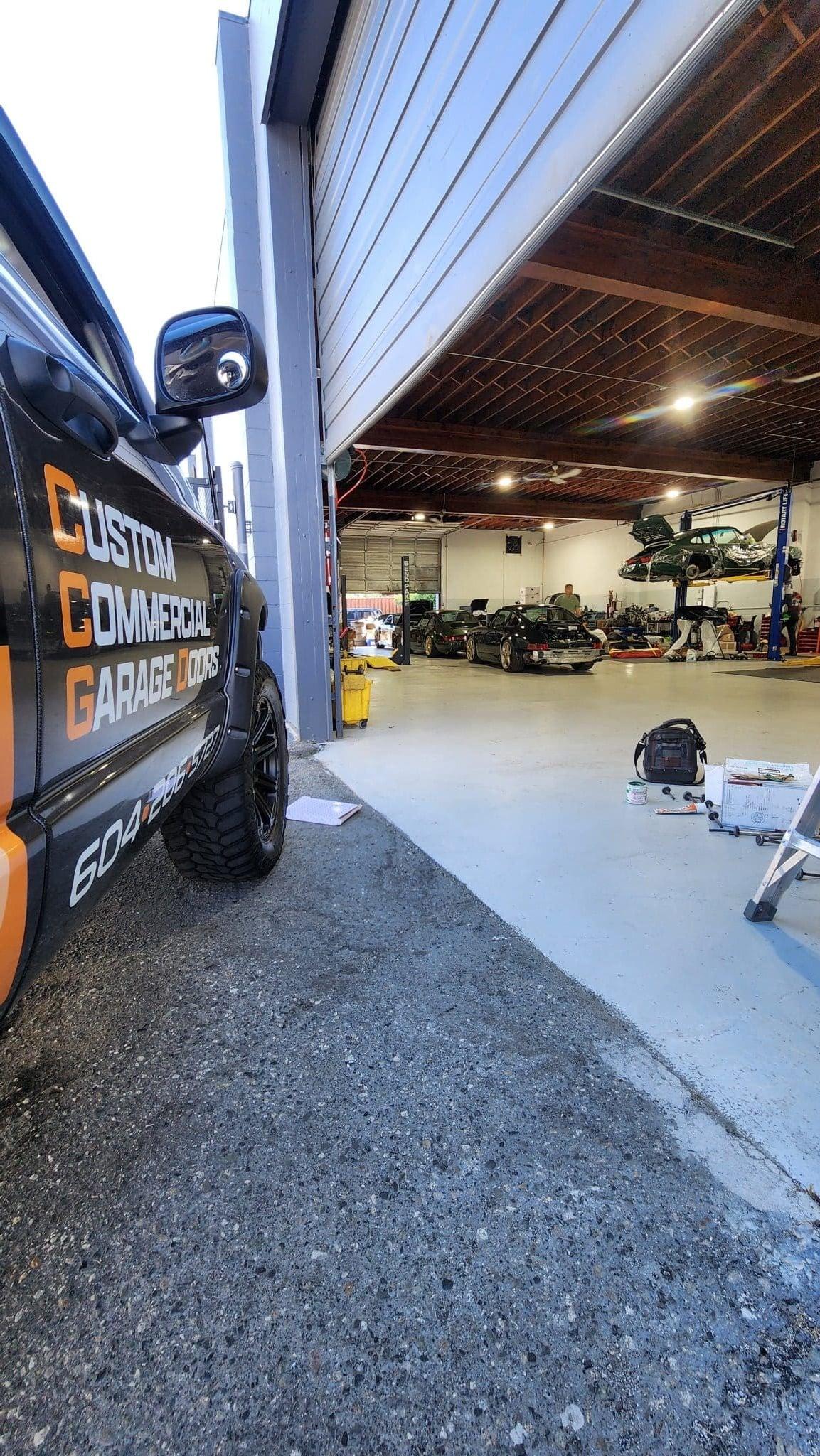
A fire hall bay door is not a warehouse door that gets used more often. It is a different machine. A distribution centre door might cycle twenty times a shift. Your busiest bay hits that before morning coffee. The springs, the operator, the track, the safety edge — every component lives in a fatigue regime the manufacturers’ standard duty ratings do not cover.
The cycle count is the number that matters. Not the warranty year. Not the door weight. A 14-by-14 sectional with 25,000-cycle springs on a hall running twelve calls a day needs spring replacement every five to six years. Put 100,000-cycle springs on the same door and you buy twenty. The steel cost difference is negligible. The labour cost of swapping springs under a live door — twice — is not.
What the codes actually require
NFPA 80 governs the opening. UL 325 governs the operator. They are not the same standard and they do not reference each other cleanly.
NFPA 80 wants the door to open fully in a defined time after the alarm drops. That time varies by jurisdiction — some halls write four seconds into spec, others accept seven. The operator’s torque curve, the spring balance, and the track friction all feed that number. A door that passes the annual drop test in January can fail it in July because the nylon rollers have flattened on one side from sitting closed in the heat.
UL 325 requires a monitored entrapment protection system. Photo-eyes alone do not satisfy it on a fire hall door. The standard demands a reversing edge that signals the operator to stop and reverse within two seconds of contact. That edge takes a beating — hose drags, boot strikes, ice buildup. When the monitoring circuit opens, the operator defaults to constant-pressure hold-to-run. The crew loses automatic operation exactly when they need it most.
Spring systems built for the cycle rate
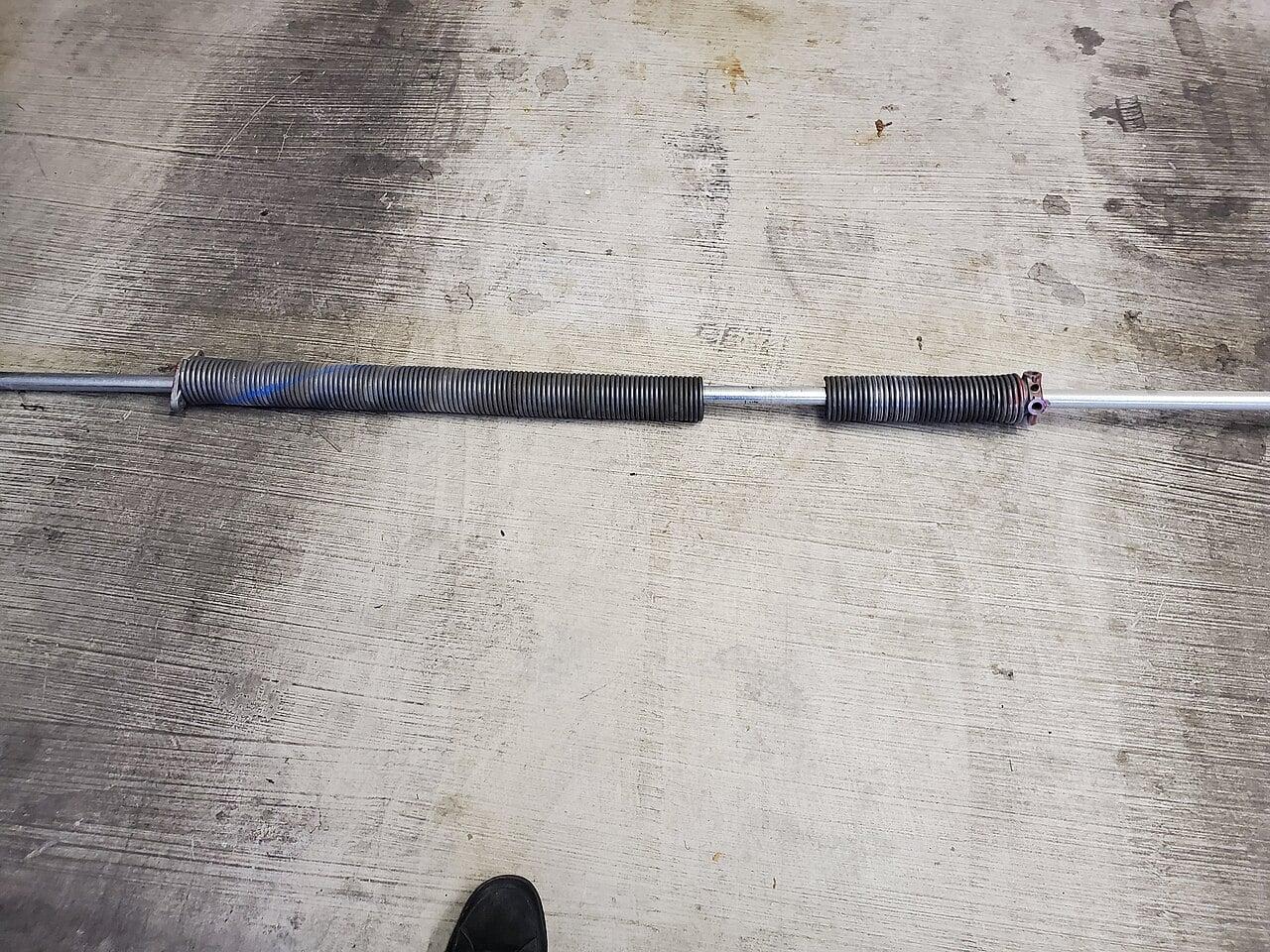
Standard torsion springs on a 16-foot door: 25,000 cycles. High-cycle: 50,000, 100,000, 200,000. The wire diameter grows. The inside diameter stays the same. The cone size jumps. You need a larger shaft, larger bearings, and a spring anchor bracket that will not tear out of the header after 80,000 reversals.
We spec 100,000-cycle springs as the floor for any hall running more than eight calls a day. The upcharge over standard is roughly the cost of one emergency spring swap. The second swap is pure savings.
Extension springs still show up on older halls with low headroom. They store energy differently — the cable pulls the spring, the spring pulls the door. A broken extension spring whips. A broken torsion spring stays on the shaft. That difference alone is worth the conversion cost when the track layout allows it.
Operators that hold up
Residential-style jackshafts burn out in eighteen months on a busy bay. The duty cycle rating on the nameplate assumes a 10-second run, 20-minute rest. Your bay runs 15-second cycles back-to-back during a shift change.
Commercial operators — LiftMaster Maxum, Manaras, Hörmann industrial — use continuous-duty motors, oil baths, and brake assemblies rated for the heat. The brake is the wear item. Every stop energizes the brake coil. A hall running 4,000 cycles a year cycles the brake 4,000 times. Spec a replaceable brake module. Do not spec a sealed gearbox that requires whole-unit replacement when the brake wears.
Track and hardware details that survive
Standard 2-inch track with 13-gauge verticals deflects under a 400-pound door section hitting the jamb at speed. Heavy-duty 12-gauge with continuous angle reinforcement holds the line. The flag bracket — where horizontal meets vertical — takes the peak load. A welded flag bracket with a 3/16-inch gusset outlasts a bolted one by a factor of three.
Rollers: ten-ball nylon with sealed bearings. Eleven-ball if the door exceeds 500 pounds. Steel rollers on a high-cycle door transmit vibration into the hinges and panels. Nylon damps it. The roller stem is the failure point — look for cold-headed stems with a radius at the shoulder, not a sharp corner.
Hinges: 14-gauge minimum on intermediate, 11-gauge on end hinges. The end hinge carries the roller through the curve. A cracked end hinge lets the roller climb the track. That is a door-off-track call at 3 a.m.
The safety edge that lasts
Rubber astragal with a pneumatic switch fails three ways: the tube punctures, the switch corrodes, the wire fatigues at the hinge point. A monitored electric edge with a through-hinge cable carrier eliminates two of three. The carrier keeps the flex radius constant. The switch stays dry inside the operator housing.
Wireless edges exist. They solve the cable fatigue. They introduce battery replacement and radio interference from the bay’s own radios. We have pulled wireless edges off halls that lost signal every time the engine started. Hardwired with a carrier is the conservative choice. It works.
Preventive maintenance that matches the duty cycle
Annual inspection is the code minimum. A hall running 3,000 cycles a year needs quarterly. The checklist:
- Spring tension check — measure the stretch, not the feel
- Brake air gap on the operator — spec is typically 0.015 to 0.025 inch
- Roller stem play — any lateral movement means the bearing is gone
- Hinge fasteners — self-tapping screws back out; replace with Grade 5 bolts and locknuts
- Photo-eye alignment — clean the lenses with isopropyl, not glass cleaner
- Reversing edge test — block with a 2×4, verify reverse under two seconds
- Cable drum alignment — the cable must track flat, not walk the flange
- Weatherseal integrity — torn bottom seal lets water freeze the door to the floor
Track the cycle counter on the operator. If it does not have one, add a mechanical counter to the shaft. Data beats calendar.
When the bay geometry fights you
Low headroom, side room, or backroom forces compromises. A vertical-lift track with a high-lift extension puts the horizontal track above the spring line. The door travels up, then back. The cycle count on the top rollers doubles because they run the curve twice per cycle. Spec accordingly.
Jackshaft operators mount on the torsion shaft. They need 18 inches of side clearance. If the bay wall won’t give it, a front-mount trolley operator with a solid shaft coupler works — but the coupler adds a maintenance item. There is no free geometry.
The call we get at 2 a.m.
Door won’t close. Crew is standing in the rain holding the constant-pressure button. The reversing edge has a broken wire. The operator sees an open circuit and refuses automatic mode. The fix is a jumper at the terminal strip and a note to replace the edge tomorrow. The crew goes back to automatic. The hall stays operational.
That jumper stays in place until the part arrives. We carry monitored edge kits for the major operators on the truck. Most halls do not stock them.
Next step
If your bay doors are running on standard-cycle springs, residential-grade operators, or pneumatic edges, you are buying emergency calls you do not need. We can audit the cycle count, the hardware, and the code compliance in one visit. Call (604) 206-5727 — the voice AI answers 24/7 and dispatches the nearest tech with the right parts.