The door at a waste transfer station fails differently than the door at a warehouse. It is not just cycles. It is the chemistry — hydrogen sulphide and ammonia attacking galvanized track, lactic acid from leachate eating bottom seals, chlorides from road salt and wash water pitting the spring wire — and the impact of a 15-tonne loader that misjudges the opening by six inches.
Most doors installed in these facilities are standard sectional units with light-gauge track and hardware rated for 25,000 cycles. They last eighteen months. The replacement cycle becomes a line item in the operating budget. It does not have to be.
What the environment actually does to hardware
Galvanized track looks fine for the first six months. Then the white rust starts at the bolt holes where wash water sits. By month twelve the vertical track has lost enough section modulus that a loader tap bows the flange. The door binds. The operator trips on force limits. The maintenance crew shims the track with washers and calls it fixed.
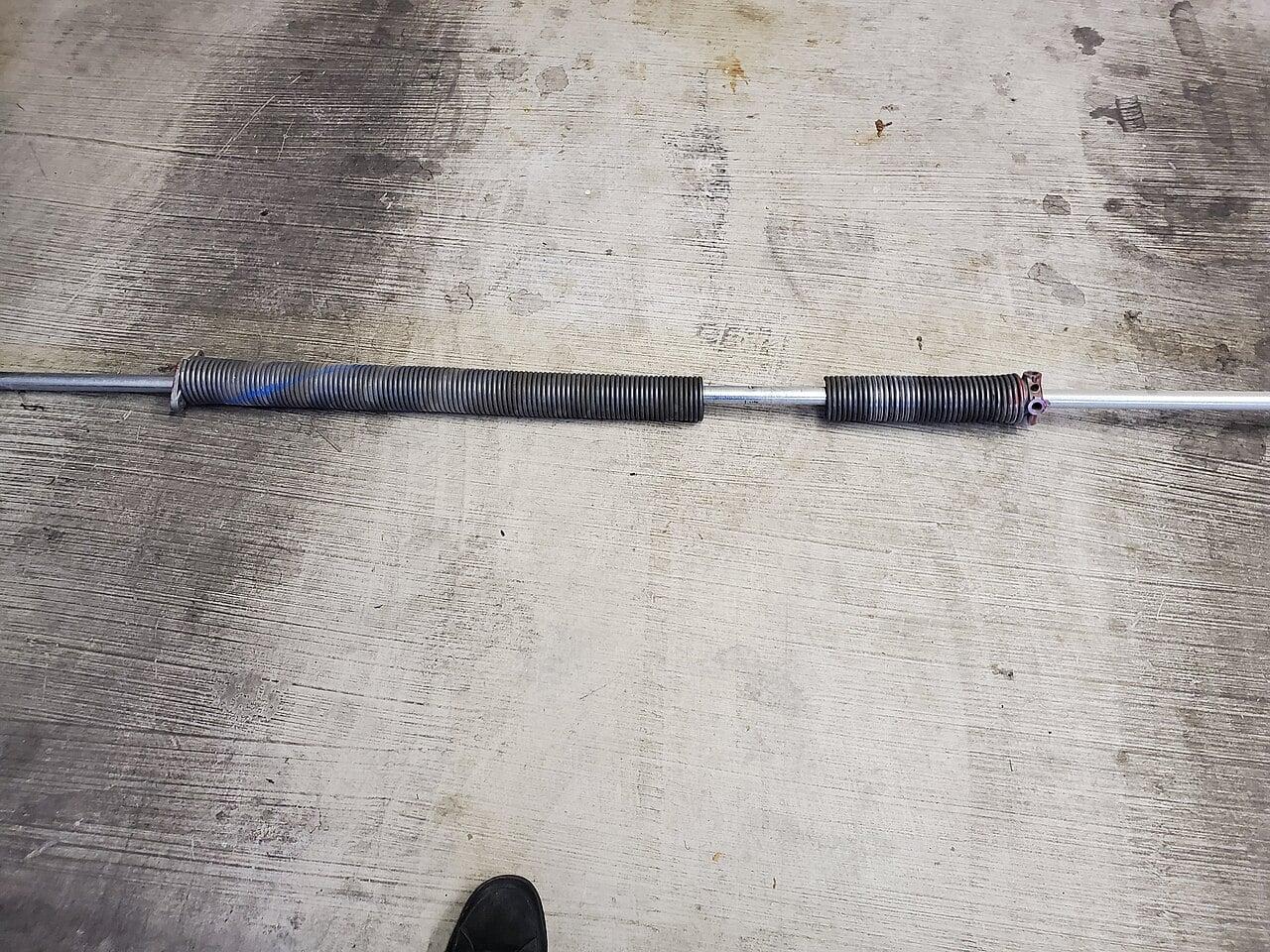
Springs fail next. Standard oil-tempered wire is not rated for chloride exposure. Micro-pits form at the coil surface. Each cycle propagates a stress crack. A 25,000-cycle spring snaps at 9,000. The door comes down hard. If the cable drum does not strip, the bottom section buckles.
Bottom seals are the shortest-lived component. Standard vinyl hardens in six weeks of daily caustic wash-down. It shrinks, pulls away from the floor, and lets odour escape. The facility gets a bylaw notice. The seal gets replaced with the same part number. Six weeks later the cycle repeats.
Track and hardware that survive
Heavy-gauge track — 13-gauge minimum, 12-gauge for doors over 14 feet wide — buys time. Hot-dip galvanized after fabrication, not pre-galvanized coil. The difference is visible at the punched holes: no bare edges.
Stainless steel track (304) is the step up. It handles the chlorides. 316 is better where wash-down uses bleach or quaternary ammonium disinfectants. Cost is roughly double. Labour is the same. The decision comes down to whether the facility plans to be in the building for five years or twenty.
Rollers: sealed stainless ball bearings with nylon tires. Steel tires score the track. Nylon tires on unsealed bearings swell with water ingress and seize. The sealed nylon combination runs three to four years in this environment. Lubricate the stem, not the tire.
Hinges: 11-gauge minimum, hot-dip galvanized after stamping. Number 1 through 5 hinges carry the section weight; end hinges carry the roller load. Oversize the end hinge by one gauge. It prevents the oval-hole elongation that leads to panel sag.
Springs: cycle rating is the wrong metric
A spring rated for 100,000 cycles in a clean warehouse will deliver 30,000 in a transfer station. The chemistry accelerates fatigue. The only reliable approach is oversizing.
Calculate the door weight. Add 20 percent for ice buildup and wet debris on the top section. Spec a spring rated for 100,000 cycles at that inflated weight. The wire diameter increases. The coil count increases. The spring physically fits the same shaft. The cost premium is 15 percent. The life extends to actual 50,000 cycles in-service.
EZ-Set or torsion? Torsion. EZ-Set springs trap moisture between the spring and the shaft. Corrosion starts at the contact line and works inward. Torsion springs breathe. They also allow dual-spring configurations — if one breaks, the other holds the door. Single-spring EZ-Set leaves the door free-falling.
Cables: 7×19 aircraft galvanized, minimum 1/4 inch diameter for doors up to 16 feet. 5/16 inch above that. Stainless cable (304) is available. It eliminates the cable-as-sacrificial-anode problem. The drums must match — grooved for the cable diameter, aluminum or nylon. Steel drums rust, abrade the cable, and create the very failure they are meant to prevent.
Seals that hold odour
The bottom seal sees the worst of it. Standard bulb seal fails three ways: the vinyl hardens, the retainer corrodes, the fastener pulls through.
Aluminum retainer with stainless self-drilling screws. EPDM bulb — not vinyl, not neoprene. EPDM resists the ozone generated by the UV lamps some facilities run for odour control. It stays flexible at -30°C. It resists the caustic cleaners. Replace the bulb annually as preventive maintenance. The retainer stays.
Side and top seals: vinyl-coated polyester brush seal mounted on anodized aluminum carrier. Brush conforms to warped jambs. Vinyl coating sheds water. Anodizing resists the wash-down. Replace the brush insert every two years. The carrier stays.
Threshold: UHMW polyethylene threshold bonded to the concrete with epoxy adhesive and mechanical anchors. It takes the loader tire impact. It does not spall. It gives the bottom seal a flat surface to compress against. Without it, the seal compresses against aggregate and leaks at every low spot.
Operators and controls
Jackshaft operators keep the motor and logic board off the ceiling — away from the condensation drip line and the corrosive vapour layer that stratifies under the roof deck. Mount the operator on the wall, 18 inches below the shaft centerline. Run the control wiring in sealed liquid-tight conduit.
Photo-eyes fog. Heated photo-eyes (12 VDC heater element in the housing) clear in minutes. Mount them 18 inches above the floor, inside the jamb, not on the track. Track-mounted eyes get knocked out of alignment by the first loader pass.
Loop detectors in the approach slab replace pull-cords and motion sensors. No moving parts in the vapour zone. The loop sees the loader, signals the operator. The operator opens. The loader passes. The operator closes on a 30-second hold timer. Simple. Reliable.
Battery backup on the operator is not optional. Power fails during storm events — exactly when the facility is receiving peak volume. A door that cannot open backs trucks onto the street. The bylaw officer writes the ticket. The 24 VDC battery pack runs 20 cycles. Size it for 40.
Panel construction
Standard 2-inch sandwich panels with 26-gauge skins dent when a loader bucket catches the bottom edge. The dent cracks the paint. Corrosion starts at the crack. The panel delaminates.
Spec 24-gauge exterior skin minimum. 22-gauge for doors over 16 feet wide. Polyurethane core — not polystyrene. Polyurethane adheres to the skins. Polystyrene debonds when water migrates into the panel edge. A delaminated panel has no structural stiffness. It bows under wind load. It binds in the track.
Impact-resistant bottom section: 18-gauge steel skin, reinforced with 14-gauge hat channels on 12-inch centers. It takes a loader hit at 5 km/h and springs back. The standard section folds. The reinforced section costs 30 percent more.
Windows: skip them. Glazing collects condensation. The frames corrode. The seal fails. If daylight is required, use translucent fiberglass panels in the top section only. No frames. Structural adhesive bond to the panel core.
Maintenance schedule that prevents the emergency call
Weekly: wipe photo-eye lenses with isopropyl alcohol. Check bottom seal contact across full width. Listen for bearing rumble on the first cycle of the day.
Monthly: lubricate roller stems and hinge pins with PTFE spray. Check cable tension — equal both sides, no slack at the drum. Inspect spring coils for white rust. Torque track bolts to spec.
Quarterly: cycle the door on battery backup. Verify the loop detector picks up a test load. Check the threshold adhesive bond. Replace the bottom seal bulb if the compression set exceeds 50 percent.
Annually: full spring tension check. Re-torque all track and hardware fasteners. Inspect panel skins for corrosion initiation. Budget for spring replacement at 40,000 cycles — not when they break.
The spec sheet you hand the procurement officer
Door: sectional, 2-inch polyurethane core, 24-gauge exterior / 26-gauge interior skins, 18-gauge reinforced bottom section. Track: 12-gauge hot-dip galvanized after fabrication, 304 stainless vertical track optional. Hardware: 11-gauge hinges, sealed nylon rollers with stainless bearings, 304 stainless cable drums. Springs: dual torsion, 100,000-cycle rating at 120% door weight, oil-tempered or galvanized wire. Cables: 5/16 inch 7×19 304 stainless. Seals: EPDM bottom bulb in aluminum retainer, vinyl-coated brush sides and top, UHMW threshold. Operator: jackshaft, 24 VDC battery backup, heated photo-eyes, loop detector input. Finish: powder coat over galvanized, safety yellow or white for visibility.
No residential hardware. No light-commercial track. No vinyl bottom seal. No single-spring EZ-Set. No pull-cord operation.
When to call
The door binds on the third panel. The operator faults on force limit. The bottom seal leaks odour at the corners. The spring shows white rust at the coil gap. The cable has three broken wires in one lay length. The track flange is bent 15 mm off true.
Do not wait for the cable to snap. Do not wait for the bylaw notice. The repair window in a transfer station is Sunday 02:00 to 05:00. Schedule it. Bring the parts. Do it once.
Call (604) 206-5727 — Metro Vancouver.