A recycling facility door does not get used. It gets beaten. Tipping-floor grit works into every roller bearing and track groove within hours. Loader forks clip the bottom panel on every third pass. The cycle count hits five figures before the paint cures. Standard commercial doors — even heavy-duty ones — last six months in that environment. The ones that survive two years share a short list of design choices that have nothing to do with brand loyalty.
What the environment actually does to hardware
Dust is not dirt. At a material recovery facility it is a mix of glass fines, plastic film, metal shavings, and moisture that packs into a grinding paste. Standard nylon rollers seize in three weeks. Sealed ball-bearing rollers with metal shields last a season if you grease them monthly. The only thing that survives without a maintenance window every Friday is a sealed roller with a polyurethane tread on a stainless axle — expensive, and worth every dollar.
Track takes the same abuse. Standard 2-inch horizontal track fills with fines, the door drags, the operator trips on force limits, and the maintenance crew shims the limit switches instead of cleaning the track. Fix it once: specify 3-inch track with a wider throat and a sweep brush mounted on the bottom bracket. The brush does not keep the track clean. It keeps the track functional between cleanings.
Impact is the other half. A 14-foot wide door on a tipping floor gets hit. Not “may get hit.” Gets hit. The bottom section takes the fork tips. The second section takes the mast. Standard 24-gauge skins dent, then crease, then crack at the stile. You need 20-gauge minimum, preferably 18-gauge with a reinforced bottom rail and an impact-resistant strut system that transfers the hit to the jambs instead of folding the panel.
Spring life is a math problem, not a guess
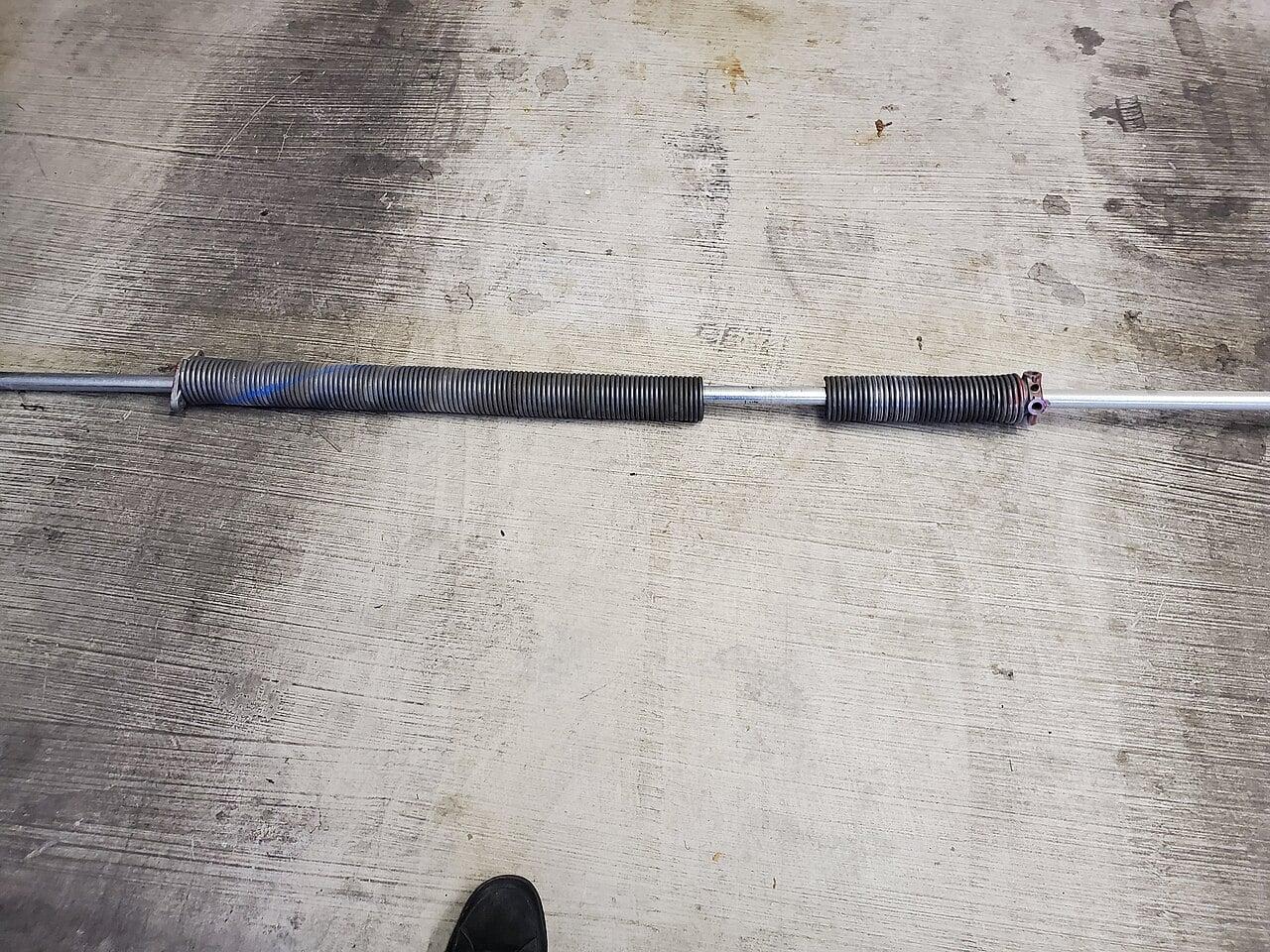
A standard 25,000-cycle torsion spring on a door that cycles 120 times a day fails in seven months. That is not a defect. That is arithmetic. At 120 cycles daily you hit 25,000 in 208 days. Spec 100,000-cycle springs and you buy two years. Spec 200,000-cycle and you buy four — but the wire diameter grows, the spring ID grows, and the shaft must handle the torque. That means a solid 1-inch or 1-1/4-inch keyed shaft, not a hollow tube. The bearing brackets need to be bolted to structural steel, not lagged to wood blocking.
Dual-spring assemblies are not optional. When one spring breaks on a single-spring door, the door crashes down. On a dual-spring door, the second spring holds it long enough to clear the tipping floor and lock it out. The cost difference is negligible. The downtime difference is everything.
Operators: duty cycle vs. marketing cycle
Every operator manufacturer publishes a “duty cycle” rating. Most are tested at room temperature, no load, clean power. In an MRF the operator sees cold starts at -10°C, voltage drop from the loader charging station on the same panel, and a door that weighs 300 lbs more than the nameplate because of packed track and seized rollers.
Size the operator for 150% of the calculated door weight. Use a jackshaft operator with a purpose-built 20-amp circuit and a soft-start module. Belt drive is quieter but chain drive tolerates shock loading better — and in this service, shock loading is the norm. Mount the operator on the wall, not the hood. Hood-mounted units vibrate loose in six months. Wall-mounted units stay aligned.
Photo-eyes are a liability if they are the only safety. Dust blinds them in a shift. Use a monitored sensing edge on the bottom seal and photo-eyes mounted 18 inches off the floor, angled down, with air-purge collars if the budget allows. The sensing edge catches the pallet the photo-eye misses. The photo-eye catches the person the sensing edge misses. You need both.
Seals that don’t shred in a week
Standard vinyl bottom seal tears on the first frozen pallet. EPDM rubber lasts longer but still splits at the corners. The only seal that survives is a triple-fin EPDM with a steel retainer channel bolted — not tek-screwed — to the bottom rail. The retainer distributes the load across the full width. The fins wipe grit instead of trapping it.
Jamb seals take forklift hits. Brush seals survive better than vinyl flaps because they deflect instead of tearing. Mount them on adjustable retainers so the maintenance tech can compensate for track spread without removing the seal.
Header seal is the one everyone forgets. Heat escapes. Dust enters. A heavy-duty brush header seal with a stainless retainer pays for itself in the first winter on heating loss alone.
Panels: insulation value vs. impact value
Insulated panels (R-12 to R-18) are standard now. In a heated MRF they matter. In an unheated sort building they add weight and cost without return. What matters everywhere is skin gauge and strut design. 18-gauge exterior skin with 24-gauge interior skin, C-channel struts on 24-inch centers, and a thermal break that is mechanical — not just foam — so the door does not bow when the sun hits one side and the tipping floor is freezing on the other.
Section joints need double tongue-and-groove with a weatherseal that compresses 50% at rest. Single tongue-and-groove leaks air and lets grit into the hinge line. Hinges: 14-gauge minimum, 12-gauge on the bottom two hinges. Through-bolted. No self-tappers.
Maintenance that actually happens
Write the PM schedule into the spec. Monthly: clean track, inspect rollers, check spring tension, test sensing edge, verify limit switches. Quarterly: torque all hinge bolts, inspect shaft keys, check operator chain/belt tension, lubricate bearings with synthetic grease rated for -40°C to 150°C. Annually: replace bottom seal, inspect spring wire for micro-cracks, load-test operator on force limits.
Post the schedule on the door jamb. Laminate it. If it is not posted, it does not happen.
When to replace instead of repair
A door that has taken three major impacts in one panel — replace the panel. A door where the track has been straightened twice — replace the track. A door where the operator has been rebuilt once — replace the operator. The labor to rebuild equals the labor to replace, and the new unit comes with a warranty that covers the next hit. Patching a recycling-facility door is buying the same failure twice.
What to ask the supplier
- Show me the cycle test data for this spring at 100,000 cycles in a dust chamber.
- What is the operator’s actual torque curve at -20°C on a 20-amp circuit?
- Can I buy the bottom seal retainer as a separate part, or do I have to buy the whole bottom rail?
- How many turns of pre-tension on the torsion spring for a 14-foot high-lift door with 200-lb counterbalance?
- If the photo-eye fails at 2 AM, does the door fail safe or fail secure?
If they cannot answer on the spot, they do not supply this market.
—
Call (604) 206-5727 — Metro Vancouver.