Self Storage Facility Door Repair
Self storage operators don’t call because one unit door is stuck. They call when the tally hits double digits and every failed door is a unit they can’t rent. A 200-unit facility in Richmond or Burnaby runs on light-gauge roll-up curtains — 3×7, 4×7, 5×7 — and the failure mode is always volume: dented curtains from tenant furniture, bent latch bars from forcing, springs that lost tension on the tube so the door won’t stay up, guides spreading on ground-floor units near the river where salt air accelerates corrosion. The economics only work if you treat it as a site problem, not a door problem.
How Unit Door Failures Stack Up Across a Facility
A typical self storage building has two door populations that need completely different treatment. The unit doors — hundreds of light roll-up curtains on spring-loaded tubes — fail in predictable ways. The corridor overhead doors, drive-aisle sectional doors, and the main gate operator are standard commercial equipment. Mixing the two on one work order wastes money. Unit doors need a tech who can move bay to bay with a parts kit sized for the day’s list; corridor doors need a lift, heavier hardware, and often a second tech. We keep the scopes separate so you get one invoice that makes sense to your accountant.
Curtain Damage: Dents, Creases, and When to Replace
Tenants back moving trucks into curtains. They stack dressers against the inside face. They force a stuck door until the bottom bar bends into a shallow V. A single crease across a 24-gauge curtain usually means the panel won’t seal at the floor and the spring tension will fight the deformation every cycle. If the crease is in the bottom third, you can often straighten the bar and re-tension. If it crosses a stiffening rib or the curtain has multiple impact points, replacement is faster and cheaper than straightening time. We carry common curtain widths in the truck for Richmond and Delta sites; wider or non-standard curtains ship from the Amarr line in two to three days.
Latch and Hasp Failure on High-Turnover Units
The slide latch and hasp take more abuse than any other component. A tenant loses the key, forces the latch with a screwdriver, and bends the catch ear. The next tenant can’t lock it. The one after that jams a padlock through the bent hasp and snaps the staple. On a facility with monthly turnover, you’ll see five latch styles across three manufacturers because the original spec got value-engineered and the replacement parts bin is a guess. We standardize to a heavy-duty slide latch with a reinforced catch plate on every service visit — same part, same tool, same adjustment. The old hasps go in the scrap bucket.
Spring Tension Loss on Tube-Assisted Roll-Ups
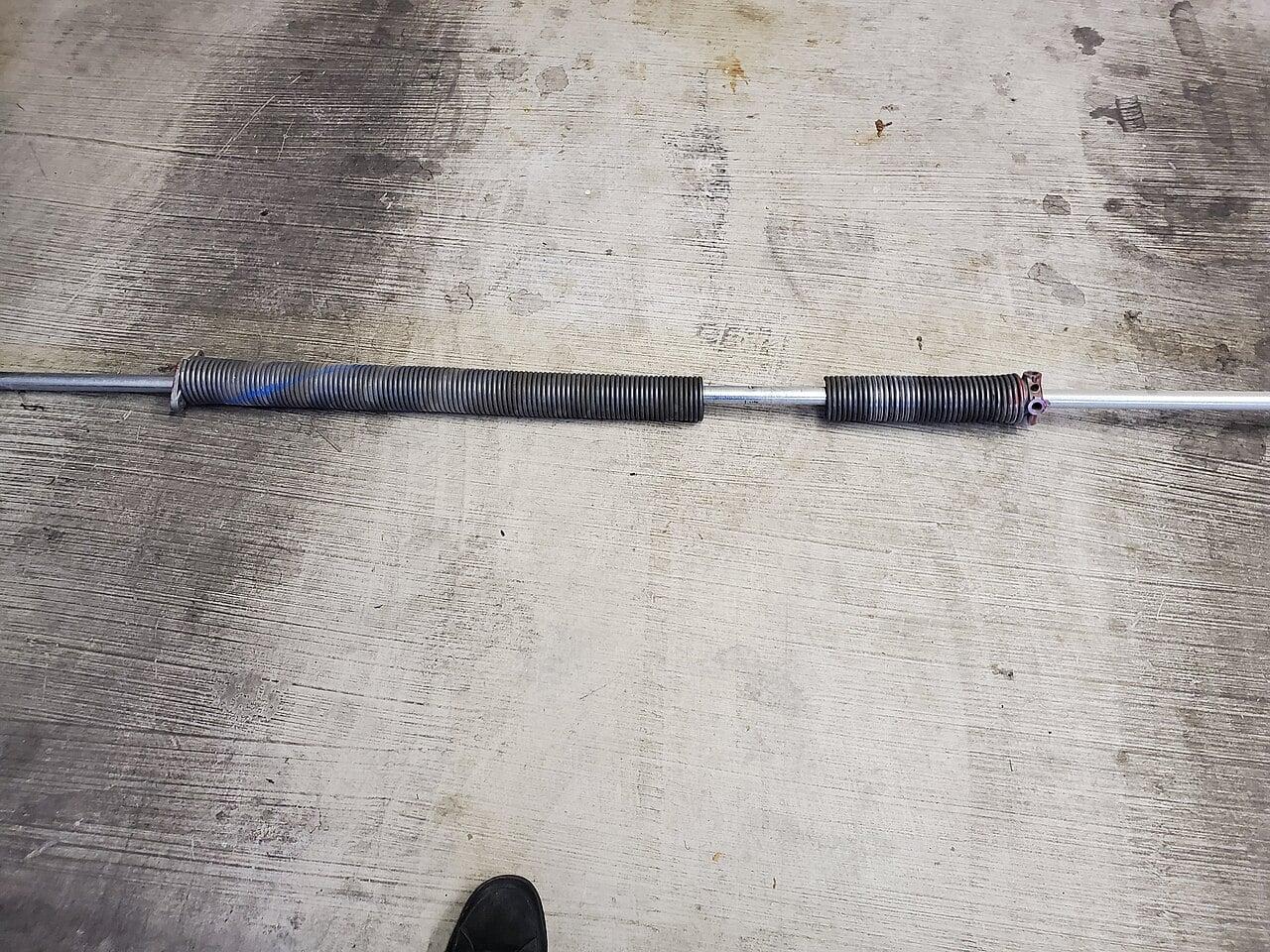
Light unit doors use a torsion spring inside the tube. After 8,000 to 12,000 cycles — about three years at average occupancy — the spring relaxes enough that the door drifts down halfway and the latch won’t engage. Tenants prop it with a broom handle. The spring doesn’t break; it just quits. Re-tensioning takes eight minutes per door if the tube is accessible and the winding plugs aren’t stripped. Stripped plugs mean tube replacement. We batch re-tension jobs by building wing: the tech walks the hallway with a tension gauge, a winding bar, and a box of plugs, hitting every flagged unit in one pass.
Guide Wear and Spreading on Ground-Floor Units
Ground-floor guides take forklift hits, pallet jack scrapes, and the full force of Fraser River humidity. The guide angle spreads outward, the curtain rubs, the rollers bind, and the spring fights the drag until the tube brackets bend. On river-adjacent facilities in Richmond and Ladner, the bottom 18 inches of guide angle corrodes to lace in two winters. We cut the damaged section, weld in a galvanized replacement sleeve, and re-align the guide to plumb. If the concrete jamb is spalled, we anchor the new sleeve with epoxy-set expansion bolts — not concrete screws, which pull out in wet aggregate.
Corrosion at the Bottom Edge: The River Effect
Facilities within 500 meters of the Fraser — River Road, Mitchell Island, parts of Annacis — see bottom-bar rot that inland sites don’t. The curtain’s bottom seal holds standing water after rain. The zinc coating sacrifices itself to the galvanized guide angle, and the steel underneath pits. Once the pitting reaches the stiffening rib, the curtain tears on a windy day. We specify aluminum bottom bars with vinyl astragal for replacement curtains on those buildings. The upcharge pays for itself in one avoided emergency call.
Batching Repairs: One Visit Beats Five
A facility manager who calls every time three doors fail spends three times the travel charge and gets three different techs who don’t know the site. The efficient model: you keep a running log — unit number, symptom, tenant lock status — and we schedule a half-day or full-day block. The tech arrives with a parts kit built from your last list: springs, latches, bottom bars, guide sleeves, rollers, seals. We clear the log, you get one invoice, and the vacancy report shrinks. Facilities that batch quarterly cut their per-door cost by 40 to 60 percent versus reactive calls.
Logging Failures So the Visit Is Efficient
The log needs four columns: unit number, failure type (curtain / latch / spring / guide / seal), lock status (tenant lock / overlock / vacant / management key), and priority (rentable now / blocked / safety). A photo of the damage sent by text lets us pre-pick parts. If you manage multiple buildings, keep separate logs — the tech loads the truck per building, not per portfolio. We’ve seen managers combine lists and wonder why the truck is short three guide sleeves. The fix is simple: one log, one building, one visit.
Overlock and Tenant Lock Access Protocol
You can’t service unit 147 if the tenant’s disc lock is on the hasp and the tenant is in Kelowna. BC’s Self Storage Act gives you the right to cut the lock after proper notice, but the notice timeline varies by facility policy and the tenancy agreement. We don’t cut locks. We work the units you’ve cleared — vacant, overlocked by management, or tenant-authorized. If the log shows “tenant lock” on six units, we skip them and hit the other fourteen. You cut the six on your schedule; we return for a short follow-up or catch them on the next batch. No surprise charges, no liability disputes.
Corridor and Drive-Aisle Doors: Different Spec, Different Crew
The 12×14 sectional door at the end of the interior corridor, the 16×14 drive-aisle door at the loading bay, and the 24-foot slide gate at the entrance are not unit doors. They run on commercial torsion springs, 2-inch or 3-inch track, and LiftMaster Maxum or Manaras operators. They need commercial garage door spring repair when a spring snaps, commercial garage door roller and track alignment when a forklift hits the jamb, and operator logic troubleshooting when the gate won’t close. We quote those separately because the parts, labor, and safety requirements are a different tier. Lumping them with unit-door batching obscures the real cost of each population.
Gate and Access Control Integration
The main gate is the facility’s front door. When the operator fails — loop detector, photo eye, radio receiver, or the controller itself — no one enters or exits. That’s a revenue stop, not a unit vacancy. We treat gate calls as priority emergencies. If the access control system (keypad, prox reader, Bluetooth module) needs re-programming or replacement, we coordinate with your access vendor or handle it directly through our commercial gate access control service. The gate track, rollers, and chain are inspected on every visit because a derailed gate panel damages the operator arm and the concrete post.
Preventive Maintenance for the Whole Site
Unit doors don’t have a maintenance schedule in most facilities — they get fixed when they break. A quarterly walk with a tension gauge, a lube stick, and a torque wrench changes the economics. We check spring tension on a sample set, lubricate guide rollers, tighten tube brackets, verify latch engagement, and inspect bottom seals. The corridor doors and gate get a full commercial garage door maintenance contracts inspection: spring balance, operator limits, safety edges, battery backup, and chain tension. The report gives you a capital plan — which curtains to budget for replacement next year, which guides need welding, which operator is on borrowed time.
Frequently Asked Questions
How many unit doors can you repair in one day?
A single tech with a stocked truck clears 18 to 25 unit doors in an eight-hour day if the log is accurate, the units are accessible, and no tenant locks block the work. Corridor doors and gates are separate line items.
Do you carry replacement curtains for all widths?
We stock 3-foot, 4-foot, and 5-foot standard-height curtains in 24-gauge and 22-gauge. Non-standard widths, insulated curtains, or custom colors ship from Amarr in two to three business days.
What if a tenant’s lock is on a door we need to fix?
We skip that unit and note it on the work order. You cut the lock per your policy and the Self Storage Act; we return for a short follow-up or catch it on the next scheduled batch.
Can you re-key or replace the slide latches to one key system?
Yes. We can install keyed-alike slide latches across a building or the whole facility. The management key opens all; tenant keys are unique per unit. This is easiest during a batch visit.
How do you handle ground-floor guide corrosion near the river?
We cut out the rotted bottom section of the guide angle, weld in a galvanized sleeve, and anchor it with epoxy-set expansion bolts. For replacement curtains we specify aluminum bottom bars with vinyl astragal to break the galvanic cell.
Do you service the big corridor doors and the gate on the same visit?
Only if you request it and we schedule the time. They need different parts, different tools, and often a second tech. We quote them separately so your books stay clean.
What’s the typical response time for a gate that won’t open?
Gate failures are priority emergencies. During business hours we reach most Richmond industrial sites in 30 to 45 minutes; after hours, 30 to 60 minutes. The voice AI dispatches the nearest tech with gate parts loaded.
Can you set up a quarterly preventive walk for our portfolio?
Yes. We build a schedule by building, log findings per unit, and deliver a capital-plan report after each walk. The per-door cost drops sharply versus reactive calls.
Do you work on facilities in Surrey, Langley, or North Vancouver?
We cover all of Metro Vancouver — Richmond, Vancouver, Burnaby, Surrey, Delta, North Vancouver, West Vancouver, New Westminster, Coquitlam, Langley. Travel time is built into the batch day rate.
What brands of unit doors do you see most often?
Janus, Trachte, Hall, and older DBCI roll-up curtains dominate the market. We service all of them. Springs, latches, and guides are interchangeable across brands once you know the tube diameter and guide profile.
How do you price a batch day versus a single call?
A batch day is a flat rate for up to a defined door count with a pre-loaded parts kit. Single calls carry a trip charge plus time and materials. Most facilities save 40 to 60 percent per door by batching.
Can you help with insurance claims if a tenant drives into a unit door?
Yes. We document the damage, provide a repair estimate on company letterhead, and coordinate with your adjuster. The process is the same as our vehicle-impact work on warehouse doors.
Do you offer any warranty on unit door repairs?
Parts carry the manufacturer’s warranty. Ask the technician about workmanship coverage on the specific repair when you book. If the same failure recurs on the same unit in that window, we return at no charge.
What’s the best way to send you the repair log?
A shared spreadsheet (Google Sheets or Excel Online) with the four columns — unit, failure type, lock status, priority — plus photos attached to rows. Text or email works for small lists.
Additional Questions
How do you handle a facility with mixed door brands across phases?
We identify the tube diameter, spring wire size, and guide profile for each phase on the first walk. The parts kit then carries the right springs and latches for each population. The log should note phase or building code per unit.
Can you replace just the bottom bar and seal without changing the whole curtain?
Yes, if the curtain body is straight and the ribs aren’t cracked. We slit the crimp, slide the old bar out, install a new aluminum bar with vinyl astragal, and re-crimp. It’s a 15-minute job per door.
What if the tube brackets are bent from a door being forced down?
We replace the brackets with heavy-gauge equivalents and re-align the tube. If the header angle is bent, we straighten or shim it. This is common on ground-floor units where tenants use the door as a bumper.
Do you service the overhead doors at the manager’s office and maintenance shop?
Yes. Those are standard commercial sectionals. They go on the corridor-door quote, not the unit-door batch.
How do you secure the site while working in a tenant corridor?
We cone the work bay, post “Door Under Repair” signage, and keep the curtain lowered unless we’re actively testing spring balance. Tenants walk past safely; no corridor shutdown needed.
Can you install new unit doors in a building expansion?
We supply and install the full Amarr commercial line for new build-outs — roll-up curtains, sectionals, and operators. The spec matches your existing guide spacing and tube height so maintenance stays simple.
What’s the longest lead time you’ve seen for a non-standard curtain?
Four weeks for a custom-width insulated curtain with a non-standard color. Standard widths in white or gray ship in two to three days. We stage the order so the batch visit isn’t delayed.
Do you work weekends or evenings to avoid tenant disruption?
We can. Evening and weekend batch visits carry a modest shift premium but eliminate tenant access complaints. Many strata-managed facilities prefer Saturday mornings.
How do you handle a door that’s come off the tube entirely?
The curtain unspooled because the spring broke or the tube coupler sheared. We re-spool the curtain, replace the spring or coupler, re-tension, and check the guide alignment. It’s a two-tech job for safety.
Can you integrate with our property management software for work orders?
We accept work orders emailed from any system. If your platform has a webhook or API, we can discuss a direct feed — but a shared spreadsheet with photos is usually faster to set up and easier for the tech in the field.
What’s the difference between a unit door spring and a corridor door spring?
Unit doors use a light torsion spring inside a 1.5-inch or 2-inch tube, rated for 10,000 to 15,000 cycles. Corridor sectionals use 2-inch or 3-inch torsion springs on a solid shaft, rated for 25,000 to 100,000 cycles. Different wire, different winding, different tools.
Do you repair the automatic door operators on interior hallway doors?
Some facilities have low-energy operators on corridor doors for accessibility. We service those — LiftMaster, Norton, Dormakaba — but they’re a separate line item from the unit-door batch.
How do you handle a facility where the unit doors are different heights?
We note the height per unit in the log. Springs are cut and wound to the specific drop. The tech carries a spring kit covering the range. It adds five minutes per odd-height door.
What’s the most common reason a unit door won’t latch?
Bent latch bar or spread hasp from forcing. Second most common: spring tension lost so the curtain sags and the latch misses the catch. Third: guide spread pushing the curtain out of alignment. All three are batch fixes.