Search for BC loading dock rules and you mostly get American OSHA pages. BC's Occupational Health and Safety Regulation works differently: there is no single loading dock section. Here is what actually applies to a dock in this province, section by section, and where the equipment manuals fill the gaps.
Warehouse and distribution managers ask us this a lot, usually after a near miss or before a WorkSafeBC visit. The honest answer surprises people. The BC OHS Regulation doesn’t have a loading-dock chapter, and it doesn’t use the words “dock plate” or “trailer restraint.” Dock safety in BC comes from several general sections that apply to docks, plus the manufacturers’ instructions, which the Regulation makes binding in its own way.
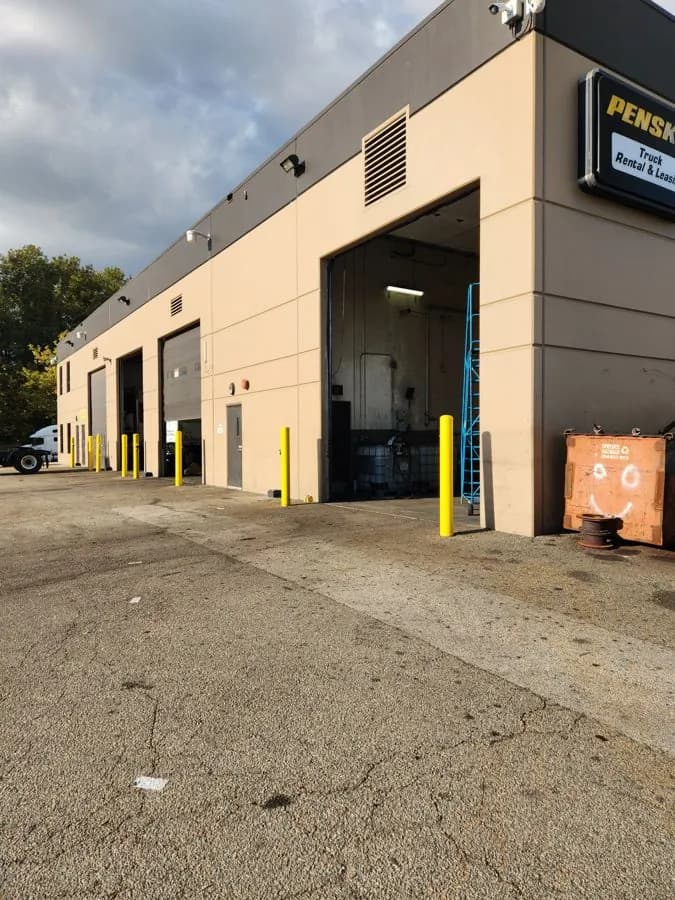
This isn’t legal advice. Read the sections yourself on worksafebc.com and talk to your safety advisor. But it’s an accurate map of where WorkSafeBC loading dock requirements actually come from.
The sections behind WorkSafeBC loading dock requirements
| Section | What it says (summarized) | Why it matters at a dock |
|---|---|---|
| 4.55 / 4.56 | Guardrails are needed where a raised floor or platform is 122 cm (4 ft) or more above the adjacent floor or grade. The exception: the front edge of a loading dock, provided effective measures protect workers from injury | An open dock edge is allowed, but only with other protection in place |
| 4.3(1)-(2) | Equipment must be used per the manufacturer’s instructions, if available. Installation, inspection, testing, repair and maintenance must follow the manufacturer’s instructions and any required standard, or a professional engineer | Your leveler, restraint and door manuals become the maintenance standard |
| 4.3(3) | Equipment found unsafe must be identified so it isn’t inadvertently returned to service until made safe | Tag out a damaged leveler or door, don’t just tell the shift |
| 16.9(1) | An operator must not leave mobile equipment controls unattended unless it’s secured against inadvertent movement with at least 2 effective braking or parking systems, which can include wheel chocks | Applies to your forklifts and other mobile equipment |
| 16.43 | Lift trucks must meet CAN/CSA B335-15 (or the listed ANSI/ITSDF standard) | WorkSafeBC’s guideline lists “loading trucks, trailers, and railway cars” among operator training topics |
| Part 10 | Energy sources must be isolated and locked out before maintenance | Applies when anyone works on a leveler, restraint or door operator |
1. The open dock edge: “effective measures”
Section 4.55 would normally require a guardrail on any platform 4 ft or more above grade, and most docks qualify. Section 4.56 exempts the front edge of a loading dock provided effective measures are taken to ensure that workers are protected from injury. The Regulation doesn’t list those measures. In practice that’s where your procedures, markings, closed overhead doors on empty positions and trailer restraint come in.
The overhead door is part of this. An empty dock position with the door closed is a wall. With the door open and no trailer, it’s a 4 ft drop. A dock door that won’t close, or creeps up, is a safety problem as well as a security one. Our loading dock door repair page covers those failures.
2. Trailer creep and early departure: where the rule really comes from
There’s no BC section that says “chock every trailer.” Section 16.9 deals with mobile equipment left unattended, and we couldn’t confirm WorkSafeBC applies it to a highway trailer parked at your dock. So don’t quote it that way.
The requirement usually comes through section 4.3 and the equipment manuals. For example, one hydraulic dock leveler user’s manual lists as an owner’s responsibility that the transport vehicle’s brakes are applied and wheel chocks or positive restraints that provide the equivalent protection of wheel chocks are engaged. A mechanical leveler manual’s daily checklist asks staff to verify that a vehicle restraint, or at minimum wheel chocks, are present and working. If your leveler manual says it, 4.3 makes following it part of your obligations.
MHI’s Loading Dock Equipment Manufacturers group (LODEM) describes a vehicle restraint as equipment intended to prevent a transport vehicle from leaving the dock during loading. It calls a trailer pulling away with a forklift operator still inside a serious safety hazard. It also notes red and green light systems can be added to improve communication between dock staff and drivers.
After a trailer pulls out under load
The same hydraulic leveler manual says a leveler that is structurally damaged, or has suddenly lost support under load (such as a trailer pulled out from under it), must be removed from service and inspected before use. Combined with section 4.3(3), that means tag it out and get it inspected, not just reset it and carry on.
3. Maintenance follows the manual
Section 4.3(2) is the one most sites underrate. Installation, inspection, testing, repair and maintenance must be done per the manufacturer’s instructions. For a dock that means:
- Dock levelers: intervals vary. One mechanical leveler manual calls for planned maintenance every three months on single shift and monthly on multi-shift. One hydraulic manual calls for inspection at least every 30 days. Our hydraulic vs mechanical leveler comparison covers the differences.
- Overhead doors: door and operator manufacturers publish their own maintenance and safety-device test schedules. Commercial operators must have monitored entrapment protection or constant-pressure close. See our commercial door safety devices guide.
- Records: the Regulation section quoted above doesn’t spell out a format, but if you can’t show the work was done to the manual, it’s hard to show you complied. A documented loading dock safety inspection gives you that record.
4. Forklifts and trailers
Section 16.43 requires lift trucks to meet CAN/CSA B335-15 (or the listed ANSI/ITSDF standard), and WorkSafeBC’s Part 16 guideline lists loading trucks, trailers and railway cars as an operator training topic. Forklifts running in and out of trailers also beat up door tracks, panels and bottom sections. Our forklift impact damage guide covers what to look for.
5. Lockout when anyone works on dock equipment
Part 10 applies to levelers, restraints and door operators like any other machinery. Section 10.3 says no maintenance work may be done until parts are secured against inadvertent movement, energy hazards are controlled, and the isolating devices are locked out. Levelers and doors also store mechanical energy in springs, so switching off the power isn’t enough on its own. We cover that in detail in our post on overhead door lockout.
A quick self-check against WorkSafeBC loading dock requirements
- Are empty dock doors kept closed, and do they stay closed?
- Is there a restraint or chock procedure, and does it match your leveler manual?
- Is maintenance on levelers, restraints and doors done and recorded to each manual’s interval?
- Is damaged equipment tagged out per section 4.3(3)?
- Do staff working on dock equipment follow a written lockout procedure?
We service the overhead doors and the dock equipment around them across Metro Vancouver. See our dock equipment repair page for leveler, shelter and restraint work.
Questions property managers ask us
Does WorkSafeBC have a specific loading dock regulation?
No single section covers loading docks. The BC OHS Regulation applies general sections instead: guardrails and the dock-edge exception in 4.55 and 4.56, equipment maintenance per the manufacturer in 4.3, mobile equipment in Part 16, and lockout in Part 10.
Does a loading dock edge need a guardrail in BC?
Section 4.55 requires guardrails at 122 cm (4 ft) or more above grade, but section 4.56 exempts the front edge of a loading dock provided effective measures are taken to ensure workers are protected from injury.
Does WorkSafeBC require wheel chocks on trailers at the dock?
We could not find a BC section that says that directly. The requirement usually comes from the equipment manuals, which section 4.3 requires you to follow. One hydraulic leveler manual requires trailer brakes applied and wheel chocks or equivalent positive restraints engaged.
How often does a dock leveler have to be maintained in BC?
Section 4.3 requires maintenance in accordance with the manufacturer’s instructions. Intervals vary. One mechanical leveler manual calls for planned maintenance every three months on single shift and monthly on multi-shift.
What should we do after a trailer pulls away with the leveler still on it?
Take the leveler out of service and have it inspected. One hydraulic leveler manual says a leveler that suddenly lost support under load must be removed from service and inspected, and section 4.3(3) requires unsafe equipment to be identified so it is not returned to service by mistake.
Book a look at your doors
Call (604) 206-5727 or use the contact page. We answer around the clock for commercial door failures. New commercial clients: 10% off labour on your first service call or repair. Mention NEW10 when booking (one per business, not combinable with maintenance-contract pricing, work booked by Dec 31, 2026).

