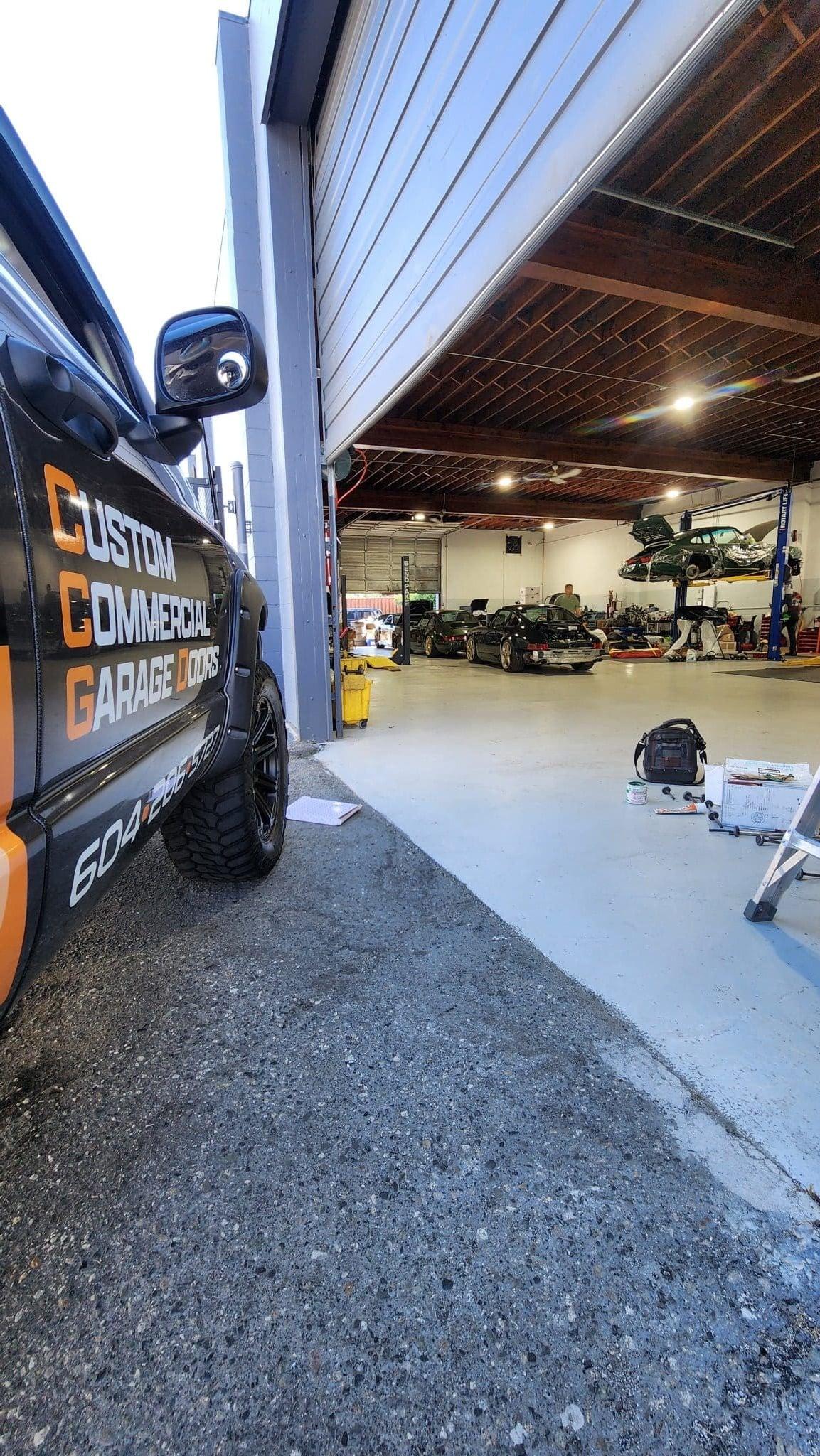
Rolling steel doors coil into a drum above the opening. Sectional doors break into horizontal panels that travel up vertical track and then back along the ceiling. That single mechanical difference drives every other distinction — headroom, cycle life, repair cost, and what happens when a forklift hits the curtain.
Headroom and sideroom: what the building gives you
A rolling door needs 18 to 24 inches of clear headroom for the drum and hood, plus six to twelve inches on each side for the guides. If your bay has a low ceiling, sprinkler mains, or HVAC ducts tight to the header, a rolling door often fits where a sectional cannot.
Sectional doors demand headroom equal to the door height plus 18 to 24 inches for horizontal track radius — 14 feet of door means roughly 16 feet of ceiling clearance. They also need three to six inches of sideroom per side for vertical track. In older warehouses with bar joists at 12 feet, sectional is simply off the table without structural work.
Cycle life and spring design
Rolling doors use a torsion spring barrel inside the drum. The spring is sized for the curtain weight and rated in cycles — typically 100,000 to 300,000 cycles on standard commercial models. The spring lives in a protected tube, shielded from weather and debris.
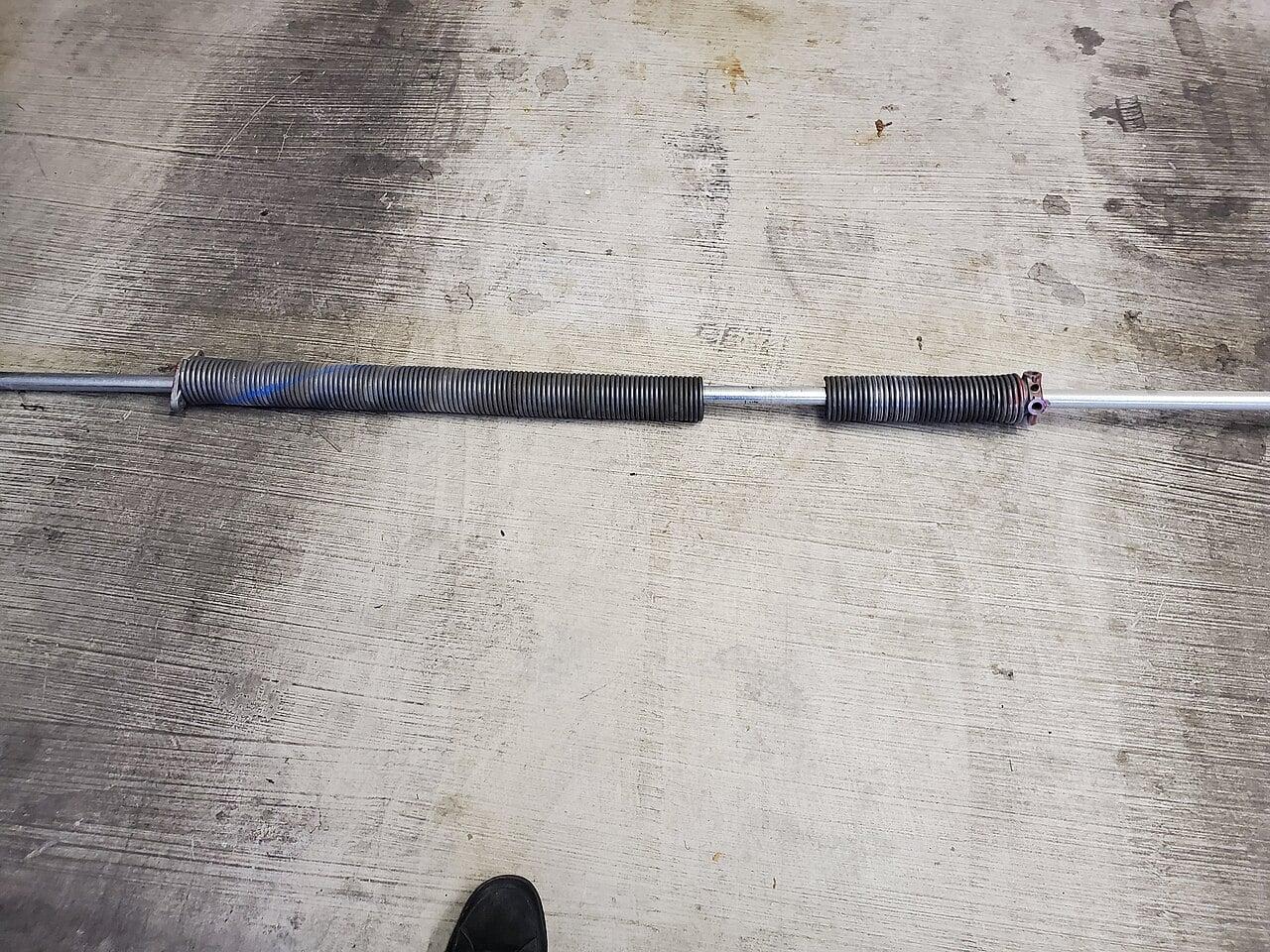
Sectional doors run torsion springs on a shaft across the header (standard-lift) or rear-mounted (high-lift). Same cycle ratings apply, but the springs are exposed. In a coastal climate where salt air settles on the shaft, uncoated springs corrode faster. We see sectional springs fail at 60,000 cycles in Richmond parkades where rolling springs in the same building are still running.
High-cycle spring upgrades exist for both types. The cost difference is modest; the downtime difference is not.
Impact resistance: forklift vs curtain
A rolling steel curtain is 18- to 24-gauge interlocking slats. A forklift tine at walking speed dents a slat. The door keeps running. You replace the damaged slats — usually three to five — without touching the drum or guides.
A sectional panel is 24- to 27-gauge steel skins with foam or honeycomb core. The same impact buckles the panel, often jams the rollers in the track, and can bend the vertical track itself. Repair means panel replacement plus track realignment, and frequently a spring re-tension because the cable drum slipped when the door jammed.
If your bay sees daily forklift traffic, rolling steel wins on durability. If the bay is a clean-room loading dock with pallet jacks only, sectional holds up fine and seals better.
Sealing and insulation
Sectional doors seal four ways: bottom astragal, jamb weatherstrip, header seal, and interlocking panel joints with thermal breaks. R-values of R-12 to R-18 are standard on 2-inch commercial panels. For heated warehouses or climate-controlled storage, sectional is the default.
Rolling doors seal at the bottom and along the guide channels. The curtain-to-guide gap is inherent — air moves through it. Insulated rolling slats exist (foam-filled, R-6 to R-9), but the perimeter leakage limits real-world performance. In a freezer bay, you add a high-speed fabric door inside the rolling door. That two-door system costs more upfront but solves the infiltration problem.
Maintenance reality
Rolling doors: lubricate the guide channels annually, inspect the curtain for bent slats, check spring tension every two years. The drum bearing is sealed; most technicians never touch it unless the spring breaks.
Sectional doors: lubricate rollers, hinges, and springs every six months. Check cable wear at the bottom bracket — that is the number-one failure point we see on sectional doors in high-cycle applications. Adjust track alignment annually as the building settles. Test the opener force limits monthly; a sectional door that binds will shred a gear drive in a weekend.
Both door types need a professional balance check once a year. An unbalanced door destroys operators and springs regardless of construction.
Operator mounting and power
Rolling doors take a side-mounted jackshaft operator on the drum end. The motor hangs beside the hood — compact, out of the way, easy to service from a ladder.
Sectional doors use a trolley operator on the ceiling (standard-lift) or a jackshaft on the torsion shaft (high-lift / vertical-lift). Trolley operators need ceiling space and a straight run; jackshaft operators need shaft access. In tight bays with crane rails or conveyor lines, the rolling door’s side-mount operator is often the only layout that fits.
Three-phase power is standard for both on doors over 14 feet wide or 200 lbs. Single-phase works on smaller doors but expect shorter motor life under heavy cycling.
Fire ratings and code
Rolling steel fire doors are a mature, listed product — 3-hour labels are common, drop-testing is straightforward, and the fusible link release is built into the drum. Sectional fire doors exist but are less common above 12 feet wide; the panel joints and track complexity make listing harder to maintain.
If your bay opens to a fire separation wall, confirm the listing matches the wall rating before you spec. We have replaced sectional fire doors that lost their label after a panel swap because the replacement panel wasn’t from the same listed assembly.
Decision matrix
| Factor | Rolling Steel | Sectional |
|---|---|---|
| Minimum headroom | 18–24 in | Door height + 18–24 in |
| Sideroom | 6–12 in/side | 3–6 in/side |
| Forklift impact | Replace slats | Replace panel + track work |
| Insulation (real-world) | R-6 to R-9 | R-12 to R-18 |
| Seal tightness | Moderate | High |
| Cycle life (standard) | 100k–300k | 100k–300k |
| Spring exposure | Protected | Exposed |
| Fire door availability | Excellent | Limited above 12 ft |
| Operator footprint | Side wall | Ceiling or shaft |
The short version
Low headroom, high abuse, exterior bay, no heating — rolling steel.
Heated space, tight seal required, clean traffic, ceiling height to spare — sectional.
Fire wall opening over 12 feet wide — rolling steel fire door.
Still unsure? Send a photo of the header and the ceiling plan. We’ll tell you which door fits before you order.
Call (604) 206-5727 — Metro Vancouver.