A commercial overhead door that cycles twenty times a day needs a spring system built for repetition, not just lifting force. Torsion springs handle that load by winding on a shaft above the door; extension springs stretch along the horizontal tracks. The physics dictate everything that follows — cycle rating, headroom, cable tension, and what happens when something breaks.
How each system stores energy
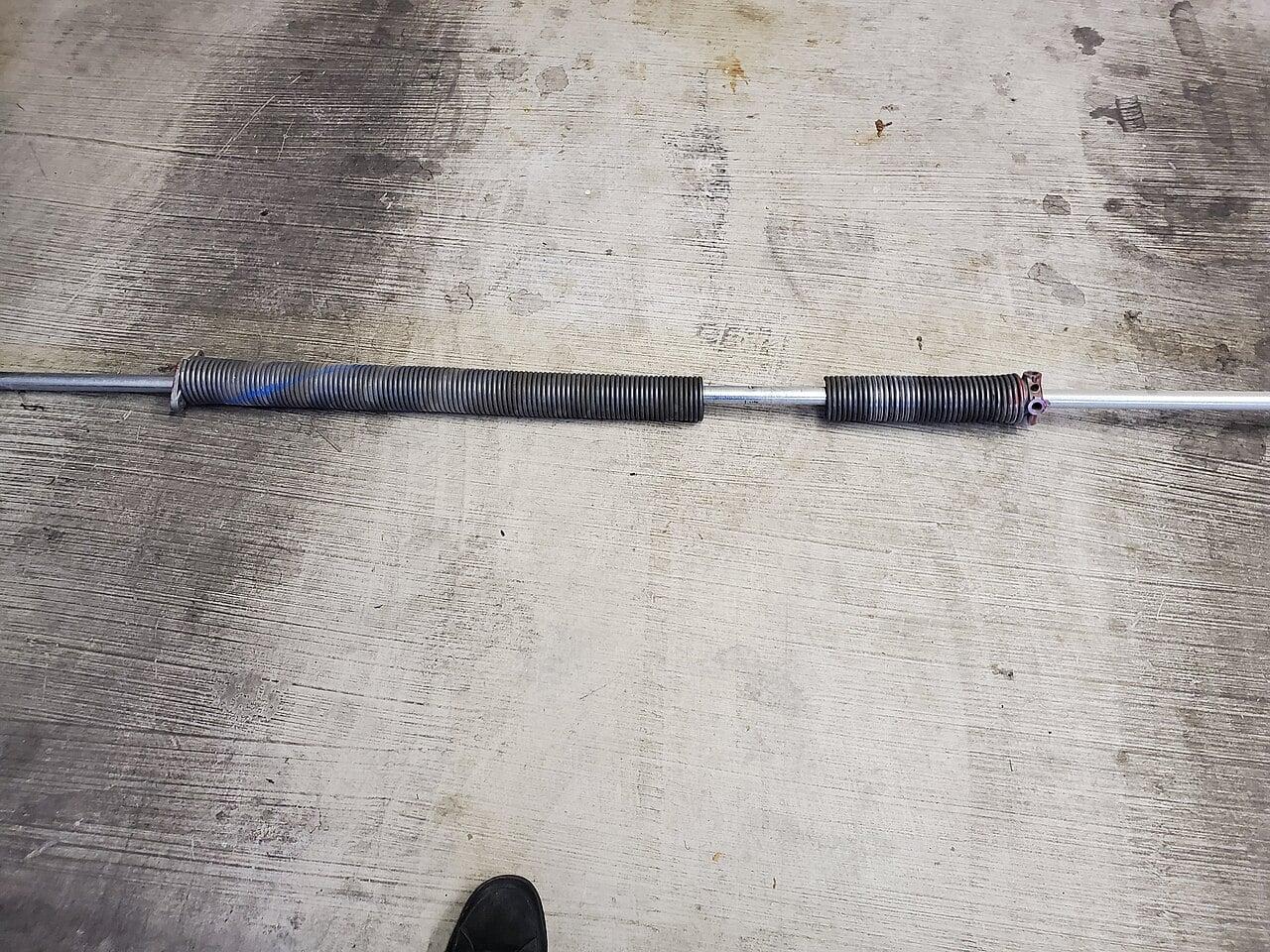
Torsion springs sit on a steel shaft mounted above the opening. As the door closes, cables pull the drums, winding the spring and storing torque. When the door opens, that torque unwinds and lifts the door through the same cables and drums. The force stays centered on the shaft. The door moves straight up because both sides pull equally, every cycle.
Extension springs run parallel to the horizontal tracks. Each spring stretches as the door descends, pulling on a pulley-and-cable assembly that multiplies the travel. The lift force comes from the sides. If one spring loses tension faster than the other — and they always do — the door walks sideways in the tracks. That walk wears rollers, hinges, and track brackets faster than the cycles alone would.
Cycle life is not a marketing number
A standard torsion spring on a commercial door rates 25,000 to 100,000 cycles depending on wire size and inside diameter. The math is straightforward: wire stress, mean diameter, and active coils determine the stress range per cycle. You spec the spring for the door weight and the expected daily cycles, and you get a predictable replacement interval.
Extension springs on the same door typically rate 10,000 to 15,000 cycles. The stretch geometry puts higher stress on the wire for the same lift force. The hooks and clips that terminate the spring add stress concentrations the torsion coil avoids. In a warehouse loading dock that sees fifty cycles a day, an extension spring fails in six months. The torsion spring on the identical door runs two to four years.
Headroom and sideroom drive the choice
Torsion needs 12 to 18 inches of headroom above the opening for the shaft, drums, and spring stack. Low-headroom drums and dual-shaft setups can shave that to 8 inches in tight parkades, but you lose some cycle rating on the smaller drums.
Extension springs need almost no headroom — they live in the horizontal track space. What they demand is sideroom: 4 to 6 inches on each side for the spring, pulley, and cable run. In a retrofit where the header is tight but the side walls are open, extension fits where torsion cannot. That is the only common reason to specify extension on a new commercial install.
Safety cables are not optional
When a torsion spring breaks, the stored energy releases into the shaft. The spring uncoils violently but stays on the shaft. The door drops. The cables go slack. Nobody gets hit by flying metal unless they are standing under a falling door — which is its own hazard.
When an extension spring breaks, the stored energy releases along the spring’s axis. The spring becomes a projectile. A safety cable threaded through the center of each spring catches it. Without that cable, the broken spring crosses the bay at spear velocity. I have seen one punch through a block wall. Every extension installation needs safety cables, inspected at every service call. If the clips are corroded or the cable is frayed, replace them. It takes ten minutes and costs almost nothing.
Adjustment and balance
Torsion adjustment happens on the shaft. You add or remove quarter-turns of winding until the door balances at mid-travel. The adjustment is repeatable and measurable — count the turns, write it on the tag. Two technicians get the same result.
Extension adjustment moves the S-hook or clip along the track hanger. You stretch the spring more or less. The adjustment changes the spring rate slightly because the active length changes. It also changes the cable tension unevenly side to side. Balancing an extension door is feel and guesswork. Balancing a torsion door is arithmetic.
When extension makes sense
- Retrofit with 6 inches of headroom and no budget to reframe the header.
- Door width under 10 feet, cycles under 10 per day, sideroom available.
- Temporary structures where the door system moves with the building.
That is the list. If your door does not fit one of those bullets, torsion is the correct specification.
What to watch for on an existing door
Torsion: gaps between coils on a wound spring mean the spring is relaxing — it has lost torque and the opener is carrying more load than it should. Rust streaks on the coils mean moisture is working the wire. A shaft that wobbles in the end bearings means the bearings are shot and the spring is loading eccentrically.
Extension: uneven stretch between the two springs. Frayed safety cables. Pulley bearings that howl on the down stroke. Track brackets pulling away from the jamb because the side-pull force has nowhere else to go.
Next step
If you are speccing a new commercial door, start with the headroom measurement. If you have 12 inches, spec torsion. If you are maintaining an existing extension door, put safety cables on the next service ticket and plan the conversion to torsion at the next spring replacement. The parts cost difference is small. The labor is the same. The cycle life difference pays for itself in the first year.
Call (604) 206-5727 — Metro Vancouver.