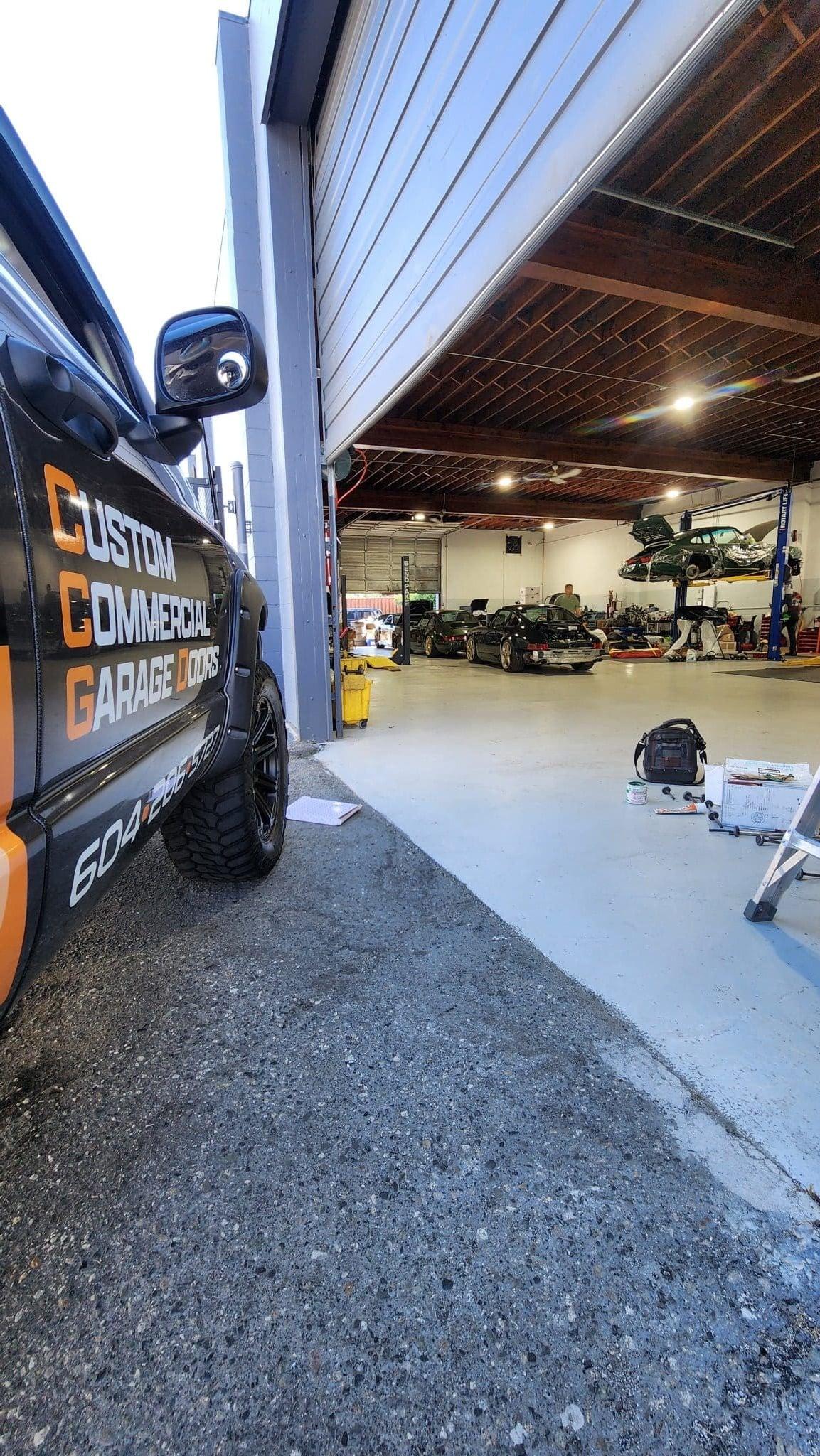
A forklift tine catches the bottom section of a 14-foot warehouse door. The panel buckles. The door still opens, barely, scraping the track. You need it fixed yesterday. The question is whether you order a single section or spec a complete new door.
The answer lives in three places: the track, the spring system, and the header.
What the damage actually tells you
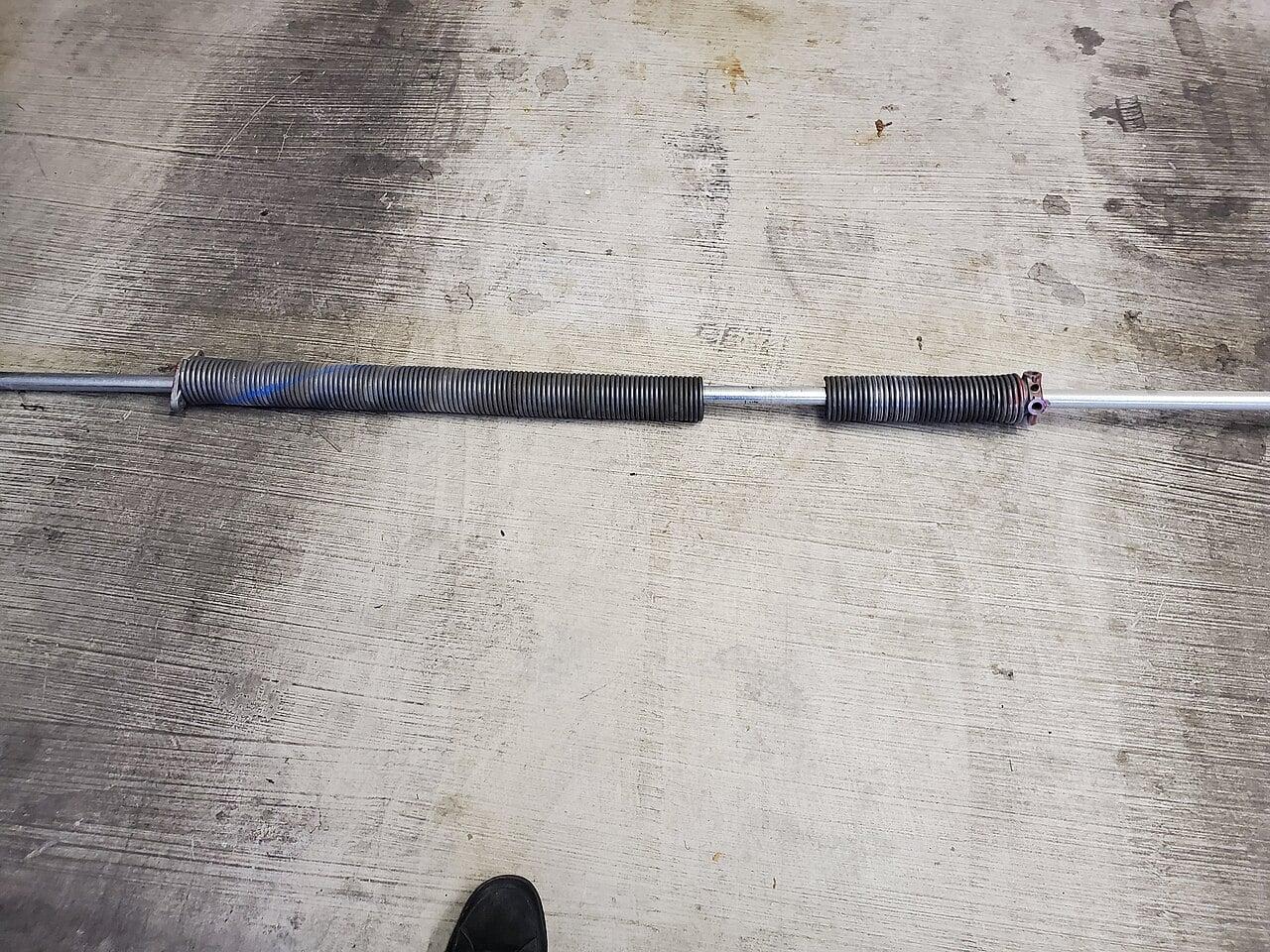
A dented panel is visible. What it hides is the real problem. Impact force travels. It bends the vertical track where the rollers sit. It tweaks the horizontal track radius. It shifts the header bracket. It can stretch a torsion spring past its elastic limit without snapping it — leaving you with a spring that looks fine but cycles unevenly.
Run your hand along the track flange where the damaged panel sits. Feel for a lip or flat spot. Spin each roller. If one drags or chatters, the track is bent. That track will eat a new panel inside two weeks.
When a panel swap makes sense
The door is under ten years old. The manufacturer still runs the section profile. The track is straight, the header is plumb, and the spring balance tests within spec — meaning the door holds at waist height when you disconnect the operator and lift by hand.
You also need the exact section: same gauge, same rib pattern, same end-stile hardware, same hinge locations. On an Amarr or Raynor door that’s still in production, lead time is typically five to ten business days. On a Hörmann or Manaras, it can be longer if the colour or texture is a special order.
Labour for a single-section swap on a standard-lift commercial door runs two to three hours with two techs. The door comes down, the section comes out, the new one goes in, hinges and rollers transfer over, tension resets, safety devices re-test. Done.
When the whole door has to go
The section is discontinued. Happens more than owners realize — manufacturers rationalize lines every few years. If you can’t get the panel, you’re not repairing the door; you’re patching it.
The track is bent. Straightening commercial track in place rarely holds. The steel has work-hardened. A new panel on bent track will bind, gap, and eventually pop the rollers.
The header has shifted. Look at the flag bracket where the horizontal track meets the wall. If the lag bolts have pulled or the concrete is spalled, the door will never seal. You’re chasing a moving target.
The spring system is mismatched. Older doors often carry springs sized for the original weight. Add a heavier replacement panel — even a few pounds — and the balance shifts. The operator works harder. The spring fatigues faster. The cables see uneven load. You’ll be back in six months replacing a spring that should have lasted five years.
The door has taken multiple hits. Three panel swaps over five years equals one new door in cost, with none of the warranty or thermal performance.
The insulation trap
This catches people. You order a replacement panel for an insulated door. The new section arrives with a higher R-value core because the manufacturer updated the foam formulation. The old sections are lighter. The spring balance is now off. The door drifts down. The operator strains. You either re-spring the whole door — which is most of a full replacement labour-wise — or you live with a door that fights you every cycle.
Ask for the panel weight before you order. Compare it to the spec sheet on the existing door. If the supplier can’t tell you, don’t buy.
Lead time reality
Single panel, in stock locally: two to three days. Single panel, factory order: two to three weeks. Full door, standard size and spec: one to two weeks. Full door, custom width, high-lift track, insulated, powder-coated: four to six weeks.
If the dock is down and the building is open to weather, lead time decides for you. A temporary track brace and a strap across the opening buys you the factory lead time. It does not buy you a panel that doesn’t exist.
What the operator sees
A new door on old track is a warranty claim waiting to happen. Most commercial operator manufacturers — LiftMaster Maxum, Manaras, Hörmann — require the door to meet spec for balance, alignment, and seal. If you hang a new curtain on track that has a quarter-inch wobble, the operator senses the resistance, ramps force, and eventually trips the overload or shears the drive sprocket.
The service call to diagnose that costs more than the track replacement would have.
Decision checklist
Walk the door with this in hand. Check each box honestly.
- [ ] Section profile still in production
- [ ] Track straight, no flat spots on radius
- [ ] Header solid, flag brackets tight
- [ ] Spring balance test passes (door holds at mid-height)
- [ ] Replacement panel weight matches original within 2 lbs
- [ ] No more than one previous panel replacement on this door
- [ ] Lead time fits your operational window
Seven checks. If any one fails, spec the full door. The math only looks closer on paper.
Next step
Text a photo of the damaged section, the track at the impact point, and the spring tag to (604) 206-5727. We’ll tell you which path is real and which is a patch. No charge for the triage.