A power outage does not care about your loading dock schedule. When the grid goes down, the operator stops, and the door becomes a dead weight — anywhere from 300 to 2,000 pounds of steel and insulation sitting in the tracks. The only way to move it is the manual override built into every commercial operator. Knowing which one you have and how to use it before the lights go out is the difference between a ten-minute delay and a crew standing around waiting for a service truck.
Find the override before you need it
Every commercial operator — LiftMaster Maxum, Manaras, Hörmann, or a legacy brand — ships with a manual release mechanism. The three most common types are a chain hoist hanging beside the motor, a hand crank that inserts into the operator housing, and a red emergency release cord or lever on the trolley. Walk each door in your building right now. Locate the device. Confirm it moves freely. If the chain is seized with rust or the crank socket is stripped, you do not have a manual override. You have a decoration.
Chain hoists are standard on jackshaft operators mounted beside the torsion shaft. The chain loops down to about shoulder height. Pull the hand chain in the direction marked “open” — usually a sticker on the hoist housing or an arrow cast into the body. One full pull typically moves the door six to twelve inches. A 16-foot sectional takes thirty to forty pulls. It is slow, deliberate work. Do not jerk the chain. A sudden shock load can snap the hoist’s internal pawl or jump the chain off the pocket wheel, leaving you with no override at all.
Hand cranks live on trolley operators and some direct-drive units. The crank handle stores in a bracket on the operator cover or hangs on a nearby wall hook. Insert the square or hex end into the drive socket on the operator body — often behind a removable plug. Turn steadily. You are driving the same gear train the motor uses, only at human speed. If the crank binds after a few turns, stop. Forcing it strips the socket or shears the crank pin. That operator is now locked until a technician replaces the drive assembly.
Red emergency release cords hang from the trolley on drawbar operators — the ones where the motor sits on the ceiling and a rail runs to the door. Pulling the cord drops the trolley off the drive chain or belt. The door is now free-floating on its springs. This is the fastest way to open the door, and the most dangerous. A properly balanced door will stay where you put it. An unbalanced door — springs worn, cables frayed, or a section damaged by a forklift — will crash down or fly up the moment you let go. If you are not certain the springs are holding the weight, do not pull the cord. Call for service instead.
Check spring balance before you disengage
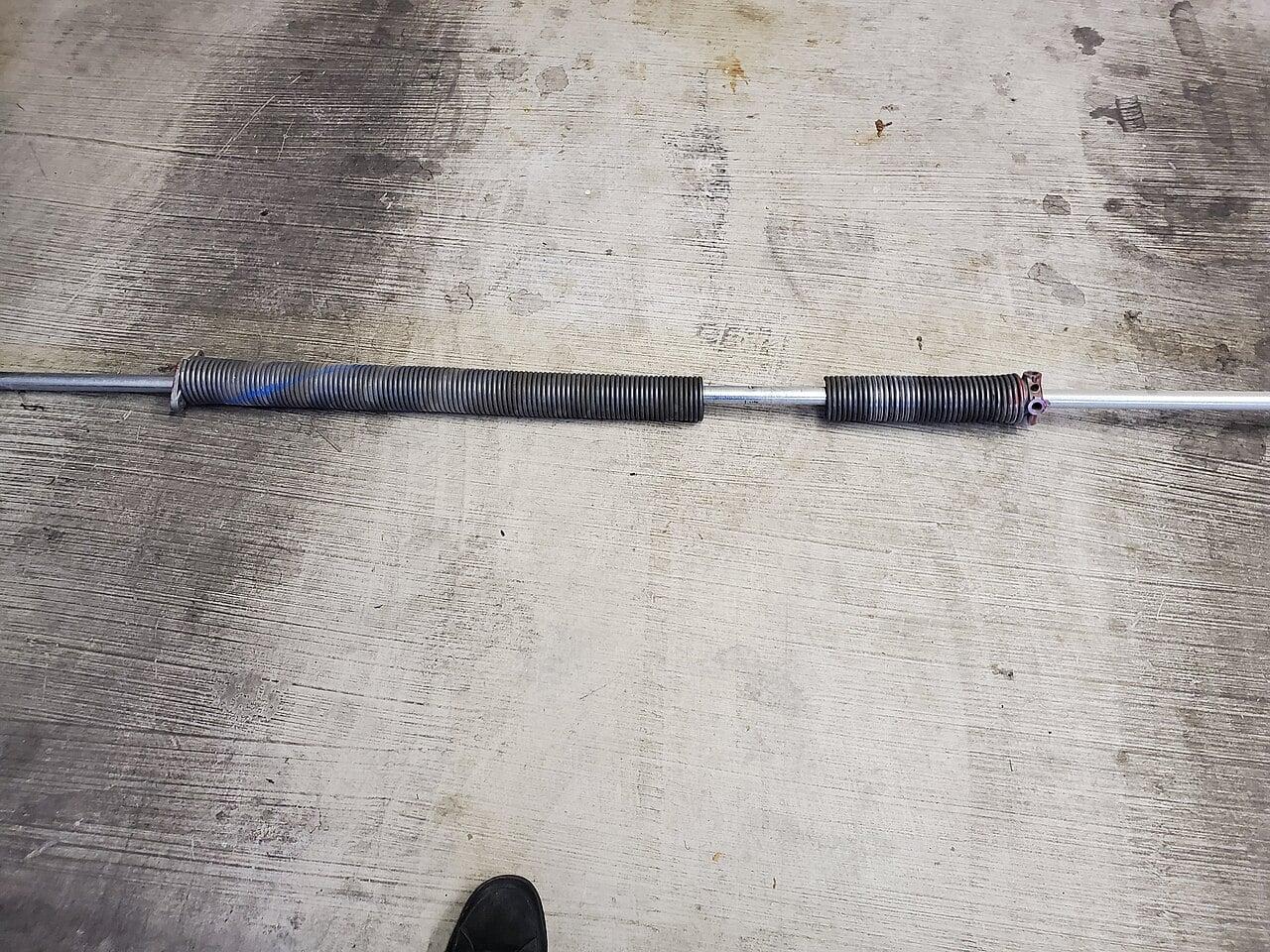
Torsion springs carry the door’s weight. Extension springs do the same job on lighter doors. When the operator is engaged, the motor fights the spring tension. When you disengage, the springs take the full load. If a spring is broken, the door has no counterbalance. A 14-foot by 14-foot insulated sectional with a broken spring weighs what it weighs — 1,200 pounds or more — and you are not moving it by hand. The chain hoist or crank will stall. The emergency release will drop the door like a guillotine.
Stand clear of the door’s path. Have a second person watch the springs and cables while you operate the override. If you see a spring gap — two coils separated where they should touch — or a cable with slack on one side and tension on the other, stop. The door is not safe to move manually. Secure the opening with straps or blocking if you must leave it, and wait for a technician.
Lock the door in position once it’s open
A door held only by spring balance is not secured. A gust of wind, a bump from a pallet jack, or vibration from overhead equipment can start it moving. Chain hoists have a brake that holds when you let go of the chain — test it by releasing tension slowly after a few pulls. If the door creeps, the brake is worn. Hand cranks rely on the operator’s internal worm gear to hold position; most do, but verify before you walk away. Doors released by the emergency cord have no brake at all. You must clamp the track or install a manual slide lock — the pin that drops into the vertical track — on both sides. If your doors do not have slide locks, order them. They cost a fraction of a service call and they work when the power does not.
Re-engage the operator correctly when power returns
This is where most damage happens. The operator’s limit switches remember where “open” and “closed” are. If you moved the door manually, the door and the operator are now out of sync. Do not hit the wall button and hope. On chain hoist and crank systems, return the override to its neutral or engaged position — usually a lever on the hoist or simply removing the crank — then run the operator through a full close-and-open cycle using the wall control. Watch the door. If it stops short, reverses, or hits the floor hard, the limits need resetting. On drawbar operators, you must manually slide the trolley back onto the drive chain until it clicks into the re-engage position. Only then cycle the operator. If the trolley misses the catch, the next cycle strips the drive gear.
Cold weather changes everything
At minus ten, grease in the chain hoist stiffens. Nylon rollers on the door sections flatten where they sit in the track, creating a flat spot that grabs on the first inch of travel. The chain may need a few hard pulls to break free. The crank socket may feel seized. Warm the operator housing with a torpedo heater for five minutes if you can. Do not use an open flame. Do not spray WD-40 into the hoist — it washes out the factory grease and attracts grit. A light coat of synthetic spray lubricant on the chain and pocket wheel in November prevents most winter seizures.
When to stop and call
- The override device itself is damaged, seized, or missing.
- The door moves unevenly — one side leads, cables slack on one drum.
- You hear grinding, popping, or a loud bang from the spring assembly.
- The door weighs more than two people can control once released.
- Power is restored but the operator trips its thermal overload or makes a humming noise without moving.
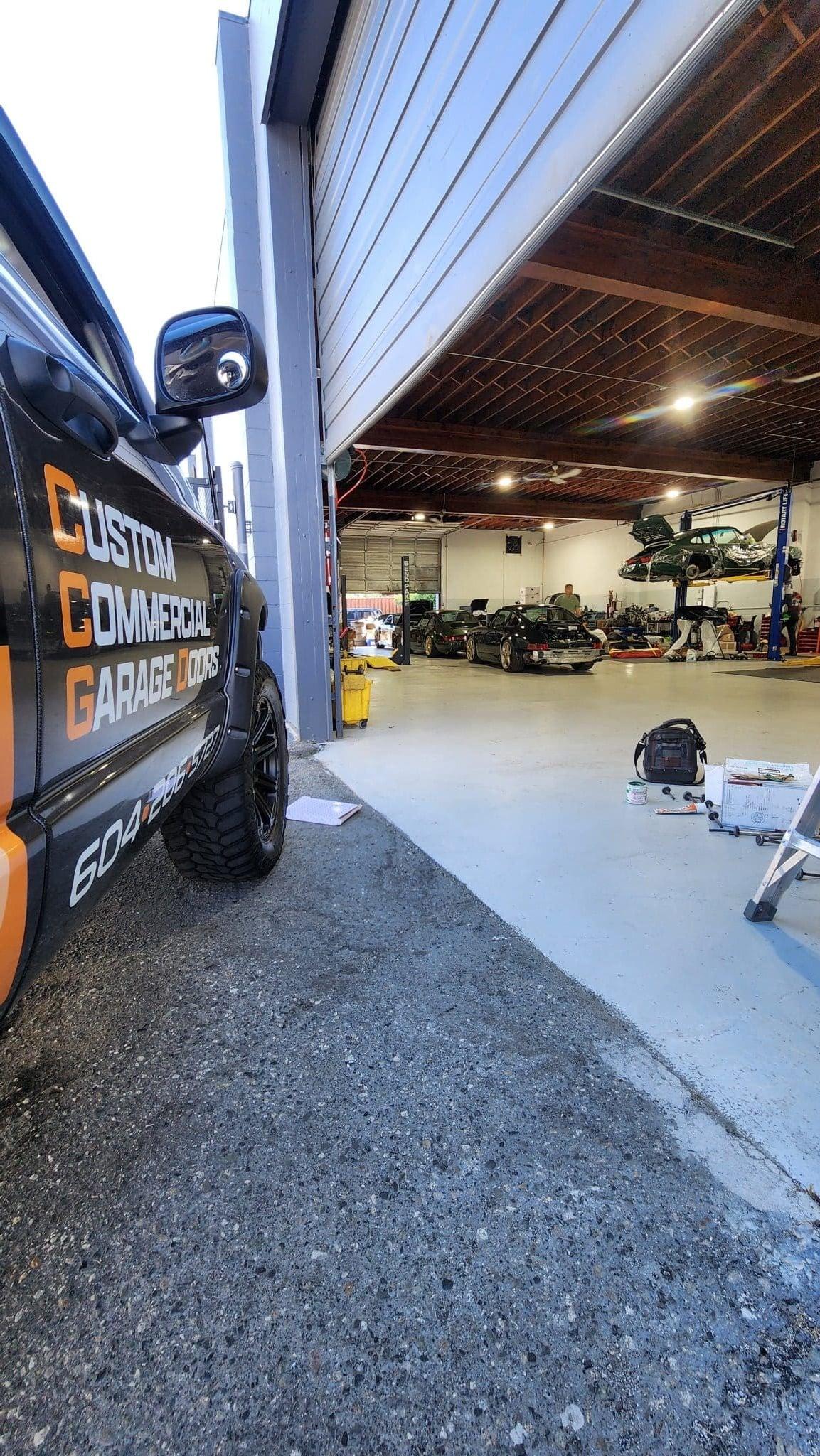
CCGDS runs 24-hour emergency dispatch across Metro Vancouver. The voice AI answers every call, captures the door type and issue, and sends the nearest technician with the right parts — springs, cables, hoist components, operator boards. Most Richmond industrial sites see a truck in thirty to forty-five minutes during business hours; thirty to sixty minutes at 2 AM. If the manual override fails, you are not solving it with improvisation. You are waiting for someone who does this for a living.
Call (604) 206-5727 — Metro Vancouver.