Car wash bay doors do not wear out. They dissolve. The combination of heated water, alkaline detergents, road salt, and constant humidity attacks every component at once — tracks, springs, hinges, cables, rollers, and the operator hanging above it all. A door that lasts twenty years in a warehouse lasts three in a busy wash bay if it was spec’d wrong.
The failure pattern is predictable. It starts at the bottom panel and works up. It starts at the cable drums and works in. It starts at the operator’s limit switches and works through the logic board. Knowing where to look lets you catch it before the bay goes down on a Saturday afternoon.
What the chemicals actually attack
Alkaline presoaks and tire cleaners run at pH 11 to 13. That is not “harsh.” That is caustic. It strips the passivation layer off galvanized track in months, not years. Once the zinc is gone, the base steel corrodes at the same rate as raw plate in a salt fog chamber. Powder coat lasts longer but fails at the first scratch — forklift tine, pallet corner, ice scraper — and the corrosion undercuts the coating sideways.
Stainless 304 holds up until chlorides concentrate in the crevices. Then it pits. 316 is the minimum for anything that stays wet. Nylon rollers swell and crack. Steel rollers seize. Sealed bearings last longer than open ones, but the seals themselves harden and leak. There is no perfect roller. There is only the one you replace on a schedule instead of waiting for it to flat-spot and shred the cable.
Springs: the hidden clock
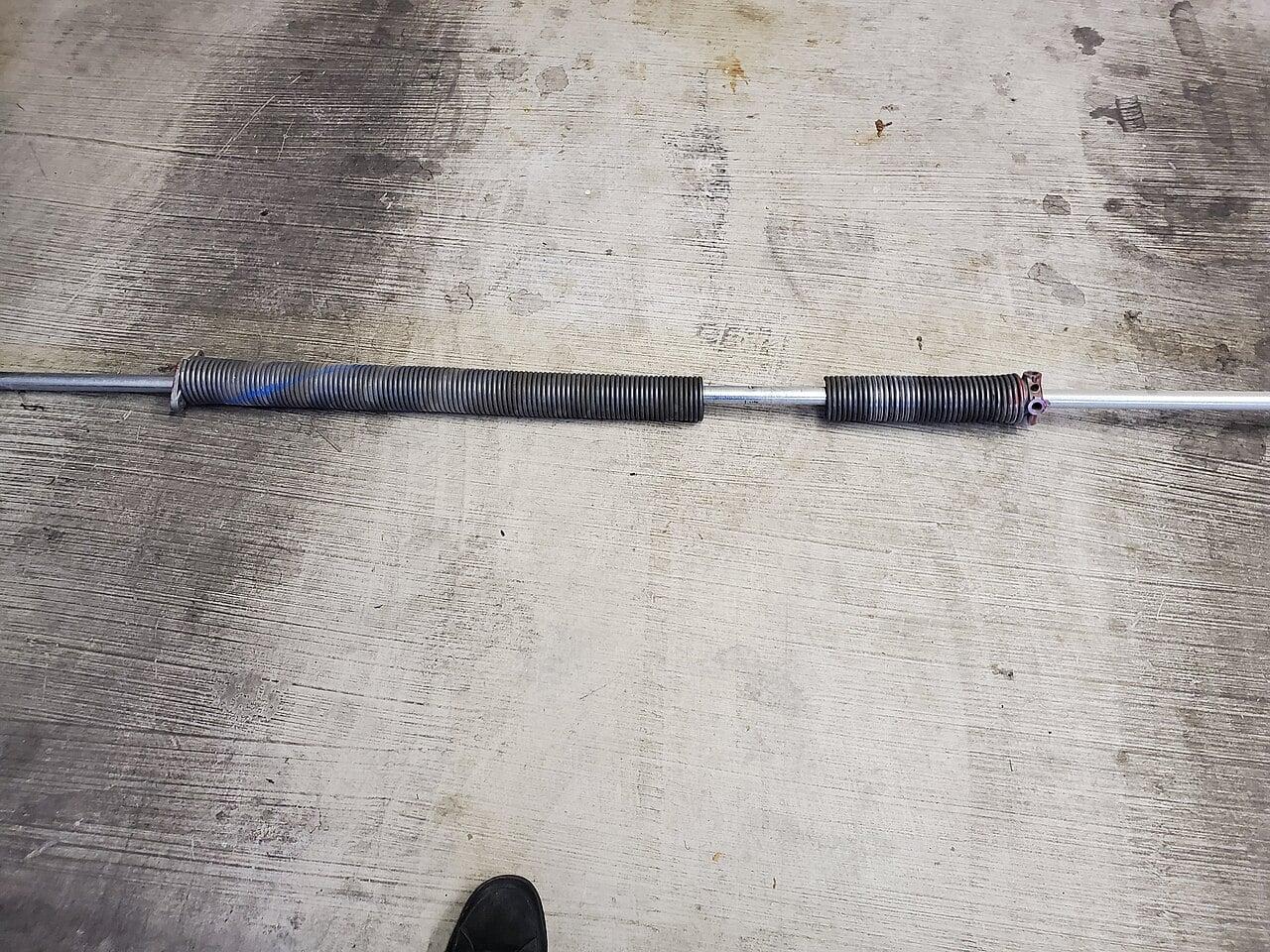
Torsion springs in a car wash do not fail from cycle count. They fail from stress corrosion cracking. The wire surface sees tension, moisture, and chloride all at once. Micro-cracks form at surface defects and propagate under the static load. One day the spring snaps with a crack like a rifle shot. The door drops. The cable whips. If the bay is occupied, the vehicle takes the hit.
Oil-tempered wire lasts longer than galvanized. Shot-peened lasts longer than plain. But the only real fix is treating springs as a wear item with a calendar life, not a cycle life. In a high-volume bay, that is twelve to eighteen months. In a seasonal wash, twenty-four. Mark the install date on the spring cone with paint pen. Replace on schedule.
Cables and bottom brackets
Aircraft cable is galvanized. The galvanizing lasts until the first wash cycle. After that, the wire strands corrode against each other inside the lay. You cannot see it from the outside. The cable loses cross-section until it parts under load — usually at the bottom bracket where the ferrule traps moisture.
Stainless 316 cable solves the corrosion. It introduces a new problem: galling at the ferrule and drum groove. The fix is a thimble eye with a stainless thimble, swaged with a copper sleeve, and a drum grooved for the larger diameter. Costs more. Lasts years instead of months.
Bottom brackets rot where the cable attaches. The bracket sits in the spray zone. Galvanized brackets last a year. Stainless brackets last the door’s life. Spec them once and stop replacing them.
Operators: the control box is the weak point
The operator body hangs high and stays relatively dry. The control box, limit switches, and photo-eyes do not. Mount the operator on the wall beside the opening, not above it, if headroom allows. Run the control box to a dry wall — inside the equipment room, not the wash bay. Use NEMA 4X enclosures for any electronics that must stay in the bay. Seal every conduit entry with duct seal putty, not tape. Condensation travels down conduit like a wick.
Limit switches on commercial operators (LiftMaster Maxum, Manaras, Hörmann) are mechanical or magnetic. Mechanical switches corrode at the plunger. Magnetic switches fail when the sensing magnet falls off the drum or the reed switch corrodes. Replace the limit assembly as a unit every two years. It takes twenty minutes and prevents the door from over-traveling into the header.
Photo-eyes fog. The lenses etch. The emitters drift. Clean them weekly with a microfiber cloth and isopropyl. Replace the pair annually. They are cheap. A door that closes on a customer’s hood is not.
Track and hardware choices that hold up
Standard 2-inch galvanized track: twelve to eighteen months in a busy bay. Hot-dip galvanized after fabrication: two to three years. 304 stainless track: four to six years, then pitting at the bolt holes. 316 stainless track: ten-plus years. The cost difference between 304 and 316 is roughly 15 percent. The labor to replace track is the same. Do the math once.
Hinges: 11-gauge galvanized fail at the pivot hole. 316 stainless hinges with bronze bushings eliminate the pivot wear. They cost three times as much. You buy them once.
Shaft: solid 1-inch cold-rolled steel rusts at the keyways and bearing races. 316 stainless shaft costs more than the rest of the hardware combined. It also eliminates the single point that drops the entire door if it shears. In a high-volume bay, it pays for itself the first time you do not have to emergency-swap a shaft on a holiday weekend.
Maintenance that actually works
Quarterly: wash the tracks, hinges, and rollers with fresh water. No soap — it adds surfactants. Rinse until the runoff runs neutral on pH paper. Dry with compressed air. Spray the springs with a light coat of synthetic PTFE lubricant (not WD-40, not motor oil). Wipe excess. Lubricate the operator chain or belt per the manual.
Semi-annually: pull the cables off the drums. Inspect every inch. Replace at the first sign of red dust between strands. Check the bottom bracket bolts — they loosen from vibration. Torque to spec. Test the operator limits and safety reversal with a 2×4 block. Verify the photo-eyes align and the indicator LEDs are solid.
Annually: replace the springs, cables, and photo-eyes on the calendar. Not “when they look bad.” On the calendar. A bay down for four hours on a planned Tuesday costs less than a bay down for six hours on an unplanned Saturday with a tow bill and a dented BMW.
When to replace the whole door
Panels delaminate. The skins separate from the foam core at the bottom seal. Water wicks up the channels and freezes. The panel bows. The door binds. You can replace the bottom panel once. Twice, and the labor equals a new door.
If the track is pitted past the point where rollers run true, replace the track. If the shaft shows corrosion at the bearing races, replace the shaft. If the operator housing is pitting, the internal gears are next. At that point you are rebuilding the door piece by piece. A new 316 stainless sectional with a wall-mounted operator in a dry room costs less than two years of piecemeal repairs and the lost revenue while the bay is down.
What to spec for a new bay
- 316 stainless track, hinges, shaft, bottom brackets, and cable drums
- 316 stainless aircraft cable with thimble eyes
- Oil-tempered, shot-peened torsion springs — painted, not galvanized
- Sealed-bearing nylon rollers with stainless stems
- Wall-mounted operator with control box in a dry room, NEMA 4X enclosure
- Photo-eyes mounted at 6 and 18 inches, angled slightly down to shed water
- Bottom seal: triple-contact EPDM with aluminum retainer, not vinyl
- Header and jamb seals: EPDM bulb seal in aluminum retainer
The door costs 2.5 to 3 times a standard galvanized package. It lasts five to seven times longer. The math works if you own the building. If you lease, negotiate the spec into the tenant improvement allowance or walk away. A landlord who specs a galvanized door in a car wash is transferring the replacement cost to you.
Bottom seal material decides how fast the rot climbs
Standard vinyl bottom seals turn brittle and crack within months once alkaline runoff pools against them. Once the seal splits, every wash cycle pumps fresh chemical directly into the bottom panel's insulation and the horizontal track, accelerating the dissolve from the inside out. We spec EPDM or silicone bulb seals rated for continuous chemical exposure; they stay flexible and hold contact against the concrete even when the floor slopes toward the drain.
Check the seal at every service visit by running a gloved finger along the full width — if it feels hard, shows surface crazing, or leaves residue on the glove, replace it before the next weekend rush. A ten-minute swap on a quiet morning beats a bay-down emergency when the garage door freezes to the floor or the bottom panel delaminates halfway through the day.
—
Call (604) 206-5727 — Metro Vancouver.