Every BC strata with five or more lots now has to get a depreciation report at least every five years. The parkade door is one of the few items in that report that wears out by use rather than by age. Here is how it fits the rules, and what a council can hand the report writer so the numbers aren't a guess.
A parkade door can look fine from the lobby and still be a year from a major repair. That’s why it causes trouble in depreciation reports. A roof ages with the calendar. A parkade door and its operator age with every car that goes in and out. If the report writer only sees the door on one site visit, the service life in the report is an estimate based on looks. A council that supplies real data gets a better parkade door depreciation report entry, and fewer surprises in the contingency reserve fund.

The rules in 2026: who needs a report and how often
The Strata Property Act, section 94(2), says a strata corporation must obtain, from a qualified person, “a depreciation report estimating the repair and replacement cost for major items in the strata corporation and the expected life of those items.” The details are in the Strata Property Regulation:
- Every 5 years. Regulation 6.21(2): a strata corporation “must obtain a new depreciation report at least once every 5 years.”
- No more waiving it. The old ¾-vote deferral in the Act is repealed. The Province’s strata pages say stratas “can no longer defer getting a depreciation report by an annual ¾ vote”, effective July 1, 2024.
- Catch-up deadline already passed for Metro Vancouver. Under 6.21(3), a strata established before July 1, 2024 with no report since December 31, 2020 had to get one before July 1, 2026 if it’s in Metro Vancouver, the Fraser Valley or the Capital Regional District.
- Small stratas are exempt. Regulation 6.22: the requirement doesn’t apply while there are fewer than 5 strata lots.
- Who can write it. For reports obtained on or after July 1, 2025, Regulation 6.2(0.1) limits the “qualified person” to listed professional designations: engineers and engineering licensees, architects and architectural technologists, applied science technologists and certified technicians, AACI appraisers, REIC certified reserve planners, and professional quantity surveyors.
A door contractor isn’t on that list. What a door contractor can do is give the qualified person facts about the doors that a visual inspection can’t show.
Where the parkade door sits in a depreciation report
Regulation 6.2(2)(b) says the physical component inventory must describe, and give a 30-year estimated service life for, common property and assets the strata must repair. It lists items “including, but not limited to”:
- “the building’s exterior, including roofs, roof decks, doors, windows and skylights” (6.2(2)(b)(ii)),
- “the building’s systems, including the electrical, heating, ventilation, air conditioning, plumbing, fire protection and security systems” (6.2(2)(b)(iii)), and
- “parking facilities and roadways” (6.2(2)(b)(v)).
A parkade entry touches all three: the door itself, the operator and access controls (part of the building’s security), and the parking facility it serves. Some reports lump them into one line. We think it’s more useful to split them, because they wear out on different schedules:
| Component | What drives its life | Data that helps the planner |
|---|---|---|
| Door sections or curtain | Vehicle strikes, corrosion, cycles on hinges and rollers | Door type, size, gauge, impact history |
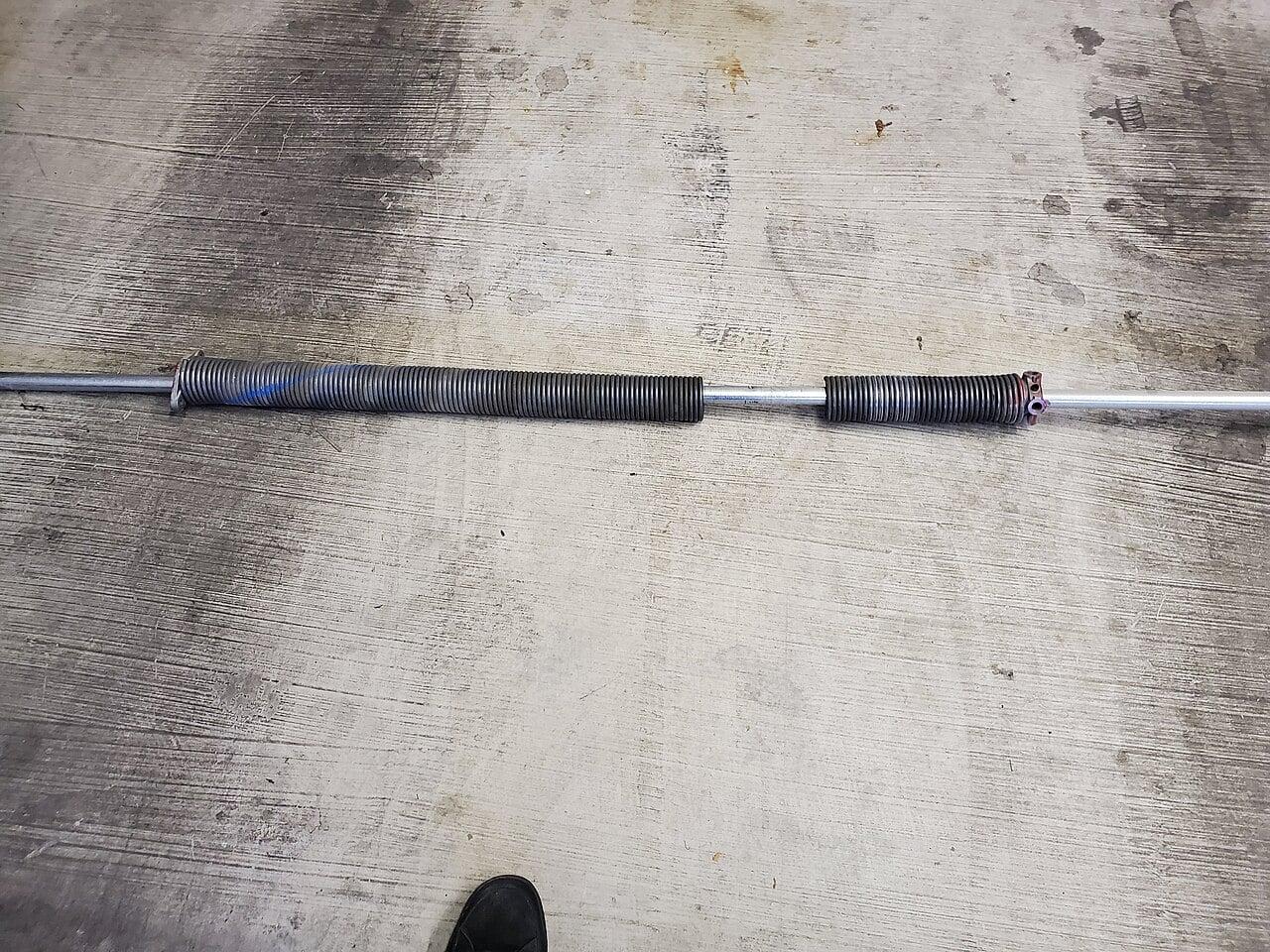
| Springs, cables, drums | Cycles. Springs are rated in cycles, not years | Spring cycle rating, install date, cycle count |
| Operator (motor, board, brake) | Duty rating vs actual cycles per day | Make, model, duty rating, age, repair history |
| Safety devices and access controls | Weather, impacts, parts availability | Photo eyes or edges, receiver, keypad or fob reader models |
What to give the person writing your parkade door depreciation report
Regulation 6.2(2)(a) says the inventory is based on an on-site visual inspection “conducted by the person preparing the depreciation report”. A visual inspection can see dents and rust. It can’t see how many times the door ran last year. Here’s the package we suggest councils assemble before the site visit:
- Cycle counts. Many commercial operators keep a count on the board. LiftMaster’s Logic 5.0 manual describes an absolute cycle counter that is not reset (see our Logic 5 cycle counter guide), and Manaras sells a six-digit non-resettable counter kit. Two readings a few months apart give a real cycles-per-day figure. Our parkade cycle count article shows the arithmetic.
- Operator make, model and duty rating. Manufacturers publish duty ratings. LiftMaster lists its APT apartment trolley at over 100 cycles per day. Manaras lists its OTH-A apartment trolley at 30 cycles per hour and more than 100 cycles per day. If your building runs more cycles than the operator is rated for, the planner should know that.
- Install dates for the door, the operator and the last spring change.
- Two to three years of service invoices. Repeated repairs on the same part are a sign the remaining life is short.
- Impact history. Vehicle strikes shorten door life and often show up as recurring track or section repairs.
- Any discontinued parts your service company has flagged. A board you can’t get any more can end an operator’s life early.
Why cycle data matters more than age
Two identical doors installed the same year can be in very different shape. One serves 20 townhouses. The other serves a 200-unit tower. Cycle-rated parts (springs especially) will fail on cycles whatever the calendar says. A report that gives both the same life is wrong for one of them. If the counter on your operator has never been read, have it read now and again in three months. That’s the cheapest data your next report will get.
Turning the parkade door depreciation report into a funding decision
Regulation 6.2(3) says the financial section must project maintenance, repair and replacement costs over 30 years and include “at least 3 cash-flow funding models” for the contingency reserve fund (CRF). Those models may use CRF contributions, special levies and borrowing (6.2(4)).
The report matters again when it’s time to pay for the work. Under Strata Property Act section 96(b)(i)(A)(II), spending from the CRF needs only a majority vote at a general meeting if it is “related to the repair, maintenance or replacement recommended in the most current depreciation report”. Most other CRF spending needs a ¾ vote. So a door or operator replacement that the report specifically recommends is easier to approve than one it missed.
When the door fails before the report says it will
Section 98(3) lets a strata spend from the operating fund or the CRF without a prior vote “if there are reasonable grounds to believe that an immediate expenditure is necessary to ensure safety or prevent significant loss or damage”. A parkade door stuck open overnight may qualify. Section 98(5) limits that spending to the minimum needed, and 98(6) says owners must be told as soon as feasible. An emergency repair isn’t a way to fund a planned replacement.
The Regulation also sets a floor on reserve funding: 6.1(2) says the annual CRF contribution must be at least 10% of the operating fund budget, and 6.1(1) says it has to be decided after considering the most recent depreciation report.
Repair now or plan the replacement?
The depreciation report doesn’t decide this for you, but it frames the choice. A few practical rules of thumb:
- If the operator is rated below your real cycles per day, repairs will keep coming. Plan the replacement and get it into the report.
- If the door is sound and only springs and rollers are wearing, high-cycle parts may be cheaper than a new door. See our cycle ratings explainer.
- If parts are discontinued, the next failure may be the last. Price a replacement before it happens.
For day-to-day upkeep between reports, our strata maintenance guide covers the routine work, and we handle repairs through our strata parkade door service.
This article summarizes the Act and Regulation as published on BC Laws in October 2026. It isn’t legal or financial advice. Your depreciation report provider and strata manager can confirm how the rules apply to your corporation.
What strata councils ask us about depreciation reports
How often does a strata need a new depreciation report in BC?
At least once every 5 years under Strata Property Regulation 6.21(2), for stratas with 5 or more lots. The annual ¾-vote waiver no longer exists.
Can our door company write the depreciation report?
No. For reports obtained on or after July 1, 2025, Regulation 6.2(0.1) limits the qualified person to listed professional designations such as engineers, architects, applied science technologists, AACI appraisers, certified reserve planners and quantity surveyors. A door company can supply data to that person.
Is the parkade door part of the depreciation report?
It should be. Regulation 6.2(2)(b) requires a 30-year service life for items the strata must repair, including the building exterior and its doors, building systems including security systems, and parking facilities.
What vote do we need to replace the parkade door from the CRF?
Under section 96 of the Strata Property Act, a majority vote is enough if the work is recommended in the most current depreciation report. Most other CRF spending needs a ¾ vote.
What door data should we give the report writer?
Cycle counts from the operator, the operator make, model and duty rating, install dates, recent service invoices, impact history and any discontinued parts.
Get door data for your next report
Call (604) 206-5727 or use the contact page. We answer around the clock for commercial door failures across Metro Vancouver.
New commercial clients: 10% off labour on your first service call or repair — mention NEW10 when booking (one per business, not combinable with maintenance-contract pricing, work booked by Dec 31, 2026).