A workable overhead door maintenance budget comes from duty class, consumable life and your own service history. This is the method we use with Metro Vancouver facility managers.
Most facility budgets we see treat doors as one line. Ten doors, one number, carried over from last year plus a little. Then a spring lets go on the busiest dock in February and the number is gone by March. A working overhead door maintenance budget starts from how hard each door works, not from how many doors the building has.
Build the overhead door maintenance budget by duty class
Walk the building once and sort every door into three buckets by how often it cycles. One large Canadian door manufacturer publishes the same logic in its commercial maintenance guidance. Doors over 7,500 cycles a year get serviced every three months. Doors between 3,000 and 7,500 get two visits, and doors under 3,000 get one. Another manufacturer’s commercial maintenance sheet lands in the same place with a different ruler. It calls for inspection and lubrication quarterly or every 5,000 cycles, whichever comes first.
You do not need a counter on every door to sort them. A shipping door that runs all day in a distribution building is the top bucket. A dealership bay door that opens for every car is the middle. A sprinkler room door that moves twice a month is the bottom. Modern operators make it easier. The LiftMaster Maxum commercial line logs cycles internally, and we read that count on every service visit.
Once the doors are sorted, the service side of the budget is close to arithmetic. Top-bucket doors get four visits a year, middle doors two, bottom doors one. Price per visit varies with door size and access, so get that number from your service contractor in writing rather than guessing at it.
The consumables you will buy no matter what
Some parts wear out on a schedule that maintenance can stretch but never cancel. Budget for them as recurring purchases, the way you budget filters on a rooftop unit.
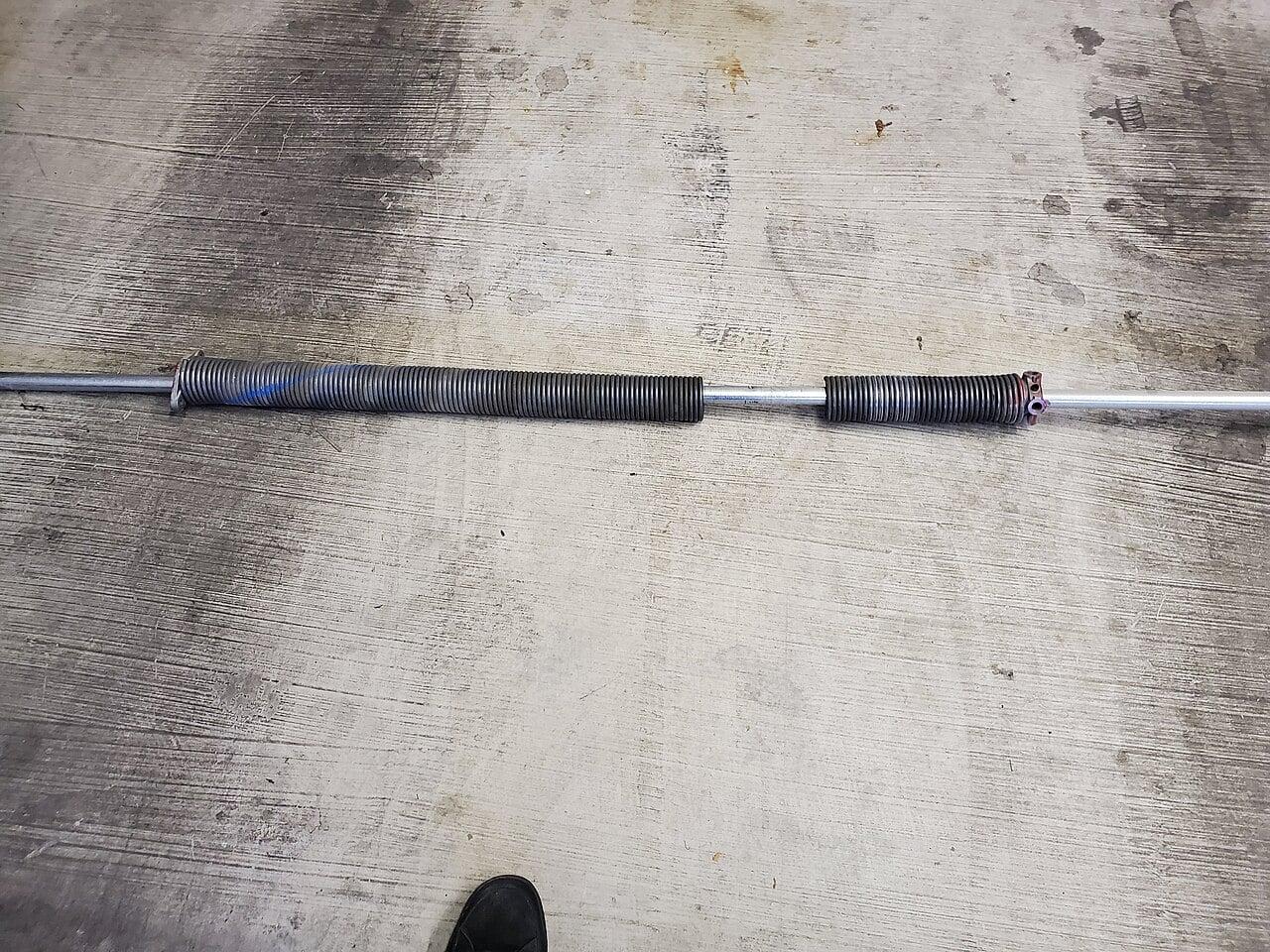
- Torsion springs. A standard commercial spring is rated around 10,000 cycles. On a door running 40 cycles a day that is under a year and a half of life. High-cycle springs rated for 25,000, 50,000 or 100,000 cycles cost more up front and push the replacement out for years.
- Rollers and hinges. Stems wear, tires crack, hinge knuckles open up. On high-cycle doors we replace rollers long before they fail because a seized roller chews the track.
- Bottom seals and weatherstrip. Forklifts clip them and UV hardens them. On heated buildings a torn seal shows up on the gas bill before anyone reports it.
- Cables. Frayed strands at the bottom fixture are a replacement, not a watch item.
Springs deserve their own line
Spring breaks are the single most common emergency call we run, and they never happen on a quiet afternoon. If you know a door’s cycle rating and roughly how often it runs, you know the year the spring will fail within a reasonable window. Put the replacement in the plan for that year and change it on your schedule instead of the spring’s.
Planned replacement beats run-to-fail on busy doors
We will say it plainly. Running a high-cycle door to failure is the most expensive way to own it. A failure closes the bay, and on a dock door the real cost is the trucks that cannot load, not the part. An after-hours emergency call costs more than the same work done on a scheduled visit. A door that drops on a broken spring often bends track and panels on the way down, and the spring job becomes a panel job.
For the bottom-bucket doors the math flips. A door that cycles 500 times a year may never reach its spring rating. Annual inspection and lubrication is enough, and prepaying quarterly visits on it is wasted money. That is the point of sorting by duty class first. The budget should be lumpy on purpose, heavy on the doors that earn it.
What actually moves the price of a PM contract
When we quote maintenance contracts, the variables are consistent. Door count and duty class set the visit schedule. Door height and type change the labour, since a 20-foot rolling steel door with a hood is a different visit than a 10-foot sectional. Operator type matters too, as jackshaft units mounted beside the shaft take longer to inspect than trolley operators. Access is the quiet one. A parkade gate that can only be worked on overnight carries night labour. We wrote a separate piece on maintenance contracts and on what a PM program covers visit by visit, so this post stays on the money side.
Bundling is the other lever worth asking about. A contractor already on site with a lift and a parts stock can service six doors for much less per door than six separate visits. Multi-building owners who tender all their doors as one scope get better unit pricing than anyone negotiating door by door.
Hold a reserve for what maintenance cannot prevent
Maintenance does not stop a forklift. Vehicle impact is the other big category of commercial door spend in this region, and it arrives at random. A reasonable reserve covers one impact repair per busy dock per year on top of the PM plan. Our panel versus full replacement guide covers how that decision goes once the damage is done. The reserve also absorbs the smaller failures that show up between visits. A photo eye knocked out of line, an operator board after a power event, a track bent by a pallet.
There is a compliance reason to keep the maintenance itself funded, separate from the reserve. WorkSafeBC’s OHS Regulation section 4.3(2) requires that equipment be maintained and repaired in accordance with the manufacturer’s instructions. A door that drops because the budget deferred its service is not a neutral event in that framework. Skipped PM can also void the manufacturer’s warranty on a newer door, which quietly transfers cost from the manufacturer to you.
Lower Mainland weather belongs in the number
Local conditions change the budget in ways a generic template misses. Buildings near the Fraser River and out toward Delta and Richmond sit in damp salt-touched air most of the winter. That air rusts cables and bottom brackets faster than anywhere else we work. Heated warehouses see seals and perimeter weatherstrip earn their keep November through March, so we front-load seal checks into fall visits. Our winter prep guide covers that work in detail. If your portfolio includes residential-style parkade doors under stratas, the funding mechanics differ enough that we wrote a separate strata guide for councils and property managers.
Turn this year’s history into next year’s budget
The best input for an overhead door maintenance budget is the service history you already paid for. Pull twelve months of invoices and sort them three ways. Planned versus emergency tells you which doors are under-maintained, since a door generating repeat emergency calls is telling you its duty class is set too low. Parts by door tells you which doors are approaching end of life. When repair spend on one door passes a sensible share of replacement cost, move it to the capital plan. Cycle counts, where the operator records them, tell you which springs and operators hit their ratings next year. Our post on cycle ratings explains how to read those numbers against the hardware.
Do that once and the second year is easy. The overhead door maintenance budget stops being a guess carried forward and becomes a schedule with prices attached. We service commercial doors across Richmond, Vancouver, Burnaby, Surrey and the rest of Metro Vancouver, and we run 24-hour emergency call-out for the failures no plan catches. Call (604) 206-5727 and we can build the duty-class list with you on a single walkthrough.