Most commercial overhead door warranties in Canada are conditional. The fine print ties coverage to documented maintenance, and a skipped service year can cost you the claim. We install and service Amarr, Raynor, Hormann and LiftMaster doors across Metro Vancouver, and we read the manuals so our customers do not get caught.
A new sectional door on a Richmond warehouse feels like a solved problem. It runs quiet and the operator is new. There is a warranty card in the office drawer. Then a spring lets go in year two and somebody files a claim. The manufacturer asks a question nobody expected. Show us the service records.
That question is written into the paperwork of every major brand we install. This post walks through the garage door warranty maintenance requirements we see in the manuals, brand by brand. It also covers what a building owner in the Lower Mainland has to actually do about them.
The maintenance clause in every commercial door warranty
Door and operator warranties cover defects in materials and workmanship. They do not cover wear, and they do not cover neglect. The way the manufacturer separates a defect from neglect is the maintenance clause.
LiftMaster’s published limited warranty for the United States and Canada says it plainly. Proper operation of the product depends on your compliance with the instructions regarding installation, operation, maintenance and testing. The warranty does not cover damage resulting from the failure to do that. The exclusions list names failure to provide reasonable and necessary maintenance alongside abuse and unauthorized repairs. One more trap sits in the same document. The standard LiftMaster residential warranty excludes units installed for non-residential use. A house opener bolted above a shop door in a commercial bay carries no coverage at all.
Hormann states the commercial side even harder. Its service documentation says power driven industrial doors must be inspected at least once per year by trained specialists. Product warranties, the same document says, can usually only be maintained if that routine inspection takes place. The same document notes regular inspection and maintenance is usually required to keep many insurance policies valid. We are Richmond’s only Hormann certified commercial garage door company, and that annual trained-specialist inspection is the single requirement we see missed most often.
What Amarr’s commercial guidance tells you to do and when
Amarr publishes commercial maintenance guidance on its own site. We supply and service the full Amarr commercial line, so this is the schedule we quote to warehouse customers. Amarr recommends maintenance inspections every six months on commercial doors.
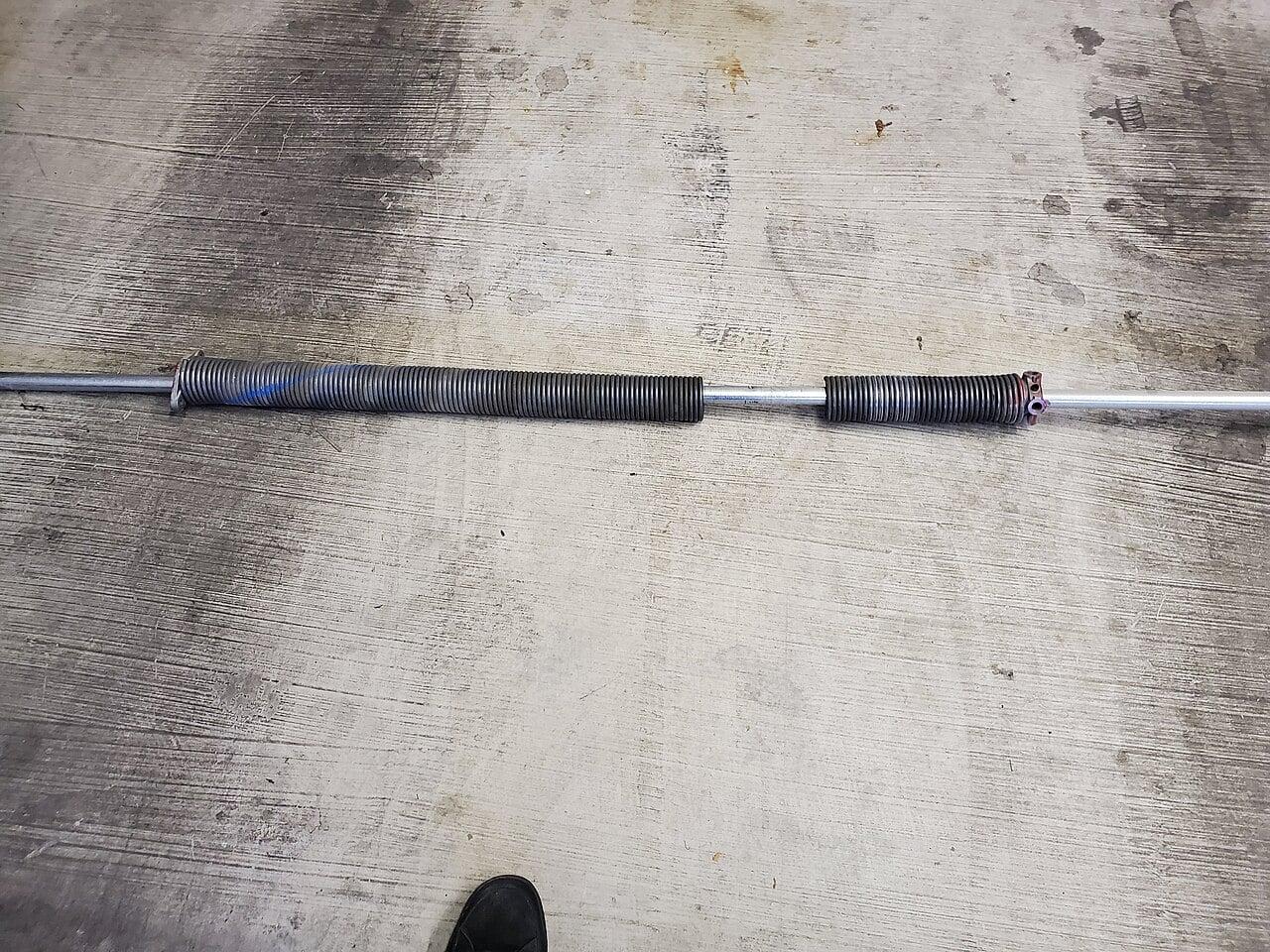
Between those visits the manual-level care is specific. A small amount of 10W30 motor oil goes on the steel rollers and roller shafts. Hinges get the same. Nylon rollers get nothing because they are self lubricated. Oiling them just collects grit. Weather stripping gets a silicone based lubricant about every two months. Petroleum oils make the rubber lose its elasticity, so they stay off the seals. Amarr also tells owners to leave torsion springs to a commercial door professional, which matches our view. A loaded torsion spring on a 14 foot insulated sectional stores enough energy to break an arm.
The balance test is the one check Amarr describes that costs nothing. Disconnect the operator, raise the door by hand, and see if it holds at the opening positions. A door that drifts down is out of balance, and every cycle after that is the operator dragging dead weight.
Raynor and Hormann run different clocks
Raynor’s published warranty terms show how short some of the clocks really are. On galvanized product, Raynor warrants track and hardware components against defects in material and workmanship for six years. Springs get three years from the date of delivery to the original purchaser. Three years on a spring is not long. If a spring fails inside that window and the claim review finds a dry, rusted counterbalance nobody ever serviced, you have handed the manufacturer its answer.
Hormann, as above, anchors everything to the annual inspection by trained specialists. The practical difference between the brands is small. Amarr says every six months on commercial doors. Hormann says at least yearly by someone qualified. Raynor’s short spring coverage rewards owners who can show the counterbalance was looked after from day one. The common thread is that none of them accept an unserviced door as a warranty claim.
Garage door warranty maintenance requirements on operators
Operator coverage is separate from door coverage, and it is stricter, because an operator is a motor with a duty rating. The LiftMaster commercial platforms we install carry published duty classes. A Logic 5.0 industrial unit such as the model J or T is rated for 25 cycles per hour and up to 90 cycles per day. The medium duty M series units are rated for 12 cycles per hour and under 50 cycles per day. The Maxum DC platform runs 20 cycles per hour and 90 per day standard. Its extended rating is 30 per hour and 150 per day.
Those numbers are warranty conditions in disguise. A medium duty operator on a distribution dock running 120 cycles a day is outside its published rating. A burned motor on that door reads as an application problem rather than a defect. Matching the operator class to the real cycle count protects the claim the same way lubrication protects the hardware. If your doors run harder than the hardware was specified for, look at our high cycle hardware upgrades page before the warranty question ever comes up.
The first year is when doors loosen
New commercial doors settle. Fasteners seat into fresh steel, cables stretch a few millimetres, and spring tension relaxes slightly as the coils take their set. Our blunt opinion, after pulling apart more of these than we can count, is simple. The first service at month six matters more than any visit after it. That visit catches loose track bolts and drifted force settings while they are still adjustments. It also starts the paper trail inside the warranty period instead of after it.
Proof beats memory when a claim gets reviewed
Every garage door warranty maintenance requirements clause has the same weak point for the owner. The burden of proof sits with you. A claim reviewer does not visit your building. They read what you send, so the record has to exist in writing.
A defensible record names the door and the company that did the work, with a date. It lists what was inspected and lubricated. It also lists what was adjusted and what was recommended. Hormann’s service literature describes its visit reports as legal proof of compliance with statutory and insurer obligations. That is the standard to copy. Our commercial door annual inspection checklist shows what a thorough visit covers. A dated copy of that checklist per door per visit is the whole system.
Keep the delivery documents too. Raynor’s spring coverage runs from the date of delivery to the original purchaser, so the invoice that proves that date is part of the claim file.
What we set up on a new installation
When we hand over a new commercial door we set the maintenance side up before we leave the site. The operator cycle counter gets a baseline reading, recorded against the duty rating. That reading feeds the interval math described in our cycle counter guide. The manufacturer schedule for that specific door and operator goes into the service file. The first PM visit gets booked inside the first six months while everything is still under full coverage.
For owners who do not want to track any of this, a service agreement does it automatically. Our preventive maintenance program page covers the visit scope. The maintenance contract page covers how the reporting works for strata and property managers. Either way the visits happen on schedule. The reports pile up in your file, which is the only place a warranty argument is ever won.
Custom Commercial Garage Doors Ltd services commercial overhead doors across Richmond, Vancouver, Burnaby, Surrey, Delta and the rest of Metro Vancouver. Emergency call-out runs 24 hours. If your door is still inside its warranty window and has never been serviced, call (604) 206-5727 and we will get the record started.
Common questions
Does skipping maintenance actually void a commercial door warranty
It can void the claim that matters. LiftMaster’s warranty excludes damage caused by failure to provide reasonable and necessary maintenance. Hormann states product warranties can usually only be maintained with an annual inspection by trained specialists.
How often does a commercial overhead door need service to stay covered
Amarr recommends maintenance inspections every six months on commercial doors. Hormann requires at least one inspection per year by trained specialists. We set the real interval by cycle count, because a busy dock door needs more than the minimum.
Who is allowed to do warranty maintenance on a commercial door
Owners can handle cleaning and lubrication. The hand balance test is fine too. Torsion spring and cable work belong to a commercial door professional. So do operator adjustments. Hormann specifically requires trained specialists for the annual inspection on power driven industrial doors.
Is the operator warranty different from the door warranty
Yes. The operator warranty comes from the operator manufacturer and depends on the duty rating. Running a medium duty unit rated under 50 cycles per day on a high cycle dock door puts failures outside coverage as an application problem.
What records should I keep for a warranty claim
Keep the delivery invoice, since it starts the coverage clock. Add a dated written report for every service visit naming the door and the work performed, signed by the company that did it. A claim reviewer only reads what you can send them.