The service visit fades. The record is what you show the inspector, the fire marshal and the adjuster. A Richmond commercial door crew on what the file must contain in BC.
We repair commercial doors across Metro Vancouver, and we read a lot of service history, or try to. Most buildings cannot produce any. A door gets serviced for fifteen years by four different companies and the only trace is a stack of invoices in an email account nobody checks. When a WorkSafeBC officer, a fire inspector or an insurance adjuster asks for the file, the invoices are not enough. This post covers what commercial door maintenance records are supposed to contain and which rules actually require them in BC. It also covers how we set them up in buildings with more than a couple of doors.
Why the record matters more than the visit
A blunt opinion from the truck: half the value of a maintenance visit is the paper it generates. The lubrication wears off in months. The signed record that says a qualified person tested the balance and found the bottom brackets tight is still worth something years later. It is the only proof the work happened.
Three different people can demand that proof. A WorkSafeBC officer after an incident. A fire inspector doing an annual walk of the building. An insurance adjuster after a forklift or truck puts a door out of commission. Each of them has a specific document in mind, and a verbal account of regular servicing satisfies none of them.
What WorkSafeBC expects you to produce
An overhead door on a loading dock is workplace equipment. Section 4.3 of the BC Occupational Health and Safety Regulation covers it. Every kind of work on the equipment must follow the manufacturer’s instructions, or the specification of a professional engineer. The manufacturer’s manual for your door and operator sets out service tasks and intervals. Section 4.3 is what makes those pages enforceable in BC.
Section 4.9 of the same regulation describes what a recording system looks like where one is required. It must identify the equipment by model and serial number, plus the name and address of the owner. Every test, inspection, repair or maintenance task needs an entry signed by the person who performed it. Even where a door does not strictly fall under 4.9, we treat that section as the template. An officer investigating an injury will ask for something in exactly that shape.
The practical takeaway is simple. Keep the manual and follow its intervals. Every visit gets a dated, signed entry. Our commercial door annual inspection checklist covers what the visit itself should include.
Fire doors and NFPA 80 record retention
Rolling steel fire doors live under a stricter regime. NFPA 80 requires fire door assemblies to be inspected and tested at least annually, and it spells out the written record in detail. The record must include the date and the facility’s name and address. It also needs the names of the people who did the inspection and testing. It also needs the name and address of the inspecting company and the signature of the inspector of record. Each door gets its own individual record with an opening identifier, its location, a description of the assembly and a list of any deficiencies found.
Retention is written into the standard. Inspection and testing records must be kept for at least three years, on a medium that will survive that period. The acceptance test record from the original installation stays with the assembly for its whole life. A fire inspector can ask for these at any time. We walk through the test itself in our post on fire door drop testing. The report we leave behind is built to the NFPA 80 record requirements.
One thing we see constantly in Vancouver stratas and older warehouses is a fire door that was drop tested exactly once, at installation. There is usually no paper from that day either. The door may still work. On paper the building has never had a working fire door, and that is how an inspector will read it.
What commercial door maintenance records actually contain
A useful door file is short. For each door we record the following, and we would suggest the same fields to anyone keeping their own log.
- Door identifier and location. Paint or stencil a number on the door itself. Door 3 on the north dock beats any verbal description.
- Door model and serial number. Same again for the operator. A LiftMaster Logic 5.0 jackshaft is rated by the manufacturer at 25 cycles per hour and up to 90 cycles per day. The operator model tells a technician what duty the door was built for.
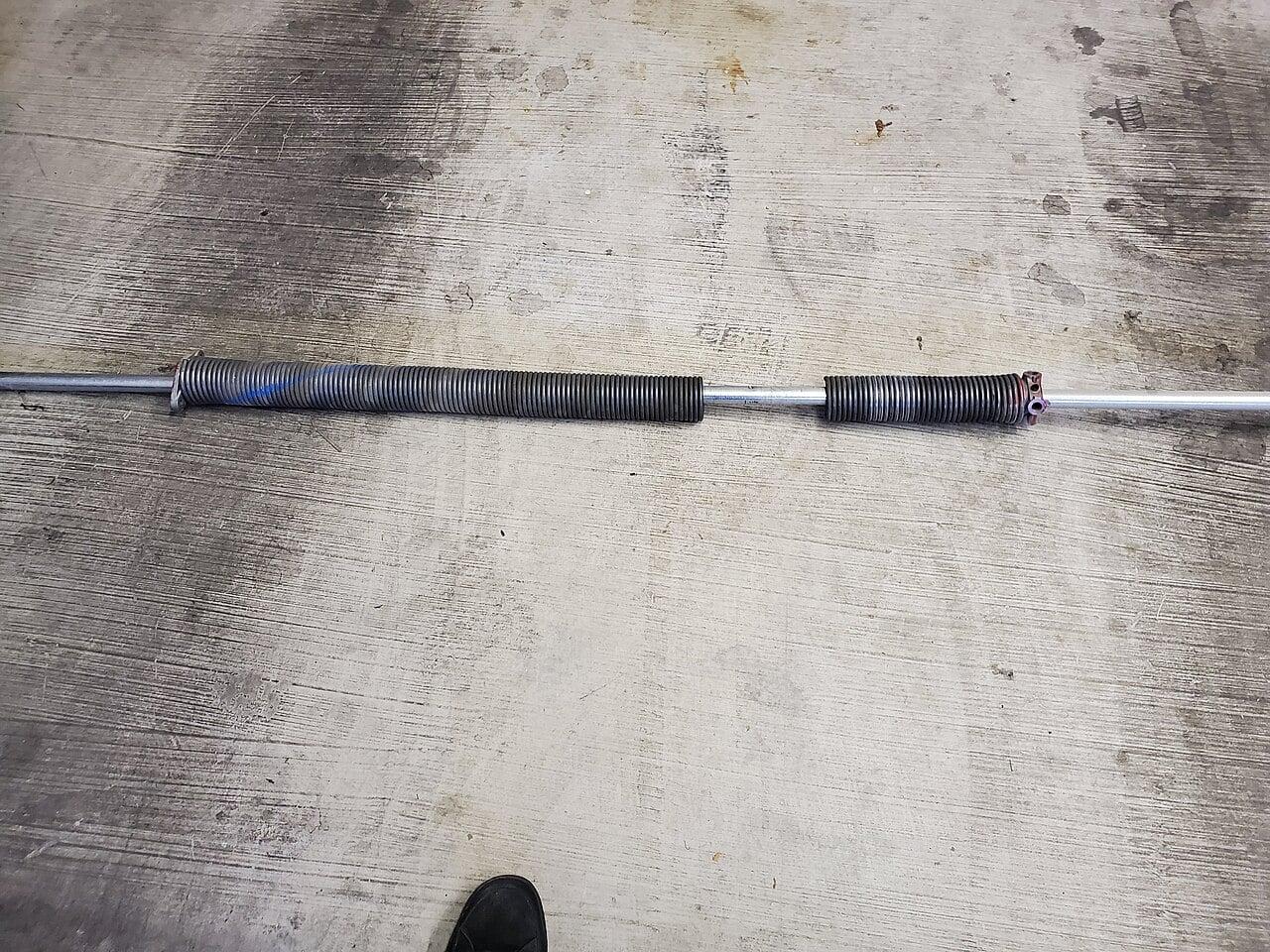
- Spring details as installed. Wire size, inside diameter and length let the next company order the right springs without a site visit.
- Date of each visit and the company. Then the technician’s name with a signature or initials.
- What was inspected and what was adjusted, with the balance test result noted every time.
- Parts replaced, with the part and the reason.
- Deficiencies found and not yet corrected, with who was told.
The one line entry that settles arguments
The deficiency line deserves its own mention. When we find a frayed cable and the building declines the repair, we write down the finding and the recommendation, dated. That single line protects the building manager who passed the quote up the chain, and it protects us. It also tends to get the repair approved faster than any phone call.
Cycle counts turn a log into a forecast
Commercial operators with a cycle counter give you something a paper log alone cannot. Write the counter reading into the record at every visit and you can calculate the real daily cycle rate of each door. Springs are built to a cycle life, so a door running 60 cycles a day is on a completely different replacement schedule than its neighbour running 6. We explain the arithmetic in our guide to commercial door cycle counter maintenance.
With two or three years of readings, spring and cable replacement stops being an emergency and becomes a line in next year’s budget. That is the whole point of a preventive maintenance program. The record is what converts visits into a forecast.
The insurance claim test
Vehicle impacts are the most common catastrophic failure we attend. A truck backs into a door and the claim goes in. Then the adjuster asks whether the door was maintained. A building that produces a dated service history gets a clean conversation about the impact. A building that produces nothing invites the argument that the door was already defective, which can shrink the payout or stall the claim for months. We cover the repair side in our post on the cost to repair a garage after car damage in BC.
The same logic applies in reverse. If a door fails and injures someone, the maintenance file is the first document every lawyer requests. You want it to exist, and you want it to be boring.
Setting up records for a multi-door building
For warehouses, parkades or industrial strata buildings with six or more doors, we set records up the same way every time.
- Number every door physically and map the numbers on a one page site plan.
- Create one record per door, not one per building. NFPA 80 requires per-door records for fire doors anyway, and the habit should cover every door.
- Open each record with the nameplate data. Model and serial. Spring specs. Operator model with its duty rating.
- Pick one home for the file and name one person who owns it. A shared spreadsheet with a dated row per visit works. So does a binder in the electrical room, as long as it does not leave.
- Give your service company access, and demand they write in it. A contractor who will not document their work on your asset is telling you something.
When we take over service on a building with no history, the first visit is longer because we are building door records from nameplates and measurements. Every visit after that is faster and cheaper, which is the quiet payoff of commercial door maintenance records done properly. If you want the file built for you, call us at (604) 206-5727. We answer around the clock.
Frequently asked questions
How long do fire door inspection records need to be kept?
NFPA 80 requires written records of fire door inspections and testing to be retained for at least three years, and local authorities can require longer. Acceptance test records from the original installation should be kept for the life of the door assembly.
Does WorkSafeBC require maintenance records for overhead doors?
Section 4.3 of the BC OHS Regulation requires equipment in a workplace to be maintained and repaired in accordance with the manufacturer’s instructions. If an inspector asks how you meet that, a dated service record signed by the person who did the work is the answer they accept. Section 4.9 describes what a proper recording system looks like, including model and serial number.
What should a commercial door service record include?
At minimum, record the door identifier and location with the date. Add who did the work and for which company. Then note what was inspected and what was adjusted or replaced, with part details. Add the balance test result plus the cycle counter reading where the operator has one. Deficiencies that were found but not fixed belong in the record too.
Can I keep door maintenance records in a spreadsheet?
A spreadsheet works fine as long as every entry is dated, names the person who did the work, and gets backed up. NFPA 80 accepts paper or electronic records provided the medium survives the retention period. The format matters less than the habit of writing the entry the same day the work happens.
Who is responsible for keeping door maintenance records in a leased warehouse?
That depends on the lease, and we have seen it go wrong both ways. Many commercial leases put equipment maintenance on the tenant while the landlord keeps the building fire systems. Read the lease, decide in writing who holds the door records, and give the other party a copy once a year.