A crooked track on a commercial overhead door means one side of the door is not moving in alignment with the other, causing binding, uneven wear, or the door to stall mid-travel. This misalignment typically results from impact damage, loose mounting hardware, or settling of the building structure shifting the track out of plumb. You’ll notice the door rubbing against the track, hearing a scraping or grinding noise, or seeing gaps between the roller and track flange on one side. The door may also move slower on one side or appear tilted when opening or closing.
Common Causes of Track Misalignment
Tracks are secured to the building jamb with angle brackets and lag bolts. If a forklift, pallet jack, or vehicle strikes the lower track, it can bend the track or knock the brackets loose. Over time, vibration from daily operation can cause lag bolts to work loose, especially if they were not installed with washers or into solid framing. In older buildings, settling of the foundation or wall framing can shift the jamb, pulling the track out of vertical alignment. Temperature changes can also cause metal to expand or contract, worsening minor misalignments.
How to Visually Inspect the Track
Close the door and examine both vertical tracks from inside the facility. Look for gaps between the roller stem and the track flange—these should be even on both sides, typically 1/8 inch or less. Use a level against the face of each track to check for plumb; both should read within 1-2 degrees of vertical. Check the mounting brackets where they attach to the wall: look for elongated bolt holes, missing lag bolts, or brackets that are visibly bent or pulled away from the wall. Spin each roller by hand; if it binds or wobbles in the track, the track may be twisted or damaged.
What You Can Safely Check Yourself
You can inspect the track for obvious damage, loose bolts, or visible gaps. Tighten any accessible lag bolts on the mounting brackets using a wrench—do not over-torque, as this can strip the wood or damage the bracket. Clean debris from the track interior with a brush; dirt or ice buildup can mimic misalignment. Lubricate the rollers and track with a silicone-based spray to rule out friction-related sticking. If the door moves freely by hand after these steps and the rollers sit evenly in the track, the issue may be minor.
When Misalignment Requires Professional Repair
If the track is bent, twisted, or the mounting brackets are pulled away from the wall, realignment requires loosening brackets, shifting the track, and re-securing it—often while supporting the door weight. Attempting to force a bent track back into place can weaken the metal or cause it to snap. If the door binds severely or rollers are jumping out of the track, do not operate it; continued use can damage rollers, cables, or the door panels. Any work involving loosening track brackets risks sudden door movement if the springs are still tensioned.
The Role of Torsion Springs and Why They’re Off-Limits
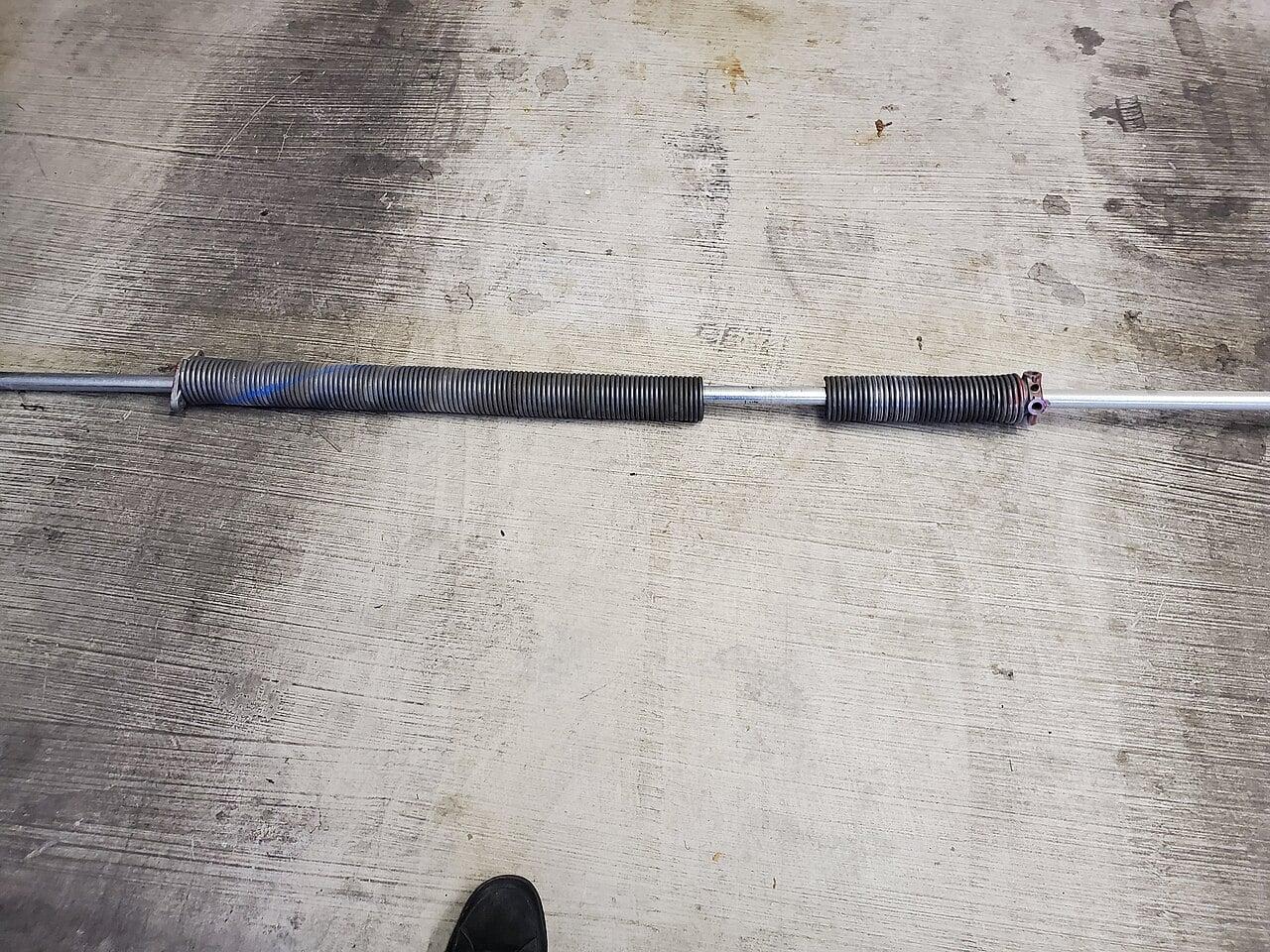
Torsion springs store enough energy to lift a heavy door—releasing them uncontrolled can cause serious injury or death. Adjusting or removing springs to relieve tension for track work is not a DIY task. Even if the door seems light, the springs are still loaded and can unwind with violent force. Only trained technicians should handle spring adjustment or release. If your inspection suggests the track issue is related to spring tension or door balance, stop and call a professional.
Frequently Asked Questions
Can a crooked track cause the door to come off the rollers?
Yes. If the track is misaligned enough, rollers can climb out of the track flange, especially during operation. This jams the door and can bend the horizontal track or damage the door sections. Stop using the door immediately if rollers are exiting the track.
How do I know if the problem is the track or the door itself?
Disconnect the opener and lift the door manually. If it moves smoothly and evenly by hand, the issue is likely in the opener or its drive system. If it binds or feels uneven, inspect the track, rollers, and hinges for damage or misalignment.
Is it okay to just tighten the bolts and see if it holds?
You can tighten loose bolts as a first step, but if the track is bent or the wall has shifted, tightening alone won’t hold the alignment. The track will shift back under load. Persistent looseness after tightening indicates a deeper structural or mechanical issue.
CCGDS (604) 206-5727