When a commercial overhead door fails to open and the lifting cables are suspected, the issue typically stems from cable damage, misalignment, or loss of tension at the drum or spring assembly. The lifting cables run from the bottom bracket of each door section, up to the cable drum on the torsion spring shaft, and are responsible for translating rotational force from the springs into vertical lift. If a cable frays, kinks, or comes off the drum groove, it can no longer carry the load evenly, causing the door to bind, hang crooked, or refuse to move. You might hear a scraping noise, see one side of the door sag, or notice the cable hanging loose or piled at the bottom of the track.
Common Causes of Lifting Cable Failure
Lifting cables fail due to wear, improper tracking, or sudden load shifts. Over time, cables develop broken strands from flexing over the drum and rubbing against the bottom bracket or track. In high-cycle doors, this wear accelerates. If the door is out of balance — often due to a failing torsion spring — one cable bears more load, speeding up fatigue. Impact damage from forklifts or pallet jacks can also kink or jump the cable off the drum. Corrosion in damp environments weakens the steel, increasing the risk of sudden snap.
What a Frayed or Damaged Cable Looks and Sounds Like
Visually, inspect the cable near the bottom bracket and where it wraps around the drum. Fraying appears as fuzzy or protruding wires; a kink shows as a sharp bend or flat spot. If the cable has jumped the drum, it will be loose, tangled, or wound unevenly on the drum surface. Audibly, a failing cable may produce a clicking or ticking sound as damaged strands catch on hardware, or a loud snap if it ruptures under tension. The door may move unevenly, with one side lagging or lifting faster than the other, indicating unequal cable tension.
How Cable Misalignment Affects Door Operation
Cables must wind smoothly into the drum’s helical groove. If the cable starts to wind on top of itself or slips sideways, it binds, preventing drum rotation. This often happens when the door panel is damaged or the bottom bracket is loose, allowing the cable to pull at an angle. Misalignment can also occur if the torsion spring shaft has shifted, altering the drum’s position relative to the cable path. In either case, the door will resist opening, and the motor may strain or trip on overload if it’s an electric operator.
What You Can Safely Check Yourself
Before assuming the worst, you can perform a few visual and mechanical checks. First, disconnect the operator by pulling the release cord — this isolates the door’s mechanical system. Manually attempt to lift the door; if it moves freely and stays open halfway, the springs are likely intact, pointing to a cable or track issue. Inspect both cables for visible damage, especially at the bottom brackets and drum. Check that the cables are seated in the drum grooves and not crossed or stacked. Look for obstructions in the tracks and verify the rollers are seated and turning freely. Never attempt to adjust or remove cables under tension.
Why Torsion Springs Make Cable Work Dangerous
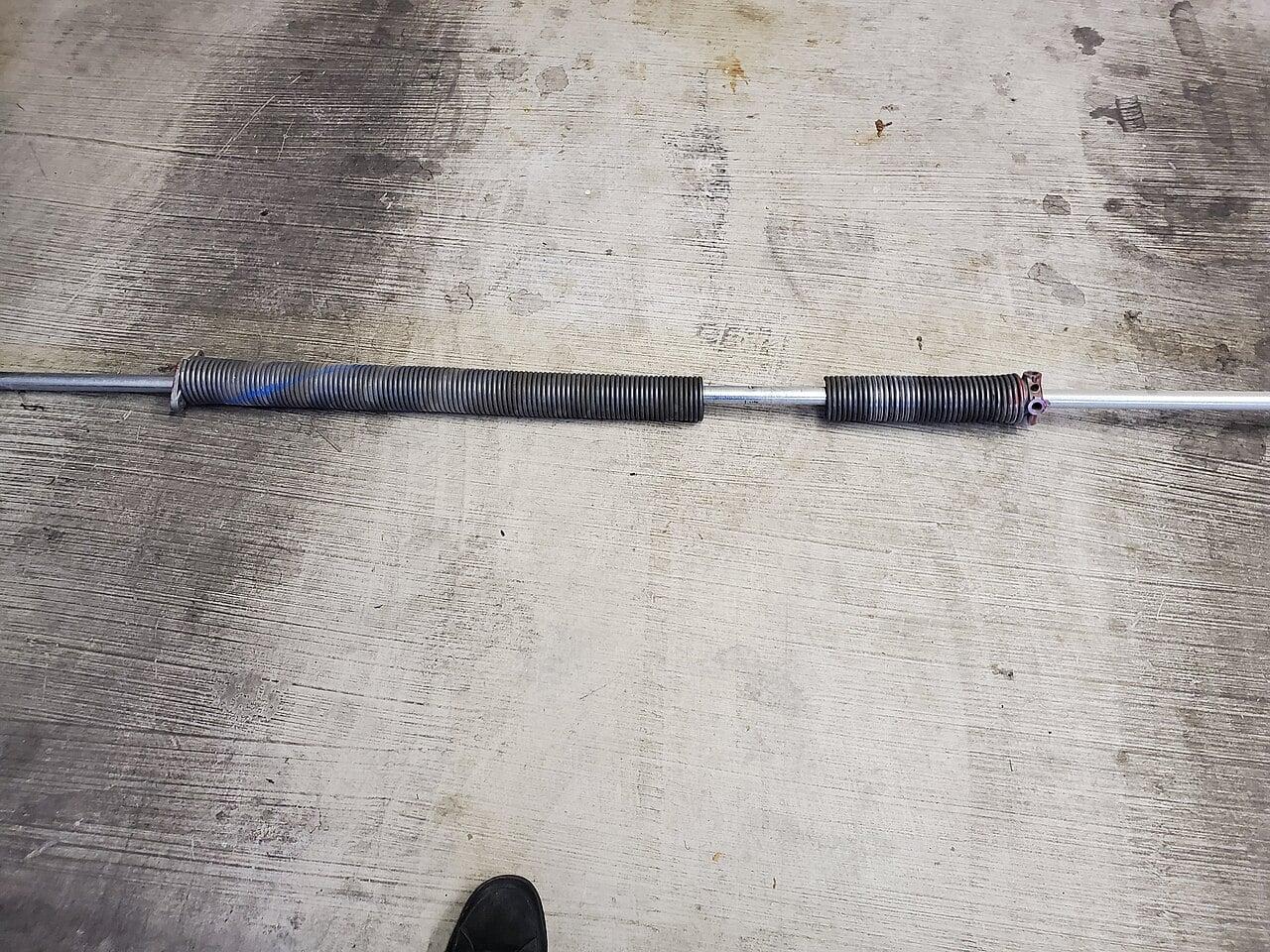
The lifting cables are under constant tension from the torsion springs, which store enough energy to cause severe injury or death if released unexpectedly. Even if a cable appears slack, the spring may still be loaded, particularly if only one cable has failed. Attempting to remove, adjust, or replace a cable while the spring is wound risks sudden unwinding, which can cause the drum to spin violently, throwing cables and hardware. This is not a DIY task — the stored energy in torsion springs requires specialized tools and training to manage safely.
When to Call a Commercial Door Technician
If you observe frayed cables, a cable off the drum, uneven door lift, or hear unusual noises during operation, stop using the door and contact a qualified technician. Continuing to operate the door risks further damage to the track, panels, or operator, and increases the chance of catastrophic cable failure. A technician will assess cable condition, drum wear, shaft alignment, and spring tension before replacing cables in matched pairs to ensure balanced lift. They’ll also verify the bottom brackets are secure and the drum grooves are undamaged.