Commercial overhead door extension springs typically last between 10,000 and 15,000 cycles, which translates to roughly 3 to 5 years under normal use in a warehouse or industrial setting. This lifespan depends on door weight, frequency of operation, environmental conditions, and maintenance practices. Unlike torsion springs, extension springs stretch and contract along the horizontal tracks on either side of the door, absorbing and releasing energy with each cycle. Over time, the constant flexing causes metal fatigue, leading to microscopic cracks that eventually result in sudden failure.
What Happens Inside an Extension Spring Over Time
Extension springs are made of coiled steel wire designed to store energy when stretched. As the door opens, the springs extend, pulling the door upward via cables and pulleys. When the door closes, the springs contract, releasing that stored energy. Each cycle applies stress to the wire’s surface, and repeated loading and unloading causes fatigue. In coastal or humid areas like Metro Vancouver, corrosion accelerates this process, especially if the springs are not galvanized or properly lubricated. Rust pits act as stress concentrators, significantly shortening usable life.
Signs Your Extension Springs Are Wearing Out
Visible gaps between coils indicate the spring has permanently stretched and lost tension. You may also notice the door opening unevenly, with one side lagging or jerking. Listen for squealing or grinding noises during operation—these often point to dry or corroded springs rubbing against pulleys or brackets. A sudden increase in manual effort to lift the door, or the door feeling heavier than usual, suggests the springs are no longer providing adequate counterbalance. If the door slams shut or fails to stay open, the springs may have lost significant tension.
What Failure Looks and Sounds Like
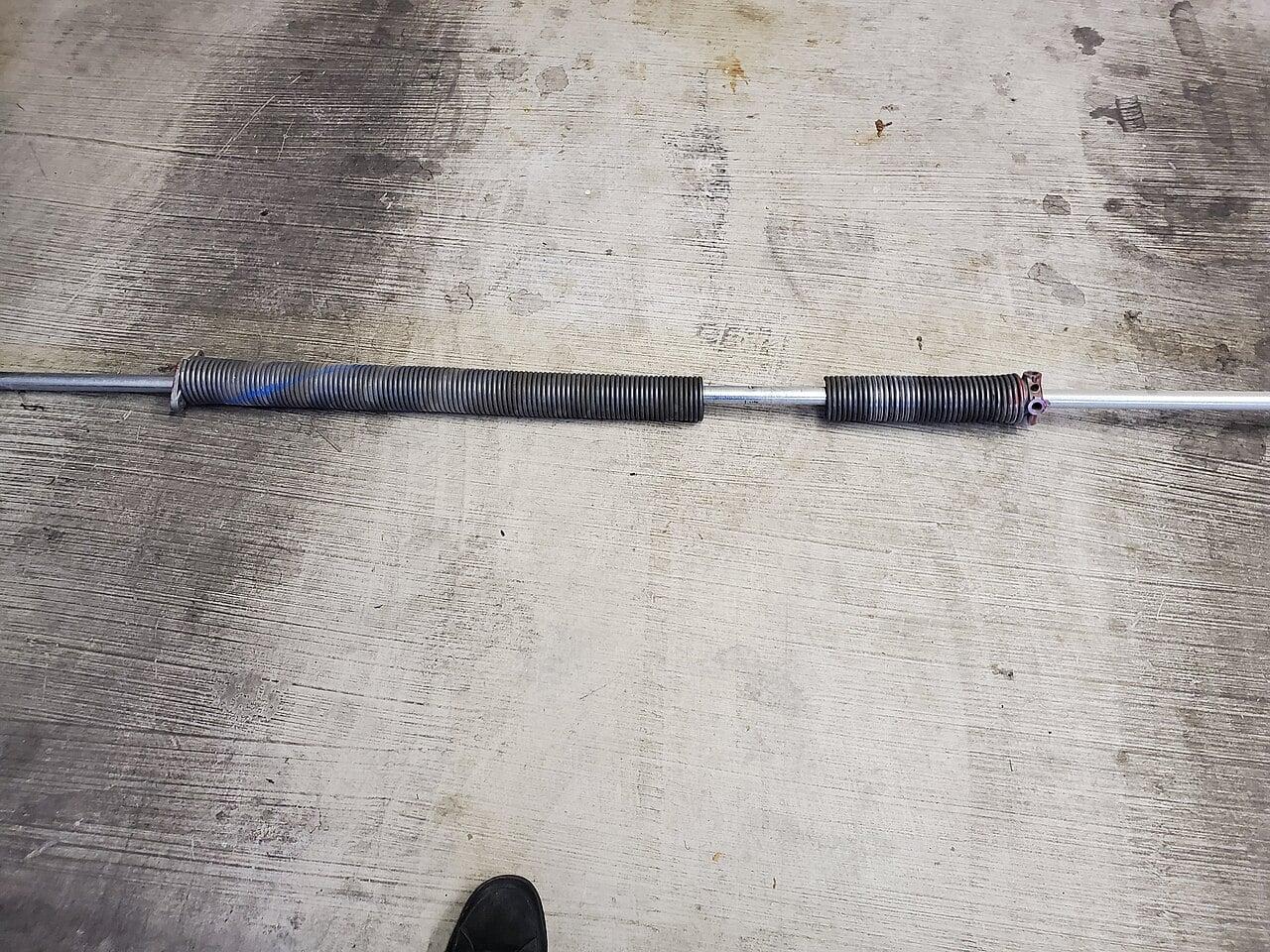
When an extension spring breaks, it typically fails at the end loop or along the coiled body. The failure is often instantaneous and violent: the spring can snap, sending metal fragments flying. You’ll hear a loud bang or crack, similar to a firecracker, followed by the door dropping unevenly or becoming jammed in the track. One side of the door may sag noticeably. Unlike torsion springs, which are contained on a shaft, extension springs are exposed and can whip violently when broken, posing a serious impact hazard to anyone nearby.
What You Can Safely Check Yourself
You can visually inspect the springs for rust, gaps in the coils, or damaged end loops where they attach to the pulley or bracket. Check that the safety cables—thin metal ropes running through the center of each spring—are intact and properly secured. These cables are designed to contain the spring if it breaks. Lubricate the springs lightly with a silicone-based spray every six months to reduce corrosion and friction, but avoid grease, which attracts dust and grit. Never attempt to adjust, remove, or replace extension springs yourself. The tension stored in these springs can cause severe injury or death if released unexpectedly.
When to Call a Professional
If you observe any signs of wear, uneven door movement, or hear unusual noises, stop using the door and contact a qualified technician. Replacing extension springs requires specific tools, knowledge of proper spring rating (based on door weight and height), and correct installation of safety cables. A professional will match the replacement springs to the original specifications, ensure proper tension balance, and verify that all safety components are functional. Attempting this repair without training risks improper installation, which can lead to premature failure or catastrophic breakage.
Frequently Asked Questions
### Can I extend the life of my extension springs with maintenance?
Regular lubrication and keeping the springs clean and dry can help maximize their lifespan, but metal fatigue is inevitable. In corrosive environments, galvanized or coated springs may last longer than standard steel.
How do I know if my door uses extension or torsion springs?
Extension springs run parallel to the horizontal tracks on both sides of the door and stretch when the door opens. Torsion springs are mounted on a metal shaft above the door and twist to store energy.
Is it safe to operate the door if one extension spring is broken?
No. Operating the door with a broken spring creates uneven load, increases wear on the remaining spring and components, and risks sudden failure of the second spring. The door should be disabled until repaired.