Coastal salt air accelerates corrosion on commercial overhead door extension springs by depositing chlorides that break down protective coatings and attack the steel wire itself. This leads to pitting, reduced tensile strength, and eventual failure under cyclic load. The first sign is often visible rust or white powdery residue near the spring ends or where coils touch. You may also hear increased squeaking or grinding during operation as corroded surfaces bind. Unlike torsion springs, extension springs stretch and contract along the horizontal track, exposing more surface area to moisture and salt spray, especially in facilities near the Fraser River or Burrard Inlet. Inspect the springs monthly by wiping them down with a dry cloth and checking for flaking, discoloration, or gaps between coils. If the spring appears stretched unevenly or makes a loud twang when the door moves, it is nearing failure. Do not attempt to adjust, remove, or replace extension springs yourself—they store significant energy and can snap violently, causing serious injury. Lubrication with a silicone-based spray can slow surface corrosion but does not stop internal pitting. Once rust penetrates the wire, the spring’s load capacity is compromised and replacement is the only safe option. In coastal environments, consider upgrading to galvanized or stainless steel springs for longer service life, though even these require regular cleaning in high-exposure zones.
Mechanism of Salt-Induced Corrosion
Salt air contains sodium chloride particles that settle on metal surfaces. When humidity is present, these chlorides form an electrolyte that enables electrochemical reactions. The protective zinc coating on standard springs acts as a sacrificial anode, but in constant salt exposure, it depletes rapidly. Once the coating is compromised, chlorides penetrate microscopic imperfections in the steel, initiating pitting corrosion. These pits act as stress concentrators, reducing the effective cross-sectional area of the wire. Over time, the spring cannot handle the door’s weight, leading to permanent set or sudden rupture. The process is faster in winter when temperature swings cause condensation, and in facilities with frequent door cycling, which accelerates fatigue in weakened metal.
Visual and Audible Failure Indicators
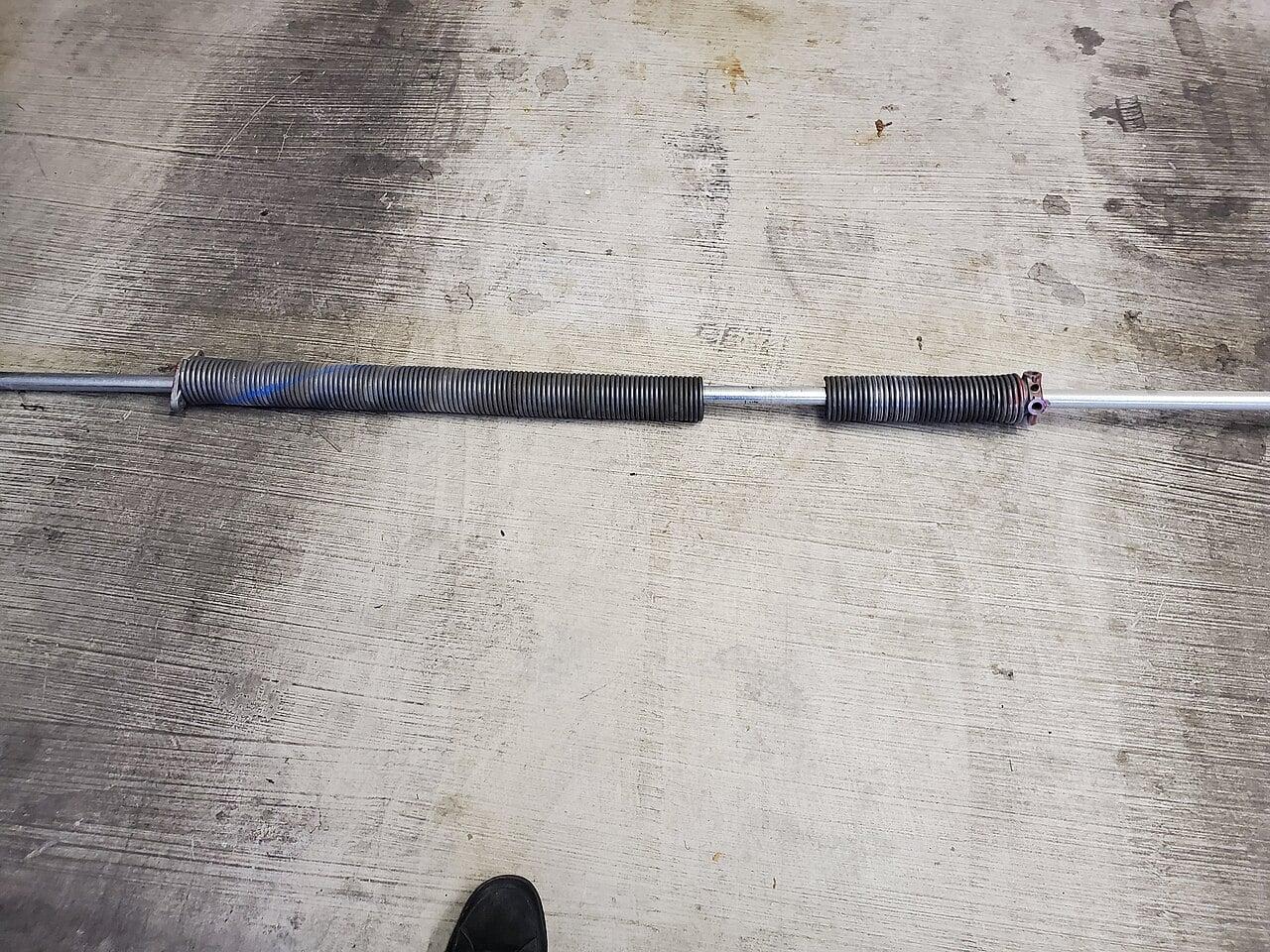
Early corrosion appears as dull grey or white powdery deposits—zinc oxide or zinc chloride—on the spring surface. As it progresses, orange-brown rust becomes visible, especially at the ends where the spring hooks onto the pulley and bracket. You may notice the spring looks longer than normal when the door is closed, indicating elastic deformation from overstress. Audibly, a healthy extension spring operates quietly; a corroded one emits a squeak during movement or a sharp ping when the door stops, caused by metal-on-metal contact in pitted areas. If the door opens unevenly or one side lags, it often means one spring has lost tension while the other still functions—a dangerous imbalance that increases strain on the opener and tracks.
What You Can Safely Inspect Yourself
Facility staff can and should perform routine visual checks. Use a flashlight to examine the full length of each spring, focusing on the hooks and areas where coils contact. Wipe the spring with a clean rag—if it comes away with orange residue, corrosion is active. Check that the safety cable running through the center of the spring is intact and properly anchored; this prevents the spring from becoming a projectile if it breaks. Listen during operation for new noises. Never touch the springs with tools or attempt to adjust tension. If you see broken strands, significant pitting, or the spring is visibly elongated, stop using the door and isolate it until a technician can replace both springs—even if only one appears bad, as they wear at similar rates.
Why DIY Replacement Is Not an Option
Extension springs are under constant tension when the door is closed. Attempting to remove one without proper tools and training can result in the spring launching like a whip, capable of causing blunt force trauma or lacerations. The same risk applies to tightening or loosening the adjustment nuts on the pulley system. Even releasing tension by opening the door fully does not eliminate all stored energy, as residual tension remains in the horizontal section. Torsion springs, while not the focus here, are even more hazardous due to rotational energy and should never be handled by untrained personnel. Only technicians with spring-specific training and winding bars should perform replacement or adjustment.
Preventive Measures for Coastal Facilities
Increase inspection frequency to monthly in salt-exposed locations. Clean springs with a damp cloth followed by a dry wipe to remove salt buildup—avoid pressure washers, which can force chlorides deeper into coils. Apply a light coat of silicone-based lubricant to inhibit surface moisture retention, but do not use grease, which attracts dirt and accelerates abrasion. Ensure weather seals around the door are intact to minimize indoor humidity cycling, which worsens condensation on metal. When replacing springs, specify hot-dip galvanized or marine-grade stainless steel options, and confirm the technician installs new safety cables, as old ones may be weakened by corrosion.
Frequently Asked Questions
### How often should extension springs be replaced in a coastal BC facility?
There is no fixed interval—lifespan depends on exposure level, door usage, and maintenance. In high-salt zones like Richmond or Delta, springs may last 3-5 years with diligent care, but failure can occur sooner if corrosion is unaddressed. Replace springs in pairs as soon as pitting or deformation is observed, not on a schedule.
Can I use WD-40 to protect the springs from salt air?
No. WD-40 is a water displacer and light lubricant, not a corrosion inhibitor for sustained salt exposure. It evaporates quickly and does not form a protective barrier. Silicone-based lubricants are preferred because they resist wash-off and do not degrade rubber or plastic components nearby.
Will rinsing the springs with fresh water help reduce salt buildup?
Rinsing can remove surface chlorides but risks forcing moisture into crevices if not dried immediately. A better approach is wiping with a slightly damp cloth followed by a dry microfiber towel to physically lift salts without introducing excess water. Avoid hoses or sprayers that increase dwell time of moisture on metal.