If your commercial overhead door stops mid-close or reverses immediately after hitting the floor, the issue is often traced to the extension spring system. Unlike torsion springs mounted above the door, extension springs run parallel to the horizontal tracks and stretch to counterbalance the door’s weight. When one or both springs lose tension, break, or become obstructed, the door’s equilibrium shifts, triggering safety mechanisms that prevent closing. This isn’t just an inconvenience—it’s a sign the door is no longer balanced and poses a risk of sudden movement.
How Extension Springs Function in Commercial Doors
Extension springs store energy by stretching when the door closes and contracting when it opens. Each spring connects to a cable and pulley system at the door’s bottom bracket, running toward the rear track hangers. Proper operation requires equal tension on both sides; if one spring weakens, the door tilts during travel, causing uneven roller binding or premature contact with the safety edge. In Metro Vancouver’s damp climate, corrosion at spring ends or cable fraying accelerates wear, especially on doors cycling over 20 times daily.
Visual and Audible Symptoms of Spring Failure
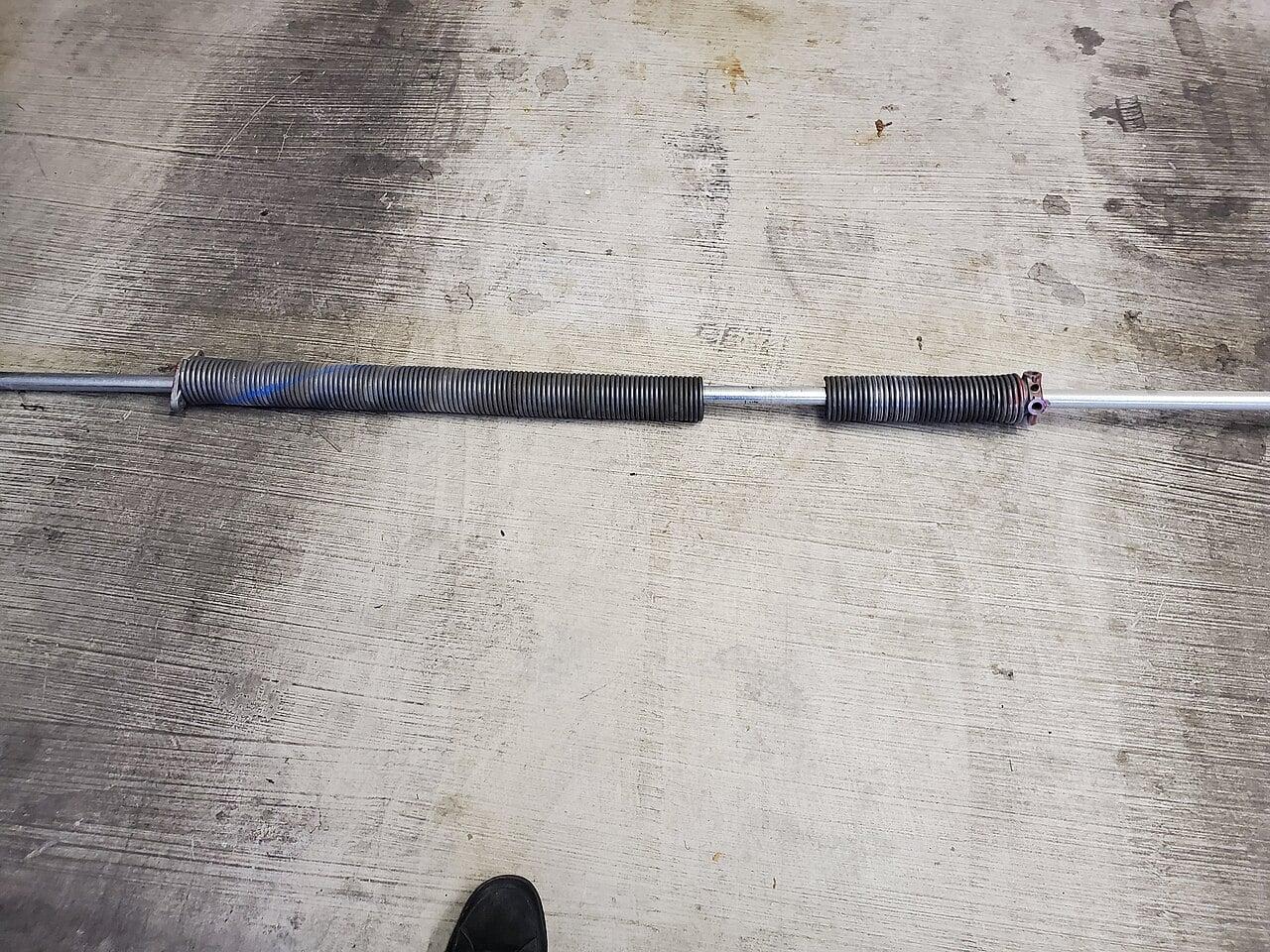
Look for gaps in the spring coils when the door is closed—indicating overstretch or breakage. A loud *bang* during operation often signals a spring snap, though sometimes the failure is silent, manifesting only as the door refusing to seal at the bottom. You might notice the door appears lopsided in the track, with one side higher than the other, or hear grinding as rollers skip due to misalignment. Safety cables running through the springs should be intact; if they’re slack or broken, the spring has likely already failed catastrophically.
What You Can Safely Inspect Yourself
Before assuming spring failure, verify nothing is obstructing the door path—check for debris in the tracks, ice buildup common in BC winters, or damaged weather seal causing false resistance. Manually lift the door to waist height; if it stays put, the springs may still hold tension. If it drops or rises sharply, tension is lost. Examine the spring ends for rust, deformation, or detached S-hooks. Never attempt to adjust or remove springs—even with the door open, residual tension can cause severe injury. Lubricate rollers and hinges with silicone-based spray, but leave spring components alone.
Why DIY Spring Repair Is Not Recommended
Extension springs operate under extreme stored energy—typically stretching to 2.5x their relaxed length. A sudden release can propel metal components at high velocity, posing lethal risk. Unlike torsion springs, which are contained within a shaft, extension springs whip freely when broken. Recalibrating tension requires precise matching of spring rate to door weight; incorrect springs cause rapid wear on motors, cables, and panels. In commercial settings, doors often exceed 400 lbs, making proper spring selection critical for both safety and operator protection.
When to Call a Commercial Door Technician
If visual inspection reveals broken coils, detached cables, or uneven door hang, discontinue use and isolate the door. Technicians use spring tension bars and calibrated winding tools to safely replace matched pairs—never a single spring, as imbalance guarantees recurrence. They’ll also inspect associated components: cable drums for wear, pulleys for seizure, and track alignment for twist from prolonged uneven loading. Facilities in Vancouver’s industrial zones should schedule spring checks biannually due to salt-air exposure accelerating fatigue.
Frequently Asked Questions
### Can I operate the door manually if the springs are broken?
Manually operating a door with failed extension springs is unsafe and not advised. The door may drop suddenly or require excessive force to lift, risking strain or injury. Disconnect the opener and secure the door in the open position until repaired.
How long do extension springs typically last on a commercial door?
Cycle life depends on usage and environment, but standard springs are rated for 10,000–15,000 cycles. In high-frequency BC warehouses, this may translate to 3–5 years, though corrosion can halve that lifespan without regular maintenance.
Are there alternatives to extension springs for heavy commercial doors?
Yes, many newer installations use torsion spring systems mounted above the door, which offer better balance, longer cycle life, and enhanced containment of stored energy. Retrofitting is possible but requires structural assessment of the header and track system.