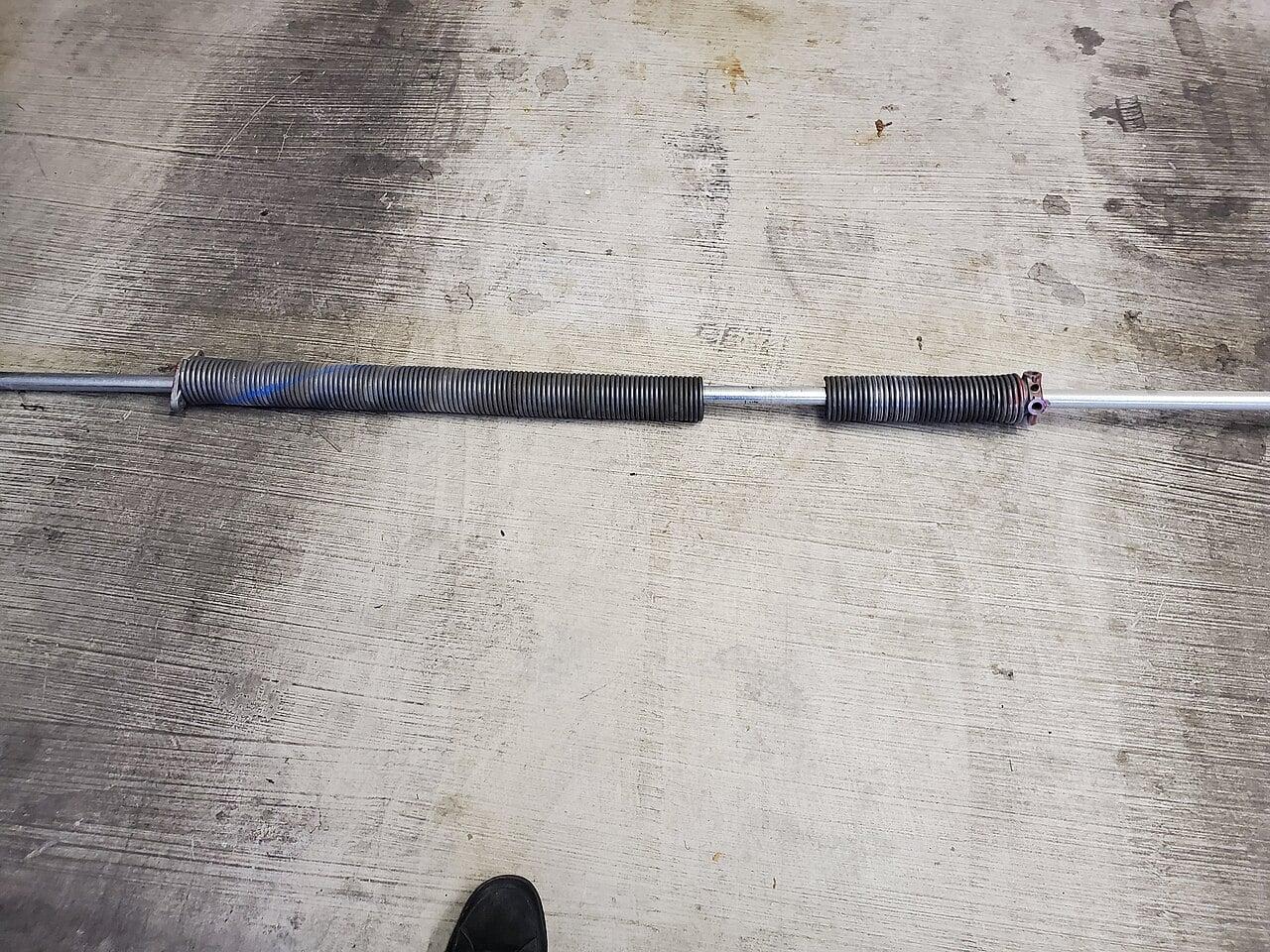
When a commercial overhead door fails to open and the issue traces to the extension spring system, the problem is almost always a broken or severely weakened spring on one or both sides of the door. Extension springs stretch and contract along the horizontal tracks to counterbalance the door’s weight, and when they fail, the door becomes too heavy for the opener to lift or may bind unevenly. You’ll typically see a visible gap in the spring coil, hear a loud snap when it broke, or notice the door crooked in the track with one side sagging. The cables may appear slack or frayed, and the door might only move a few inches before stalling or jerking violently.
How Extension Springs Function in Commercial Doors
Extension springs are mounted perpendicular to the door tracks, one on each side, running from the track hanger to a pulley system connected to the lift cables. When the door closes, the springs stretch, storing mechanical energy. When opening, that energy releases to assist the motor in lifting the door’s weight. In commercial applications, these springs are heavier gauge and under constant high tension, often supporting doors weighing 400 to 1,000 pounds or more. Unlike torsion springs that twist, extension springs rely on linear stretch, making their failure mode more visually apparent but no less hazardous.
Common Failure Modes and Warning Signs
The most frequent failure is a clean break in the spring wire, usually at the end loop or in the middle of the coil due to metal fatigue from repeated cycling. Over time, corrosion from moisture or chemical exposure weakens the steel, accelerating wear. Before total failure, you might hear squeaking or groaning as the spring strains under load, or see gaps forming between coils when the door is closed. If only one spring breaks, the door will lift unevenly, causing the rollers to bind or jump the track, which can bend the track or damage the cable drums.
What You Can Safely Inspect Yourself
You can visually check for a separated spring coil, loose or broken cables, and whether the door hangs level when closed. With the door fully closed and disconnected from the opener (pull the emergency release cord), manually attempt to lift the door — if it feels extremely heavy or won’t stay up, the springs are likely compromised. Look for rust, gaps in the spring, or fraying where the cable attaches to the bottom bracket. Never attempt to adjust or remove the spring while under tension; even disconnected, the stored energy can cause violent release if mishandled.
Why DIY Repair Is Not Recommended
Extension springs on commercial doors operate under extreme tension — often exceeding 500 pounds of force when stretched. Attempting to replace or adjust them without proper tools and training risks sudden snap-back, which can cause serious injury or death. The springs are under constant load even when the door is closed, and releasing them requires specialized winding bars and secure anchoring. Additionally, mismatched spring ratings or incorrect cable length after replacement can lead to imbalance, premature wear, or door runaway.
When to Call a Professional Technician
If the door won’t open, shows visible spring damage, or operates unevenly, contact a qualified commercial door technician. They will safely release tension, replace both springs (even if only one is broken) to ensure balanced operation, inspect cables and pulleys for wear, and verify the door’s alignment and balance after repair. Professional service also includes lubrication of moving parts and adjustment of the opener’s force settings to accommodate the restored spring tension.
Frequently Asked Questions
### Can I operate the door manually if one extension spring is broken?
You should not attempt to operate the door manually or with the opener if a spring is broken. The door will be dangerously unbalanced, likely to bind in the track, and could fall suddenly if the remaining spring fails or the cable slips.
How long do extension springs typically last on a commercial overhead door?
Commercial extension springs are usually rated for 10,000 to 20,000 cycles (one cycle = one open and close), which translates to 3–7 years depending on usage frequency. High-cycle facilities like distribution centers may see shorter lifespans.
Is it necessary to replace both extension springs if only one is broken?
Yes, technicians replace both springs as a pair even if only one has failed. Springs lose tension over time, and mixing a new spring with an aged one creates imbalance, leading to uneven wear, poor door tracking, and potential premature failure of the new spring.
CCGDS (604) 206-5727