Salt-laden air from the Pacific Ocean deposits microscopic chloride particles on exposed metal surfaces. When these chlorides settle on steel hinges of commercial overhead doors, they initiate electrochemical corrosion that penetrates protective coatings and attacks the base metal. This process is not surface rust; it’s subsurface oxidation that weakens the hinge knuckle and pin assembly from within, often undetected until operational failure occurs.
Mechanism of Chloride-Induced Corrosion
Chloride ions break down the passive oxide layer on steel, creating localized anodic sites where metal oxidizes and releases electrons. This drives cathodic reduction of oxygen and moisture, accelerating material loss. In coastal environments like Metro Vancouver, the combination of high humidity, wind-driven salt spray, and temperature cycling creates a persistent electrolyte film on hinge surfaces. Unlike inland areas where corrosion is uniform and slow, chloride attack is aggressive and pitting, concentrating stress at the hinge pin bore and knuckle edges.
Visual and Audible Signs of Hinge Degradation
Early signs include orange-brown staining around the hinge knuckle that wipes off but returns quickly. As corrosion progresses, the hinge pin may seize, causing the door to bind or drag during operation. You might hear a grinding or squealing noise that changes pitch as the door moves — this indicates metal-on-metal contact due to lost clearance. Advanced corrosion causes visible pitting on the hinge leaves, misalignment of the door panel, and in severe cases, the hinge leaf detaching from the jamb or door stile due to metal loss at the mounting points.
What Facility Staff Can Safely Inspect
You can check hinge condition during routine maintenance by visually inspecting the knuckle and pin for rust staining, pitting, or missing paint. Operate the door slowly and listen for abnormal noises — grinding, clicking, or uneven resistance suggest hinge bind. Check for vertical or lateral door misalignment by measuring gaps at the top and bottom of the door; uneven gaps often indicate hinge sag from corrosion-induced weakening. Lubricate the hinge pin with a silicone-based lubricant if movement is stiff but not seized — never use WD-40 as a long-term lubricant; it attracts dust and evaporates quickly.
When DIY Intervention Is Appropriate
Surface cleaning of light rust with a wire brush and application of a corrosion-inhibiting primer followed by touch-up paint is within the scope of facility staff if the hinge shows no pitting, pin seizure, or misalignment. Replacing a hinge pin is acceptable if the knuckle is intact and the pin slides out by hand after lubrication. However, if the hinge leaves are deformed, the mounting holes are elongated, or the door sags despite hinge tightening, the structural integrity is compromised and replacement requires professional assessment.
Why Hinge Replacement Is Not a Simple Swap
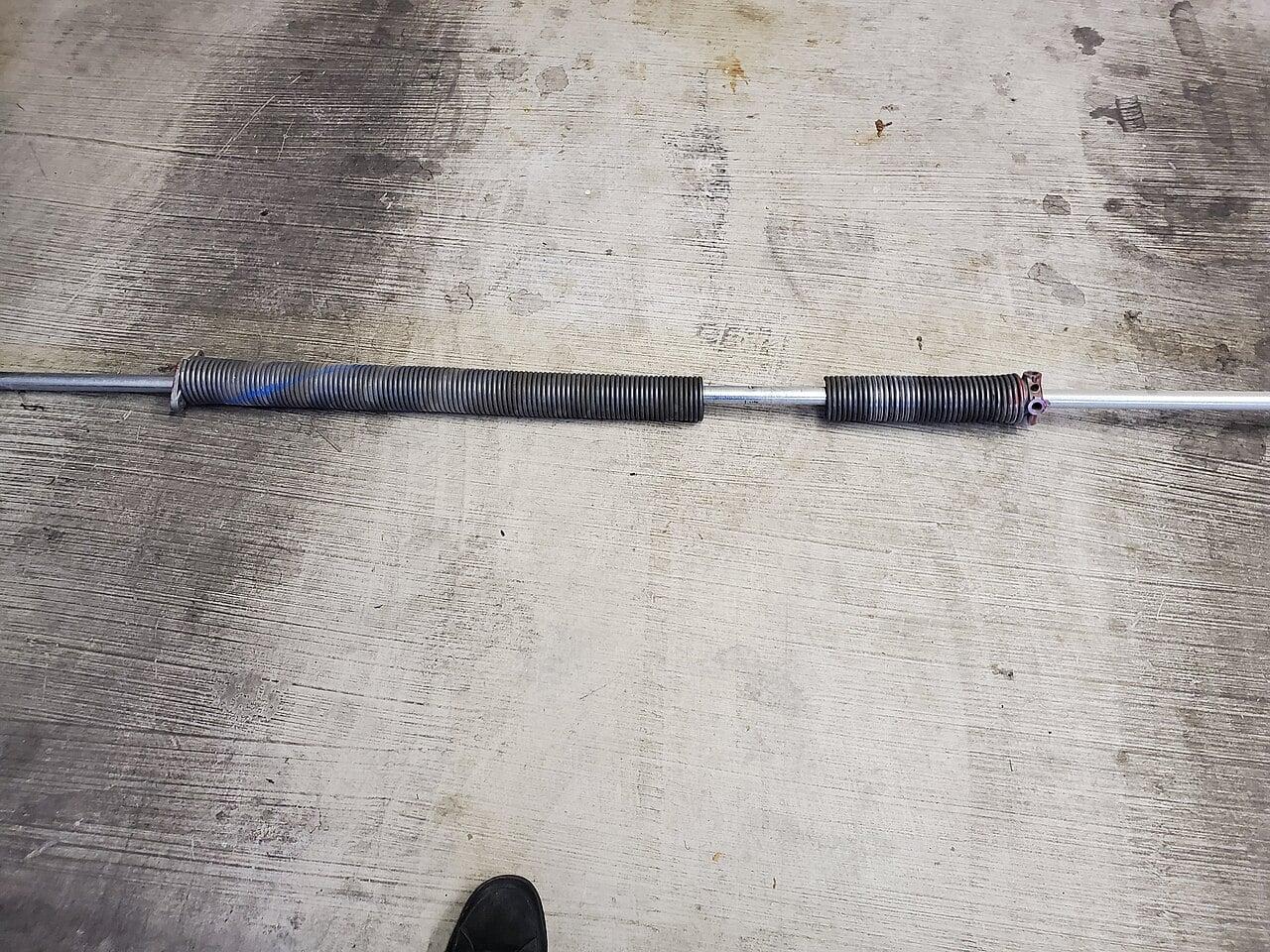
Commercial overhead door hinges are load-bearing components that transfer the door’s weight to the jamb and track system. Replacing a hinge involves supporting the door panel to prevent sudden drop, which requires proper blocking and awareness of spring tension — even on extension spring systems. Misalignment during replacement can bind the door, create uneven wear on rollers, or interfere with the safety edge or photo-eye. If the door uses torsion springs, any work near the spring assembly must be performed by a technician; stored energy in torsion springs can cause severe injury if released unexpectedly.
The Role of Material Selection in Coastal Environments
Standard steel hinges with zinc plating are inadequate for sustained salt exposure. In coastal zones, hinges should be hot-dip galvanized, stainless steel (grade 304 or 316), or coated with a marine-grade epoxy system. Even then, crevice corrosion can occur where moisture traps between the hinge leaf and door stile. Facility managers should specify corrosion-resistant hinges during replacement and ensure proper drainage and ventilation around the door frame to minimize moisture retention.
Frequently Asked Questions
### Can I paint over corroded hinges to stop the damage?
Painting over active corrosion only masks the problem; chlorides continue to react with the metal underneath, leading to blistering and delamination. Remove all loose rust and corrosion products to bare metal before priming and painting.
How often should I inspect hinges on a coastal commercial door?
In salt-air environments, inspect hinges every three months as part of preventive maintenance. Increase frequency after winter storms or periods of high wind carrying spray inland.
Does lubricating a corroded hinge restore its strength?
Lubrication improves movement but does not recover lost metal strength from pitting or material loss. A lubricated hinge that still binds or shows visible damage should be evaluated for replacement.