Limit switches on a commercial overhead door strut control how far the door travels when opening and closing. They are mechanical or electronic stops that tell the motor when to cut power, preventing the door from over-traveling and damaging the strut, track, or header. If the door stops too soon or continues past the intended point, the limit switches are likely out of adjustment.
Understanding the Limit Switch Mechanism
Most commercial strut-mounted operators use a rotary limit switch attached to the motor’s output shaft. As the door moves, a cable or chain rotates the shaft, turning a cam inside the switch housing. The cam physically pushes against micro-switches that interrupt power to the motor. Open and close limits are set independently—usually via adjustable screws or dials that change where the cam engages the switch. When properly set, the door stops with the bottom seal just touching the floor on close and clearing the header by the manufacturer’s specified height on open.
Signs the Limit Switches Need Adjustment
If the door stops 2–4 inches short of full closure, you’ll see daylight under the seal or feel a draft. If it travels too far, the bottom bar may buckle against the floor or the strut may strain against the header stop. On open, a door that stops low risks hitting vehicles or equipment; one that goes too high can pull the top roller out of the track or overstress the strut mounting bolts. You might hear the motor humming after the door appears stopped—this is the motor trying to turn but being cut off by the switch, or conversely, the motor running past where it should stop because the switch didn’t engage.
Safety First: What You Can and Cannot Touch
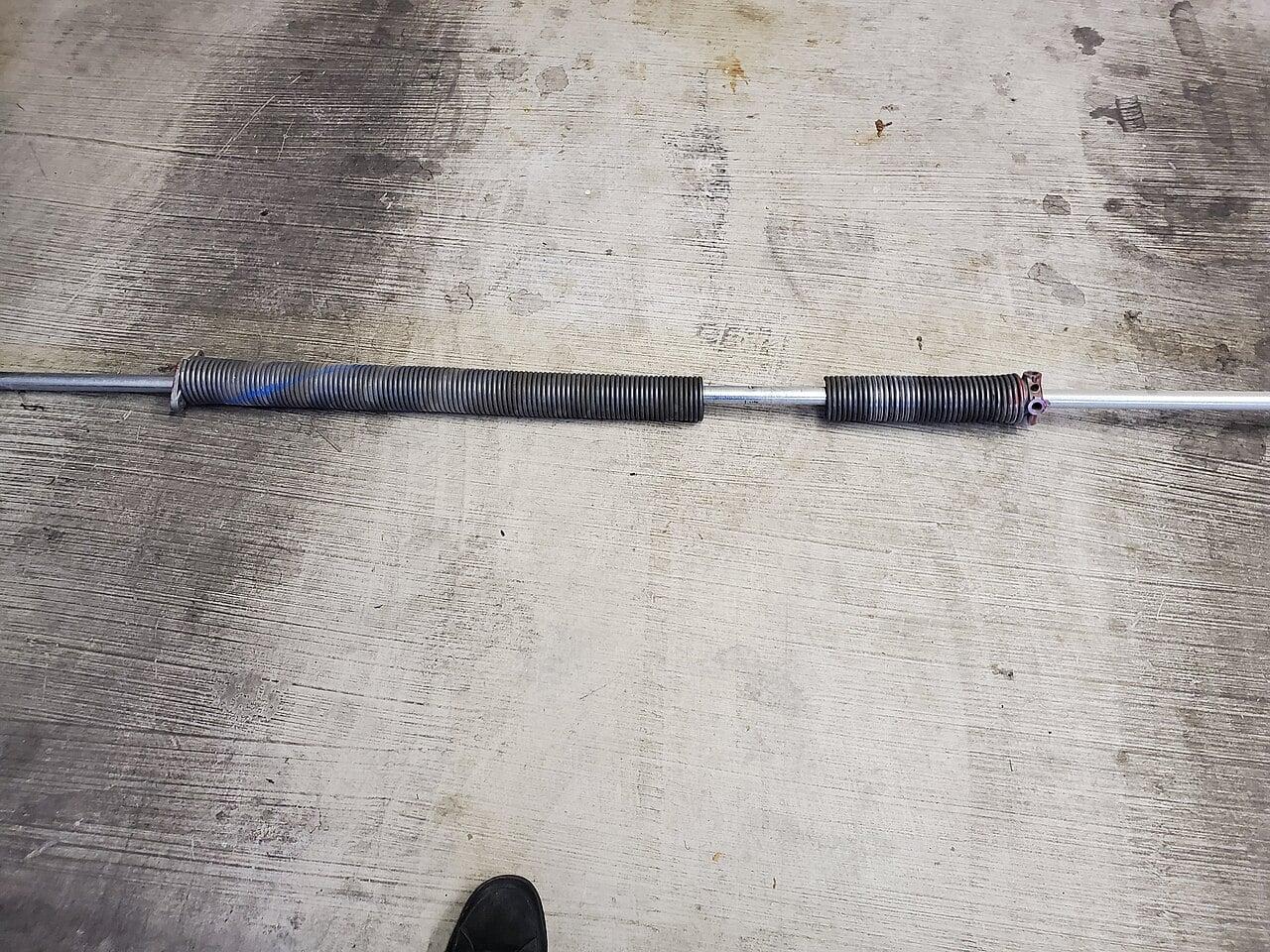
Before touching anything, disconnect power to the operator at the disconnect switch or breaker. Never adjust limit switches while the door is under power. The strut itself is under significant torsion from the springs—do not attempt to adjust, remove, or tamper with the torsion spring assembly, spring anchors, or cable drums. These store lethal energy and must only be serviced by trained technicians. Limit switch adjustment is generally safe because it involves only the operator housing, not the spring system. However, if the door is unbalanced (sags when manually lifted halfway), do not proceed—adjusting limits on an unbalanced door masks a deeper spring or cable issue.
How to Check Current Limit Settings
With power off, manually open and close the door. Note where it stops naturally—this tells you if the issue is mechanical (e.g., bent track, worn rollers) or purely limit-related. If the door moves freely and stops at the same point each time manually, the problem is likely in the limit switch. Mark the door’s position on the track with chalk or tape at the desired open and close points. Then restore power briefly (only to test, not to leave energized) and observe where the motor stops. Compare to your marks.
Adjusting the Open and Close Limit Switches
Locate the limit switch housing on the motor—usually a plastic or metal box with two protruding screws or dials labeled ‘open’ and ‘close’. Using a flathead screwdriver, turn the close limit screw clockwise to decrease travel (door stops sooner) or counterclockwise to increase travel (door travels farther). Adjust in quarter-turn increments. After each adjustment, disconnect power, test manually to ensure no binding, then restore power briefly to check the stop point. Repeat until the door stops with the seal lightly compressing on the floor. For the open limit, follow the same process: clockwise reduces open height, counterclockwise increases it. Set so the top roller sits just below the track’s horizontal radius, per the manufacturer’s spec—typically 2–4 inches below the top of the vertical track.
When Limit Switch Adjustment Isn’t Enough
If adjusting the switches doesn’t change where the door stops, the issue may be a slipping cable on the drum, a stripped gear in the limit box, or a failing motor. If the door drifts after stopping (creeps down or up), the brake may be worn or the limit switch contacts are pitted and not holding. Intermittent operation—where the door stops correctly one day but not the next—often points to loose wiring or a failing switch mechanism. In these cases, continued adjustment is ineffective and can lead to over-travel damage. Stop and call a technician.
Frequently Asked Questions
### Can I adjust limit switches if the door has a broken spring?
No. A broken spring means the door is unbalanced and may fall rapidly if disconnected from the opener. Attempting to adjust limits under these conditions is dangerous and pointless—the door won’t stay put for testing. Secure the door in place and call for spring replacement before touching the operator.
Why does my door stop correctly in winter but not in summer?
Temperature changes cause metal components to expand and contract. In cold weather, lubricant thickens and the door may bind slightly, making it seem like it stops short. In heat, components expand and the door may travel farther. Check and adjust limits seasonally, and ensure the track is clean and lubricated with a silicone-based product—not grease, which attracts dirt.
### How often should limit switches be checked?
As part of quarterly preventive maintenance. Include them in your visual inspection: look for loose mounting bolts on the switch housing, frayed wires, or corrosion on the contacts. Test the door’s stop points manually and with power. If you’re adjusting them more than twice a year, investigate underlying wear in the drive system, such as chain stretch or cable wear.
For complex operator issues beyond limit switch adjustment, contact CCGDS at (604) 206-5727.