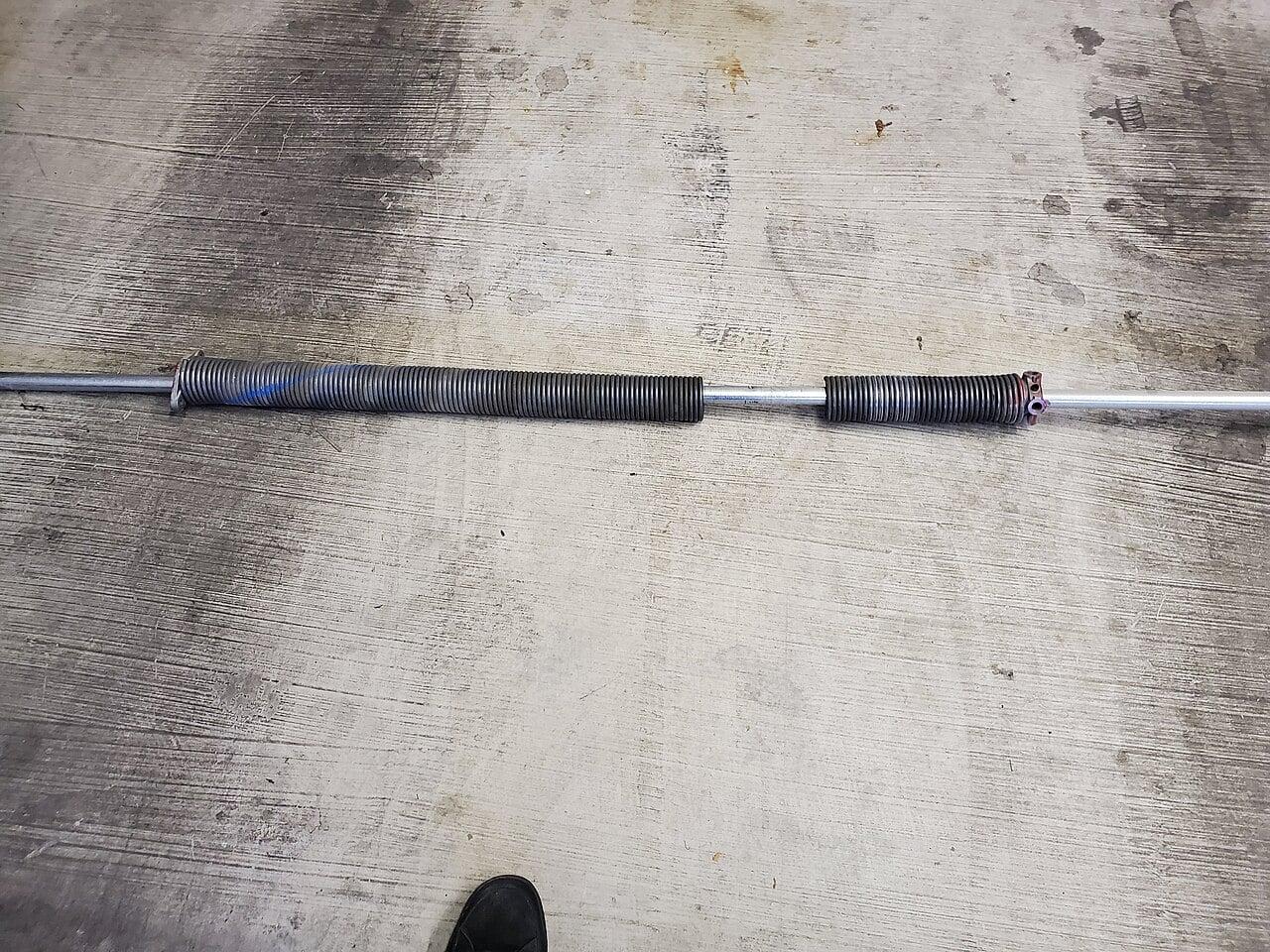
Short answer. Duplex torsion springs are a spring inside a spring. The smaller inner spring slides on the shaft first, the outer spring goes over it, and their winding cones are bolted together so they wind as one. Heavy commercial doors use them when there isn't room on the shaft for more springs side by side. The danger is that a broken inner spring can hide inside a healthy outer one. Only a trained tech should open one up.
Duplex torsion springs show up on the heavy end of commercial work. Big insulated sectionals, tall service bays, doors with a lot of glass. When a door needs more lift than two springs can give, there are two ways to get it. Put more springs along the shaft, or nest a second spring inside the first. Each has its own failure modes, and each needs a tech who has done it before.
The safety point is not negotiable. A duplex set stores far more energy than a single spring the same length. Industry replacement instructions for duplex sets call for a torch to cut the old spring free, and they say the torch should not be used without prior training. That tells you who should be doing this work.
How duplex torsion springs are built
DDM Garage Doors, a parts supplier, publishes duplex replacement instructions for commercial doors with two duplex systems, one on each half of the door, joined by a coupler where the solid shafts meet. On each half there is an inner spring and an outer spring. The smaller inner spring goes onto the shaft first and the outer one slides over it.
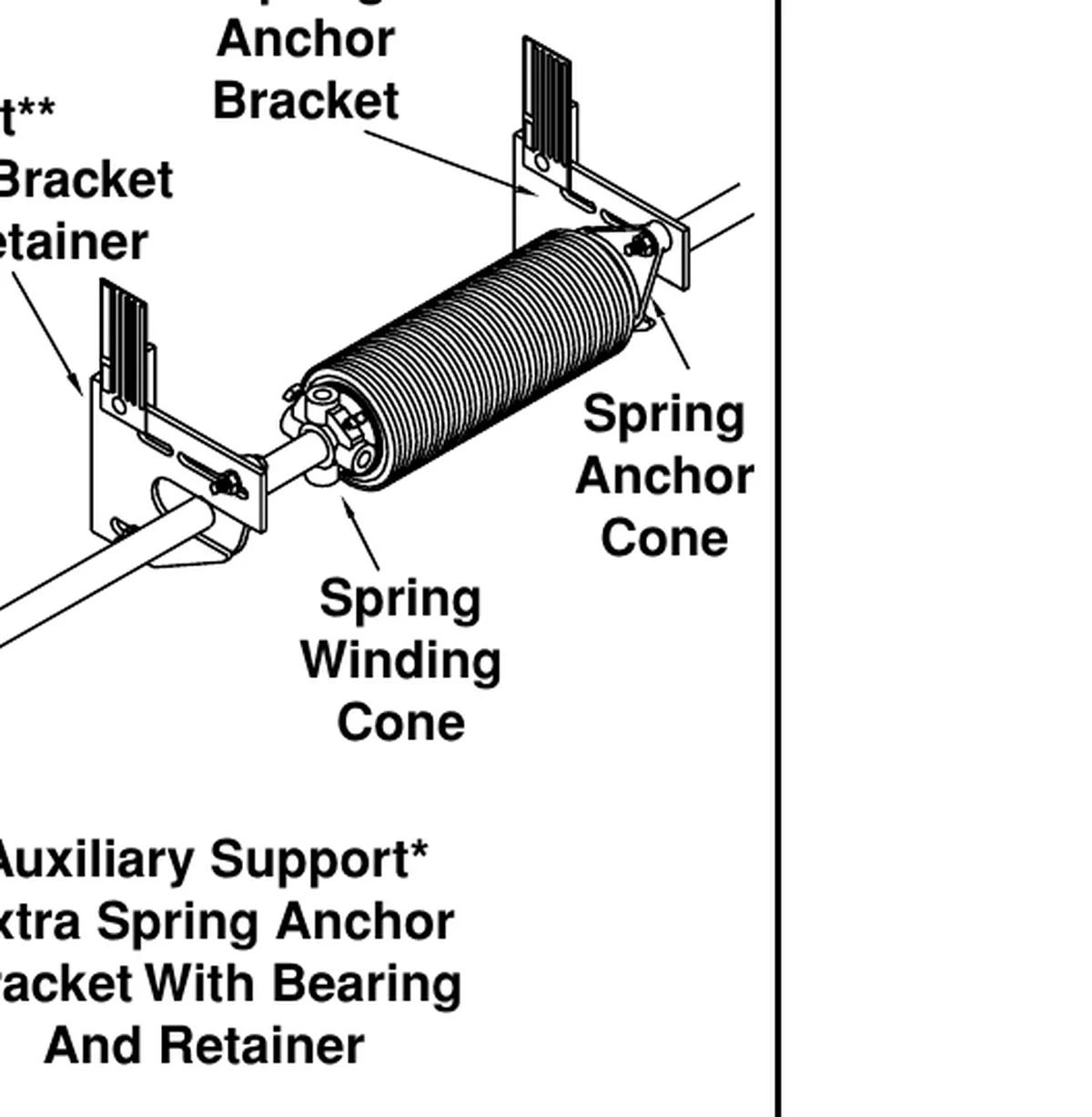
Each spring still has a winding cone and a stationary cone. The two winding cones are bolted together, so they turn as one. The two stationary cones are bolted to the spring anchor bracket. The two springs are sized so the pair shares the load.
Why a broken inner spring hides
You can't see the inner spring with the outer one wound over it. The same DDM instructions give two tells. The door gets much heavier to lift by hand, since half of that side's lift is gone. And the stationary cone often shows the outer coil wound further onto it than normal, because the broken inner spring has forced it there.
That's why duplex doors fool people. The operator may still lift the door, slow and loud. The outer spring looks fine. Meanwhile the operator is doing work the springs should do. Our page on a door that moves slowly covers how that shows up.
Multi spring layouts along the shaft
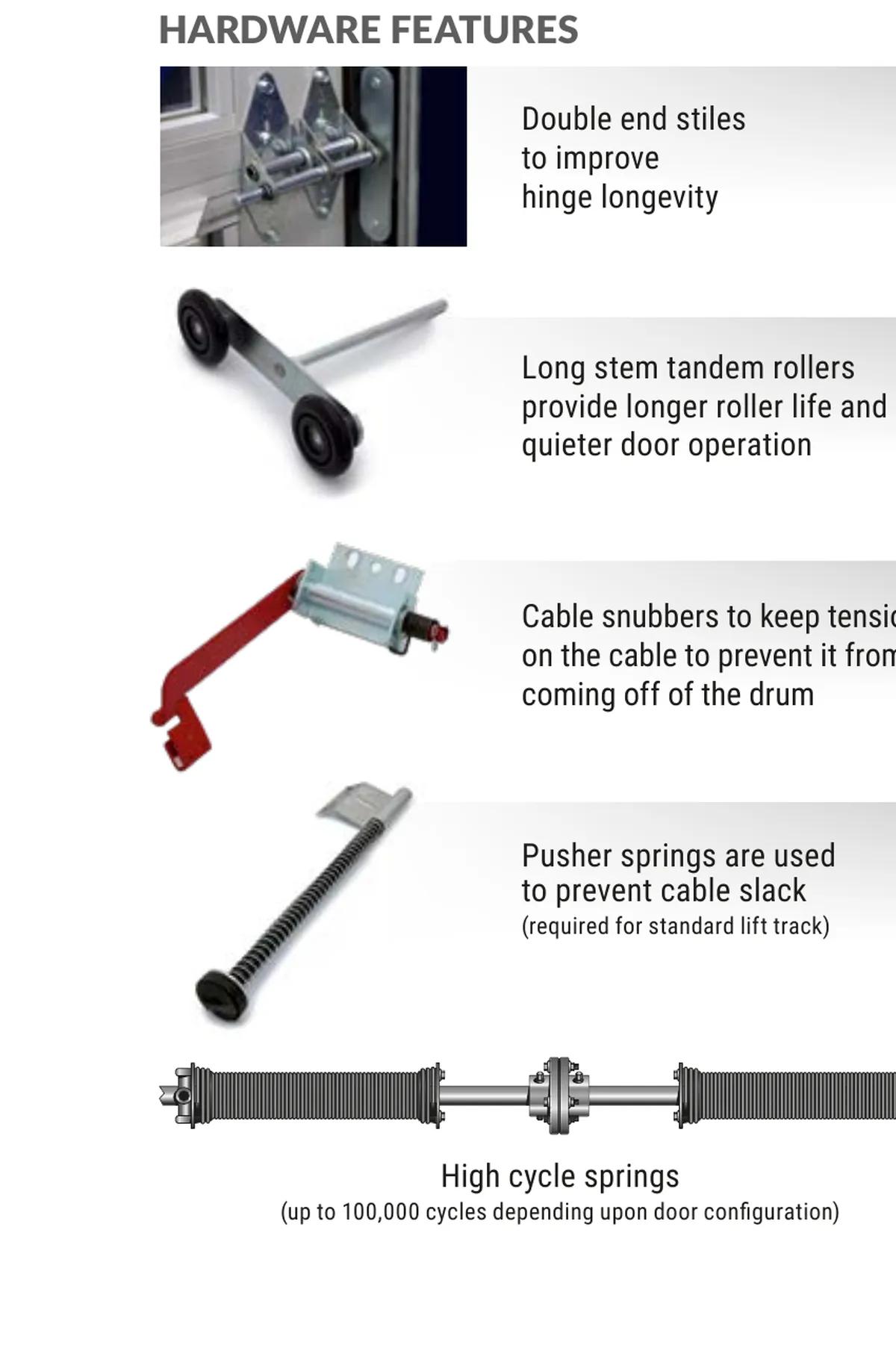
The other way to add lift is more springs. Clopay's commercial manual shows one and two spring layouts and calls for auxiliary supports when the door gets wide or heavy. An extra spring anchor bracket with bearing goes about 3 inches in from each drum on doors 20 feet or wider or 730 lb and heavier. The spring anchor brackets page has the full rule.
The same manual notes that doors with more than one row of springs need extra headroom. Doors over 18 feet high, over 1,000 lb springing weight or on high cycle springs may need more headroom and sideroom as well.
| Layout | Where it fits | What to watch |
|---|---|---|
| Two springs, one shaft | Most commercial sectionals | Replace both when one breaks |
| Four or more springs on one shaft | Wide or heavy doors with shaft length to spare | Auxiliary bearings, equal turns per pair |
| Duplex sets | Heavy doors with no room for more springs | Hidden inner breaks, extra stored energy |
Which one we'd pick
Our opinion. Where the shaft has room, we'd rather run more single springs than duplex sets. They're easier to inspect and measure. A broken one is obvious from the floor. Duplex earns its place on short shafts and very heavy doors, and there it's the right engineering. We just want the building to know it's there, so nobody assumes a quiet outer spring means a healthy door.
On a service call
We measure every spring, inner ones included once they're unloaded. We weigh the door when the numbers don't add up. Then we size the replacement set against the door weight and the cycles the door actually runs. The bay door spring repair page covers warehouse doors, and cycle ratings explained covers matching springs to traffic. For sizing, see the torsion spring wire size chart.
If a heavy door on your site has gone slow or loud, lock it out. Then call (604) 206-5727. More on our commercial spring repair page and signs a torsion spring is failing.