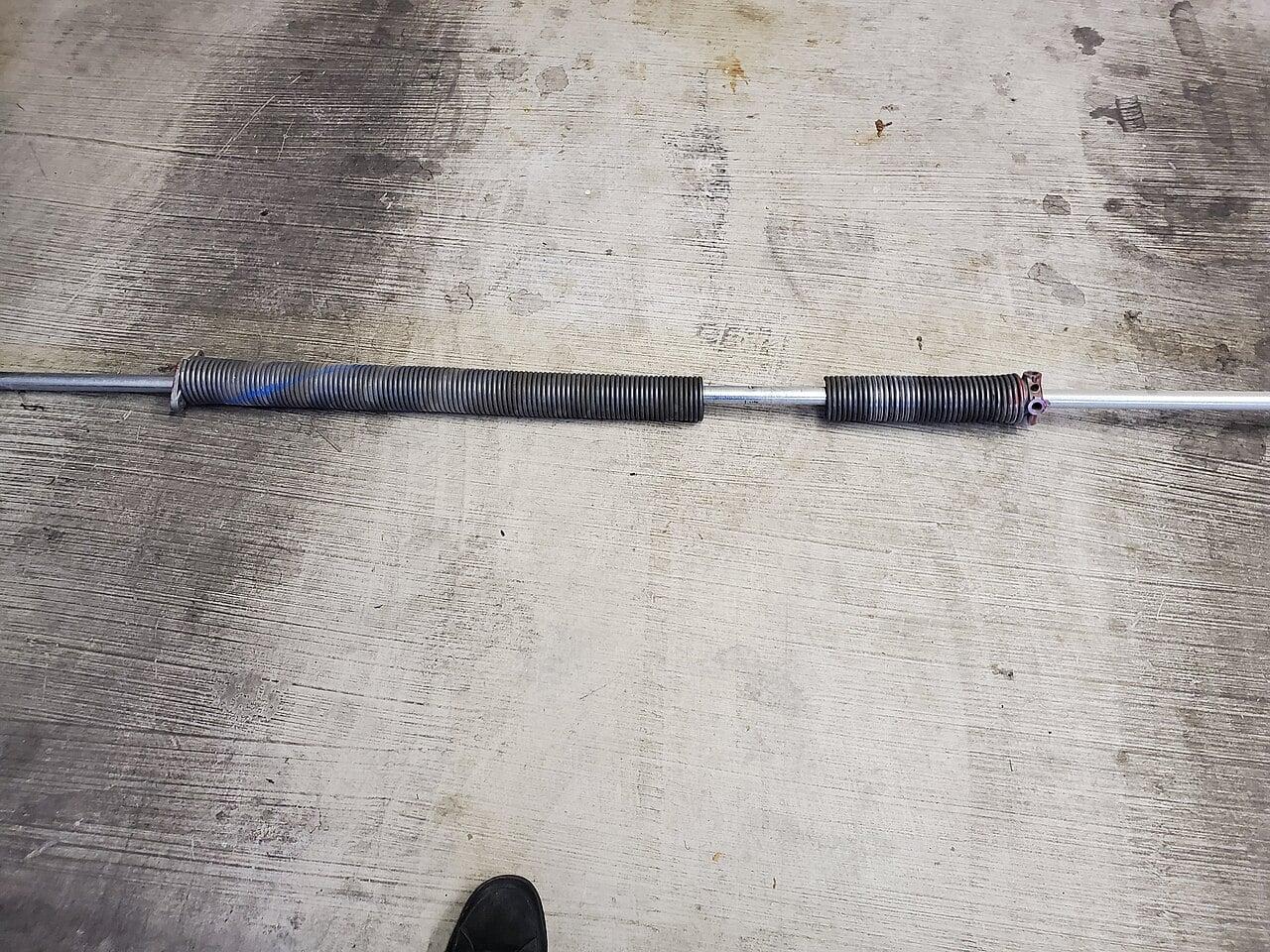
Torsion springs on commercial overhead doors fail due to metal fatigue from repeated cycling, not sudden breakage. Each cycle winds and unwinds the spring, gradually weakening the steel until it can no longer support the door’s weight. The first sign is often a door that feels heavy when operated manually or struggles to stay open at mid-height. You might hear a loud bang when the spring finally fractures—this is the release of stored energy, not the cause of failure. Visually, look for gaps in the spring coils, rust accumulation, or elongation where the spring appears longer than when new. A spring that has lost tension will not lift the door smoothly; instead, it may jerk, stall, or require excessive force from the opener. If the door closes too quickly or slams shut, the spring is no longer counterbalancing the weight. Do not attempt to adjust, repair, or replace torsion springs yourself. These components store enough energy to cause serious injury or death if mishandled. Only trained technicians with proper tools should handle spring replacement. Regular inspection of the spring’s condition, along with listening for unusual noises during operation, helps identify wear before failure. Keep the spring clean and lubricated with a silicone-based spray to reduce friction and corrosion, but never use WD-40 as a lubricant—it attracts dust and degrades over time. If you notice any of these signs, discontinue use and contact a qualified service provider.
Visual Indicators of Spring Wear
Inspect the torsion spring mounted above the door shaft. A healthy spring has tight, uniform coils with no visible separation. As it wears, gaps form between coils, especially near the ends where stress concentrates. Rust appears as orange-brown flaking and indicates moisture intrusion, which accelerates fatigue. Elongation is measurable—compare the spring’s length to its original specification; even a 3% increase means significant tension loss. Look for deformation: if the spring is bent, kinked, or shows signs of rubbing against the center bracket or cone, it’s compromised. Paint cracking or flaking off the spring surface often precedes rust and signals metal fatigue. Never rely on appearance alone—some springs fail internally without visible signs, which is why operational behavior is equally important.
Audible and Operational Warning Signs
Listen during door operation. A healthy spring operates silently or with a soft, consistent winding sound. Grinding, squeaking, or popping noises suggest binding or uneven tension. If the door hesitates at the top or bottom of travel, or reverses unexpectedly, the spring may not be providing consistent lift. A door that drifts downward when stopped mid-cycle indicates insufficient counterbalance. When the spring breaks, it produces a sharp, explosive bang—similar to a firecracker—due to the sudden release of 200+ foot-pounds of energy. After fracture, the door will feel extremely heavy and may not lift at all with the opener. Do not cycle the door repeatedly after noticing these symptoms; each cycle increases stress on the remaining intact spring (if dual springs are installed) and risks cable failure or door misalignment.
What Happens When a Spring Fails
Torsion springs fail when the steel’s crystalline structure fatigues from flexing beyond its elastic limit. Over time, microscopic cracks propagate until a sudden overload—such as a cold start or uneven load—causes complete rupture. The energy stored in the spring (calculated as ½kx², where k is spring constant and x is displacement) releases violently, potentially damaging the shaft, cables, or door panels. A broken spring cannot support the door’s weight, so the entire load transfers to the opener motor, cables, and tracks. This often leads to secondary damage: stripped gears in the opener, frayed cables, or bent tracks. In dual-spring systems, one spring may fail first, leaving the second to carry excess load—accelerating its failure. Environmental factors like temperature swings, humidity, and lack of lubrication shorten spring life. Commercial doors cycling 20+ times daily typically see spring lifespans of 5,000–10,000 cycles, or 3–5 years under heavy use.
Safe Inspection Practices for Facility Staff
You can perform a basic visual and operational check without touching the spring. With the door closed, inspect the spring for gaps, rust, or deformation using a flashlight. Operate the door manually (disconnect the opener) and feel for smooth, balanced movement—it should lift with minimal resistance and stay put when released at any height. Listen for unusual noises. Check that the door opens and closes fully without jerking or stalling. Never wind, unwind, or attempt to adjust the spring tension. Do not stand directly in front of or under the spring during inspection. If you observe any abnormality, lock out the door and contact a qualified technician. Lubrication is the only maintenance task safe for in-house staff: apply a light coat of silicone-based lubricant to the spring coils twice a year, wiping off excess. Avoid petroleum-based products—they degrade rubber components and attract contaminants.
Why DIY Spring Replacement Is Extremely Dangerous
Torsion springs store lethal amounts of energy. A standard 10-foot commercial door spring can exert over 500 pounds of force when wound. Unwinding or winding without proper tools (winding bars, vise grips, and safety cables) allows the spring to spin uncontrollably, turning the winding bar into a projectile. Injuries include lacerations, broken bones, eye trauma, and fatalities. Even experienced technicians treat spring replacement as a high-risk procedure requiring two people, proper anchoring, and strict adherence to safety protocols. The risk is not theoretical—OSHA and workplace safety records document serious incidents annually from improper spring handling. Never attempt to save time or money by bypassing professional service. The cost of medical treatment or downtime from an injury far exceeds the cost of a correct replacement.
When to Call a Technician
Contact a service provider if the door fails to open or close smoothly, makes loud bangs during operation, shows visible spring damage, or requires excessive manual force. Technicians will measure the spring’s inside diameter, wire size, and length to specify an exact replacement—using the wrong spring creates imbalance and premature failure. They will also inspect cables, rollers, hinges, and the opener for secondary damage caused by the failing spring. Replacement involves securing the door, releasing tension safely, removing the old spring, installing the new one with correct winding, and testing balance and operation. A proper job includes lubrication and adjustment of all related components. Do not delay service—operating a door with a known bad spring risks catastrophic failure and endangers personnel.
Frequently Asked Questions
How long do commercial torsion springs typically last?
Lifespan depends on cycle frequency and maintenance. A door cycling 15 times per day may see 10,000-cycle springs last 18–24 months, while 50,000-cycle springs on the same door could last 5–7 years. Lubrication and corrosion prevention extend life; neglect reduces it dramatically.
Can I replace just one spring if I have a dual-spring system?
No. Replace both springs even if only one appears faulty. The undamaged spring has undergone identical cycling and is near the end of its service life. Mixing old and new springs creates imbalance, uneven wear, and rapid failure of the new spring.
What’s the difference between torsion and extension springs in terms of failure signs?
Torsion springs mount above the door and fail with a loud bang and loss of lift. Extension springs run along the horizontal tracks and often fail by stretching or breaking cables, causing the door to hang unevenly or fall suddenly. Both are high-tension and require professional replacement.