Cold weather reduces the elasticity of steel in torsion springs, making them more prone to sudden failure when the door cycles. The stored energy in a spring is what lifts the door; when temperatures drop below freezing, the metal becomes brittle and less able to absorb stress, especially if the spring is already worn or corroded. This is not theoretical—facility managers in Metro Vancouver see a spike in spring breaks during December and January, often during the first morning cycle when the door is coldest and under maximum load.
Why Steel Loses Flexibility in the Cold
Torsion springs are made of oil-tempered steel, which relies on its molecular structure to flex and return without deforming. Cold temperatures slow atomic movement, increasing the metal’s yield strength but decreasing its ductility. At -10°C or lower, the steel behaves more like glass—it can still hold tension, but a small nick, rust pit, or fatigue crack becomes a fracture point. When the spring tries to unwind during door lift, that stress concentrates at the weak spot and causes a clean, brittle break. It’s not that the spring loses strength; it loses the ability to stretch slightly under load, which is what prevents sudden failure.
What a Broken Spring Looks and Sounds Like
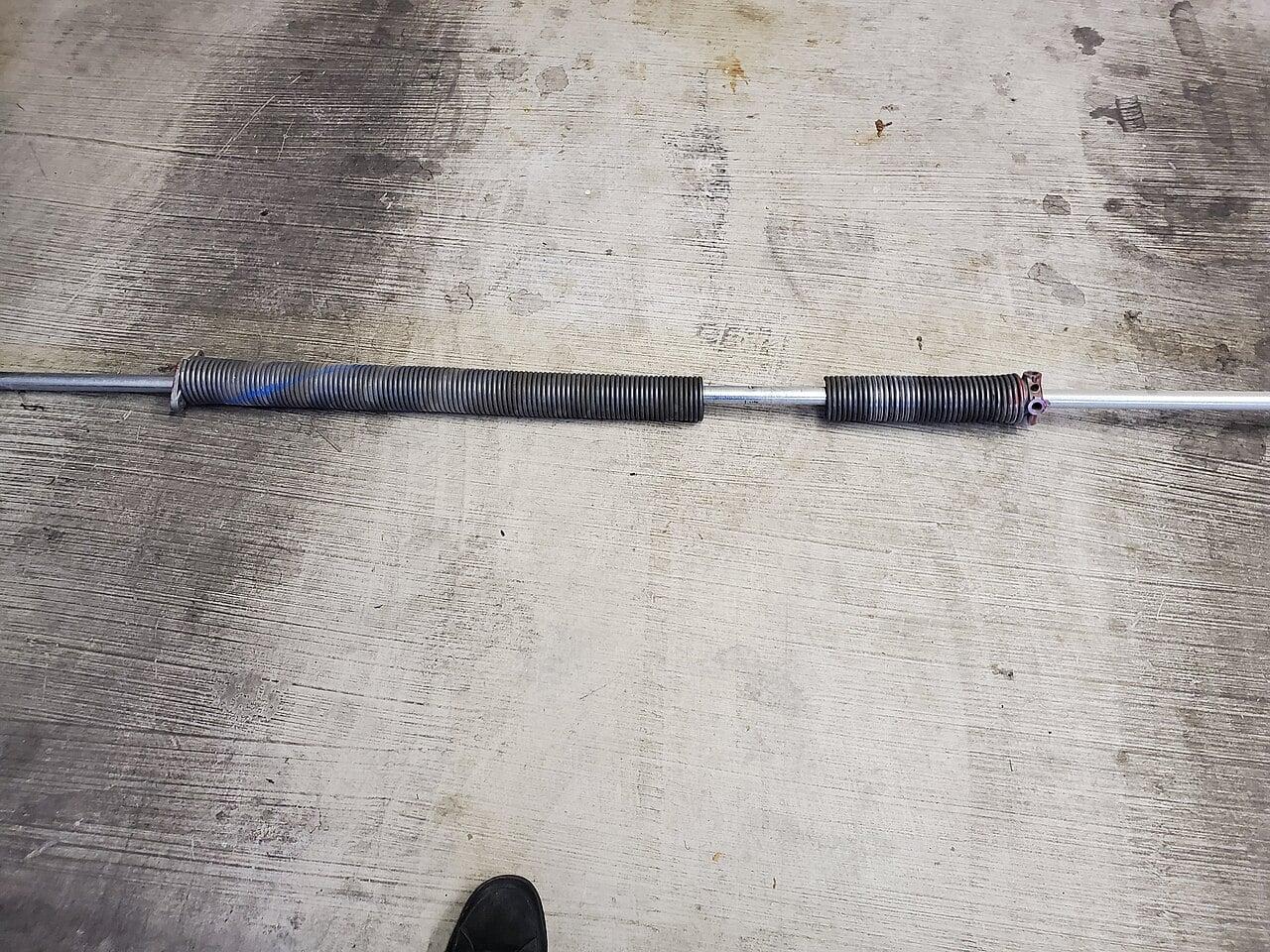
A failing torsion spring often gives no warning. When it breaks, it releases all stored energy instantly. You’ll hear a loud bang—like a firecracker or gunshot—coming from above the door. The door may jerk sideways, hang crookedly, or slam shut if it was open. Visually, you’ll see a gap in the spring coil where it snapped, usually near one end or the center. Do not attempt to operate the door. The cables may be slack or tangled, and the door could drop several inches if disturbed. This is not a jammed roller or misaligned track—it’s a catastrophic release of energy.
What Facility Staff Can Safely Check
Before calling a technician, you can perform a few visual and mechanical checks from a safe distance. First, look at the spring assembly above the door—do you see a separation in the coils? Second, with the door closed, manually lift it halfway (only if it feels light and moves smoothly—stop if it resists or drops). A door with intact springs should stay put when released; if it falls, the springs are likely broken. Third, listen for unusual creaking or groaning during operation—cold can cause temporary stiffness, but persistent noise means wear. Never touch the springs, winding cones, or cables. If you’re unsure, assume the system is under tension and leave it alone.
Why DIY Repair Is Extremely Dangerous
Torsion springs store enough energy to lift a 300-pound door. When wound, that force is concentrated in a few inches of steel. If a winding bar slips or a spring fractures during adjustment, the released energy can cause severe injury or death. The springs, cones, and cables are under constant tension—even when the door is closed. Only trained technicians with proper winding bars, safety equipment, and knowledge of spring indexing should handle them. Lubricating the springs or checking for rust is acceptable surface maintenance, but any adjustment, removal, or replacement is not a DIY task. The risk is not worth saving a service call.
How Cold Exposure Accelerates Wear
Repeated cycling in cold weather causes micro-fatigue in the steel. Each time the door opens and closes, the spring flexes slightly. In warm conditions, this flex is elastic. In the cold, the same flex creates microscopic cracks that grow over time. A spring rated for 20,000 cycles might reach its limit in half the expected life if used daily in freezing temperatures. Facility managers should track door cycles and consider upgrading to springs with higher cycle ratings or corrosion-resistant coatings if the door runs more than 15 times a day in winter.
Preventive Steps for Winter Readiness
The best defense is inspection before the cold hits. In early fall, have a technician check spring tension, look for rust or corrosion, and verify the door is balanced. A properly balanced door reduces strain on the springs. Keep the springs lubricated with a silicone-based spray—never WD-40, which attracts dust and can harden in the cold. Ensure weather seals are intact so cold air doesn’t pool around the spring assembly. If the door is in an unheated dock or warehouse, consider a radiant heater near (not on) the spring shaft to maintain ambient temperature above freezing, though this is secondary to mechanical maintenance.
Frequently Asked Questions
Can I use a heater or heat lamp to keep the torsion spring warm?
Applying direct heat to the spring or its components is not recommended. Localized heating can weaken the steel’s temper and create uneven expansion, increasing failure risk. Instead, maintain a consistent ambient temperature above freezing in the garage space using approved heating equipment. Focus on preventing cold soak through insulation and sealing, not on heating the spring directly.
How often should torsion springs be replaced in a cold climate like Metro Vancouver?
There’s no fixed interval—it depends on cycle count, maintenance, and exposure. A spring in a high-use warehouse door might last 5-7 years, while one in a low-use facility could exceed 10 years. Track door cycles and have springs inspected annually before winter. Replace them if tension is uneven, corrosion is deep, or the door fails balance tests—not based on calendar age alone.
What’s the difference between a torsion spring breaking in winter versus summer?
The failure mechanism is the same—metal fatigue exceeding the material’s limit—but winter lowers the threshold for brittle fracture. A spring that might withstand a stress spike in summer could crack in winter due to reduced ductility. The break looks identical: a clean separation in the coil. The key difference is timing—winter breaks often occur during the first cycle of the day when the door is coldest and the spring has not yet flexed enough to warm up slightly from use.