Full-view aluminum glass doors show up on renderings before the engineer has signed off on the header. That sequence causes problems. The doors are lighter than insulated sectional steel, but the point loads at the jambs are higher because the curtain has no rigidity of its own. If the building structure was designed for a standard sectional, the jambs often need reinforcement before the first track bracket goes up.
What the catalog calls them
Manufacturers list these as “full-view aluminum” or “aluminum full-view.” The frame is extruded 6063-T5 or 6063-T6 aluminum. The infill is glass, polycarbonate, or acrylic. Standard heights run 8 to 24 feet in 1-foot increments. Widths top out around 30 feet before you need a mullion or a second door. Glass thickness is usually 1/4 inch tempered, 1/2 inch insulated, or 9/16 inch laminated. Polycarbonate runs 1/4 to 1/2 inch. The frame depth is 2 to 3 inches depending on wind-load rating.
Showrooms and retail — the intended use case
Car dealerships, furniture galleries, and high-end retail specify these doors because the opening is the storefront when the weather cooperates. A 24-foot wide by 14-foot high opening on a dealership service drive lets you pull a vehicle straight into the showroom for a weekend event. The door becomes a movable wall.
The catch is thermal. A single-glazed 1/4-inch tempered panel has a U-value around 1.0. Double-glazed low-E drops that to 0.45. That is still five times the heat loss of an insulated steel sectional with a U-value of 0.08. In a heated showroom in January, the door is the coldest surface in the room. Condensation forms on the interior face at 40 percent relative humidity when it hits 5°C outside. We see it every winter on the North Shore and in Richmond — water running down the mullions onto the polished concrete.
Specify thermally broken frames and insulated glass if the space is conditioned. The frame cost jumps 30 to 40 percent. The glass cost doubles. The heating bill drops measurably.
Restaurants and brewpubs — seasonal operation
A restaurant on Granville Island or in Gastown wants the door open from May to September. Closed, it looks like a storefront. Open, it adds 40 seats. The aluminum full-view door does this job better than a coiling grille or a bifold because it seals when closed and stacks overhead in 18 inches of headroom.
Two details decide whether the owner regrets the choice.
First, the bottom seal. A vinyl bulb seal on aluminum works fine until the health inspector drags a moisture meter across the threshold after a rainstorm. A dual-durometer threshold with a thermal break and a positive-locking bottom bar keeps the water out and the inspector happy. Skip it and you will replace the seal annually.
Second, the operator. A standard trolley operator on a 14-foot door cycles 12 times a day in season. That is 1,500 cycles a year. A residential-duty operator fails at 15,000 cycles. A commercial Maxum or LiftMaster industrial unit rated for 50,000 cycles costs twice as much and lasts ten years. The math is obvious, but the line item gets value-engineered out during build-out.
Fire stations and EMS — speed and visibility
Apparatus bay doors need to open in 7 seconds. A 14-by-14 full-view aluminum door with a high-speed operator and a light curtain hits that number. The crews see the apron before the rig clears the threshold. That visibility prevents pedestrian strikes in tight urban halls.
Wind load is the specification driver here. Vancouver requires 1.5 kPa design pressure for essential-service buildings. Richmond is 1.6 kPa. A standard 2-inch frame with 1/4-inch glass fails at 1.2 kPa. You need a 3-inch frame, laminated glass, and reinforced struts on doors over 12 feet wide. The door weighs 4.5 lb/ft² instead of 2.8. The springs and counterbalance shaft size up accordingly.
Parkades and strata — the wrong tool
Strata councils ask for full-view aluminum on parkade entries because “it looks modern.” It is the wrong door. A parkade entry cycles 300 times a day. The aluminum frame fatigues at the hinge points. The glass gets hit by mirrors, bike racks, and the occasional cube van. The strata pays the difference every time.
If the building insists on visibility, use a 3-inch frame with 1/2-inch polycarbonate infill and a high-cycle spring system rated for 100,000 cycles. Budget for panel replacement every 18 months. Or specify a perforated steel sectional — 40 percent open area, 1/10 the replacement cost, and the same visibility for security cameras.
Loading docks — never
A loading dock door takes a forklift hit every 14 months on average. An aluminum full-view door does not survive the first impact. The frame bends, the glass shatters, the track pulls out of the jamb. The repair bill exceeds the door’s replacement cost. Use a 2-inch or 3-inch insulated steel sectional with a 24-gauge skin and a bottom section reinforced for impact. Save the aluminum for the customer-facing side of the building.
Hardware that matters
- Hinges: 11-gauge steel with hardened pins. Aluminum hinges gall and seize in salt air. Richmond and Delta installs need stainless pins.
- Rollers: 10-ball nylon with sealed bearings. Steel rollers mark the vertical track inside of six months.
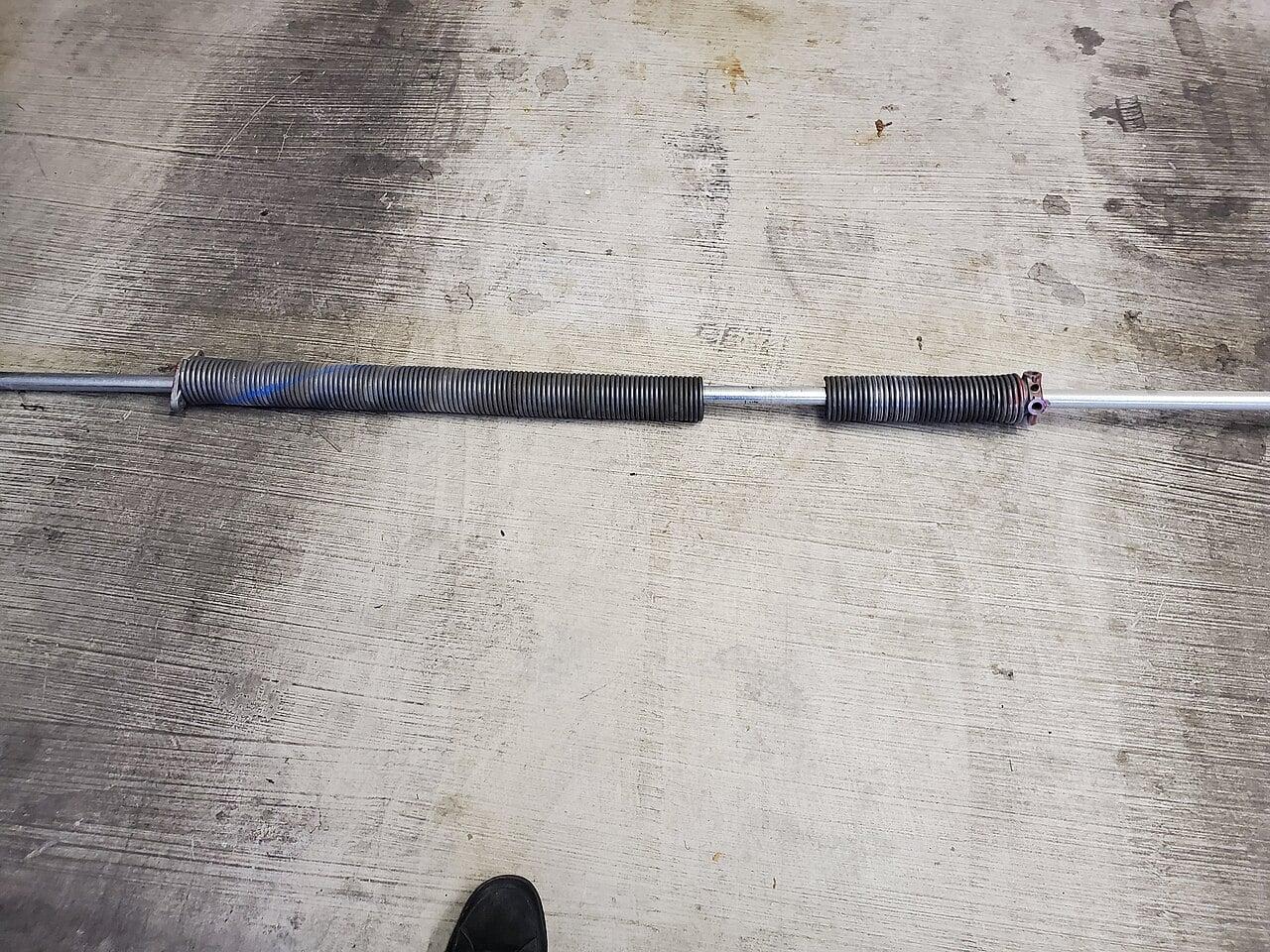
- Springs: Oil-tempered, 25,000-cycle minimum. 50,000-cycle if the door cycles more than 20 times a day. The spring wire diameter increases 0.015 inch per 10,000-cycle step.
- Operator: Jackshaft mount on doors over 16 feet wide. Trolley mounts flex the header. Jackshaft keeps the force on the torsion shaft where it belongs.
- Safety: Light curtain, not photo-eyes. Photo-eyes fog in a car wash or a bakery. Light curtains wash down with the rest of the door.
The conversation to have before the order
Ask the architect: “What is the design wind pressure for this opening?” Ask the mechanical engineer: “What is the heating load with a U-0.45 door at 24 by 14?” Ask the owner: “How many cycles a day in July? In January?” Ask the insurer: “What is the deductible for glass breakage on a storefront policy versus a commercial door policy?”
The answers change the spec. They always do.
Call (604) 206-5727 — Metro Vancouver.