Coastal salt air accelerates corrosion on the centre bearing of a commercial overhead door by depositing chlorides that break down protective coatings and pit metal surfaces. This bearing, typically a sealed or greased steel unit supporting the torsion tube, fails when salt crystals attract moisture and create an electrolytic cell that eats through the housing and races. In Metro Vancouver’s coastal zones, this process starts within 18–36 months of installation if the bearing isn’t specified for marine environments.
Mechanism of Salt-Induced Bearing Failure
Salt particles land on the door during windy conditions and remain after evaporation. When humidity rises, these particles dissolve into an electrolyte that contacts the bearing’s steel surfaces. The zinc plating or paint coating begins to sacrificial corrode, exposing bare metal. Once exposed, oxygen and chloride ions initiate pitting corrosion, which creates microscopic pits that grow under cyclic load from door operation. The bearing’s inner and outer races develop rough spots, increasing friction and heat. Grease inside the bearing oxidizes faster in this environment, losing lubricity and accelerating wear.
Visual and Audible Signs of Corrosion
Early signs include orange-brown staining around the bearing housing where the shaft exits. As pitting worsens, you may see flaking paint or rust streaks running down the torsion tube. Audibly, a failing centre bearing produces a low-frequency groan or creak during door travel—distinct from the sharper squeak of dry rollers or the snap of a loose cable. In advanced stages, the door may bind intermittently at the same point in its cycle, causing the motor to strain or the safety edge to trigger falsely.
What You Can Inspect Yourself
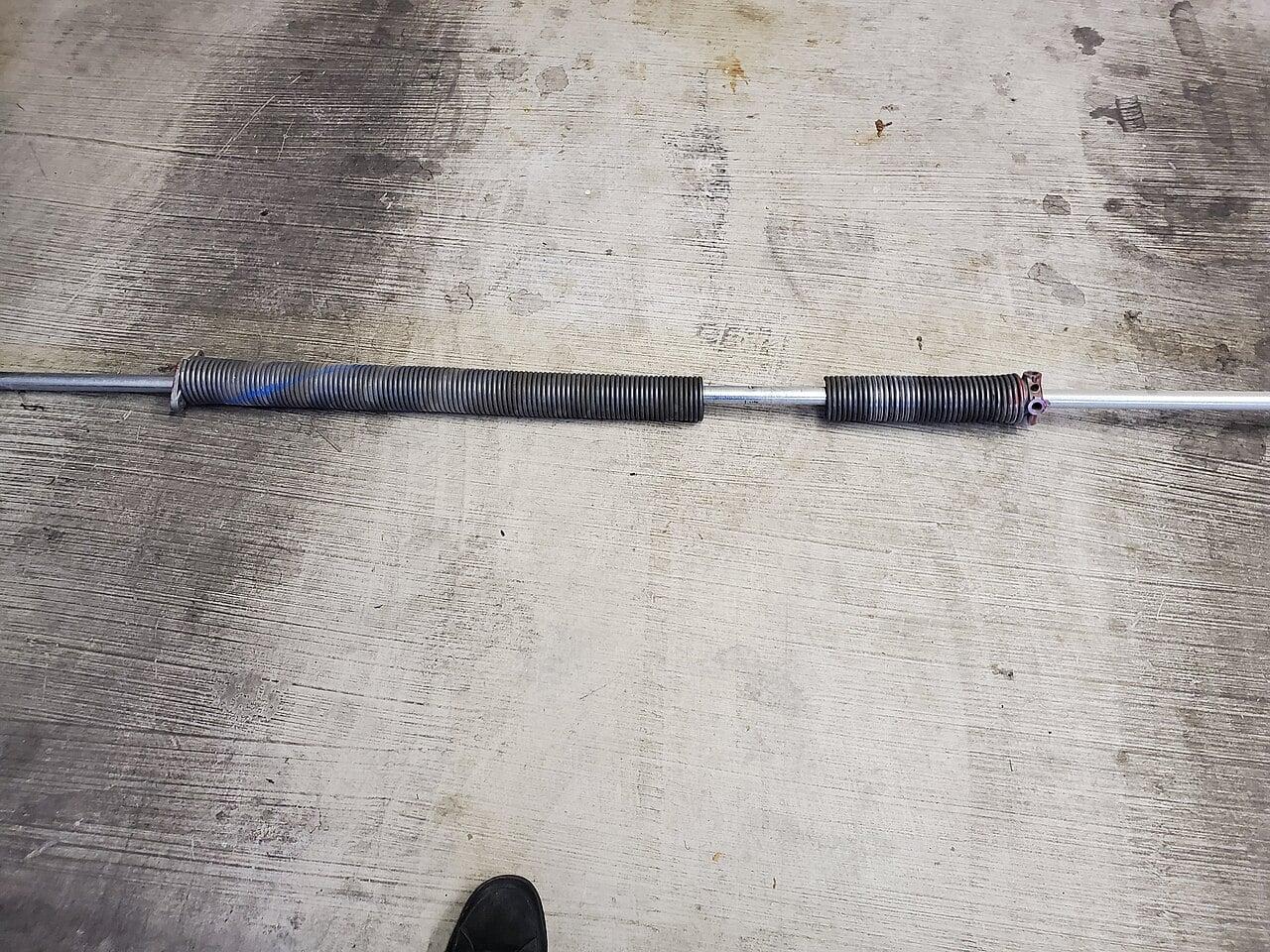
With the door closed and power disconnected, visually inspect the centre bearing where the torsion tube passes through the header bracket. Use a flashlight to look for rust accumulation, missing paint, or visible pitting on the exposed steel shaft. Check for excessive play by gripping the tube and attempting to wiggle it laterally—more than 1–2 mm of movement indicates worn races or a collapsed bearing. Listen while manually cycling the door: a smooth, quiet roll suggests the bearing is intact; grinding or roughness means internal damage.
When DIY Inspection Ends and Professional Service Begins
Cleaning surface rust with a wire brush and applying a marine-grade corrosion inhibitor is within the scope of a facility maintenance lead, provided the door is secured and de-energized. However, disassembling the centre bearing to replace it requires releasing torsion spring tension, which stores enough energy to cause severe injury or death if mishandled. The bearing is pressed onto the torsion tube and often requires specialized pullers and presses to remove without damaging the tube or cable drums. Reinstallation demands precise alignment to avoid binding or uneven load distribution.
Selecting a Replacement Bearing for Coastal Use
Standard centre bearings use nitrile seals and chrome steel races inadequate for salt exposure. For coastal installations, specify a bearing with stainless steel races (AISI 440C or equivalent), double-lipped Viton seals, and a housing coated with epoxy or zinc-nickel plating. Lubricate with a synthetic grease rated for salt spray resistance (ASTM B117 compliant). These components cost more upfront but triple the service life in chloride-rich environments.
Preventive Maintenance Schedule
In Metro Vancouver’s coastal strip (West Vancouver, North Vancouver, Richmond, Delta, and waterfront Burnaby), inspect the centre bearing every six months. Inland locations (Surrey, Langley, Abbotsford) can extend to annual checks. During each inspection, wipe the bearing housing with a degreaser, reapply a light film of corrosion-inhibiting grease to the shaft seal interface, and verify bolt torque on the header brackets. Document findings to track corrosion progression.
Frequently Asked Questions
Can I use WD-40 to protect the centre bearing from salt air?
No. WD-40 is a water displacer, not a lubricant or corrosion inhibitor. It attracts dust and evaporates quickly, leaving no protective film. Use a dedicated grease with molybdenum disulfide or a synthetic calcium sulfonate complex for long-term salt resistance.
How do I know if the bearing is seized versus just noisy?
A noisy bearing still allows rotation; you’ll hear grinding but the tube turns. A seized bearing locks the torsion tube, preventing manual cycling and causing the motor to overload or trip instantly. Seizure requires immediate spring tension release by a qualified technician.
Does painting the bearing housing help?
Only if done correctly. Painting over rust without proper surface preparation traps moisture and accelerates corrosion. Remove all corrosion to bare metal, apply a zinc-rich primer, then a topcoat compatible with grease and temperature cycling. Never paint seals or moving surfaces.