A commercial overhead door hangs crooked when the centre bearing on the torsion shaft wears out or fails, allowing the shaft to shift sideways. This misalignment pulls one side of the door lower than the other, causing uneven roller tracking and binding in the guides. The door may appear tilted when closed, rub against the jamb, or fail to seal properly along the bottom edge. You’ll often hear a scraping or grinding noise during operation as rollers drag on the track, and the door may jerk or stall mid-cycle. This issue develops gradually as the bearing deteriorates under constant load and vibration, especially in high-cycle doors.
How the Centre Bearing Supports the Torsion Shaft
The centre bearing is a hardened steel or nylon sleeve pressed into the centre bracket mounted above the door opening. It supports the torsion shaft where the springs are wound, allowing the shaft to rotate freely while carrying the full torsional load. In a properly functioning system, the bearing keeps the shaft perfectly centred, ensuring equal torque distribution to both lift cables and drums. When the bearing wears, it develops play—allowing the shaft to drift left or right. This shifts the cable drums off-axis, winding one cable tighter than the other and pulling the door bar unevenly.
Visual Signs of a Failing Centre Bearing
Look at the door when it’s fully closed. If one side sits lower than the other by more than 6mm, or if the door rubs consistently on one jamb, the shaft is likely offset. Inspect the centre bracket: if you can see lateral movement in the shaft when pushing or pulling it by hand, the bearing is worn. Check the rollers—uneven wear patterns or flat spots on one side indicate the door is tracking crooked due to misalignment. You may also notice the top rollers riding high on one side of the track while the bottom rollers bind on the opposite side.
Audible and Operational Symptoms
A worn centre bearing often produces a rhythmic scraping or squeaking noise during operation, synchronized with each panel’s movement. The door may hesitate or jerk as it passes the centre point where the misalignment is greatest. In severe cases, the door will bind completely and require manual force to move. Cycling the door several times may temporarily reduce noise as lubricant redistributes, but the underlying wear remains and will worsen. Do not ignore these signs—continued operation accelerates wear on rollers, cables, and the shaft itself.
What You Can Safely Check Yourself
With the door locked out and disabled, visually inspect the centre bracket for cracks, loose mounting bolts, or obvious bearing extrusion. Use a flashlight to check if the shaft sits centred in the bearing housing—any visible gap on one side indicates wear. Spin the shaft by hand; it should rotate smoothly without wobble or roughness. Listen for grinding or grating as it turns. Check cable tension: both cables should have similar deflection when plucked—if one is noticeably tighter, the shaft is offset. Never attempt to adjust cables or springs to compensate for a worn bearing; this masks the problem and creates imbalance.
Why DIY Repair Is Not Recommended
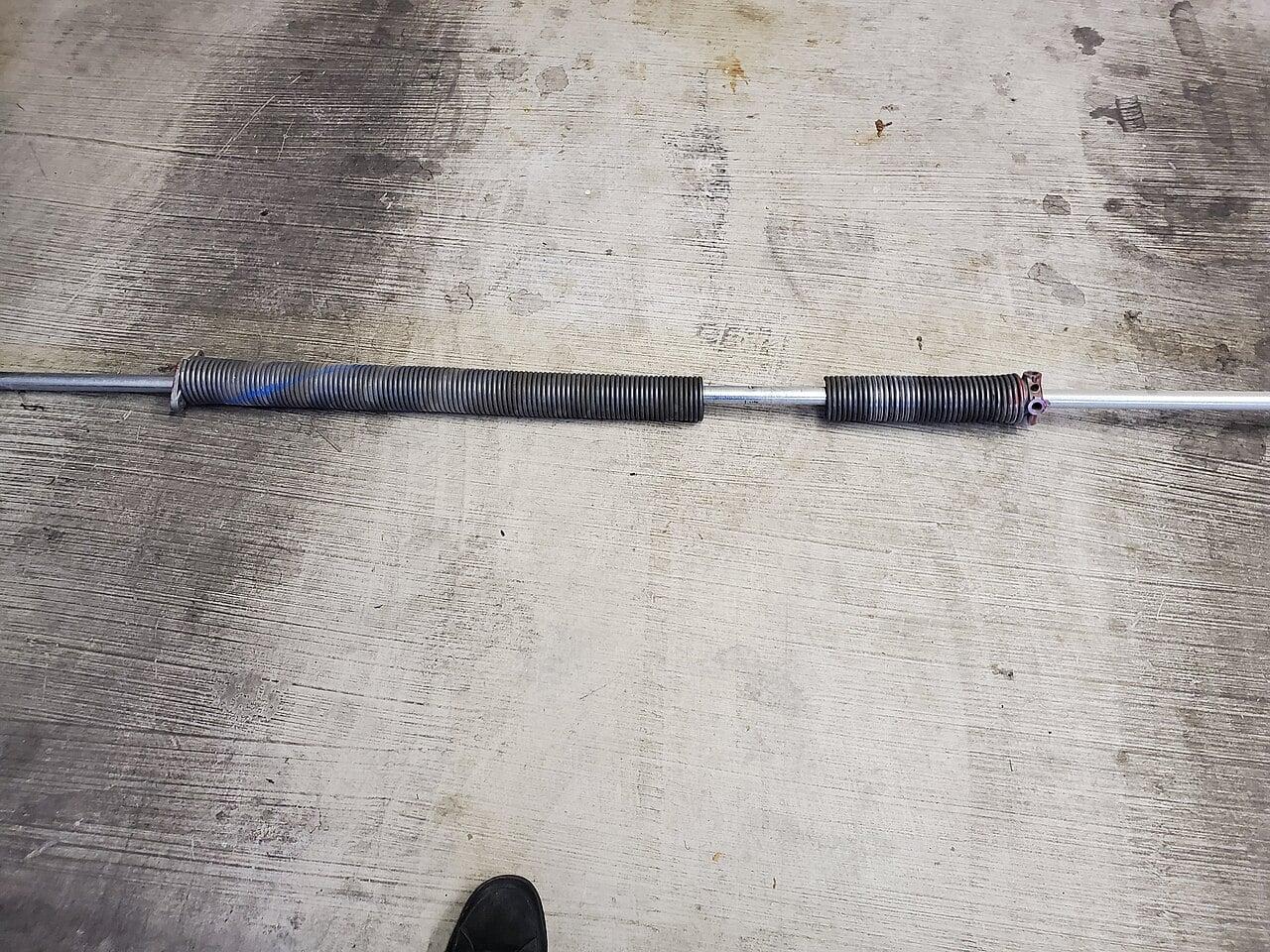
Replacing a centre bearing requires disconnecting the torsion springs to remove shaft tension. Torsion springs store lethal amounts of energy—if unwound incorrectly, they can cause serious injury or death. The shaft must be supported while the bearing is pressed out and a new one installed, which demands proper tools and experience to avoid damaging the shaft or bracket. Even after replacement, the shaft must be re-centred and cable tension rebalanced precisely; an improperly aligned shaft will destroy the new bearing quickly. This is not a lubrication or adjustment issue—it’s a mechanical failure requiring disassembly under load.
When to Call a Technician
If the door hangs crooked, shows uneven roller wear, or makes scraping noises during operation, stop cycling it and arrange for inspection. Continued use risks cable failure, shaft bending, or sudden door drop. A technician will lock out the system, measure shaft offset, inspect the bearing and bracket, and replace the bearing with the correct OEM-spec component. They will then re-time the springs, balance the cables, and verify smooth, even operation across the full travel range.
Frequently Asked Questions
### Can I lubricate the centre bearing to fix the crooked door?
Lubrication may reduce noise temporarily if the bearing is dry, but it won’t eliminate shaft play caused by wear. A worn bearing has lost its internal clearance and cannot be restored by grease—it must be replaced.
How long does a centre bearing typically last in a high-cycle door?
In a warehouse door cycling 20+ times per day, a quality steel bearing may last 3–5 years. Nylon bearings wear faster, often under 2 years in dusty or high-vibration environments. Lack of lubrication or misalignment shortens lifespan significantly.
Will replacing the centre bearing fix a bent torsion shaft?
No. If the shaft is visibly bent or shows uneven wear patterns from prolonged misalignment, it must be replaced alongside the bearing. Installing a new bearing on a bent shaft will lead to premature failure and recurring door misalignment.