High humidity accelerates corrosion and degrades lubricant in the centre bearing of a commercial overhead door, increasing friction and wear on the shaft and bearing surfaces. This leads to binding, uneven door travel, and eventual failure if not addressed. The centre bearing supports the torsion shaft where it passes through the header bracket, and in damp environments, moisture combines with airborne contaminants to form rust that pits the metal and breaks down grease.
How Humidity Causes Bearing Degradation
Moisture in the air condenses on cooler metal surfaces, especially during temperature swings common in spring and fall. This condensation mixes with dust and pollutants, creating an electrolyte that promotes electrochemical rust. The bearing is typically made of steel or cast iron, and once rust forms, it creates abrasive particles that score the shaft and wear down the bearing bore. Lubricant, usually a lithium or silicone-based grease, emulsifies with water and loses its viscosity, turning thin and ineffective. Without proper lubrication, metal-on-metal contact increases, generating heat and accelerating wear.
What Failure Looks and Sounds Like
Early signs include a squeaking or groaning noise when the door operates, particularly during the first few inches of travel. As wear progresses, the noise becomes a grinding or rubbing sound, and the door may jerk or hesitate mid-cycle. Visually, you might see orange-brown rust streaks around the bearing housing or a dark, contaminated grease buildup. The shaft may show pitting or grooves where it rotates through the bearing. In advanced stages, the door sags on one side or binds completely, requiring manual force to move.
What You Can Check Yourself
With the door closed and locked out, visually inspect the centre bearing for rust, grease condition, and shaft alignment. Use a flashlight to look for pitting on the shaft where it enters and exits the bearing. Try rotating the shaft by hand (if safe to do so) — it should turn smoothly with minimal resistance. Any roughness, grinding, or visible rust indicates degradation. Check the grease: if it’s watery, dark, or smells sour, it’s contaminated. Do not disassemble the bearing or attempt to remove the shaft — this is under tension from the torsion springs.
When Lubrication Is Enough and When It’s Not
If the bearing shows only surface rust and the shaft turns smoothly, cleaning with a degreaser and reapplying a water-resistant grease (such as a marine-grade lithium complex) may restore function. However, if the shaft is pitted, the bearing bore is worn oval, or there’s noticeable play, the bearing and possibly the shaft need replacement. Re-lubrication alone won’t fix mechanical wear — it only slows further damage. Never use WD-40 as a lubricant; it’s a solvent and will wash out remaining grease.
Why DIY Replacement Is Risky
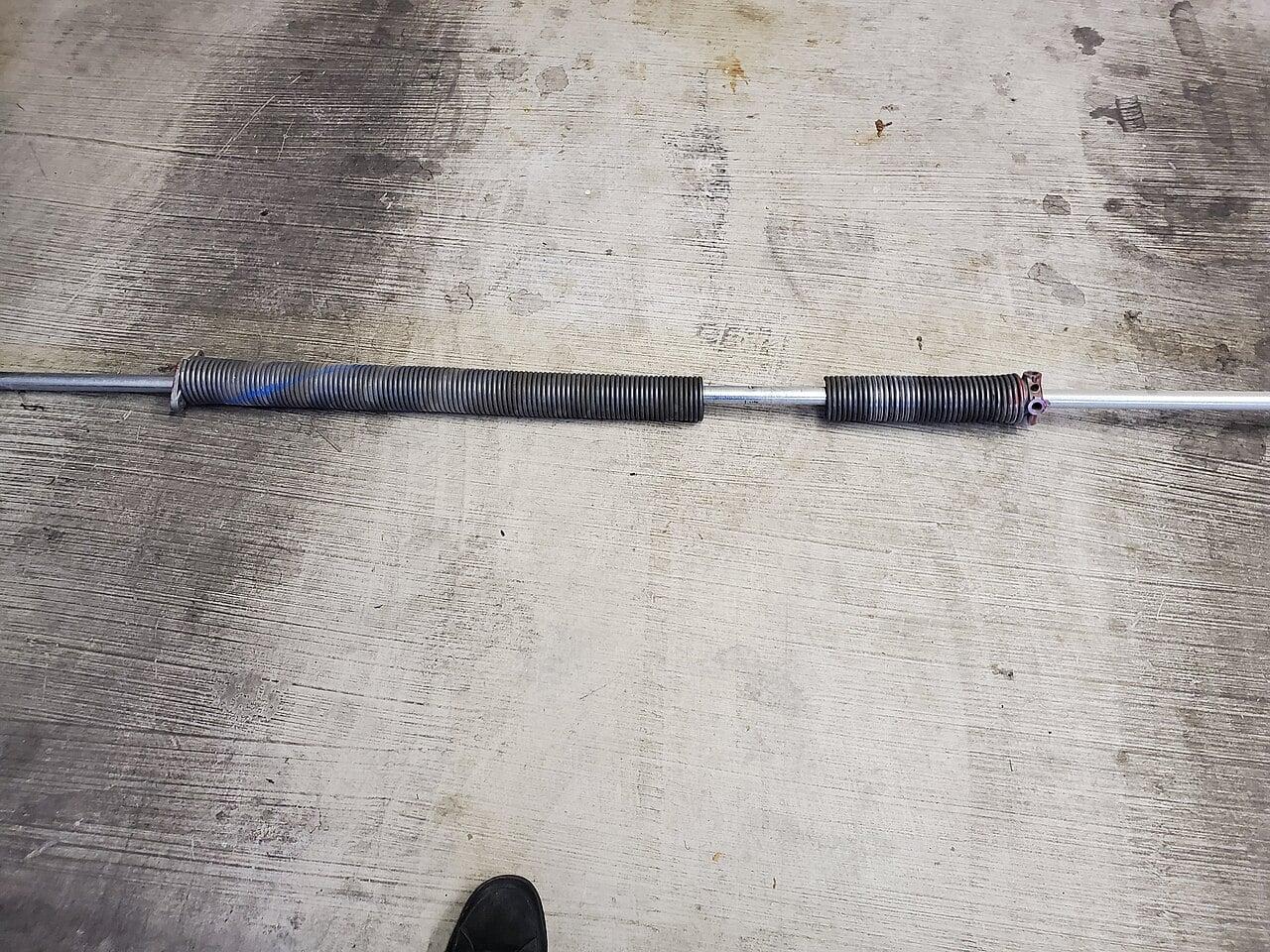
The torsion shaft stores significant energy from the wound springs. Removing the centre bearing requires releasing this tension, which, if done incorrectly, can cause the springs to unwind violently, turning the shaft into a flying hazard. Even experienced technicians use specialized tools like winding bars and follow strict procedures to control spring energy. Attempting this without proper training and equipment risks severe injury or death. The bearing itself is not under tension, but accessing it requires working in the spring assembly zone.
When to Call a Commercial Door Specialist
If you observe grinding, binding, visible shaft damage, or the door fails to operate smoothly after lubrication, stop using the door and call a qualified technician. A specialist will safely release spring tension, inspect the shaft and bearing assembly, replace worn components, and re-lubricate with the correct product. They’ll also check for alignment issues caused by header movement or worn end bearings, which often accompany centre bearing failure in humid environments.
Frequently Asked Questions
### Can I use regular grease on the centre bearing?
No. Standard grease washes out quickly in humid conditions and lacks water resistance. Use a grease specifically formulated for wet or marine environments, such as a lithium complex with corrosion inhibitors.
How often should I check the centre bearing in a coastal or humid climate?
Inspect it every three months as part of routine preventive maintenance. Increase frequency if you notice door noise, slow operation, or visible rust during seasonal transitions.
### Will a noisy bearing damage other parts?
Yes. Increased friction and binding put extra load on the motor, cables, rollers, and hinges, leading to premature wear across the system. Addressing the bearing early prevents cascading failures.