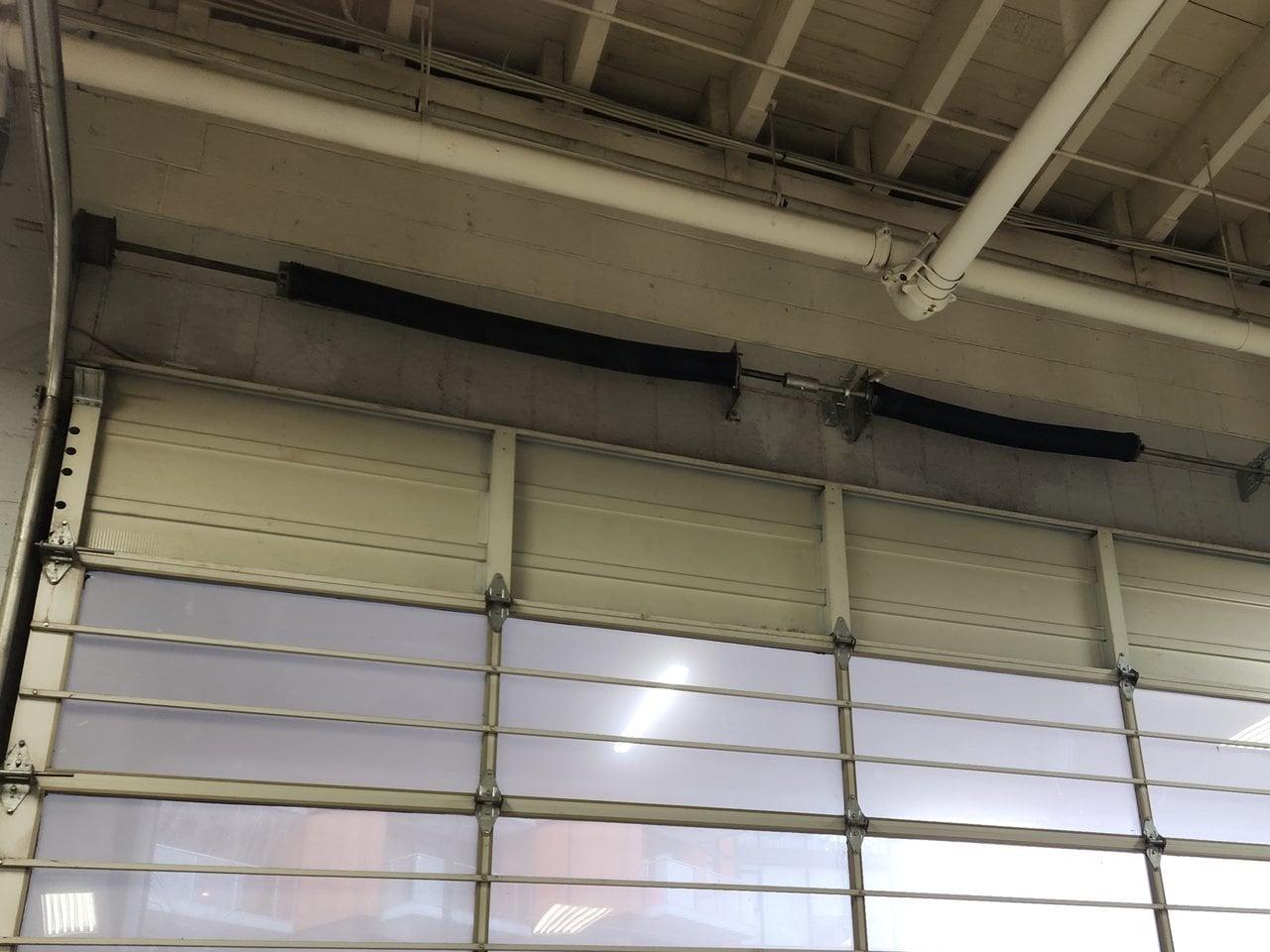
A car waits at the curb, the resident's door goes up, and the stranger follows them in. The usual first request is a faster door or a shorter timer. Sometimes that helps. Sometimes it creates a door that closes on cars. Here's what parkade door operators can actually do about tailgating, what they can't, and where the real fix sits.
Parkade door tailgating is a people problem that shows up as a door problem. A door that stays open 30 seconds after every car gives a follower 30 seconds. A door that closes fast but is set up badly can hit the resident’s own car, and then gets disabled by someone fed up with it. That’s worse than slow.
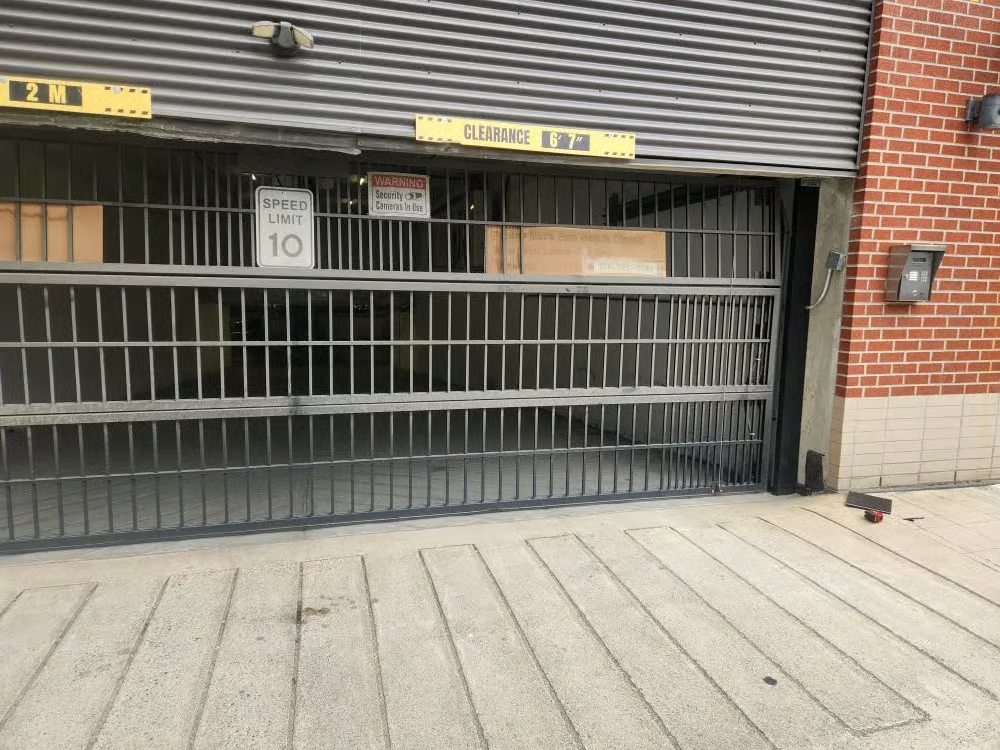
First, the honest part: overhead door operators don’t have an “anti-tailgate” mode
Gate operators sometimes do. LiftMaster’s CSL24UL slide gate manual has an ANTI-TAIL switch: with it on, when the interrupt loop or close eyes are activated “it causes a closing gate to pause. Once the vehicle is clear the gate will continue to close.” It also has a QUICK CLOSE switch that closes the gate once a vehicle clears the interrupt loop, ignoring the timer.
We searched the LiftMaster Logic 5.0 and MAXUM DC door operator manuals for the same thing and didn’t find it. No anti-tailgate, no close-after-pass. Manaras’s BOARD 070 sheet doesn’t list one either. Parkade door tailgating has to be handled with the features these operators do have, plus access control and the building’s own rules.
If tailgating is your main problem and the entry layout allows it, a barrier gate inside the door is one option. Our parking gate vs overhead door article compares the two.
Shortening the open time with timer-to-close
The open time is the window a follower uses. Timer-to-close (TTC) controls it. The details are in our timer-to-close article. For tailgating, these points matter:
- Defaults vary a lot. The MAXUM DC manual lists a default “Timer to Close 120 sec.” Manaras’s BOARD 070 has a factory preset of 5 seconds, programmable in 1- or 15-second steps up to 4 minutes. Logic 5.0 ships with TTC at 0 seconds (off). Two minutes is a long time at a busy parkade entry.
- TTC needs monitored safety devices. Logic 5.0 requires “at least one LiftMaster Monitored Entrapment Protection (LMEP) Device” for TTC. That’s a requirement, not a suggestion.
- Timer Secure keeps trying. In MAXUM DC’s B2/TS mode, after a monitored device reverses the door, “The controller will make infinite attempts to close the door until it reaches close limit.” For a door that must not be left open, that’s the useful setting.
How short is too short?
No manual gives a “right” delay. Too short and residents get caught mid-ramp with the door coming down, which sets off the safety devices and starts the cycle again. The delay is best set by watching real traffic at the door during peak hours, not from a chart.
Close sooner after the car is through: loops
Loops let the door react to where the vehicle actually is:
- An INTERRUPT loop under the door keeps it from closing on a car in the opening. LiftMaster’s MAXUM plug-in loop board says it “Prevents door from closing on a vehicle in the loop path.” That lets you run a shorter timer without hitting slow drivers.
- Manaras lists loops as a “reverse and hold open control” for operators in B2, C2 or timer-to-close mode.
- LiftMaster’s Car Dealer feature uses a loop or treadle to open the door to mid-stop only, with TTC enabled. Repeat inputs keep it at mid-stop. A lower opening is something to consider where tall vehicles aren’t expected, but check clearances first.
Remember a loop only sees vehicles. It doesn’t replace the photo eyes. A loop is an auxiliary input, not entrapment protection, in LiftMaster’s manuals.
Door speed
A faster door spends less time partly open. Published speeds give some sense of the range:
| Operator | Published speed claim |
|---|---|
| LiftMaster MAXUM DC (JDC/TDC/JHDC) | About 12 in/sec door speed |
| Manaras Rapido RSH (jackshaft) | “up to 2X the speed of the standard jackshaft operator”, sectional doors |
| Manaras Rapido RTBH-1.23 (trolley) | 23 in/sec opening, 15 in/sec closing |
Speed has to suit the door. The Rapido sheets limit door type and weight, and a high-speed operator on a heavy, worn door is a repair bill waiting to happen. Our high-speed operator page covers when it makes sense.
Closing speed vs opening speed
For tailgating, opening speed matters less than you’d think. The follower gets in during the open period and the closing travel. A fast-opening door with a long timer doesn’t help. Get the timer and loops right first.
Access control: who can open the door at all
The door can’t tell a resident from a stranger. Access control can narrow who triggers it and record who did:
- myQ Facility lets managers assign access “by person, group, time and location”, and Chamberlain’s myQ pages say it keeps “a record of who is operating each door—and when.”
- Card readers and keypads, such as Manaras’s CARDREADER017, mount near the door.
- Remote control discipline matters too. A fixed-code system with unlimited identical remotes is an open invitation. Our rolling vs fixed code article explains the difference.
For entry systems on gates and doors, see our access control installation page.
What not to do
- Don’t remove or bypass photo eyes to get a faster close. Monitored operators fall back to constant pressure to close, and non-monitored ones become dangerous.
- Don’t set a timer so short it closes on residents’ cars. The damage claims and the resident who props the door will cost you more than the tailgater.
- Don’t add warning lights as an afterthought. If you shorten the timer, a light that warns before the door moves is worth having. Manaras’s BOARD 070 can drive red and green lights through its Universal Auxiliary Output Module.
A practical plan for parkade door tailgating
- Watch the door at peak times. Count how long it stays open and how often a car follows.
- Check the timer mode and delay against what the traffic actually needs.
- Add or fix the interrupt loop so a shorter timer is safe.
- Tighten remote and credential management.
- Only then look at speed upgrades or a second barrier.
Signage and a council notice reminding residents to wait for the door to close help as well. The door can’t do the whole job. We can review your entry set-up as part of a strata parkade door service visit.
Tailgating questions
Do overhead door operators have an anti-tailgate setting?
Not that we found. LiftMaster’s CSL24UL slide gate has ANTI-TAIL and QUICK CLOSE switches, but the LiftMaster Logic 5.0 and MAXUM DC door operator manuals describe no anti-tailgate or close-after-pass mode.
What timer setting is best for tailgating?
No manual gives one. The aim is the shortest delay that doesn’t close on residents’ own cars. An interrupt loop under the door lets you run a shorter timer safely.
What is the default timer on a MAXUM DC operator?
The MAXUM DC installation manual lists a default Timer to Close of 120 seconds in B2 mode. It can be changed in the Timers menu.
Will a faster door stop tailgating?
It helps less than people expect. A follower gets in while the door is open and closing, so the timer and loop set-up usually matter more than opening speed.
Can we remove the photo eyes so the door closes faster?
No. Timer-to-close on these operators requires a monitored entrapment protection device, and removing safety devices puts people and vehicles at risk.
Review your parkade door set-up
Call (604) 206-5727 or use the contact page. We answer around the clock for commercial door failures across Metro Vancouver.
New commercial clients: 10% off labour on your first service call or repair — mention NEW10 when booking (one per business, not combinable with maintenance-contract pricing, work booked by Dec 31, 2026).