A failing commercial overhead door remote often produces inconsistent or absent radio frequency signals, which you may notice as the door not responding at all, responding only when held very close to the receiver, or requiring multiple button presses to activate. These symptoms stem from internal circuit degradation, battery issues, or signal interference, not audible noise from the remote itself. The remote is a low-power radio transmitter; when it fails, it’s the lack of expected behavior — not a sound — that indicates the problem. You won’t hear clicking, buzzing, or grinding from the remote casing during failure; those sounds point to issues in the door operator or mechanical components.
Common Failure Symptoms in Remote Operation
When a remote begins to fail, the most frequent symptom is reduced range. You might find you need to stand within a few feet of the door for it to work, whereas previously it operated from across the parking lot. This happens as the remote’s internal antenna connection degrades, the oscillator circuit drifts out of frequency, or battery voltage drops below the threshold needed for reliable transmission. Another sign is intermittent operation — the door works sometimes but not others, even with a fresh battery. This can result from cracked solder joints on the circuit board due to vibration or thermal cycling, which temporarily reconnect when the casing flexes.
Battery-Related Issues and Their Signs
A weak or dying battery is the most common cause of remote failure and is often mistaken for a deeper fault. As battery voltage declines, the remote’s transmitter power drops, reducing effective range. You may notice the door responds slowly or only after holding the button down longer than usual. In cold weather, battery performance decreases further, exacerbating the issue. If replacing the battery restores full function, the problem was power-related. However, if the remote still fails with a new battery, the fault lies in the transmitter circuitry or the door’s receiver.
Signal Interference and Environmental Factors
Sometimes the remote transmits correctly, but the signal doesn’t reach the receiver due to interference. Sources include LED lighting, wireless routers, or nearby industrial equipment emitting radio frequency noise. In these cases, the remote may work intermittently or only at very close range, mimicking a failing transmitter. You can test for interference by operating the door with the remote near the motor unit — if it works there but not at a distance, interference is likely. Moving the receiver antenna or changing the remote’s frequency (if adjustable) can resolve this, but requires technical adjustment.
When the Problem Is in the Door Operator
If multiple remotes fail simultaneously, the issue is likely not the remotes but the door operator’s receiver circuit. A failing receiver may produce no response, partial response, or erratic behavior. You might hear the operator attempt to start but stall, or see the lights flash without motion — signs of a control circuit fault, not the remote. Never assume the remote is at fault without testing with a known-good unit or checking the operator’s diagnostic LEDs, if equipped.
DIY Checks and Limitations
You can safely replace the remote battery, clean the battery contacts with isopropyl alcohol, and test the remote at close range to verify basic function. If the door responds when the remote is held against the receiver antenna, the remote is transmitting and the issue is range-related. However, diagnosing circuit board faults, reprogramming rolling-code remotes, or adjusting receiver sensitivity requires technical tools and knowledge. Any work involving the door operator’s wiring, logic board, or high-voltage components should be performed by a qualified technician. Never attempt to open or repair the remote’s sealed transmitter module — it contains small parts and is not user-serviceable.
Safety Note on Door Mechanisms
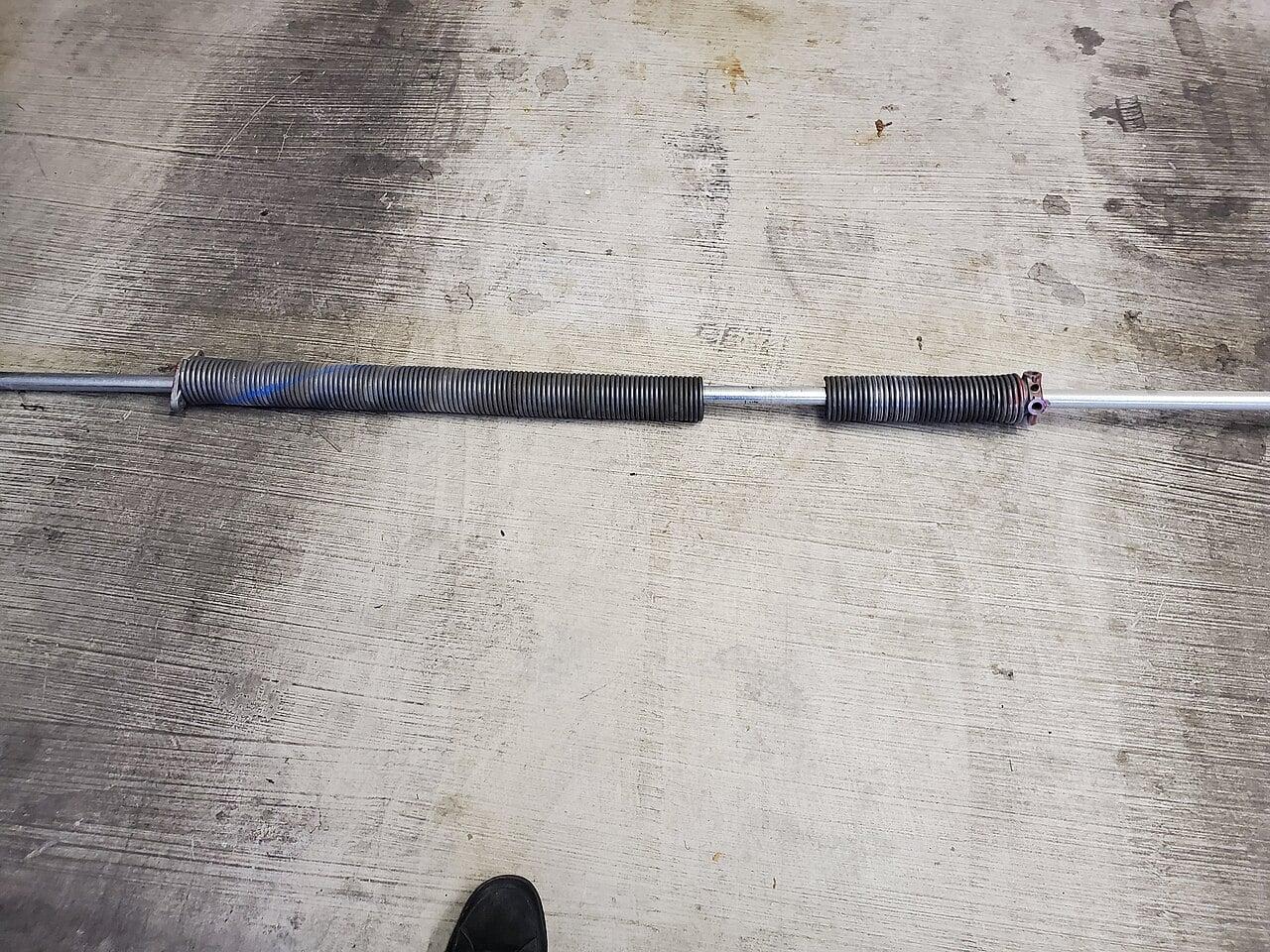
While troubleshooting the remote, observe the door’s physical operation. If the door moves slowly, unevenly, or makes grinding noises when activated by the wall switch, the problem lies in the mechanical system — springs, cables, rollers, or the operator drive — not the remote. Torsion springs store lethal amounts of energy and must only be serviced by trained professionals. Never adjust, remove, or attempt to repair springs, cables, or the torsion shaft yourself.
Frequently Asked Questions
Can a remote fail without any visible damage?
Yes. Internal circuit cracks, cold solder joints, or micro-fractures in the antenna trace can cause failure while the casing appears intact. Vibration from door operation or temperature swings exacerbate these hidden faults over time.
Why does my remote work in winter but not summer?
Temperature extremes affect battery chemistry and component conductivity. Cold reduces battery output, while heat can increase resistance in degraded circuits. If performance varies seasonally, it often indicates aging components nearing failure.
Should I reprogram the remote if it starts working intermittently?
Only if you’ve confirmed the battery is good and the issue persists at close range. Intermittent operation usually points to hardware failure, not lost programming. Reprogramming won’t fix a cracked circuit board or failing transmitter.
CCGDS (604) 206-5727