Short answer. A rolling sheet door spring tensioner is a ratchet wheel and pawl on one end bracket that holds the counterbalance spring's tension. On Amarr's 5101 sheet door, each ratchet tooth equals 1/8 turn of spring. If the door is easy to close but hard to open, it needs more tension. Hard to close and easy to open means less. The pawl has to be fully engaged in a tooth at all times, and Amarr's own label says components are under extreme spring tension.
The rolling sheet door spring tensioner is the small ratchet you see on one bracket of a storage unit door or a light commercial roll up. DASMA's Technical Data Sheet 283 defines a rolling sheet door as a coiling door used in industrial and self storage work, with a curtain of corrugated metal sheets joined together. It calls the self storage version a mini door. These are lighter than slat doors, but the spring inside is still a torsion spring under load.
Our line on safety stays the same. Amarr's 5101 guide warns that components are under extreme spring tension and could cause death or serious injury. A storage operator or tenant shouldn't be lifting the pawl. That's a tech's job.
What's on the door
Amarr's 5101 parts list shows a 9 1/2 inch spiral barrel on a 1 inch O.D. axle. The spring and counterbalance assembly sits with it, held by a ratchet spring tensioner. The curtain is 26 gauge corrugated sheet. Guides run down each side, and the bottom bar carries the latch and the astragal.
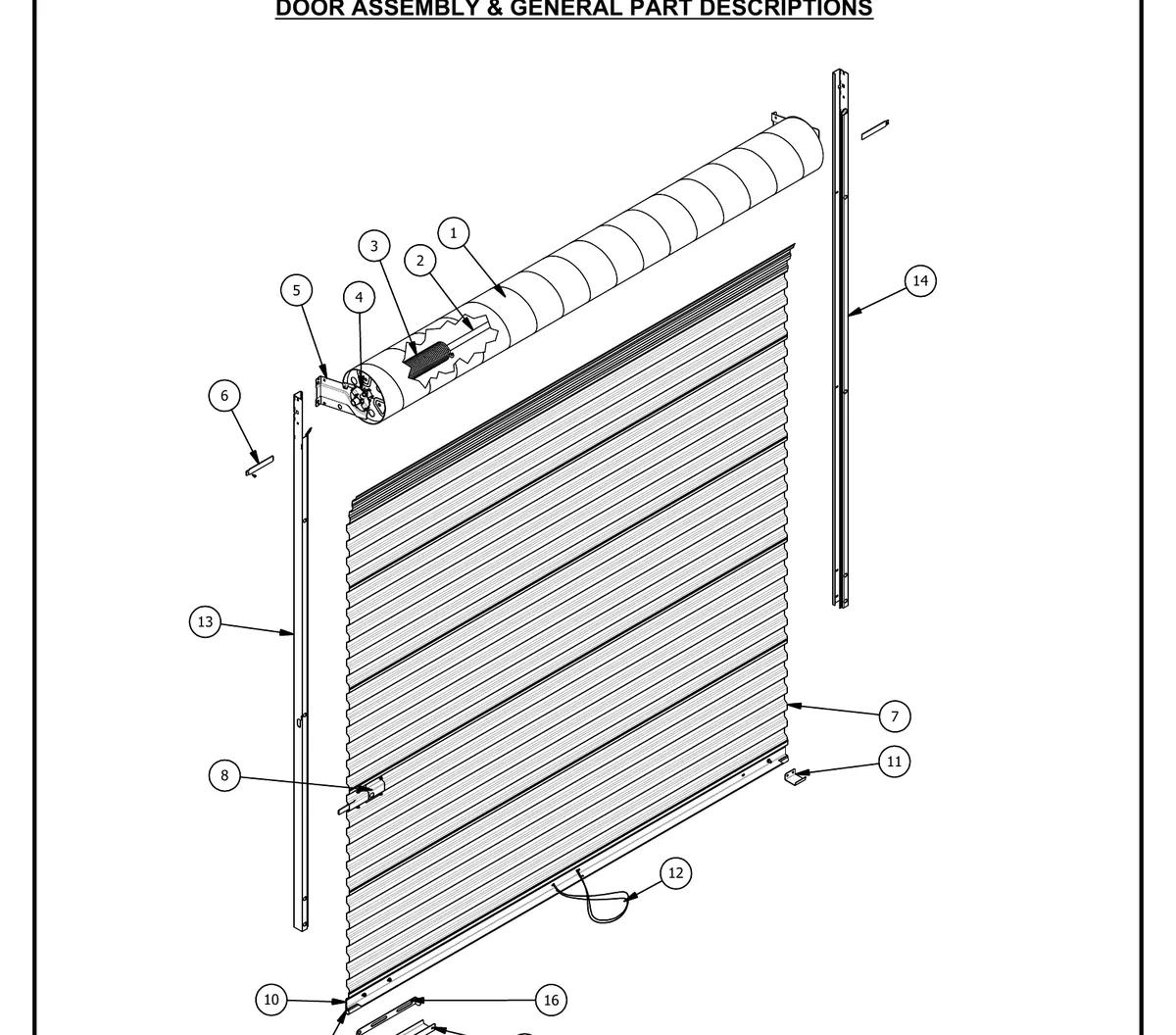
DASMA 283 gives the words for the rest. A tensioning device is a component attached to the counterbalance shaft that controls spring tension as it locks to the bracket. A live axle turns with the door. A dead axle stays still while the door runs. On the 5101, the ratchet tensioner on one bracket is what holds the set tension.
How the rolling sheet door spring tensioner works
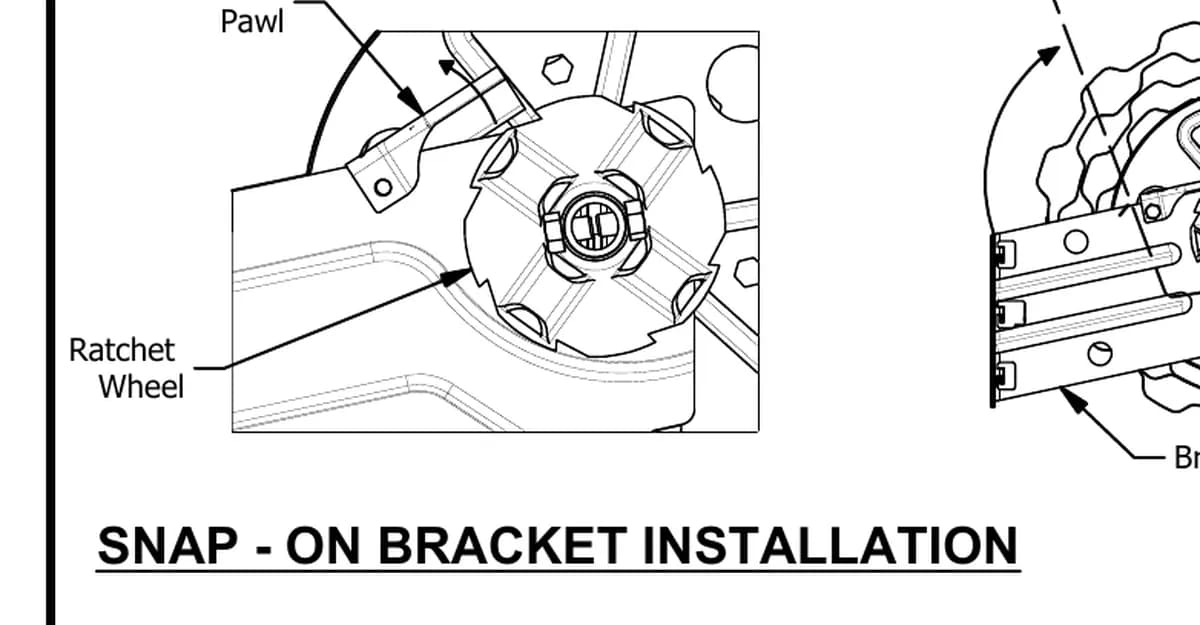
The ratchet wheel is fixed to the axle end. The pawl is a hinged tab on the bracket that drops into the wheel's teeth. With the pawl engaged, the spring can't unwind. Amarr says each tooth engagement equals 1/8 turn of spring, and their adjustments are made with an 8 inch winding bar seated in the wheel.
That 1/8 turn per tooth is why a sheet door is so sensitive. Two teeth is a quarter turn. On a light curtain that's the difference between a door that floats and one that climbs on its own.
Reading the balance
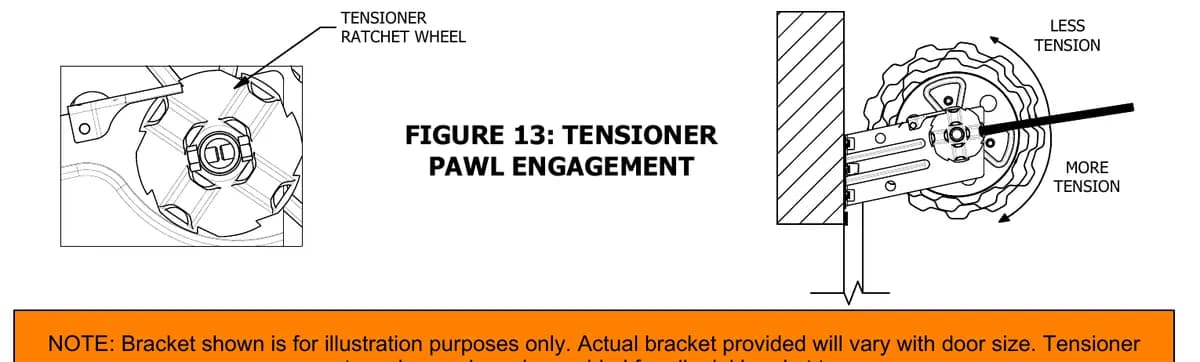
Amarr gives a simple balance test after install, and it works as a service check too. If the door is easy to close but hard to open, increase spring tension. If it's hard to close but easy to open, decrease it. A door that rises by itself from half open has too much tension. One that slams down has too little or a broken spring.
| What the door does | What it points to |
|---|---|
| Easy to close, hard to open | Too little spring tension, or a tired spring |
| Hard to close, easy to open | Too much spring tension |
| Climbs by itself from half open | Overwound |
| Drops hard when the latch is released | Broken spring or lost tension |
Where they fail
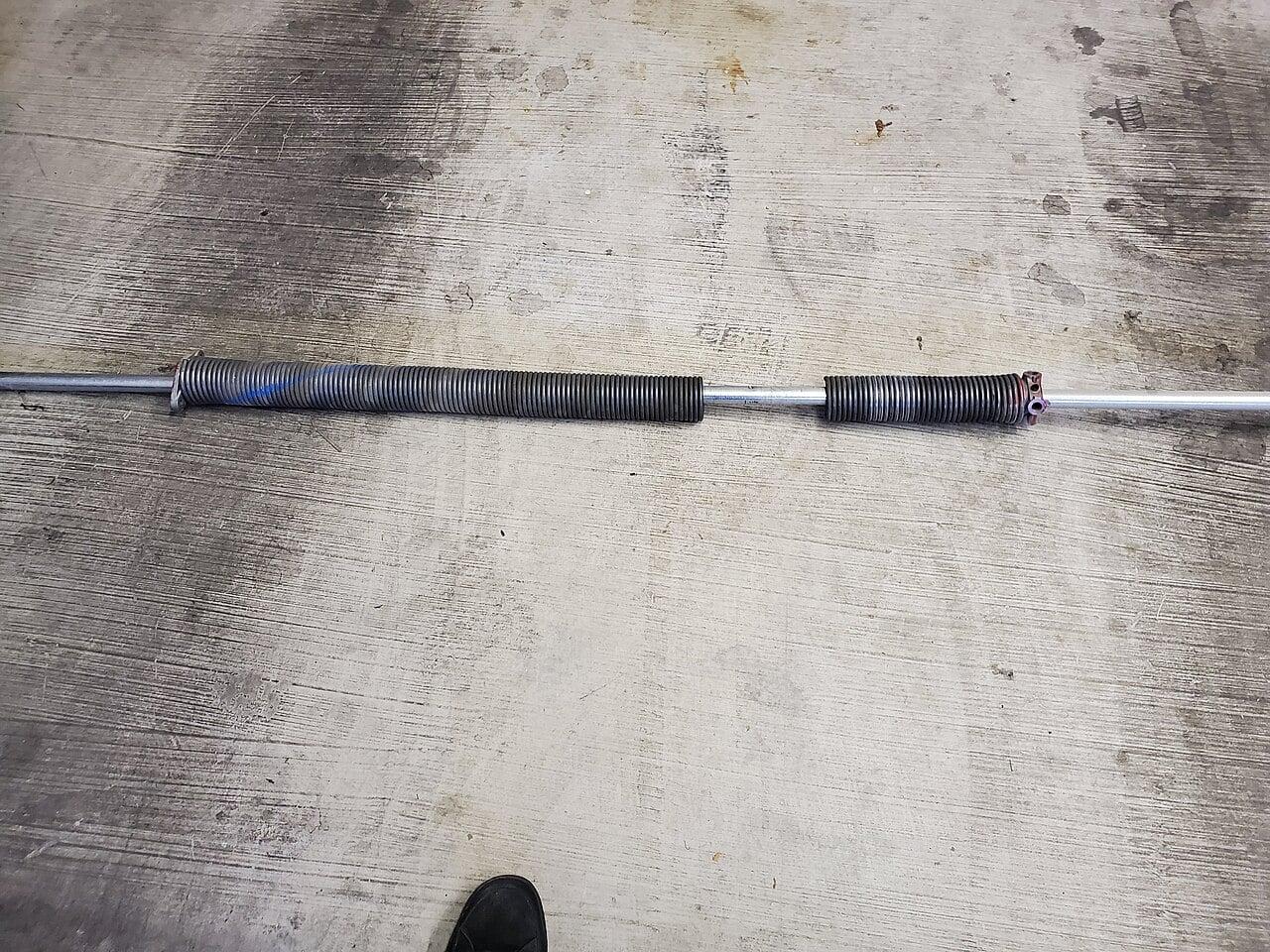
Three faults come up most on storage sites. A pawl that's half engaged and slipping one tooth at a time. Tensioner bolts that have loosened from years of slamming. Curtains dragging in a guide bent by a cart, which tenants read as a weak spring. Our opinion is that you fix the guide before you touch the tension. Adding tension to beat a dragging curtain just loads the spring and the bracket for no gain.
Amarr's guide also says do not operate a door with a broken spring. If a curtain suddenly feels like dead weight, leave it shut. Call (604) 206-5727.
For the slat door version of this hardware, see the rolling steel door barrel spring assembly. Balance theory is on rolling steel door spring tension, and our general commercial spring repair page covers how we schedule site work. Busy sites should also read parkade door cycle counts and commercial door spring failure signs.