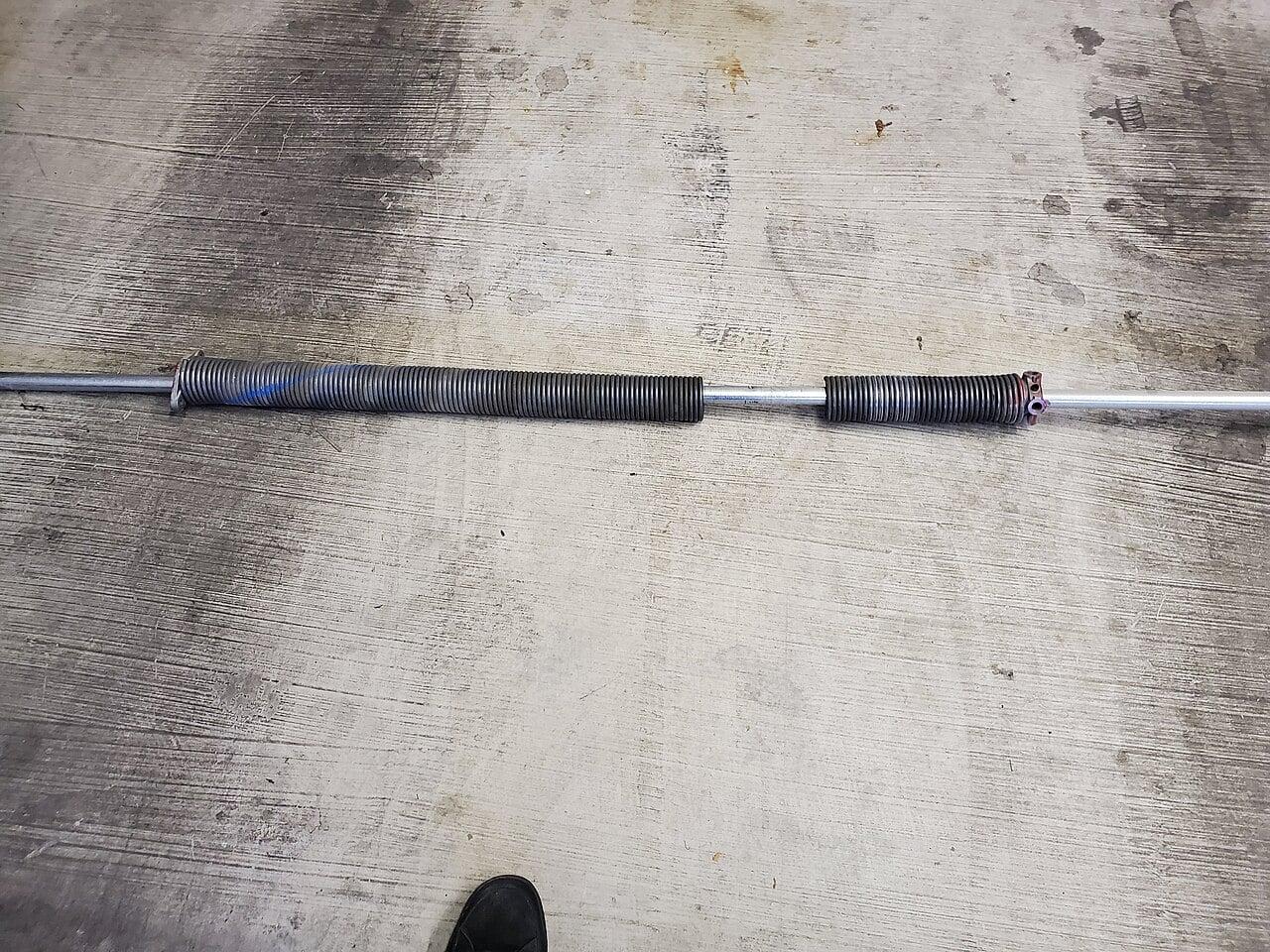
Short answer. Oil tempered vs galvanized springs comes down to finish and how the spring settles. Oil tempered wire is dark and slightly oily. Galvanized wire carries a bright zinc coat. Clopay notes a galvanized spring can run a little hot at first, meaning the door wants to drift up, and then relaxes to balance within a few weeks. Neither finish saves a spring that sits wet. Rust pits the wire, and DASMA says fatigue cracks grow from those pits.
Oil tempered vs galvanized springs is a question we get from property managers comparing two quotes. One quote says oil tempered, the other says galvanized, and the price is different. Both are torsion springs made to lift the same door. The difference is the surface on the wire and a small change in how the spring behaves in its first weeks on the shaft.
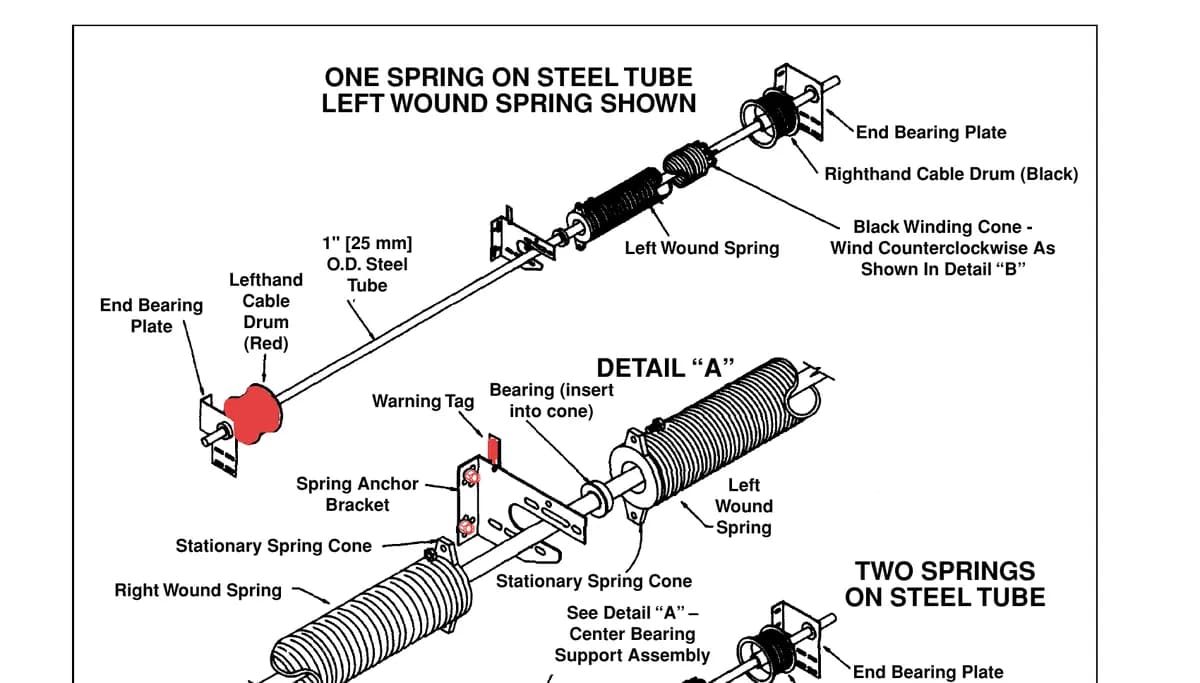
Before anything else, a safety line. Commercial torsion springs hold hundreds of pounds of door. Changing them, or even adjusting them, is work for a trained tech with solid steel winding bars. Nobody on site should touch a set screw or a cone.
Oil tempered vs galvanized springs by eye
Clopay's torsion spring supplement describes it simply. Oil tempered springs are dark in colour. Galvanized springs have a bright zinc, silver coloured coating. On a ladder with a flashlight you can tell them apart in a second. An oil tempered spring that's been up for years is often black with dust stuck to the oil. A galvanized one goes dull grey and can show white zinc bloom in a damp building.
Both get the same stencil or paint mark for wire size. The torsion spring wire size chart covers those colours.
Why a galvanized spring settles
This is the one real behaviour difference in the manufacturer literature. Clopay writes that with galvanized springs the door may appear slightly hot at first with the specified turns. The springs then self adjust and relax slightly, and the door ends up balanced after a few weeks of normal use.
What that means on a commercial job is a return visit. We set the door, and we tell the customer the balance will move a touch. On a busy dock door those few weeks can pass in days. We check it on the next service rather than chasing it the same afternoon. If an operator is on the door, its force settings get rechecked at that visit too.
Rust is what actually kills the spring
DASMA Technical Data Sheet 190 is about spring cycle life, and it is blunt about corrosion. Rust reduces the effective area of the wire, which reduces its strength. Rust also leaves corrosion pits, and fatigue cracks can start and grow from those pits. That's how a spring rated for many thousands of cycles lets go years early.
The same sheet lists the conditions that speed it up. Doors left open for long stretches see more weather and dirtier air. Frequent rain and a salty coastal site are both named. So is a corrosive environment, with acids containing chlorine called out and wash bays named as an application to review. Richmond and Delta tick most of those boxes. So does the North Shore waterfront. Our page on coastal salt air and extension springs goes deeper on the salt side.
Where each one makes sense
Our opinion, after a lot of wash bays and loading docks, is that the finish matters less than the routine. A galvanized spring on a truck wash still corrodes if it never sees grease. An oil tempered spring on a dry warehouse door can run its full rated life. DASMA 190 says regular greasing or lubrication of springs, as the door maker requires, helps get the most cycles out of them. That's the part most buildings skip.
| Site | What we lean toward | Why |
|---|---|---|
| Dry warehouse, door closed most of the day | Oil tempered | Stays oiled, no corrosion load |
| Truck or bus wash bay | Galvanized or coated, plus grease schedule | Chlorine and constant wet named by DASMA 190 |
| Waterfront or open dock door | Either, on a shorter inspection cycle | Salt and moisture shorten any spring |
What doesn't change
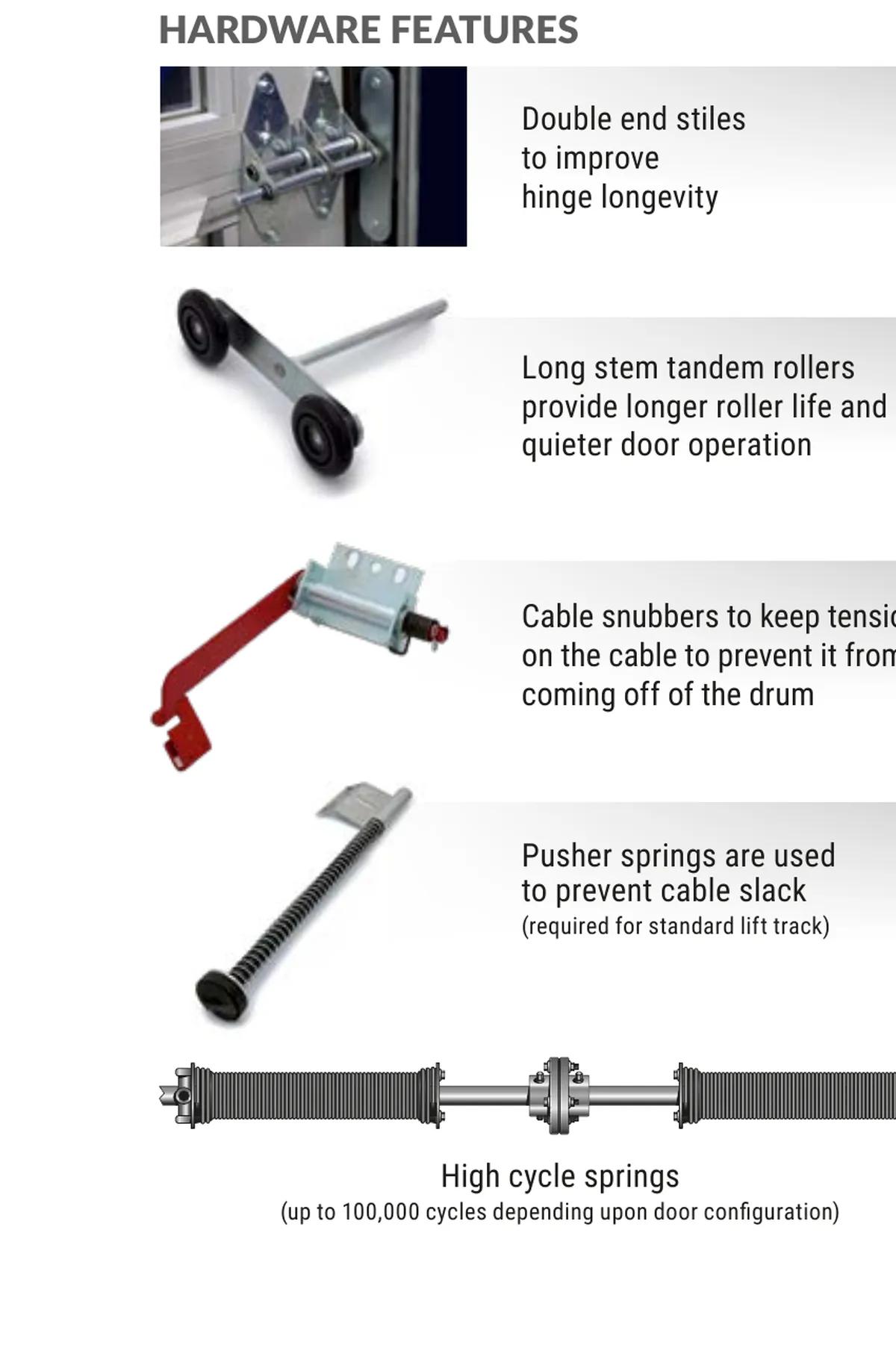
Wire size and the spring's dimensions decide lift. Finish doesn't. A galvanized spring is not a stronger spring. If your door needs more cycles, that's a question of wire and spring length. See cycle ratings explained and high cycle hardware upgrades.
If you're comparing quotes, ask each company for the exact spring size they plan to install, and what cycle rating that gives. A quote that only says galvanized isn't telling you much.
Call (604) 206-5727 if a spring on your building has snapped or looks rusty. The commercial spring repair page explains how we handle it, and how cold weather affects a torsion spring covers the other half of our winter calls. For maintenance timing, see spring maintenance.