Short answer. Spring cycle life is set at the factory and then lost in the field. DASMA Technical Data Sheet 190 lists how. A dropped or thrown spring picks up nicks and cracked cones. Torch cutting overheats coils. Wrong turns cut life. So do backward winding and bad stretch. Extra weight on the door hurts. Rain and salt on an open door hurt, as do wash bay chemicals and skipped greasing. Most early failures we see trace back to one of these.
Spring cycle life is the number on the quote. Ten thousand, twenty five thousand, fifty thousand, a hundred thousand. Our cycle ratings page explains how to pick one. This page is about why so many springs never reach theirs. DASMA wrote a whole technical data sheet on it. Number 190 reads like a list of things we've had to explain to building owners after the fact.
DASMA makes one point up front. Spring cycle life is not the same as door cycle life. ANSI/DASMA 109 tests the whole door, and any component that stops the door counts as a failure. A fifty thousand cycle spring on a door with ten thousand cycle rollers is still a ten thousand cycle door.
A reminder before the list. Every item below that touches turns or cones is work for a trained tech. Building staff can do the last section and nothing else.
Handling damage before it's even installed
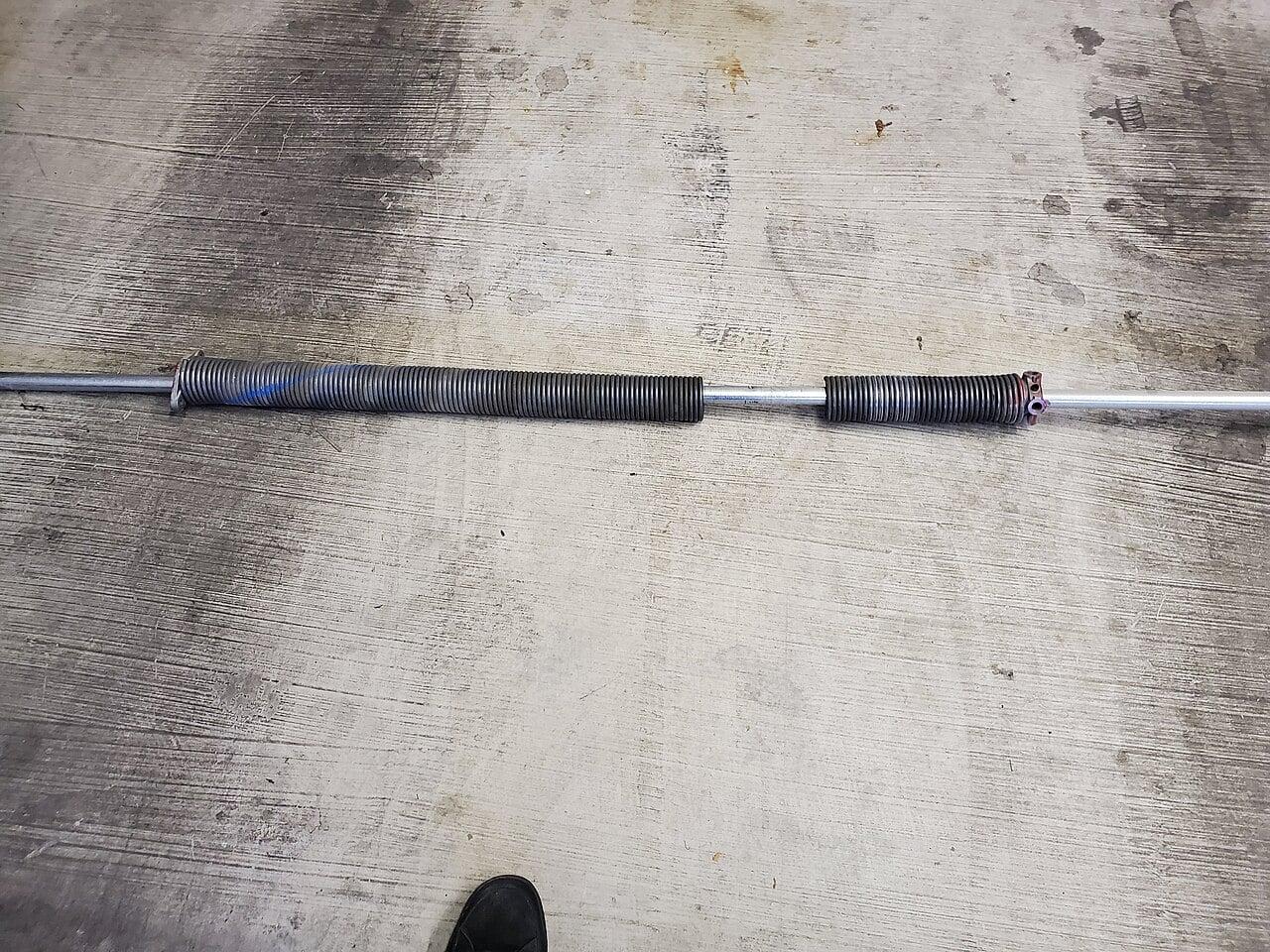
DASMA lists four handling factors. A spring that's dropped, even in its box, can pick up a nick that becomes a weak point. A thrown spring can be knocked slightly out of round, and spring tolerances are tight. Either one can crack the cast fittings on a torsion spring, and a cracked fitting can fail while the installer is winding it.
Storage counts too. Springs should be kept dry, since rust cuts the wire's effective area and leaves pits where fatigue cracks start. And if a spring is cut to length from stock with a torch, adjacent coils must not be overheated or splattered, because that makes brittle spots.
Installation mistakes that cost spring cycle life
| DASMA 190 factor | What it does to the spring |
|---|---|
| Wrong spring for the door | Fails the door's counterbalance need, wears the operator, unsafe in manual use |
| Too many turns | Overloads other counterbalance parts, unsafe for the installer |
| Too few turns | Door drifts down from the open position over time |
| Door heavier than spec | Spring works beyond its design load |
| Wound backwards | Safety hazard for the installer |
| Too little stretch | Coils scrape on each other every cycle |
| Too much stretch | Spring snakes and rubs |
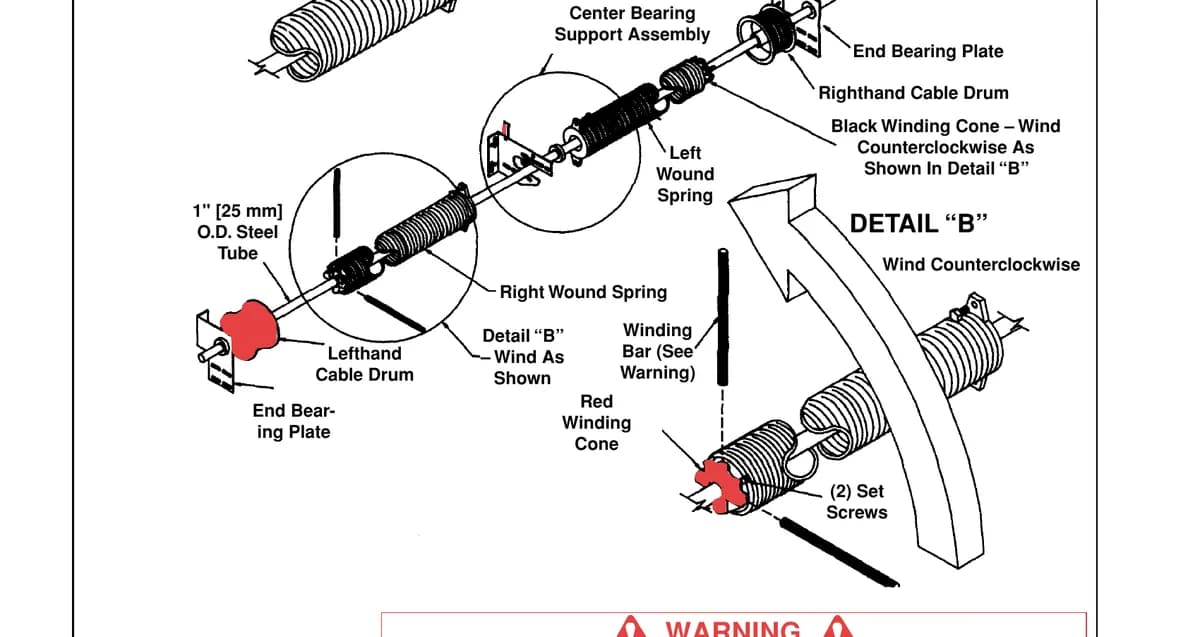
DASMA says the turns should always follow the door maker's instructions, and the installer should double check spring identification against those instructions. It also notes that stretch problems can come from the original winding or later from the shaft moving side to side. That's why we check bearings and set screws on every spring call, not only the spring.
Weight the building added
This one surprises owners. DASMA says paint or added components can push a door past its spec weight. It points to TDS 176 on hanging anything from a door. Signs, insulation kits, extra glass, a heavy windload strut. If you've changed the door, the springs don't know about it. A trained tech can weigh the door on a scale once the counterbalance is disabled.
Use and environment
Doors left open for long periods expose springs to more weather. DASMA names extreme heat and cold, frequent rain and salty coastal sites, and says doors in those places should be kept closed where possible. It names acids containing chlorine and asks that wash bays be reviewed. And it says regular greasing or lubrication of springs, as the maker requires, helps get the most cycles out of them.
Our opinion here is blunt. On Lower Mainland sites the biggest single gain is shutting the door. Dock doors that sit open all shift in November rain lose springs years early, and no rating fixes that. Our posts on cold weather and torsion springs and heavy rain and extension springs cover the weather side.
What building staff can do
Keep doors closed when not in use. Report changes to the door before they're made. Ask for the spring spec and turns in writing when a spring is replaced. Keep the counter readings if your operator has one, and our cycle counter maintenance page explains how to use them. Never touch a set screw or cone.
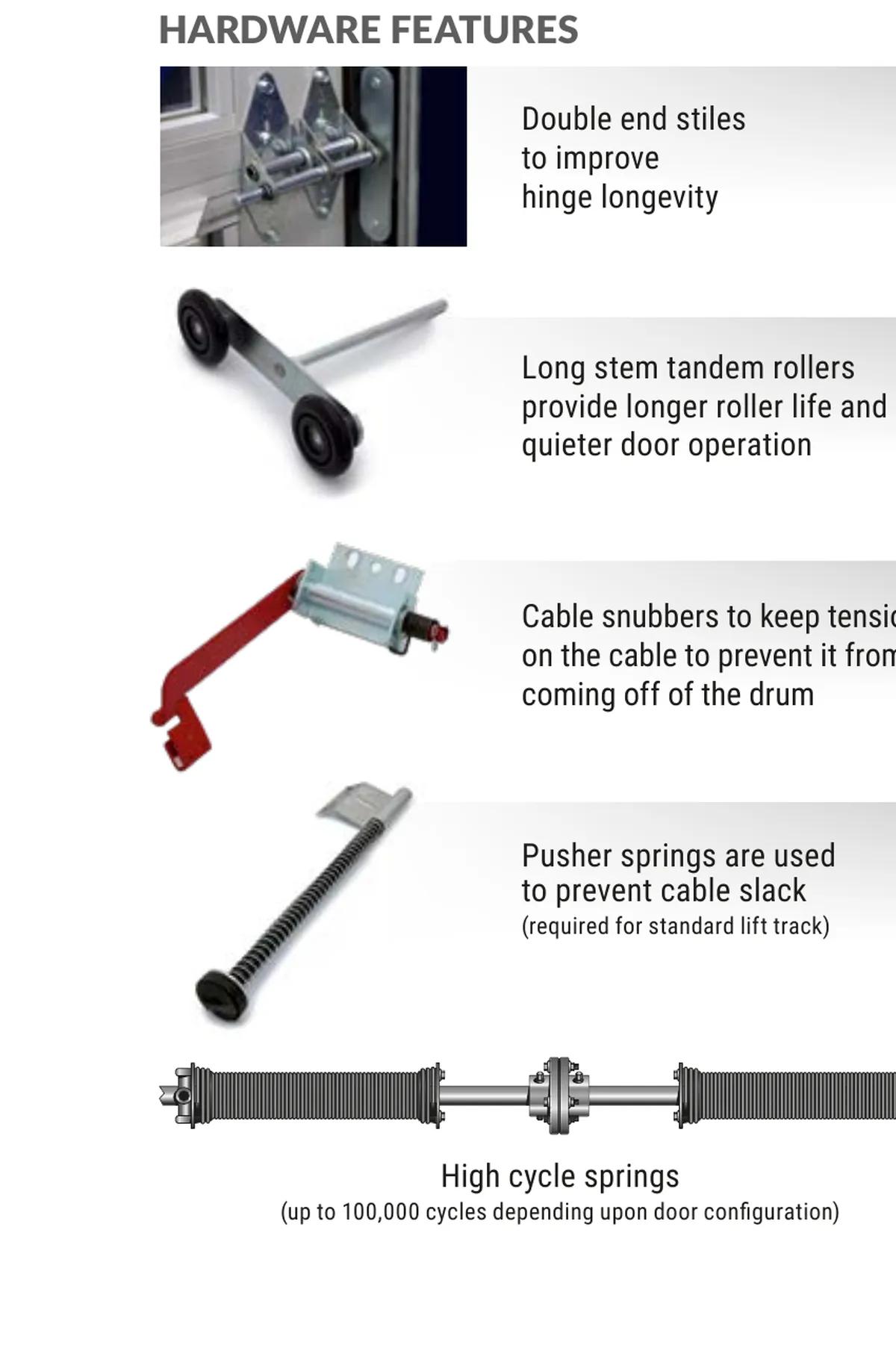
If a spring has failed early, call (604) 206-5727 and we'll look for the cause before we swap it. The commercial spring repair page, high cycle hardware upgrades, oil tempered vs galvanized springs and torsion spring winding cones all tie in here.