The noise is the diagnostic tool
A commercial door makes noise every cycle. The question is whether the sound has changed. Tenants in a parkade notice a new screech on the upstroke. That change is the only symptom that matters. You do not need to guess — you need to listen at the right point in the cycle and match the sound to the component.
Screech or howl on the way up
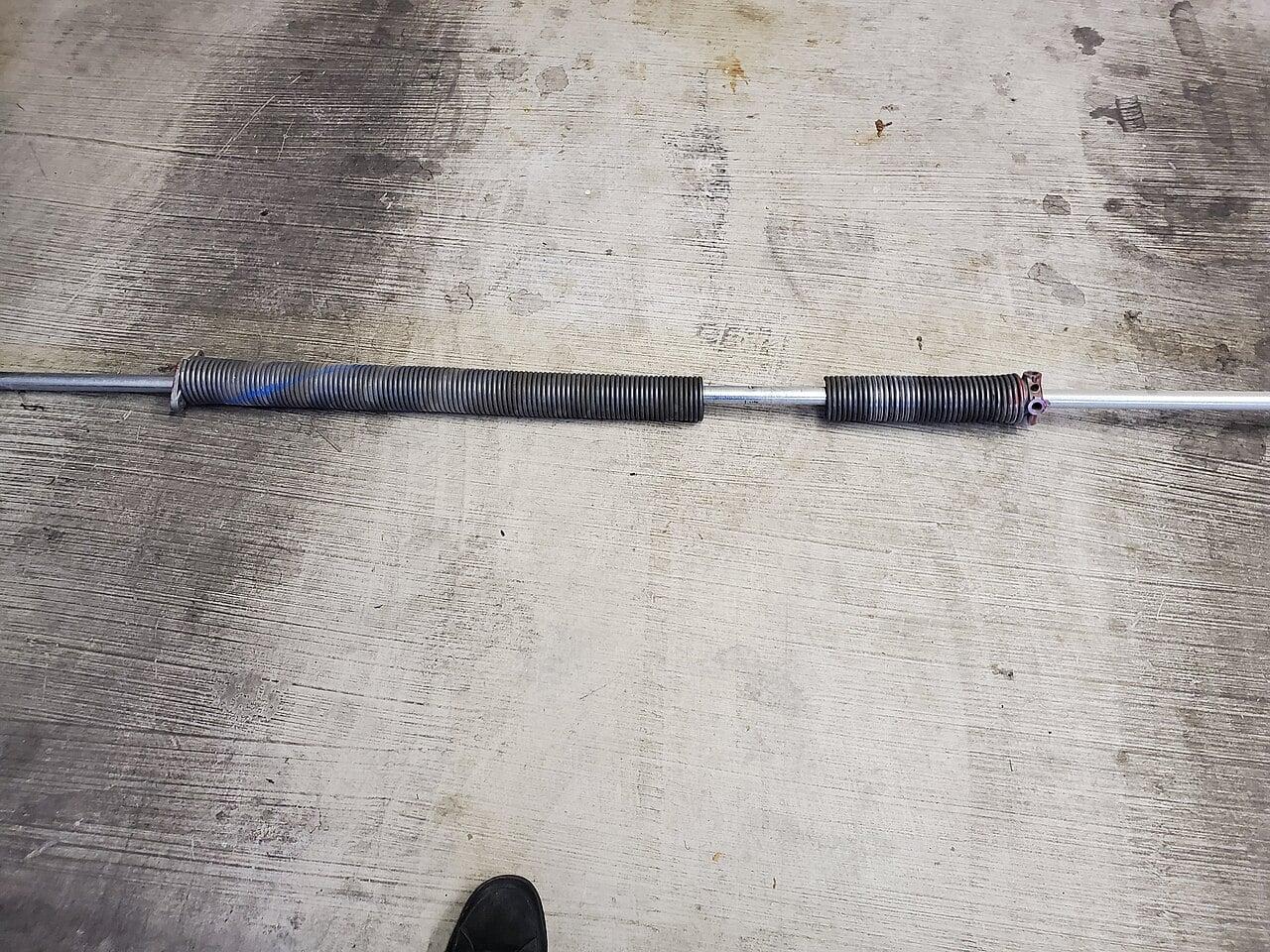
Metal-on-metal, high-pitched, usually worse in cold weather. That is dry torsion springs. The coils bind against each other under load and the friction screams. Spray the coils with a silicone-based lubricant — not WD-40, not grease. Silicone penetrates the gap between coils and evaporates clean. If the screech returns inside two weeks, the spring wire is fatigued and the coils are rubbing past the point lubrication can fix. Replace the spring before it snaps under tension.
A secondary cause: nylon rollers running dry in steel stems. Same fix, same test. If lubrication does not hold, the roller bearing is shot. Swap the roller.
Grind or growl under load
Low-frequency, feels like it comes from the operator housing. Chain-drive openers grind when the chain stretches and rides the sprocket teeth. Belt drives growl when the belt glazes and slips. Both sound like they are inside the motor but the source is the drive connection. Check chain sag — half an inch of slack at mid-span is the limit. Belt tension is spec’d by the manufacturer; if you can twist the belt 90 degrees with two fingers, it is loose.
If the drive is tight and the grind persists, the output shaft bearing in the operator is failing. You will feel vibration on the operator casing at the shaft exit. Replace the operator. Bearings are not a field-rebuild item on commercial units.
Bang or clang at the top of travel
The door hits the header hard. Two common causes. First: the up-limit is set past the mechanical stop. The opener keeps driving after the door contacts the header. Adjust the limit down until the door seals to the header without impact. Second: the door is heavy and the operator is undersized. The motor stalls, the brake engages late, and the door coasts into the header. You will see the motor amperage spike on the controller display if the unit has one. Fix: reduce door weight (replace steel panels with insulated aluminum, remove wind bracing if code allows) or upsize the operator.
A third cause on high-lift and vertical-lift tracks: the top roller jumps the track radius because the horizontal track is not level. The door falls the last six inches. Check track level with a torpedo level on the horizontal run. Shim the track hangers until the bubble centers.
Rattle that travels with the door
Loose hardware. Walk the door cycle with a 9/16 socket and a 1/2 socket. Tighten every lag bolt on the track angles, every hinge bolt, every operator bracket bolt. Strata parkade doors rattle loose faster than warehouse doors because the cycles are shorter and the vibration frequency matches the natural resonance of the track assembly. Monthly torque checks on high-cycle doors are not optional — they are the difference between a ten-minute tightening job and a track replacement.
Check the hinge points. Commercial hinges (11-gauge and heavier) have a slotted hole for adjustment. If the slot is elongated, the hinge has been shifting. Replace the hinge. Do not weld it. Do not drill a new hole. The slot exists for a reason — the door expands and contracts. Welding locks that movement in and cracks the panel skin.
Thump-thump-thump on the down cycle
Flat-spotted rollers. Steel rollers develop flats when the door sits closed for weeks under spring tension. Nylon rollers flat-spot faster in cold weather. The thump frequency matches the roller count — four rollers per side on a standard 16-foot door, eight thumps per revolution. Spin each roller by hand with the door disconnected. You will feel the flat as a catch. Replace the full set. Mixing new and old rollers creates uneven load on the shafts and bends the top bracket inside a month.
If the rollers are round and the thump remains, check the cable drums. A drum with a worn groove or a cracked flange lets the cable jump. The door shudders each time the cable reseats. Replace drums in pairs.
Whine that changes pitch with speed
Electric motor whine is normal. A whine that rises and falls with door speed, especially on a jackshaft operator, means the gear reducer is low on oil or the input seal is leaking. Jackshaft units mount on the wall beside the torsion shaft. The reducer is a sealed gearbox — if it whines, the oil has escaped. You will see residue on the mounting plate. Replace the operator. Running a dry reducer destroys the worm gear in hours.
Click-click at the photo eyes
Not a door noise. The relay in the operator logic board clicks when the safety beam breaks and remakes. If you hear rapid clicking while the door is stationary, the beam is misaligned or the reflector is dirty. Wipe the lenses. Check alignment with a laser pointer from the emitter to the receiver — the dot must center on the receiver lens at both the floor and the six-inch height. If the click persists with perfect alignment, the logic board has a stuck relay. Replace the board.
What to tell the technician when you call
- Door size and type (sectional, rolling steel, high-lift, vertical-lift)
- Cycle count per day if you know it
- Exact sound description — use the words above
- Where in the cycle the sound occurs (first foot, mid-travel, top, bottom)
- Whether the door still opens and closes fully
- Any recent impact, even minor — a forklift tap on the bottom panel changes spring balance and track alignment
The more precise the description, the more likely the technician arrives with the right spring, roller, or operator on the truck. That is the difference between a same-day fix and a return trip.
When to stop diagnosing and call
Torsion springs under load. Cable drums with frayed cables. Operator logic boards with burnt traces. Track sections bent more than a quarter inch over four feet. These are not diagnostic challenges — they are safety boundaries. A 16-foot commercial door with a broken spring weighs 300 pounds and the stored energy in the remaining spring will throw the winding bar through a cinder block wall. You do not learn this trade by trying it once.
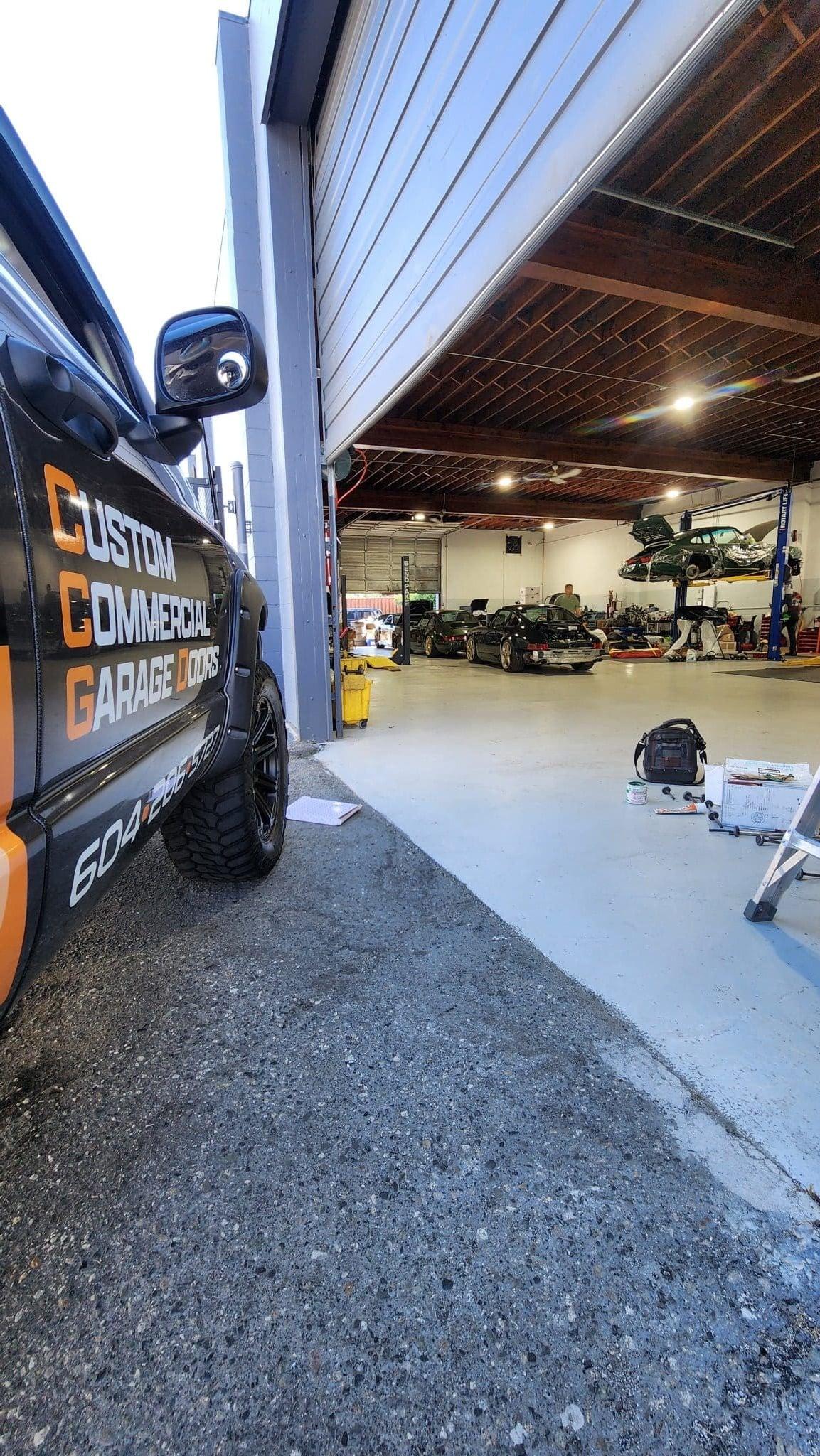
CLOSING If the noise is new, the door is telling you something specific. Match the sound to the component, lubricate what should be lubricated, tighten what should be tight, and call when the fix requires parts or training you do not have. CCGDS runs 24-hour emergency dispatch for commercial overhead doors across Metro Vancouver — Richmond, Vancouver, Burnaby, Surrey, Delta, the North Shore, New Westminster, Coquitlam, and Langley. Call (604) 206-5727 and describe the sound. The on-call technician will know what to bring.