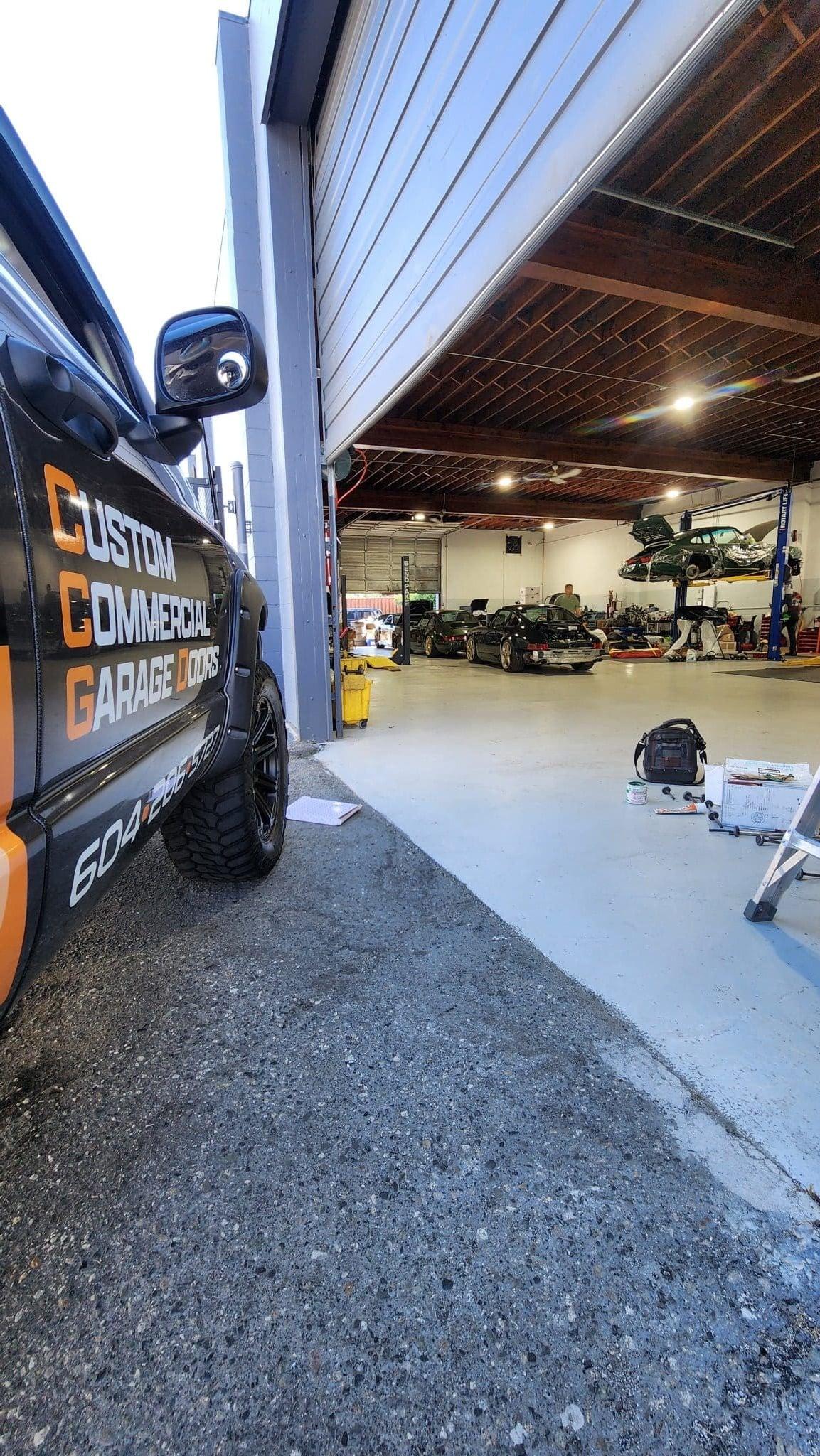
In wet climates like Metro Vancouver, commercial overhead door panels wear from a combination of moisture ingress, thermal cycling, and chemical exposure—not just age. Panels absorb water at seams and fastener points, leading to internal corrosion of steel skins or delamination in insulated cores. Repeated wetting and drying causes metal to fatigue, paint to blister, and seals to harden and crack. Salt-laden air from nearby roads or marine exposure accelerates oxidation, especially on lower panels where splash and pooling occur. You’ll see rust blooms starting at hinge mounts, white rust on galvanized surfaces, or bubbling paint near the bottom rail. Listen for creaking or grinding during operation—this often means rollers are binding due to corroded tracks or hinges seized from lack of lubrication in damp conditions. Inspect the interior skin of panels for condensation trails or white powdery residue; these indicate moisture is trapped and breaking down the bond between layers. Check weatherstripping at the bottom and sides—if it’s hard, cracked, or pulled away, water is entering and accelerating wear at the panel edges. DIY checks are limited to visual inspection, cleaning debris from tracks, and lubricating exposed hinges and rollers with a silicone-based spray. Do not attempt to adjust torsion springs, cables, or bottom brackets—these components store lethal energy and require specialized tools and training. Panel replacement or realignment due to warping from uneven moisture absorption is not a field fix; it requires door section removal and track adjustment best handled by a technician familiar with commercial door geometry. CCGDS can be reached at (604) 206-5727 for assessment of panel wear in wet-climate facilities.
How Moisture Penetrates Panel Seams and Fasteners
Water enters through microscopic gaps at panel joints, screw holes, and where the weatherstripping fails to seal. In insulated panels, this moisture migrates to the core, where it can cause polyurethane or polystyrene to break down, lose R-value, and promote mold growth. Steel skins begin to oxidize at the point of contact with water, especially if the galvanization is scratched during installation or by debris. Over time, this creates a cycle: wet panels are heavier, increasing stress on rollers and hinges, which wear faster, creating more gaps for water to enter. In facilities with frequent washdowns—like food processing or vehicle maintenance bays—this effect is compounded by thermal shock when cold water hits warm panels.
The Role of Salt and Airborne Contaminants
Metro Vancouver’s proximity to coastal routes and winter road salting means chloride-laden air settles on door surfaces. Chlorides accelerate electrochemical corrosion, breaking down the protective zinc layer on galvanized steel faster than pure water alone. This is why wear is often worst on the lower third of doors, where splash from tires and road runoff concentrates. Even inland facilities see this effect if they’re near major transit corridors. You’ll notice a gritty residue on panels after dry periods—wipe it with a cloth and if it leaves a faint pink or orange tint, it’s iron oxide forming. Regular rinsing with fresh water can reduce buildup, but avoid pressure washing directly at seals, as it can force water behind them.
Temperature Cycling and Material Fatigue
Daily temperature swings cause panels to expand and contract. In wet conditions, this movement works water deeper into seams and weakens adhesive bonds in laminated panels. Over months, this leads to visible warping—panels no longer sit flush, creating light gaps when closed. You might see the door bind at certain points in its travel or hear popping sounds as sections shift unevenly. This misalignment increases wear on rollers and can cause cables to fray if the door drags on one side. Wooden or composite overlays on steel panels are especially prone to checking and delamination under these conditions.
What Failure Looks and Sounds Like
Early signs include surface rust that wipes off but returns quickly, or paint that chips in a pattern following the panel seams. Advanced wear shows as permanent dents that don’t spring back—indicating the core has compressed or deteriorated. Listen for a rhythmic clicking during operation: this often means a roller is flat-spotted from running in a corroded track. A slow, strained motor sound suggests the door is binding due to panel drag or hinge resistance. If the door sags noticeably on one side when open, the panel may have absorbed uneven moisture and lost rigidity.
What You Can Check Yourself
Start with a visual walk: look at the bottom rail and hinges for rust streaks or white powder. Check the weatherstripping—if it’s brittle or torn, replace it. Clean the tracks with a dry brush and wipe them down; never use WD-40 as a lubricant—it attracts dust and washes away in rain. Use a silicone spray on rollers, hinges, and bearing plates. Operate the door manually (disconnect the opener) and feel for stiffness or catching points. If the door won’t stay halfway open when released, the springs may be losing tension—but do not adjust them. Note any unusual sounds and where they occur in the cycle. Take photos of worsening rust or warping over time to show a technician.
When to Call a Professional
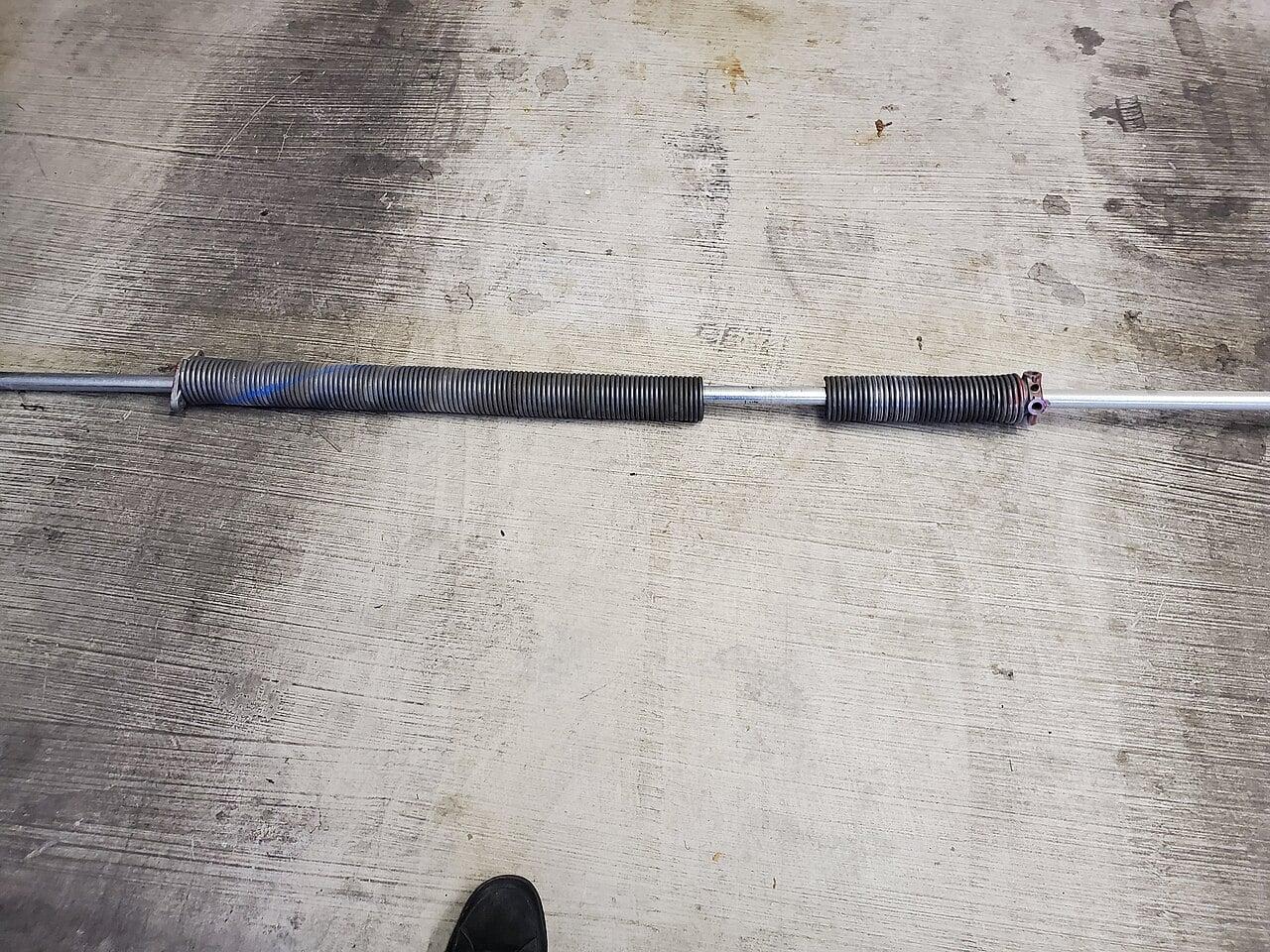
Any sign of structural compromise—like a panel that sags, cracks, or shows deep corrosion requiring more than surface cleaning—needs expert evaluation. If rollers are seized, tracks are bent, or the door requires excessive force to operate, stop using it and call a technician. Torsion spring systems are under extreme tension; attempting to adjust or replace them without proper training and tools can result in severe injury or death. Panel replacement involves precise alignment to maintain seal integrity and wind load resistance—improper installation compromises safety and efficiency. A door that’s hard to operate or leaks water after rain should be assessed for panel condition, track alignment, and hardware wear.
Frequently Asked Questions
Can I paint over rust to stop the wear?
Painting over active rust only hides it temporarily; moisture continues to corrode the metal underneath, causing the paint to blister and peel faster. You must remove loose rust, treat the surface with a rust converter or primer designed for galvanized metal, then apply a compatible topcoat. This is a surface treatment—it doesn’t fix internal panel degradation.
How often should I inspect my commercial door in a wet climate?
At minimum, do a visual and operational check monthly—more if the door cycles frequently or is exposed to salt spray. Focus on the bottom panel, hinges, and weatherstripping. After heavy rain or winter storms, check for water pooling inside the door track or wet insulation visible through panel joints.
Does insulating the door help reduce wear in wet climates?
Insulation helps regulate temperature and reduces condensation on the interior skin, which can slow internal corrosion. However, if the outer skin is compromised, water still enters and damages the core. Wet insulation loses effectiveness and can hold moisture against the steel, accelerating wear—so insulation helps only if the exterior envelope remains intact.