A commercial overhead door that moves unevenly or appears crooked only when operated via the keypad usually indicates a control signal issue affecting motor synchronization, not a mechanical bind in the tracks or springs. The door may lag on one side, tilt during travel, or reverse prematurely. This symptom is distinct from a door that is crooked manually, which points to spring tension, cable, or roller problems. When the keypad is the trigger, the fault lies in how the opener interprets the signal or distributes power to dual motors.
How Keypad Signals Affect Dual-Motor Synchronization
Many commercial overhead doors use two motors—one on each end of the shaft—to lift heavy, wide panels evenly. The keypad sends a radio signal to the opener’s logic board, which should activate both motors simultaneously with balanced force. If the logic board has a delayed response on one channel, a weak signal receiver, or intermittent wiring from the keypad input, one motor may start late or run slower. This creates a momentary twist in the door as the leading motor pulls ahead, causing the panel to skew. The crooked appearance is often most visible mid-travel and may correct itself as the door reaches the limit switch, but the strain accumulates over cycles.
Common Electrical Causes Behind Keypad-Induced Crooked Movement
Intermittent faults in the keypad’s wiring or the opener’s input terminal can cause signal degradation. Moisture intrusion in outdoor keypads, especially in Metro Vancouver’s climate, corrodes contacts and increases resistance. A loose screw terminal where the keypad wires meet the opener’s control board can arc under load, causing signal dropouts. Voltage drop across long wire runs—common in warehouses where the keypad is mounted far from the power unit—may result in insufficient signal strength to trigger both motor relays evenly. These issues do not affect wall consoles or remotes as severely because they often use different input paths or have built-in signal buffering.
What the Door Looks and Sounds Like During Failure
When the keypad is used, observe the door’s top edge as it rises. If one side lifts faster, the door will form a visible diagonal gap between the panel and the jamb on the lagging side. You may hear the motor on the leading side strain or whine slightly ahead of the other, followed by a catching or rubbing noise as the skewed panel contacts the track. The door might reverse if the safety edge or photocell detects obstruction from the misalignment. Manual operation via the disconnect cord often reveals smooth, even movement, confirming the issue is signal-related rather than mechanical.
Safe Checks You Can Perform Before Calling a Technician
First, test the door using the wall-mounted push button. If it opens and closes evenly, the keypad signal path is suspect. Inspect the keypad for water damage, cracked casing, or corroded buttons. With power disconnected at the opener, check the keypad wires where they enter the unit—look for fraying, loose terminals, or green oxidation. Re-seat the wires firmly. If the keypad has a battery backup, replace it; low voltage can cause weak signal transmission. Avoid adjusting limit screws or motor force settings—they rarely fix synchronization issues and can create safety hazards if misadjusted.
Why This Is Not a DIY Fix for Motor or Logic Board Issues
If the wall button also causes crooked movement, the problem lies in the opener’s dual-motor drive system—likely a failing motor, worn drive gear, or defective logic board. Accessing these components requires removing the opener cover and working near live voltage and high-tension parts. The motors are coupled to the torsion spring shaft; any misalignment during reassembly can bind the door or cause sudden release of stored energy. Technicians use diagnostic tools to measure motor amp draw and signal timing—adjustments are not guesswork. Replacing a logic board requires programming travel limits and force settings to match the door’s weight and spring torque.
The Role of Torsion Springs and Why They’re Not the Issue Here
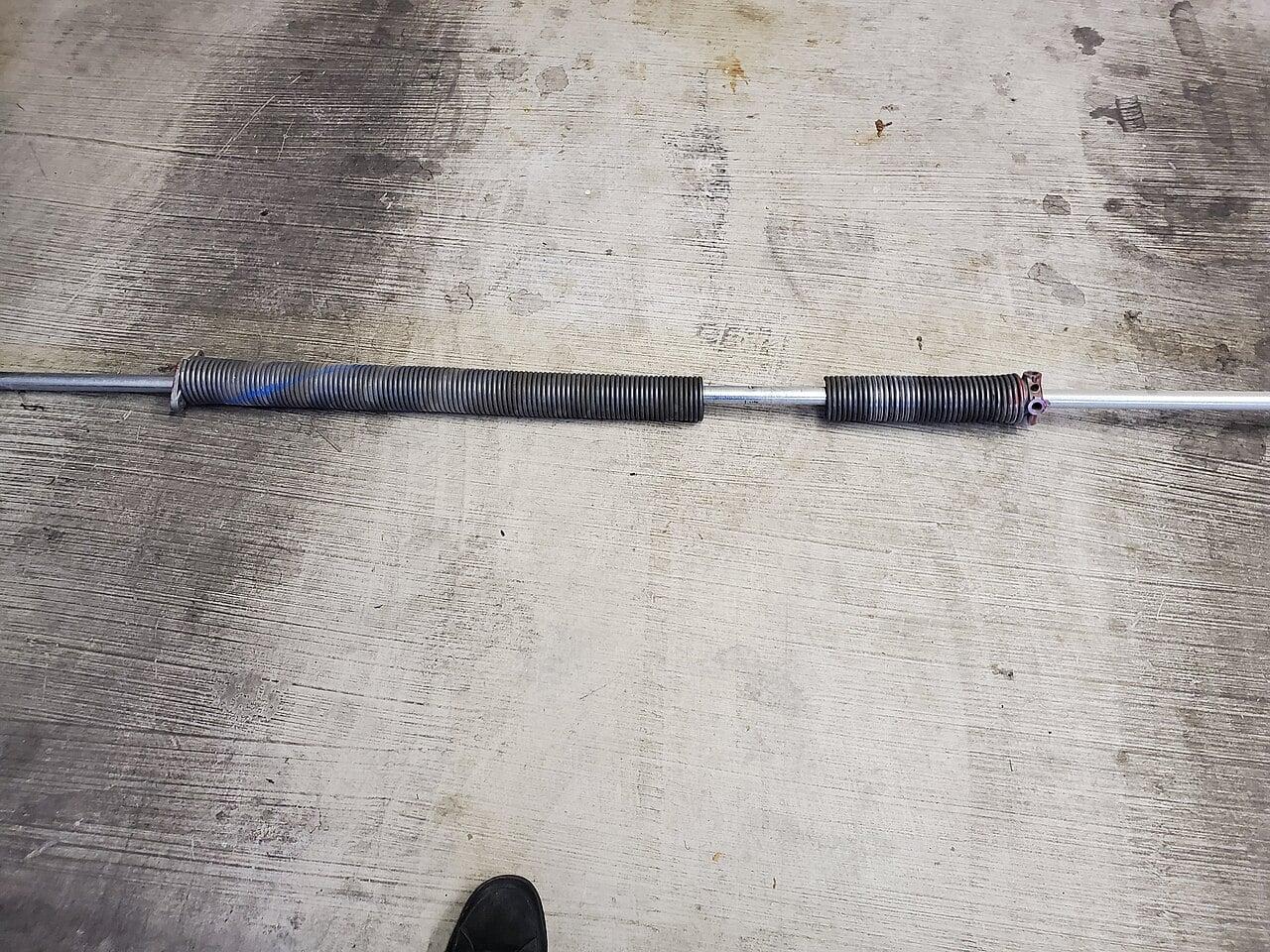
Torsion springs store immense rotational energy to counterbalance the door’s weight. If a spring were broken or unevenly wound, the door would be crooked during manual operation and likely fail to lift at all. Since the door moves smoothly when operated by hand or wall button, the springs are functioning correctly and remain properly tensioned. Do not inspect, adjust, or attempt to replace torsion springs—they can cause fatal injury if mishandled. Their condition is irrelevant to a keypad-specific signal fault, and any suggestion otherwise misunderstands the failure mode.
Frequently Asked Questions
### Can a weak keypad battery cause the door to move crooked?
Yes, if the keypad uses wireless transmission to a receiver, low battery power can weaken the signal strength, leading to inconsistent activation of the dual-motor circuit. This may result in one motor receiving insufficient voltage to start simultaneously with the other. Replace the battery and retest.
Should I lubricate the tracks or rollers to fix a crooked door from keypad use?
No. Lubrication addresses friction in moving parts, not electrical signal timing. If the door moves evenly via the wall button, the tracks and rollers are not the source of the skew. Adding lubricant will not correct a motor synchronization issue caused by faulty keypad input or logic board delay.
### Is it safe to keep using the door if it only skews when using the keypad?
Short-term use is acceptable if you operate the door via the wall button or remote to avoid uneven stress on the panels and hardware. Persistent crooked movement accelerates wear on rollers, hinges, and the top panel seal. Schedule a repair to prevent long-term damage to the door structure or opener drive system.